Mukesh Bansal once ran a company that could put your name on a T-shirt. Then he decided the company needed a different future. The change sounds obvious when the company is called Myntra and everyone already knows what happened next. At the time, it meant giving up a business his team had spent roughly four years learning to run.
There is something wonderfully inconvenient about that kind of decision. Customers exist. Money has been raised. People have become good at their jobs. The founder has probably explained the idea enough times to believe his own explanation. Changing course requires telling all those people, including himself, that competence has carried them only so far.
Myntra became a fashion retailer. Flipkart acquired it in 2014. Bansal joined the larger company’s leadership, then left in 2016. More ventures followed. Today, his working life includes enterprise AI, a venture studio, books and a podcast. The interesting continuity is his willingness to return to situations where the answer remains unsettled.
A career like that can look impeccably planned from a distance. Move closer and the tidy arrows begin to wobble. A small business reveals its limits. A product leads to an unexpected customer. A successful job stops supplying enough new questions. Bansal has repeatedly treated these developments as reasons to move.
A computer scientist walks into a fashion business
He grew up in Haridwar, where his father worked for Bharat Heavy Electricals Limited. His family had an earlier connection to the apparel trade. His father’s move into government service had interrupted it; the son would eventually bring clothes back into the family story, with rather more software attached.
Bansal graduated in computer science and engineering from IIT Kanpur in 1997. His first employer was Deloitte. In 1999, he moved into the Bay Area’s startup world, working across engineering, product management and marketing. He spent eight years at four young companies, including NexTag and newScale. Two of the four businesses failed.
That is a useful education for somebody who hopes to start a company. A successful employer can teach an employee how a working system behaves. An unsuccessful one supplies additional material: how decisions unravel, how people react, how little a sensible-looking plan guarantees. Bansal encountered both outcomes before putting his own company at the centre of his life.
He returned to India in 2007 and co-founded Myntra. His route into fashion had taken him through computer science and American software businesses. The combination would matter. Online retail requires an attractive shop window, but behind it sit inventories, warehouses, payments, returns and thousands of small promises that have to survive contact with an actual customer.
The jersey that suggested a larger wardrobe
Myntra’s early work involved personalized products. A customer could order an item made more individual by a printed name or design. It was a comprehensible proposition, and a narrow one. The opening into something larger arrived through cricket.
In 2010, an Indian Premier League team approached the company. Bansal’s team pursued the other IPL teams and Nike, with the Cricket World Cup approaching. Jerseys carrying a buyer’s own name and number connected the original personalization business to established sports brands.
Then came the more consequential thought: somebody buying a team jersey might also buy the brand’s other clothes or shoes. By 2011, Myntra was moving into full catalogues and closing its personalization operation. A printed name had helped the company discover a customer whose wardrobe extended beyond the printed name.
The distinction mattered commercially. A gift purchase tends to belong to an occasion. A clothing catalogue offers many occasions and reasons to return. The team had found a way to serve more of the same customer’s spending. Getting there required the uncomfortable step of closing the activity that had first brought the customer in.
Bansal later described those decisions through chess. “I use the word adjustment rather than pivot.” The vocabulary is revealing. A pivot can sound like a single dramatic announcement, complete with a new slide deck. Adjustment suggests a player studying the board again each morning. The first description makes a good anniversary speech. The second gives everyone something to do on Tuesday.
- 2007Make it personalCustomized gifts and T-shirts
- 2010Follow the jerseyIPL merchandise opens a door
- 2011Open the wardrobeFull catalogues; fashion retail
Fashion needed an opinion
Expanding the catalogue brought another choice. Myntra concentrated on current-season merchandise rather than making discounted old stock its defining attraction. It also developed private brands, including Roadster, DressBerry and Anouk. Fashion required a point of view as well as a database.
By February 2014, Bansal described a business with about 700 brands and 50,000 products. Those numbers belong to that moment, before the Flipkart acquisition. They show the distance from a personalized-gift operation without pretending that an early snapshot describes today’s Myntra.
He also discussed writers, stylists, photographers, trend videos and advice about putting a look together. A catalogue could help a customer imagine wearing something. That is a different editorial task from listing a processor speed. A shirt must persuade a person who already owns shirts.
The technology was equally particular. Myntra built systems covering warehouses, logistics, customer relationships and vendors. Bansal wanted recommendations and offers to reflect individual tastes. The personalization idea had survived its original business model: it now lived inside the experience of shopping.
This gives the story a pleasing twist. The company abandoned personalized goods while investing in personalized retail. The team changed what it sold and retained an interest in how people differ. Clothing supplied ample evidence. One shopper’s essential purchase is another shopper’s perfectly good reason to close the tab.
A catalogue with room for more than a name on a shirt.
Selling a company, keeping its character
Flipkart’s acquisition of Myntra in May 2014 put Bansal alongside Sachin Bansal and Binny Bansal. The companies shared investors, and their founders had known one another before the transaction. Combining forces offered scale in a market where Amazon was expanding.
The decision to preserve Myntra’s separate identity was deliberate. Its fashion proposition and Flipkart’s broader shopping proposition occupied different places in customers’ minds. Folding everything into one experience risked losing part of what made the transaction useful.
An acquisition announcement compresses years of work into a photograph and a headline. The practical work afterward involves a less glamorous question: which things should become common, and which things deserve protection? A recognizable fashion destination was one of the things the founders chose to preserve.
Bansal went on to lead Flipkart’s commerce platform and advertising business. In 2016, he left. He said the departure had been under discussion for months and that leadership responsibilities were being handed over. There was room for the company to continue and for its founder to seek another beginning.
“I want to feel like an early-stage entrepreneur again,” he said that year. It is an unusually specific ambition after a successful sale. The attraction lay partly in recovering a stage of work: close enough to the problem that decisions still change the shape of the whole business.
“I want to feel like an early-stage entrepreneur again.”
Mukesh Bansal · 2016
A studio for unfinished ideas
Bansal co-founded Cult.fit with Ankit Nagori in 2016. His work also expanded into backing other founders. His investments include Groww and Skyroot, businesses whose subjects reach well beyond the fashion rack. IIT Kanpur recognized his entrepreneurial work with its Distinguished Alumnus Award in 2021.
Meraki Labs gives this interest in beginnings an organizational home. The venture studio describes two routes: incubating ideas with entrepreneurs and partnering with companies at the pre-seed or seed stage. Its leadership includes Bansal and Peeyush Ranjan. The work starts as early as an idea on paper.
A studio changes the founder’s relationship with a new company. Time and operating experience become resources to share, alongside capital. A person who has already hired teams and changed business models can help someone confronting those questions for the first time. Experience becomes useful through proximity.
The ambition now reaches into education. In January 2026, Bansal and Ranjan launched Fermi.ai, focused on school-level STEM learning in India and the United States. Its approach emphasizes step-by-step reasoning, including work written by hand. The product is designed to help students understand the route to an answer.
It is an interesting project for someone with a computer science degree and a long apprenticeship in startups. Fast answers are attractive. Learning usually takes longer. A founder building an AI tutor has to decide which kind of speed is useful, and which kind merely allows the learner to skip the useful part.
The beginner gets his keyboard back
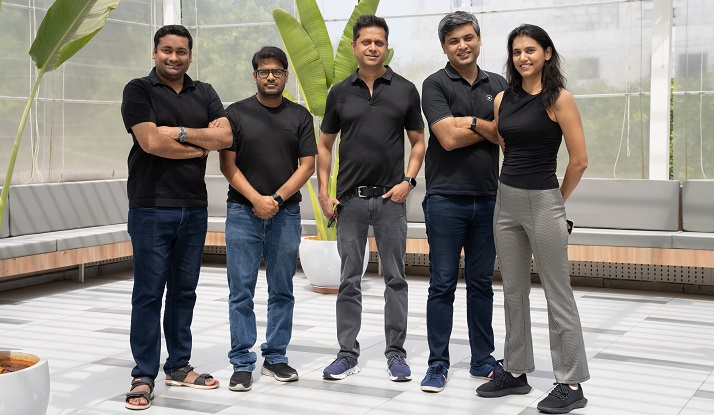
In September 2024, his enterprise AI company Nurix announced $27.5 million in funding from General Catalyst, Accel and Meraki Labs. By August 2026, it had become NuPlay AI, following the acquisition of Verloop.io. Bansal remains its founder and CEO. The company develops AI agents for business work, including customer conversations and operational processes.
The connection to his earlier career is practical. Retail contains catalogues to maintain, vendors to onboard and customers needing answers. Having spent years inside those systems gives a founder a set of problems to investigate. New technology arrives carrying a familiar list of chores.
Bansal has also returned to building software himself. In a May 2026 SparX episode, he described using AI coding tools after roughly twenty years away from writing code, and demonstrated making a Snake game. It is an amusing career loop: the engineer who learned fashion is once again at the keyboard, making something that moves.
His public work offers other ways into the same curiosity. SparX hosts extended conversations about science, technology and entrepreneurship. His 2024 book, The Start-Up Code, takes readers through company formation, product-market fit, funding and growth. Writing and interviewing give the questions somewhere to go between businesses.
Asked in a 2026 conversation how he sees himself, Bansal answered, “I see myself as a learner.” The description fits the detours better than any single job title. He has accumulated the experience to recognize a familiar problem and preserved the appetite to encounter an unfamiliar one.
The name on the T-shirt was once the product. Then the customer’s larger wardrobe became the opportunity. Years later, the founder is still looking for the next thing a familiar task might reveal. Starting over, in his case, comes with a considerable amount of experience packed in the bag.
Keep the conversation going
Explore his work: NuPlay AI · Meraki Labs · Myntra.
Follow: LinkedIn · X · SparX on Instagram · SparX on YouTube.
Read and listen: The Start-Up Code · The 2014 fashion interview · Enterprise AI videos · NuPlay’s 2026 expansion.