Before Piero Molino built tools for training artificial intelligence, he edited a Nintendo section. Between 2004 and 2007, he wrote about video games for Everyeye.it, working on articles and videos for an audience that cared about what happened when you picked up a controller. Years later came IBM Watson, Uber AI, Stanford and Predibase. In 2025, he began a new professional chapter at Studio Atelico. The old interest had acquired a rather elaborate technical education.
There is a useful way to read that journey: follow the person being asked to use the technology. At first, a reader deciding what to play. Later, an engineer trying to train a model. Now, a player describing a creature that does not yet exist. Molino has spent much of his career working on the machinery between an intention and a result. Games give him an unusually direct test of whether that machinery is worth anyone’s time.
A game critic’s unfinished business
His early games work went beyond reviewing other people’s creations. As a freelance developer, he made a pixel-art game, No, Birdie, No!, for the Edge Create 2012 competition. He also developed BitBuddies, an iOS application for pixel-art portraits. These projects sit in his career alongside research on question answering and semantic search. The combination is revealing without requiring a grand theory of destiny. Someone can enjoy both a difficult language problem and a small bird rendered in pixels.
At the University of Bari, Molino studied computer science through a bachelor’s degree, a master’s and a doctorate. His undergraduate thesis concerned serendipity in recommendation systems; his later studies turned to question answering. The subjects have a human question tucked inside the technical one: how does a system help someone discover something, or find the answer they meant to ask for? A recommendation that merely repeats the obvious is a very industrious way to achieve little.
He co-founded QuestionCube, serving as its chief technology officer while building question-answering products. One, PArisponde, won a special prize in Apps4Italy. An internship at Yahoo Labs in Barcelona brought work on community question answering. At IBM Watson, he worked on language tasks including search, question understanding and classification. Before conversational AI became an everyday consumer product, Molino was already occupied with the awkward business of getting computers to handle people’s words.
“What made it possible for me to do the things that I have done is constant curiosity.”
Piero Molino
The interface becomes the project
In 2016, Molino joined Geometric Intelligence, the startup associated with Gary Marcus and Zoubin Ghahramani. Uber acquired it that December and established Uber AI Labs. Molino became one of the lab’s founding members. His work covered research and practical applications, including language systems for customer support and graph learning for Uber Eats recommendations. The work brought him into contact with the difference between a model that runs and a system that other teams can use.
Ludwig began as his personal project at Uber AI in 2017. It was released as open source in 2019, with Yaroslav Dudin and Sai Sumanth Miryala among its early contributors. The idea was to make deep learning accessible through a readable configuration. A user could specify the inputs and desired outputs, while the framework assembled the relevant pieces. Repeated model-building work could become reusable infrastructure rather than another afternoon spent rearranging plumbing.
The underlying architecture connected encoders, a combiner and decoders. Different data types could use appropriate components while fitting a shared structure. For a researcher, this offered a way to experiment with less repetitive setup. For an engineer without deep learning expertise, it lowered the amount of specialist implementation required to begin. The distinction matters: lowering the entry cost can also save time for the person who already knows how everything works.
A conceptual sketch of the architecture, rather than a performance comparison.
Molino’s choice of name carries another interest into the software. Ludwig refers to the philosopher Ludwig Wittgenstein. He has discussed connections between philosophy of language and modern language models, and co-authored a paper with Jacopo Tagliabue examining Wittgenstein’s influence on artificial intelligence. The name is a small invitation to look beyond a framework’s installation instructions. Even a piece of developer tooling can have a reading list.
His preferred description of an accessible machine-learning system is a “glass box.” Someone experienced should be able to inspect and change its workings; someone less experienced should still be able to use it. That position leaves room for both expertise and convenience. It also explains his interest in interfaces: a useful interface lets the underlying components evolve without forcing every user to become an expert in each new component.
From a pet project to Predibase
After Uber, Molino worked in Chris Ré’s Hazy Research group at Stanford. In 2021, he co-founded Predibase with Travis Addair, Devvret Rishi and Ré. Addair brought experience with Horovod, the distributed deep-learning framework; the company also drew on the declarative approach embodied by Ludwig. Molino was Predibase’s original CEO and later its chief scientific officer. The change of title belongs in the story, because a founding role and a current job are different facts.
Predibase emerged publicly in May 2022 with $16.25 million in funding led by Greylock. Its early proposition extended declarative machine learning into an enterprise platform. Teams could connect data, train models and deploy them through interfaces that reduced the work of assembling the system themselves. The founders were taking an approach developed inside large technology companies and offering it to organizations with their own data and their own practical constraints.
As large language models became more widely adopted, Predibase focused on fine-tuning and serving them. Customization lets a model become more appropriate for a particular task; serving determines whether that customized model can be used economically at scale. Ludwig and LoRAX formed part of this work. An impressive model with an impractical bill is a difficult colleague to keep on the payroll.
- 2019Ludwig becomes open source.
- 2021Molino co-founds Predibase.
- 2025Predibase joins Rubrik; Molino turns to Studio Atelico.
Rubrik announced an agreement to acquire Predibase on June 25, 2025. The acquisition completed in July. Rubrik’s subsequent filing valued the purchase consideration at $109.1 million. That figure describes the company transaction. Molino’s next decision was more personal: he publicly said he would leave Predibase rather than accompany the team into Rubrik, and focus on Studio Atelico. The enterprise chapter had supplied techniques he wanted to bring to a different audience.
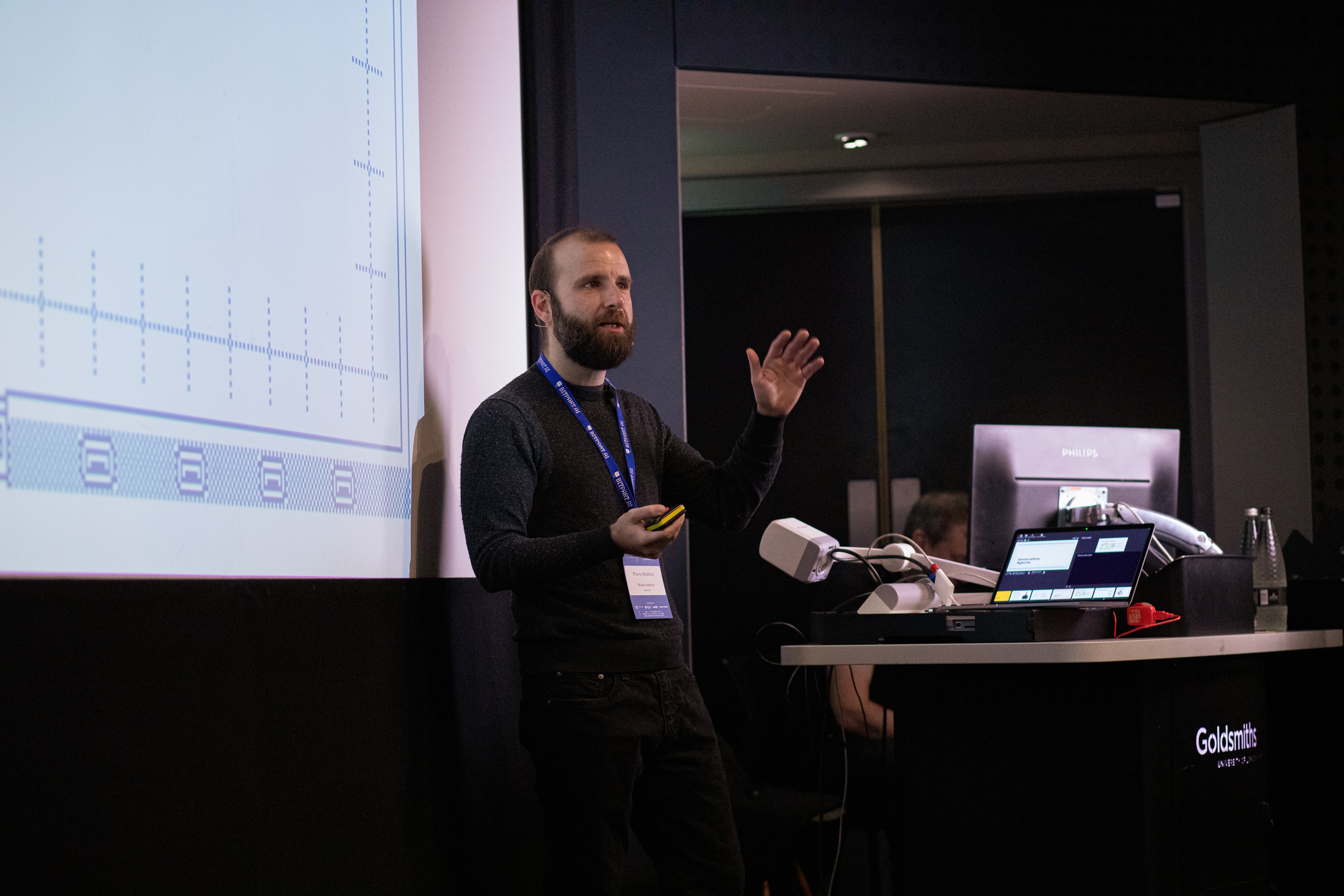
Give the player something to invent
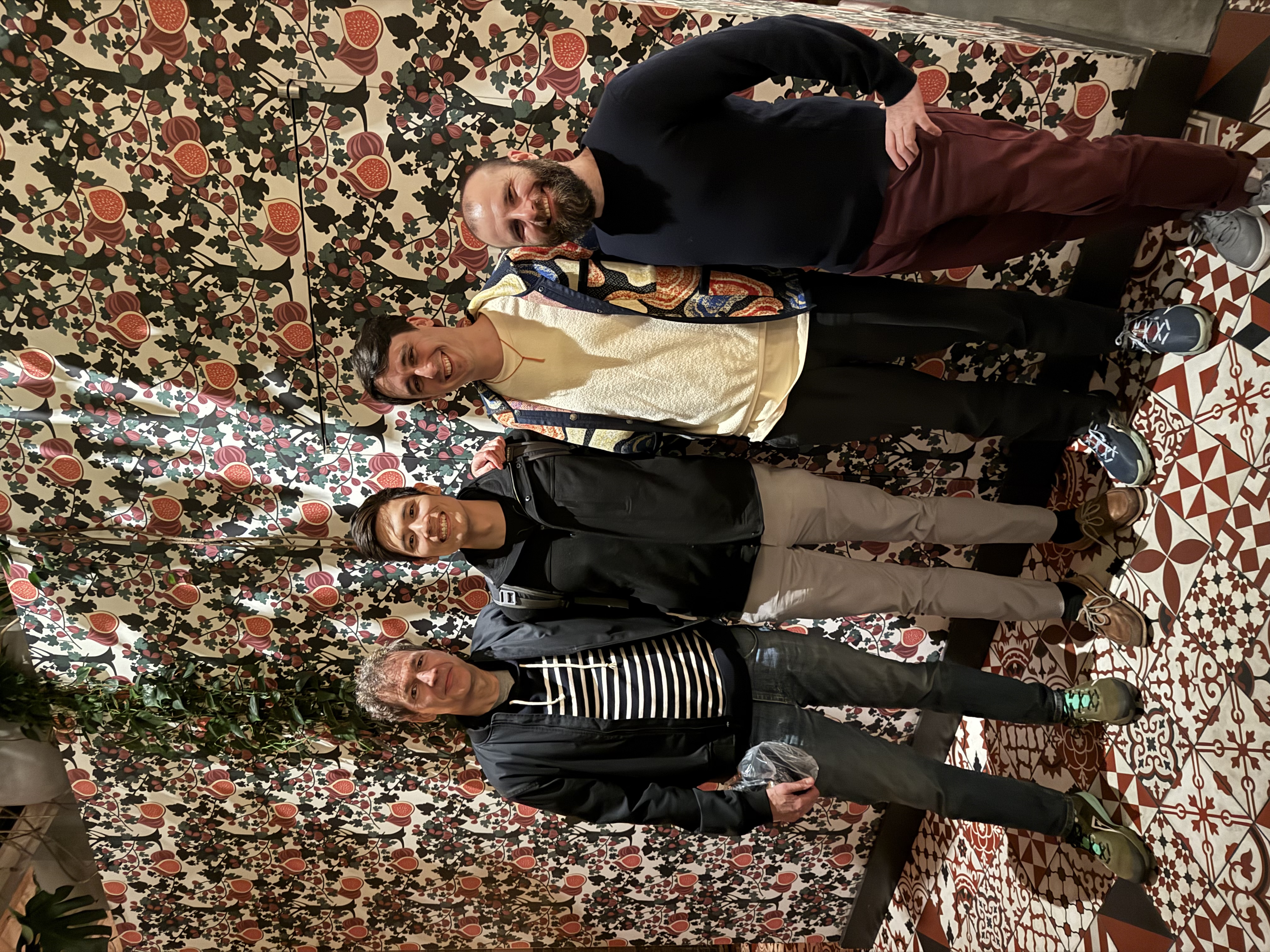
Studio Atelico’s founders include Molino, Paul Szerlip, JP Chen and Ennio De Nucci. Their backgrounds connect AI research, on-device systems and game design. In August 2025, the studio announced a $5 million seed round led by Air Street Capital, and welcomed games industry veteran Chris Olson. The plan combined an AI engine with games built using it. Making a game would expose the engine to the demands of an actual creative project.
The technical choice is to run AI on the player’s device. Cloud-based generation adds a cost each time the system is called, along with the delay of a round trip to a server. In a game, those constraints affect what a designer can afford to let a player do. Molino saw a route from his work on efficient AI infrastructure to interactions that could happen locally. The player’s imagination would not need a new server request at every turn.
The studio explored generative agents through its Generative Agents Realtime Playground, or GARP. By January 2026, it had announced its first game, Bobium Brawlers, a mobile card-and-dice battler. Players describe a creature, then receive a generated portrait and a deck shaped by the game’s rules. Creation became the attraction. “The most fun part of the experience was creation,” Molino said. A blank description field becomes a place to make something you can then send into a fight.
Experimentation also complicated the initial premise. Across more than ten prototypes, the team found that giving AI greater freedom could make games feel arbitrary. Players needed rules they could learn. In the creature artwork, an early model made every dragon purple because its training examples contained one purple dragon. Artist José Luna supplied additional examples. The anecdote gives the whole undertaking a welcome scale: the future of interactive entertainment still has to explain that dragons come in other colors.
The artist stays in the agreement
Molino describes making games as an artistic endeavor that depends on human taste and judgment. Atelico has made that position concrete through ARC, its Artist Rights Contract framework. Published as a draft in March 2026, it proposes explicit consent for training, upfront compensation, participation in a project’s success and rights limited to the project. Those terms address a practical question: what has an artist actually agreed to when their work becomes training material?
The project boundary matters. Permission for one game should have a defined relationship to permission for the next. Atelico also invited public discussion of the draft, particularly from artists. The approach treats the agreement as part of building the technology. A generated creature has a visible life on screen and a less visible history in the artwork used to train its model. Both belong to the product being made.
By September 2026, Bobium Brawlers had entered an iOS closed beta. Molino’s October conversation with Ben Lorica returned to local models, game mechanics and the relationship between AI and artists. His current work is now meeting players outside the studio, where a technical idea must survive unfamiliar requests and ordinary expectations of a game. A beta gives those expectations somewhere to land.
The career has come back to a question his Nintendo readers would recognize: is this enjoyable to play? Molino brings years of research and infrastructure work to answering it, but the answer still belongs to the person holding the device. His next chapter depends on whether they like what they have made, understand how to play with it, and want another turn. For someone who once wrote about games, that is a satisfyingly demanding audience.
Follow the work, hear the conversations
Molino’s website and career · LinkedIn · X · GitHub · Facebook
Bobium Brawlers · Predibase profile · The ARC draft
Watch: On-Device Generative Agents for Lifelike NPCs
Listen: the philosophy behind Ludwig
Read: Molino on interfaces, books and low-code ML
Read: what ten game prototypes taught Atelico