In August 2026, Chris Ré and his Stanford colleague Stuart Sul published a small heresy about a piece of software they loved. Their lab had spent years making GPU programming easier. ThunderKittens, an open library of carefully chosen building blocks, helped people write fast kernels for the chips that power modern AI. Yet after working with coding agents on a newer, more complicated project, the pair wondered whether some of those building blocks would eventually become unnecessary. The title of their essay did not hide the point: “Retire the Abstractions.”
The argument was precise enough to be dangerous. An abstraction lets a programmer hold a complicated system in mind. Ré and Sul had once needed one to build a fast “megakernel.” This time, agents helped them work closer to the underlying hardware. They still needed expertise, tests, and a sense of what a correct result should look like. They simply needed less of the scaffolding they had built for themselves. Their affectionate footnote promised continued care for ThunderKittens, even as the essay contemplated a future beyond parts of it.
There is a revealing consistency in that reversal. Ré has made a career of finding the layer that prevents people from using a powerful idea. He helps build a way through it, then looks again when the conditions change. The subject has moved from database tables to training data to GPU kernels. The question has remained stubbornly practical: what, exactly, is making this hard?
The data that had no table
Ré’s first widely recognized answer began with information that databases could barely touch. A conventional database is comfortable with fields, rows, and rules. Much of the world, meanwhile, arrives as paragraphs, PDFs, diagrams, and pictures. Researchers may know that a paper contains a useful fact, yet extracting that fact across millions of documents is a different assignment. Ré and collaborators called this material “dark data”: information that existed, mattered, and resisted ordinary queries.
DeepDive, the system associated with Ré’s early Stanford work, tried to close that gap. It extracted relationships from messy material, inferred likely facts, and put those assertions into a form that existing database tools could use. Human judgment did not disappear. People could add rules and correct errors; the system would use that feedback to improve. The point was to make a large, untidy collection of evidence workable for people who had a question but no wish to become database engineers first.
In 2015 the MacArthur Foundation awarded Ré a fellowship for this line of work. The fellowship recognized a marriage of theory and useful open software. Ré described the difficulty plainly: “All those choices that a human makes when reading the paper, the machine has to do, too.” It is an almost comically modest way to describe a formidable technical problem. Reading is easy to take for granted until one asks a machine to do it carefully, at scale, without quietly inventing what the text never said.
The chronology behind that moment is unusually well documented. Ré studied mathematics and computer science at Cornell, adding a master’s in computer science there. He earned a further master’s and a doctorate at the University of Washington. He then taught at the University of Wisconsin–Madison from 2009 to 2013 before joining Stanford. By the time the fellowship arrived, his questions about logic, statistics, and databases had become questions about the practical limits of machine learning.
A lab that sends people out
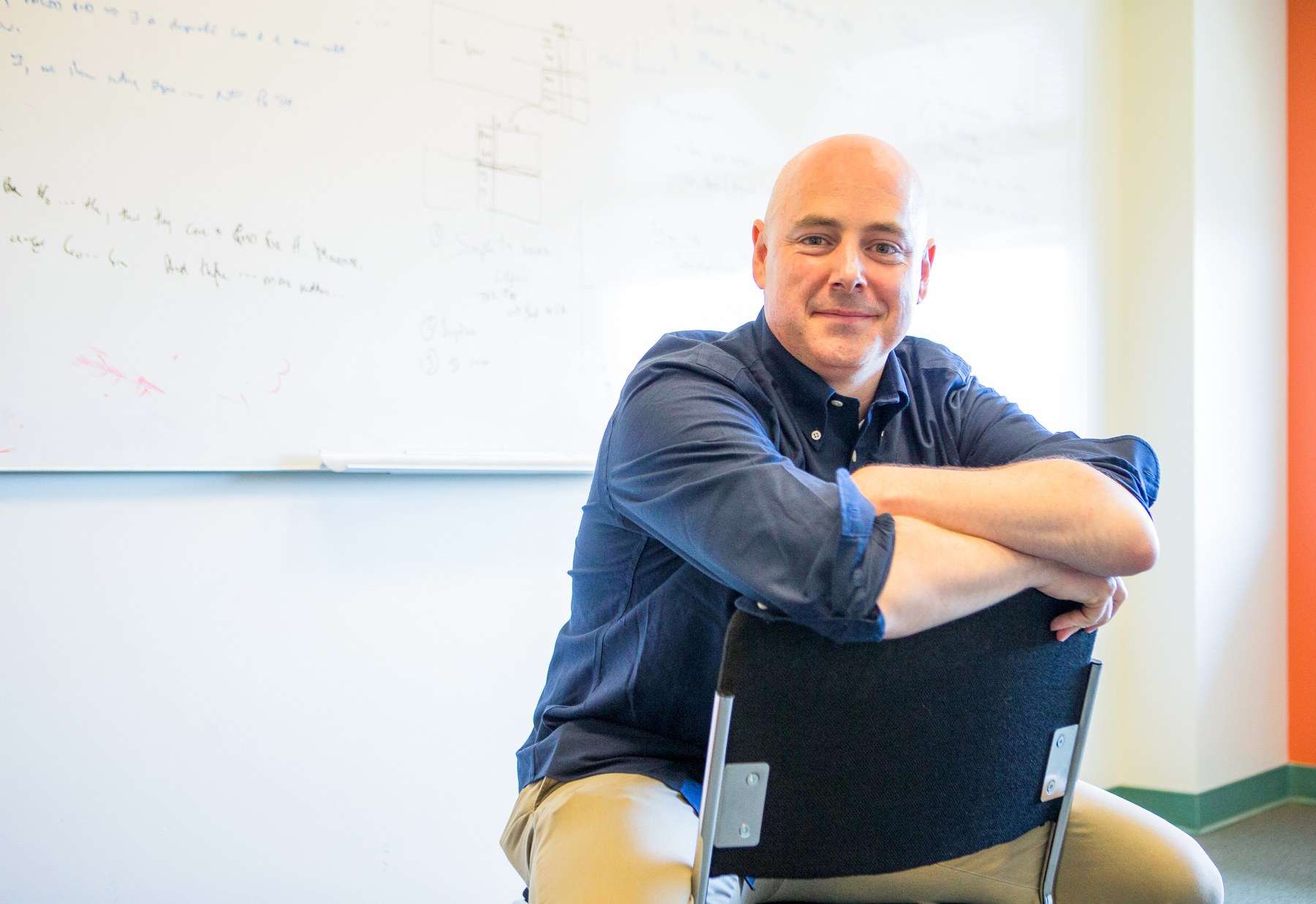
Awards offer one measure of an academic career. Ré proposes another. Ré says the real goal of his lab is to help students become professors, entrepreneurs, and researchers. He notes that more than a dozen members of the group have started professorships. It is a useful sentence to keep in mind when reading the long inventory of papers and companies around Hazy Research, the lab he leads. The work is designed to travel with people.
Even Ré’s official biography at Stanford deflates its own résumé. It says that friends let him tag along to found companies while they did the hard work of building them. It adds that his family still brags about the MacArthur Fellowship, while his closest friends think it was a mistake. These are jokes, and the profile does not ask readers to mistake them for sworn testimony. They do reveal the way he chooses to tell his story in public: with the credit pushed toward collaborators and the grandness gently punctured.
There is plenty to puncture. He has received best paper honors in database theory, database systems, and machine learning, plus later awards recognizing work that lasted. In 2024, his group received Stanford’s inaugural prize for open software tied to FlashAttention. Those awards span fields that often have different conferences, vocabularies, and ideas of progress. Ré’s recurring interest is the joint where mathematical insight meets the machinery people actually use.
When the answer becomes a company
The path from research to company is sometimes presented as a tidy handoff. Ré’s record looks more like a series of conversations that refused to end at publication. DeepDive became part of the story of Lattice Data, which Apple acquired in 2017. Inductiv, another venture associated with his research, also became part of Apple. He was a co-founder of SambaNova Systems and Snorkel AI. Each addressed a different part of the problem of making machine learning useful beyond a paper demonstration.
Snorkel grew from a frustration that Ré described with a good joke: “new-model-itis.” In his account, AI teams spent enormous energy changing models while giving less attention to the data used to train them. The difficult information inside an organization rarely arrives as a clean, labeled teaching set. Researchers working on data programming built a way for people to express labeling rules, combine them, and generate useful training data at scale. The model still matters. So does the quality of the examples that teach it what a task actually means.
That idea has the same shape as DeepDive. Someone has valuable knowledge locked in an inconvenient form. A system gives that person a clearer interface to it. The two projects are technically different, and neither can be reduced to a slogan about “democratizing AI.” Their shared ambition is narrower and more tangible: make a hard step in the workflow something more people can specify, inspect, and improve.
Together AI, founded in 2022, extends the pattern to the infrastructure around open foundation models. The company lists Ré as a founder alongside Vipul Ved Prakash, Ce Zhang, Tri Dao, and Percy Liang. Ré’s role in its founding is real; its daily operation has its own leadership. What links it to his academic work is the belief that useful AI depends on more than a single model. It needs data, software, computation, and a community that can build on each layer.
Down to the metal
More recently, Ré’s group has moved closer to the chips. Hazy Research works on the systems beneath foundation models, including fast GPU kernels, efficient inference, and methods for doing useful work with less computation. ThunderKittens is part of that effort. So are later projects such as ParallelKittens and HipKittens. These names have the cheerful air of a lab that knows how forbidding the underlying subject can be.
The hardware turn may seem far from a database system reading old documents. It is not far from Ré’s habit of asking where the real friction lies. A model may be open, but a slow or costly system can make it inaccessible in practice. An algorithm may be elegant, but the machine that runs it has its own rules. For a lab interested in the foundations of AI, the trip from data to silicon is less a detour than a search through the full chain of constraints.
His group’s current projects reach in several directions at once: local AI that divides work between devices and the cloud, techniques for measuring useful output against energy used, and model architectures that can handle demanding scientific sequences. The range is broad enough to invite a false portrait of one professor single-handedly doing everything. Ré consistently names students, co-authors, and partner labs. The institutional trick, if there is one, is to keep a group of people capable of working on difficult questions together.
The parts that remain
This brings the story back to the 2026 essay. Ré and Sul did not announce that all code should be thrown away. They described a case in which agents made one layer of abstraction less necessary, then spent much of the piece identifying the limits of that claim. Tests still needed to establish correctness. Shared libraries still helped teams review and reuse work. People new to a domain might need precisely the scaffolding that experts could now skip.
Their more intriguing suggestion is that the lasting project may be its intent, its checks, and the hard-earned knowledge required to judge a result. A codebase can then become one implementation among several. It is a provocative position from researchers who have written code that other people use. The provocation has credibility because they spell out the conditions under which it might fail.
Ré’s career has carried several objects that looked permanent until the next constraint came into view. First, the obstacle was information with no table. Then it was examples with no reliable labels. Then computation that asked too much of the available machine. Now, at least in one corner of GPU programming, the obstacle may be the abstraction that once made the work possible. He does not claim the answers are final. He keeps asking whether the next tool should look like the last one.
For a professor who says his lab’s true output is people, that may be the durable part. Students can inherit a method of inquiry without being obliged to keep every artifact. An idea can leave the lab as a paper, a library, a company, or a question that makes yesterday’s library look different. Ré’s latest question is pointed because it is aimed, in part, at his own work. A little attachment to an invention is natural. Knowing when to loosen that attachment is rarer.