She helped write the code that quietly serves a large slice of the AI internet. Then she decided it should belong to everyone - and built a company to make sure it did.
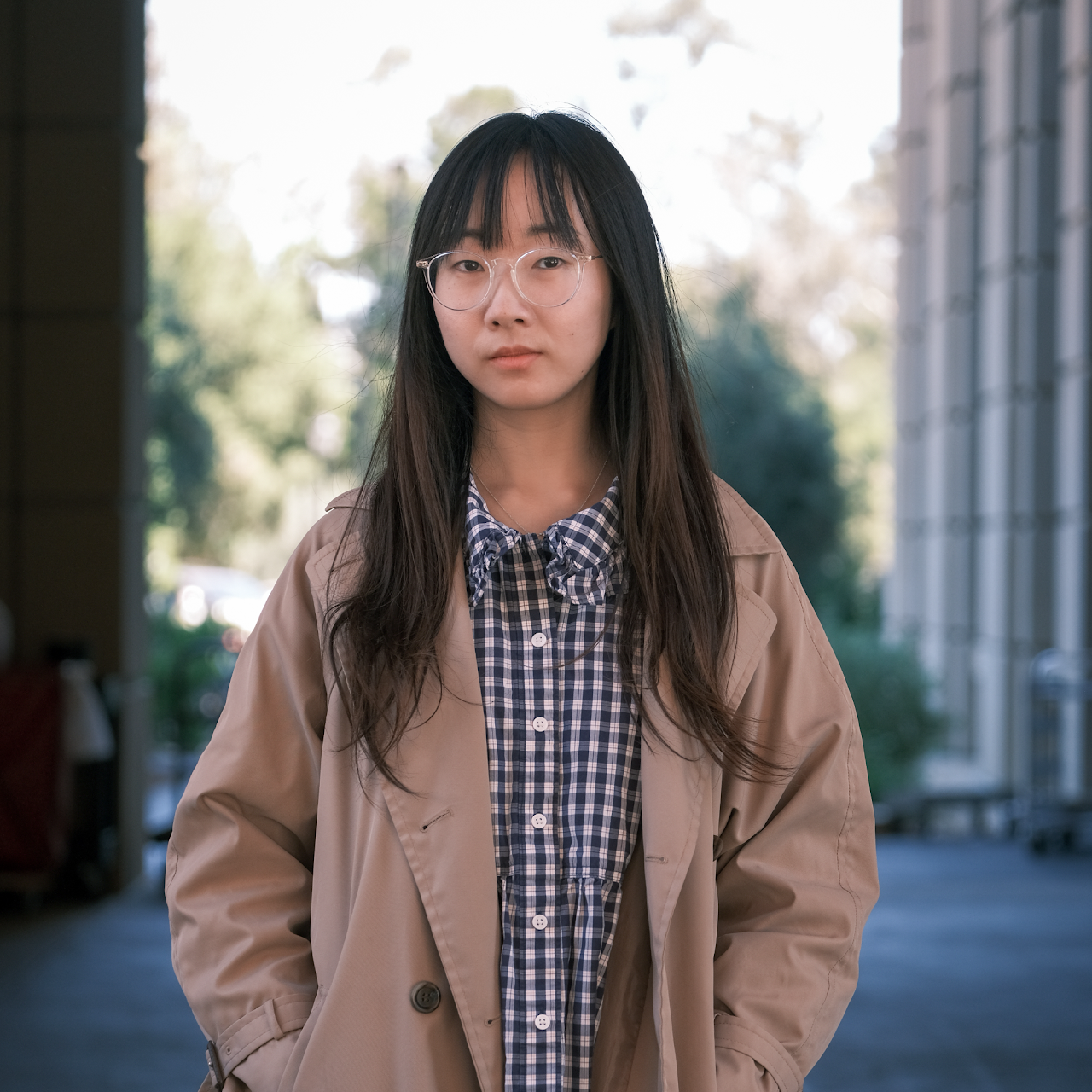
In the spring of 2026, a company most people had never heard of announced it had raised $100 million. The surprise was not the money. It was that its core product was already running - on hundreds of thousands of GPUs, at Google, Microsoft, NVIDIA, Oracle, xAI - before the company officially existed. That product is SGLang. The person at the center of it is Ying Sheng.
RadixArk, the company she co-founded and runs as CEO, is the commercial home of SGLang, the open-source inference engine that she and a small group of collaborators created in 2023. Inference is the unglamorous half of artificial intelligence: not the training that makes headlines, but the work of actually answering you, token by token, fast enough and cheap enough to matter. Sheng made that part faster. Then she made it the default.
Her pitch is contrarian in an industry obsessed with private compute moats. The advantage, she argues, will not go to whoever owns the biggest data center. It will go to whoever builds the most useful things on top of shared, world-class systems that anyone can reach.
Make frontier-level AI infrastructure open and accessible to everyone.Ying Sheng · RadixArk mission
SGLang began as an academic experiment inside LMSYS, the non-profit research collective behind Chatbot Arena. Its trick has a name that became the company's namesake: RadixAttention, which reuses the shared prefixes of prompts the way a radix tree reuses shared branches. Less wasted computation, more tokens per second. The idea spread from a paper to production at the largest AI labs in the world.
The structured-generation inference engine that became a de facto standard. Supports virtually every open model family and hardware provider, from NVIDIA to AMD.
RadixArk's framework for large-scale reinforcement-learning training - the part of the stack that teaches models to get better, at scale.
Training proprietary models, fine-tuning open ones, reinforcement learning, and large-scale inference - on one unified platform, aimed at being orders of magnitude cheaper.
High-throughput generation on limited GPU memory, and concurrent serving of thousands of LoRA adapters. The research scaffolding that made the rest possible.
The training-and-serving platform and the early open chatbot fine-tuned from LLaMA - foundational pieces of the open-model movement.
Before language models, she contributed to an automatic theorem prover for SMT problems. Mathematical proof, not just prediction.
RadixArk is dedicated to building a crucible capable of repeatedly producing cutting-edge AI, bringing the best of AI into every household.Ying Sheng · on launch day
The through-line is not luck. It is roughly fifteen years of taking hard technical things from zero to one - competition math, theorem provers, inference engines, companies.
Silver medal, NOI. A teenager places at China's National Olympiad in Informatics. The competitive-programming habit sticks.
ACM Honored Class. Graduates from the elite track at Shanghai Jiao Tong University.
Columbia. Earns an M.S. in Computer Science in New York, and wins the ACM ICPC Greater New York title.
Two Sigma & ICPC Worlds. A stint as a quant software engineer; reaches the ACM ICPC World Finals.
Novi & the Moonshot Factory. Smart-contract verification at Facebook Novi, then AI-for-code as a PhD resident at X, Alphabet's moonshot lab.
SGLang is born. Visiting Berkeley's Sky Lab, she helps create SGLang inside LMSYS. The open-source world takes notice.
xAI. Joins as member of technical staff and co-leads the inference team behind Grok - front-line experience at the limits of scale.
The leap. Leaves xAI in August - “a place where I built deep emotions and countless beautiful memories” - to start RadixArk with Banghua Zhu.
RadixArk goes public. $100M seed, Accel and Spark Capital leading, a roster of legendary angels behind them.
Banghua Zhu has known Ying Sheng since their PhD days. They were long-term collaborators and friends across multiple chapters before becoming co-founders. His read on her is not subtle: watching her build 0→1 - LMSYS, Chatbot Arena, SGLang - convinced him she was the rare engineer who can will entire ecosystems into existence.
It is a useful counterweight to the founder mythology. The thing investors bought into was not a deck. It was a decade of shipped artifacts that other people already depended on.
She is, without exaggeration, one of the most unique and legendary people I’ve ever worked with.Banghua Zhu · co-founder, RadixArk
Accel led and Spark Capital co-led the round. Then came the institutions - NVentures, AMD, MediaTek, Salience, HOF Capital, Walden Catalyst and more - and a list of angels that doubles as a who's-who of modern AI.
RadixArk nods to RadixAttention, the prefix-sharing trick at the heart of SGLang's speed. The company is named after its own algorithm.
Microsoft Research, Two Sigma, Facebook Novi, Alphabet's X, Berkeley Sky Lab, xAI. Few resumes touch quant finance, formal proof and frontier AI.
She co-authored work on an SMT theorem prover. Her early wins were in mathematical reasoning, not prediction.
If you've used a major AI product lately, there's a real chance SGLang served some of those tokens without you ever knowing its name.
She wrote that she believes in “a future of AI diversity” - many models, many builders, shared rails - over a winner-take-all data-center race.