BREAKING humans& exits stealth with $480M seed at a $4.48B valuation Backers include Nvidia, Jeff Bezos, GV, SV Angel & Emerson Collective Eric Zelikman: "AI should empower people, not replace them" From Grok 4 agent RL to a lab built on collaboration Author of STaR & Quiet-STaR BREAKING humans& exits stealth with $480M seed at a $4.48B valuation Backers include Nvidia, Jeff Bezos, GV, SV Angel & Emerson Collective Eric Zelikman: "AI should empower people, not replace them" From Grok 4 agent RL to a lab built on collaboration Author of STaR & Quiet-STaR
Person · AI Founder & Scientist

Eric
Zelikman &

He taught machines to think before they speak. Now he is teaching them to listen.

CO-FOUNDER & CEO, HUMANS& EX-xAI STANFORD REDWOOD CITY, CA
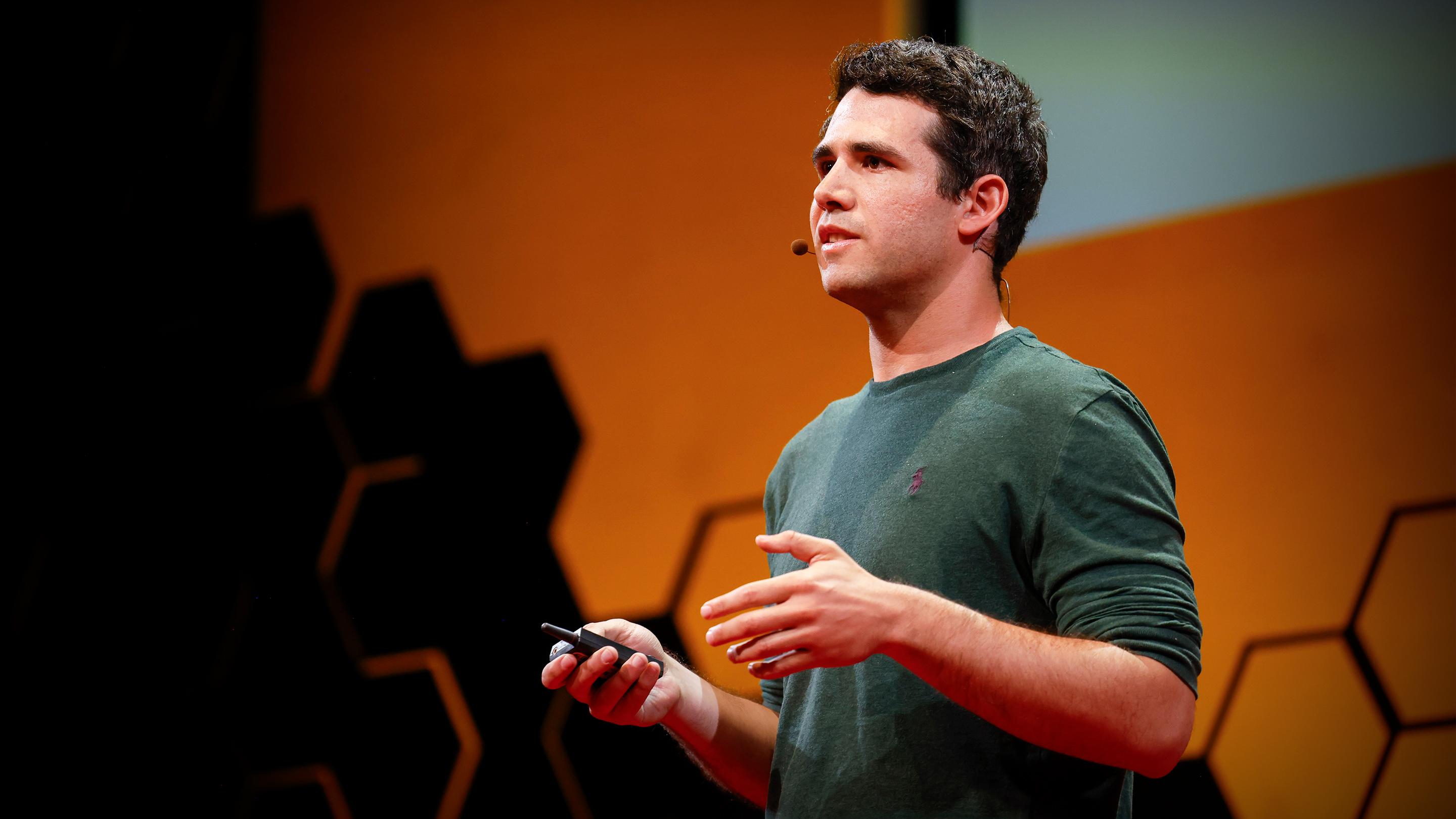
Eric Zelikman speaking at TEDAI San Francisco 2025
On the TEDAI stage, San Francisco, 2025. The title of his talk doubled as a thesis statement: AI should empower people, not replace them.

Three months old. No product. A $4.48 billion price tag.

In January 2026, a lab almost nobody had heard of walked out of stealth carrying a $480 million seed round and a guest list that read like a tech-history syllabus: Nvidia, Jeff Bezos, GV, SV Angel, Emerson Collective. The company is called humans&. The ampersand is not decoration. It is the entire argument.

The man holding the pen is Eric Zelikman, co-founder and CEO. He is not selling a chatbot that does your job. He is selling the opposite premise - software that works with you, the way a good colleague does, asking the right question at the right moment instead of confidently finishing your sentence wrong.

It is a strange thing to raise nine figures on a thesis rather than a demo. But Zelikman has spent his career on the unfashionable half of a popular idea. While much of the field raced to automate human effort away, he kept asking a quieter question: what if the point was to make people better, not redundant?

By the Numbers
$480M
Seed round, 2026
$4.48B
Valuation at launch
2022
STaR published at NeurIPS
Grok 2-4
Models he helped build

A Symbolic Systems major who took the field's favorite idea and flipped it

Zelikman came up through Stanford's Symbolic Systems program, the school's famously cross-wired blend of computer science, linguistics, philosophy and psychology. It is the degree you choose when you are less interested in machines than in minds - and it shows in everything he has built since.

He stayed at Stanford for a Ph.D. in computer science, advised by Nick Haber and Noah Goodman, and there he wrote the paper that made his name. STaR - the Self-Taught Reasoner - was the first to train language models to reason in natural language using their own rationales. Give a model a problem, let it explain its way to an answer, keep the explanations that work, repeat. The machine, in effect, learns to show its work.

Two years later came Quiet-STaR, which pushed the idea inward: language models that generate a private train of thought before they speak. An inner monologue, more or less. Along the way he published Parsel, a framework for algorithmic reasoning by decomposition that earned a NeurIPS spotlight, and a string of papers across NeurIPS, ICLR and COLM.

Then, in early 2024, he put the doctorate on hold and joined xAI - small, fast, and pointed straight at the frontier. He helped shape the pretraining data behind Grok 2, kicked off and scaled reinforcement learning for reasoning in Grok 3 Thinking, and built the agent RL infrastructure and recipe for Grok 4. If you have watched Grok learn to reason, you have watched some of his fingerprints at work.
We can build models that understand and empower people, instead of replacing or automating them away.
— Eric Zelikman

Why he left the frontier to build a different one

In September 2025, Zelikman left xAI to start humans&, a self-described human-centric frontier AI lab. His TEDAI talk a month later gave away the motive in its first minutes: the field, he argued, has been solving the wrong problem all along - building AI to replace human effort instead of to collaborate with people.

The product thesis follows from there. Where most foundation models are tuned for information retrieval - ask, receive, repeat - humans& is training for communication and coordination. The model is meant to live where people already work together, in places like a Slack channel or a shared doc, and to behave less like a vending machine and more like a teammate who asks questions naturally, the way a friend or colleague would.

To get there, the team is leaning on long-horizon and multi-agent reinforcement learning - teaching models not just to answer, but to remember, to negotiate, and to hold up their end of a back-and-forth over time. As co-founder Yuchen He put it, the model has to remember things about itself and about you; the better the memory, the better the understanding.

Zelikman's ambition for it is not modest. He calls humans& a potentially generational company - one that could, in his words, fundamentally change how we interact with these models.

Receipts

2020
Graduates Stanford, B.S. in Symbolic Systems with Honors. Builds a GANs curriculum for DeepLearning.AI.
2021
Begins a Ph.D. in computer science at Stanford under Nick Haber and Noah Goodman.
2022
Publishes STaR at NeurIPS - teaching models to reason from their own rationales.
2023
Parsel lands a NeurIPS spotlight; research stints at Microsoft Research and Google Research.
2024
Joins xAI; publishes Quiet-STaR at COLM. Works across Grok 2, Grok 3 Thinking and Grok 4.
2025
Leaves xAI to found humans&. Takes the TEDAI San Francisco stage.
2026
humans& exits stealth: $480M seed, ~$4.48B valuation.

The reading list

NeurIPS '22

STaR

Bootstrapping reasoning with reasoning. The foundational one.

COLM '24

Quiet-STaR

Language models that think before they speak.

NeurIPS '23

Parsel

Algorithmic reasoning by decomposition. Spotlight selection.

COLM '24

STOP

A self-taught optimizer for recursively self-improving code.

ICLR '24

Hypothesis Search

Inductive reasoning with language models.

We are building a product and a model that is centered on communication and collaboration.
— Eric Zelikman, on humans&

Things that don't fit in a pitch deck

1
The ampersand in humans& is the whole point. It is a company named after a conjunction - AI and people, not AI instead of them.
2
His first major paper, STaR, became one of the most-cited blueprints for teaching machines to reason. He was still a grad student.
3
He co-founded the company with Noah Goodman - the Stanford professor who had been advising his doctorate. Mentor turned colleague.
The Open Question

The bet

Here is the wager, stripped down. For years the AI story has been about scale - bigger models, more compute, longer context. Zelikman's co-founders call that the first paradigm, and they think it is ending. The second wave, in their telling, is not about how much a model knows. It is about how well it works alongside the person on the other side of the screen.

That is an easy thing to say and a hard thing to prove. humans& has the money, the team, and the conviction. What it does not yet have, by its own admission, is a shipped product. The proof will have to come from a model that can do something current ones mostly can't: remember you, ask you a useful question, and improve the work without quietly taking it over.

If he is right, the strange specifics of his career - the inner monologues, the rationales, the years spent teaching machines to reason out loud - will look less like a detour and more like a runway. If he is wrong, it will still have been one of the more interesting wrong answers in the room. Either way, the ampersand stays.

The Rolodex

Find him

in · Share X · Post f · Share IG · Open