Petrina Goh spent her weekends looking for wedding vendors. There were recommendations from friends, information from fairs, and bridal streets to visit in Kuala Lumpur and Petaling Jaya. There was plenty to look at. Finding the right people still took work. A wedding is an unusually elaborate way to discover how badly information can be organised.
Goh and her husband, Kelvin Leow, saw a business in that inconvenience. Wedding.com.my launched in September 2013, bringing wedding ideas and vendors into the same online space. The problem was personal enough to understand and common enough to investigate. They had encountered it as customers before asking anyone else to become one.
More than a decade later, Goh is founder and group CEO of Nuren Group, whose businesses include Motherhood.com.my, Kelabmama and the parenting creator platform Ibuencer. The path between those two points follows a recognisable sequence: people get married, their questions change, and a company tries to remain useful. Along the way, Goh has had to change her own answers about selling, expansion and how much a founder should control.
The weekends that became a company
The wedding business was preceded by a less promising experiment. In 2011, Goh opened a bubble tea shop with friends. The queues around the category suggested an opportunity. Their shop did not succeed, and she later acknowledged that she had lacked a personal commitment to the business. Spotting a market and wanting to spend your days serving it are separate decisions.
Wedding.com.my offered a problem she and her partners cared about. Its inspiration boards let couples collect images, videos and ideas before narrowing down vendors. Stacey Lee, another co-founder, explained how customers could gather preferences for dresses, hairstyles and make-up, then share them with friends and planners. It gave the search a starting point more useful than another weekend of wandering.
The appeal extended to merchants. A traditional wedding business could reach people who were already planning a purchase. Couples could explore options and request quotations. Taste, recommendations and transactions belonged together because customers were trying to arrange an event, with all its awkward dependencies. A beautiful dress does not, regrettably, book its own venue.
A different seat at the table
Goh came to this work with experience in both technology and finance. She had worked as a technology consultant at Accenture, then in investment roles at CIMB Investment Bank and TAEL Partners, including evaluating technology-sector deals. Her academic background included engineering at the University of Hull and accounting and finance at the University of Bath.
Those jobs placed her close to the questions investors ask of a business. Running one introduced the questions customers ask, which arrive on their own schedule and rarely in presentation order. The founder’s job involved connecting the two: a product people would use and an operation that could keep supplying it.
Money helped make that operation possible. In 2016, Nuren raised a US$2 million Series A led by Gobi Partners. Later backers included Malaysia Debt Ventures, InnoVen Capital and 500 TukTuks. Goh’s advice to businesses seeking further funding emphasised leadership, a demonstrated business model and cash-flow management. Even a company built around life’s celebrations has bills due on ordinary Tuesdays.
What happens after “I do”
A wedding marketplace has a peculiar customer-retention problem: the event eventually happens. By late 2014, Nuren’s team was already discussing how a parenting platform could continue the relationship beyond wedding planning. Motherhood’s marketplace launched in 2016. The expansion followed a customer into another stage of life, where there were more decisions, purchases and questions.
That continuity gave the business room to develop. Reviews, guidance, product sampling and workshops could help people choose; commerce could sit alongside the information. ParentCraft added a learning programme. Kelabmama gave the group a Malay-language parenting platform alongside Motherhood’s English-language offering. A shared subject did not require every reader to enter through the same door.
By November 2023, Nuren’s ten-year review reported more than five million users and 15 million monthly views. It also reported RM50 million in revenue across the preceding three years. These are different measures of the business: audience size, monthly attention and income across a stated period. Keeping the dates attached makes the progress easier to understand.
Company-reported historical figures. Different measures, different time periods.
The Parenting SuperApp brought another way for people to reach the group’s content, community and shopping services. Goh discussed its business rationale with creative director Maton Shukor as the company marked its tenth anniversary. The underlying question remained practical: how many separate searches could the business make easier for a parent?
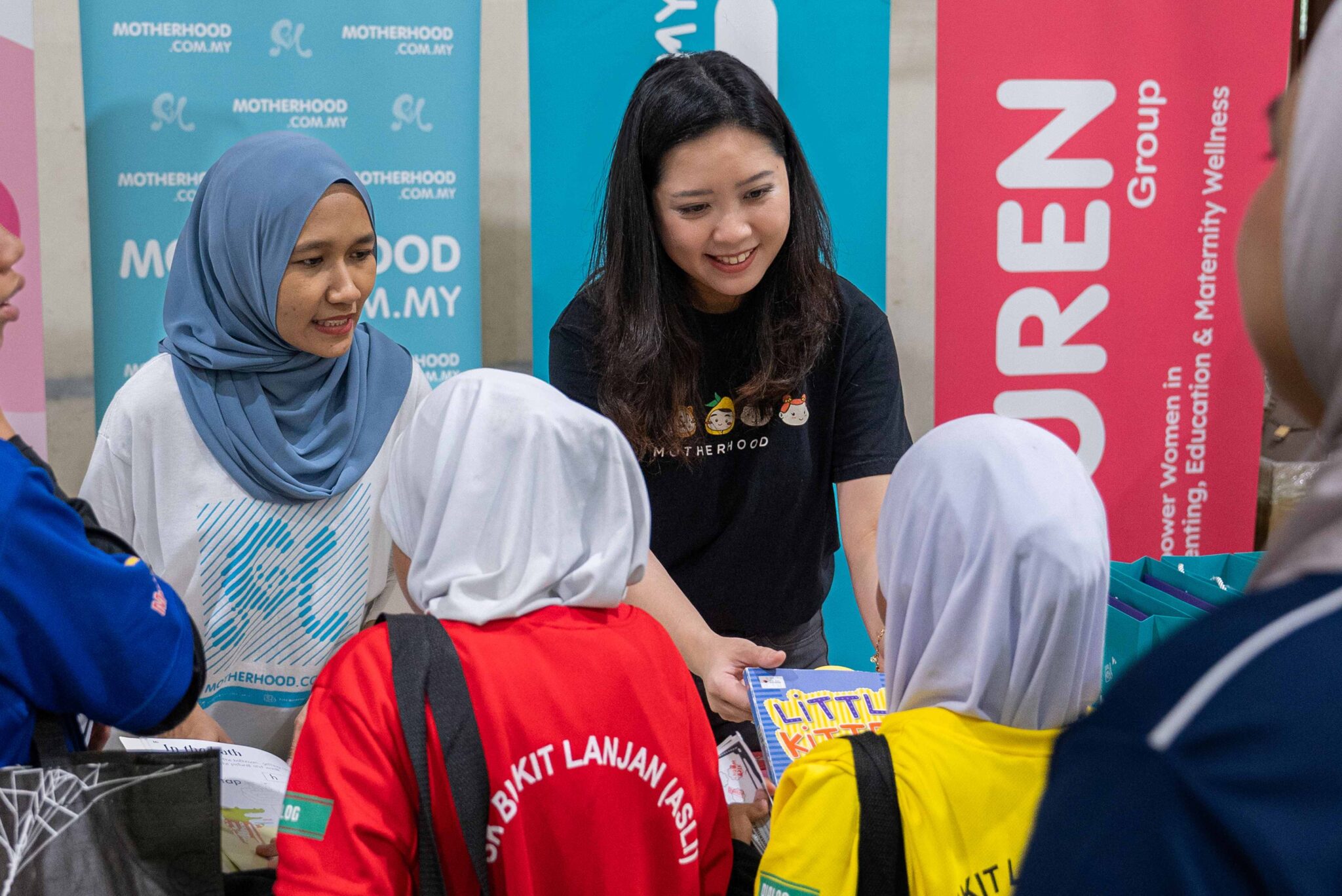
When the audience gets a voice
Ibuencer makes another part of Goh’s thinking visible. Its name combines ibu, the Malay word for mother, with influencer. The platform connects parenting creators with advertisers. In her account of the network, Goh described more than 5,000 active influencers across Malaysia, Singapore and Thailand, including established personalities and smaller creators.
These participants contribute their own family experiences through posts, stories and other content. The business arranges connections with campaigns. For a brand, that offers access to voices already familiar to particular audiences. For a creator, it offers a commercial route for the work of making content. The relationship depends on something a media plan alone cannot manufacture: people choosing to listen.
Goh has also discussed mothers earning through selling online, and fathers asking to join the creator community. The group’s name may put mothers first, but parents brought their own requests to the business. A community becomes more interesting when its members do some of the proposing.
- ParentsRead, ask and share experience
- CreatorsMake content and join campaigns
- MerchantsOffer products and reach customers
Different roles within the group’s content and commerce businesses.
The workplace reflected her emphasis on women’s participation, too. In a January 2024 interview, Goh said women made up 90 per cent of Nuren’s workforce. Her description of the job included supporting communities, education and opportunities to earn. It placed the people producing and selling within the company’s story alongside the people buying.
Thailand sent back the lesson plan
Regional growth brought a more expensive education. Goh has acknowledged that Nuren spent its seed money too quickly when expanding into Thailand and underestimated local cultural differences. The admission is useful because it names a decision the company could have made differently. A country on an expansion map contains people whose habits require more than a familiar product.
For a business that deals with families and major life events, those differences have particular weight. Weddings are full of customs. Parenting advice travels through relationships. Goh’s experience in Thailand gave her a concrete reason to advocate deeper research before moving quickly into another market. The company’s ambition survived; its assumptions needed more scrutiny.
Her later expansion plans also gave merchants a larger role. In June 2025, Nuren’s Digital Export Day, organised with MATRADE, brought together sellers and people working on cross-border trade. Goh described helping Malaysian brands reach regional markets. There is a practical attraction to growing with existing sellers: the platform’s next market can become their next market, too.
“When our sellers grow, we grow.”
Petrina Goh
She has also reconsidered the order of the business itself. Looking back in 2025, she said she would begin with engagement and community before trying to sell. A marketplace naturally watches transactions. Her revised emphasis gives the conversation before the transaction more time to develop.
A listing, and the work after it
Nuren listed on the National Stock Exchange of Australia in August 2024. Malaysia Debt Ventures’ annual report records an IPO raising A$700,000. The listing added a public-market milestone to a business that had previously relied on venture backing and other financing.
In May 2025, Nuren announced plans for a Nasdaq listing and appointed ZICO Evolve Capital as financial adviser. The distinction between that proposed move and the completed NSX listing matters. One was an ambition with an appointed adviser; the other was an event in the company’s history.
The business continued its more familiar public work. On May 28, 2026, the eighth Motherhood Choice Awards took place at Le Méridien Petaling Jaya. In the subsequent announcement, Goh spoke about helping families navigate choices and recognise useful brands and community figures. After the financing milestones came another gathering of the people the platform serves.
A paper book in a digital life
Outside the company’s platforms, Goh’s tastes are reassuringly tangible. She owns a Kindle but has said she prefers physical books, keeps a small library and collects older volumes. Jurassic Park remains a favourite film. Apparently, a career in technology can coexist quite comfortably with paper pages and cinematic dinosaurs.
She has described taking time away each quarter to learn and reflect, rather than work through the usual tasks. That habit sits beside a larger change in how she leads: less micromanagement, more responsibility for direction and culture. She has expressed a wish to mentor younger entrepreneurs, especially women, and build a homegrown company that can outlast her.
That is a different ambition from getting every decision across her desk. It asks other people to become capable of carrying the work forward. The business began with Goh and Leow looking for help with a wedding. Its longer future will depend on how much useful work others can do inside it.