Peter Schroer has spent a considerable part of his working life making the case for changing things. Products change. Factories change. Customers discover that the process they carefully specified last year has become a nuisance this year. The software, in his view, ought to be able to take the hint.
It is an unglamorous concern until you have paid for a system that cannot. Then it becomes rather personal. Schroer built Aras, the product lifecycle management company, around this gap between the way an enterprise is drawn on a diagram and the way it actually behaves. His career combines electrical engineering, management and a willingness to reconsider the business selling the software as well as the software itself.
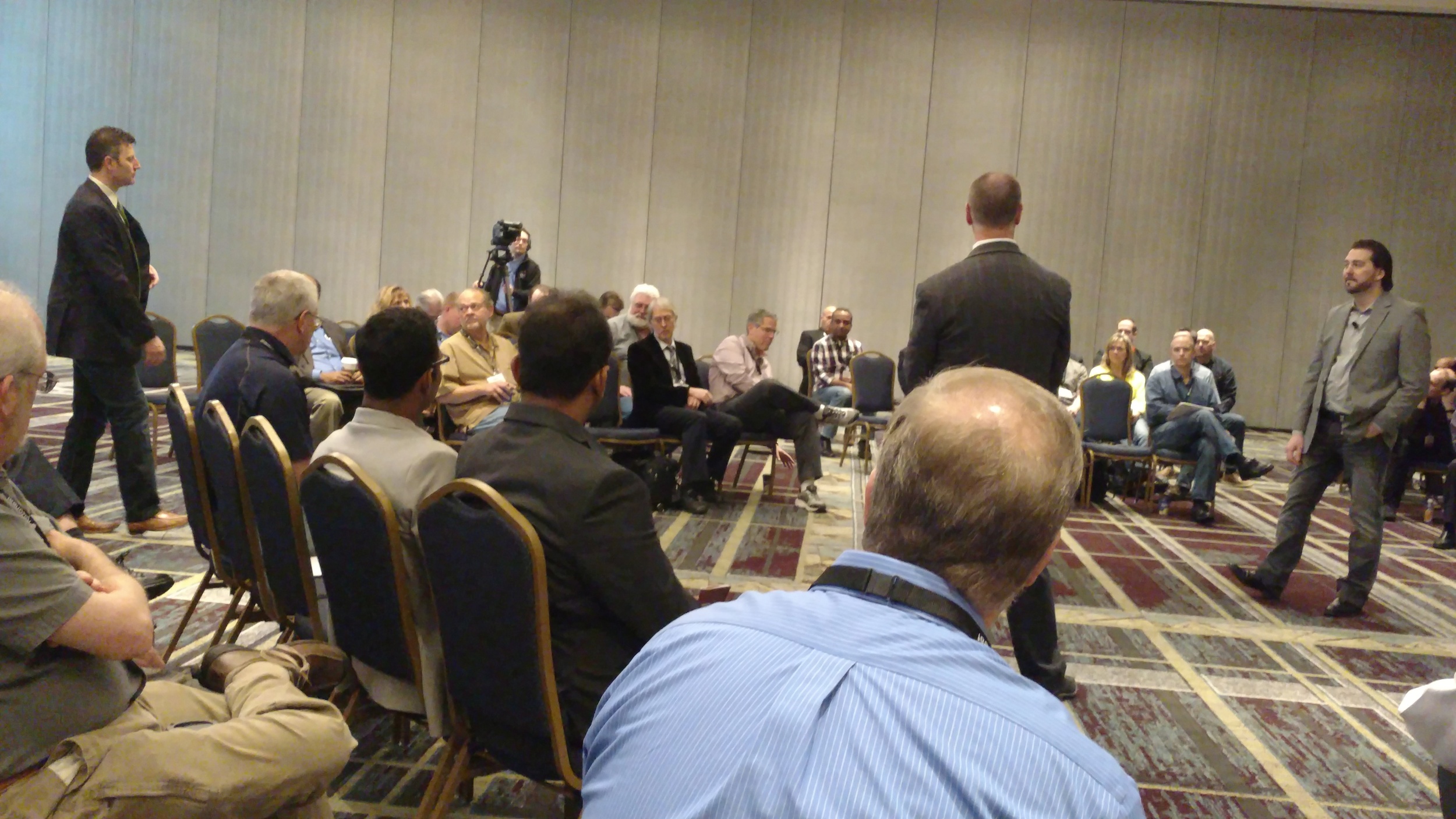
There is a small, revealing scene from 2016. At an Aras community conference in Detroit, Schroer and chief architect Rob McAveney fielded questions surrounded by attendees, with a boxing-ring motif. For once, the potential for a bruising customer discussion was acknowledged by the furniture. The format suited a founder whose commercial argument depended on keeping users close enough to answer back.
Two people, three degrees, one crowded market
Aras began with Peter and his wife, Karen, in January 2000. Looking back at ACE 2025, he offered a less ceremonious explanation than founders generally put in anniversary brochures: both had grown tired of having a boss. They started as two people and added employees gradually. The ambition came with planning; he did not describe it as an accidental business.
He incorporated the company in March. Choosing the Boston area was deliberate, too. The region offered a concentration of people who understood product data management and product lifecycle management, usually shortened to PDM and PLM. He wanted access to that accumulated experience. In a business concerned with preserving engineering knowledge, he began by going where some of it already lived.
Schroer had three Cornell degrees: a bachelor’s in electrical engineering, a master’s in electrical engineering and an MBA. His working background included management at Data General, general management at Workgroup Technologies and Thermo Electron, and responsibility for US operations at Eigner+Partner, where he also served on the board. Aras followed years inside the kinds of organizations whose problems it hoped to solve.
That combination matters. A circuit has to work. A business has to pay for the circuit, organize the people developing it and remember which version went into which product. Schroer’s education and career placed those technical and commercial obligations beside each other. At Aras, they would remain difficult to separate.
PLM concerns the information attached to a product over its life: designs, components, revisions, approvals and the connections between them. It is the sort of work that becomes visible when something goes wrong. The wrong drawing reaches the wrong team. A change loses its context. A perfectly respectable database contains an answer that nobody can confidently use.
Schroer’s premise was that companies differed too much, and changed too frequently, for rigid software to serve them well. The particular processes that made a manufacturer competitive could also make a standard implementation awkward. His proposed answer was an adaptable platform. The manufacturer would have room to develop its own practices, rather than surrender every awkward detail to a predefined workflow.
The customer carries the risk
In 2007, Aras adopted an enterprise open source business model. The company distributed software without an initial license fee and earned money through optional subscription packages. Schroer compared the arrangement to Red Hat’s business format. The essential commercial question was when a customer should have to pay, and what the vendor should still owe that customer afterward.
He treated the upfront purchase as a problem of risk. Buyers could spend heavily before knowing whether an implementation would deliver useful results. Removing the license barrier let them begin with the software itself. A subscription then supplied services and a continuing relationship. The attraction was the opportunity to judge a system through use.
His argument about access was just as practical. Charging by named user could encourage manufacturers to ration participation. Yet a product’s information might be needed well beyond the engineering department. Purchasing, suppliers and other teams could all have a reason to see it. A collaboration system starts to look peculiar when the budget rewards keeping collaborators outside.
There was another characteristic detail in his early writing: he saw an opening among companies already committed to Microsoft infrastructure. These businesses had servers, databases and people who knew how to operate them. His case for openness accommodated those existing investments. He wanted participation from the business application community, including companies with proprietary processes they would understandably prefer to keep proprietary.
That pragmatism appeared in his discussion of SharePoint PLM. Rather than demand a single replacement for every engineering tool, he described an approach in which local systems could continue their daily work, then pass released information into a shared PLM backbone. The promise was continuity across systems. The appeal lay partly in avoiding the grand demolition project that often accompanies a grand technology plan.
When asked in 2013 how Aras had grown, Schroer included “good timing, good preparation and yes, luck.” By then, he described operations on three continents, business in four currencies and more than 80 partners. Growth brought its own administrative engineering: the company needed a CFO with international experience. Even a software business devoted to flexibility eventually requires somebody to make the currencies add up.
A seat inside the boxing ring
Schroer’s customer argument also had a technical obligation attached. Customization is easy to celebrate at the beginning of a project. Its consequences arrive later, when a new release appears and somebody has to preserve the work already done. Aras made upgrade services part of its subscription proposition, including deployments that customers had customized. Freedom to change would be considerably less useful if every change made the next upgrade unbearable.
Early customer SRC illustrates the difficulty. It needed more than conventional PLM, including traceability and supply-chain capabilities, and used Aras to build applications around those needs. Its custom client and schema later complicated migration. The episode gives substance to the problem Schroer kept describing: flexibility creates real value, but software still has to carry a history of decisions into its next version.
At ACE 2016, that relationship became a physical arrangement. The conference closed with Schroer and McAveney encircled by attendees for an unstructured question session. They were available for comments about what users wanted next. The boxing-ring setting supplied the joke; the access supplied the point. People running the platform were sharing the room with people living with its consequences.
That year, the CAD Society gave Schroer its Leadership Award. The recognition specifically concerned the introduction of an open source business format into enterprise PLM. It acknowledged a commercial departure as well as technical leadership. For Schroer, the two belonged together: a different architecture needed a different route into customers’ hands.
His public writing sometimes gave these arguments more playful packaging. On LinkedIn, he published an article called “Harry Potter PLM,” alongside a blunt question about whether millions already spent on a PLM project should be treated as an investment or a sunk cost. The titles suggest a useful appreciation of the audience. Engineers and finance teams may share a software problem while requiring different invitations to discuss it.
Passing the chair, keeping the thread
In October 2021, Roque Martin succeeded Schroer as CEO. Schroer stayed on the board. By then, the founder’s job had spanned roughly 21 years. He had worked on code, demonstrations and selling in the early days, then led an organization operating internationally. Handing over the executive role changed his relationship with the company he had started.
The relationships continued. When Leon Lauritsen became Aras CEO in September 2025, he described Schroer as a mentor throughout his career. Lauritsen had come through the Aras partner community at Minerva before joining the company through its acquisition. The acknowledgment offers a concrete measure of a founder’s influence after succession: another leader could trace part of his own development through him.
“good timing, good preparation and yes, luck.”
Peter Schroer, on Aras’s growth in 2013
Schroer also put money and experience into Flexxbotics, joining its board in 2022. The company announced his investment in January 2024 as part of a round led by eCoast Angels. Other participants included figures connected with Aras. A professional network built around industrial software was being brought to another manufacturing problem.
Flexxbotics works on software for robot-driven manufacturing. Schroer pointed to the opportunity in robotics and manufacturing reshoring. The setting had moved toward workcells and automation equipment, but the family resemblance was clear: separate machines and systems needed to cooperate, and useful information needed to reach the point of action. It was familiar territory viewed from closer to the factory floor.
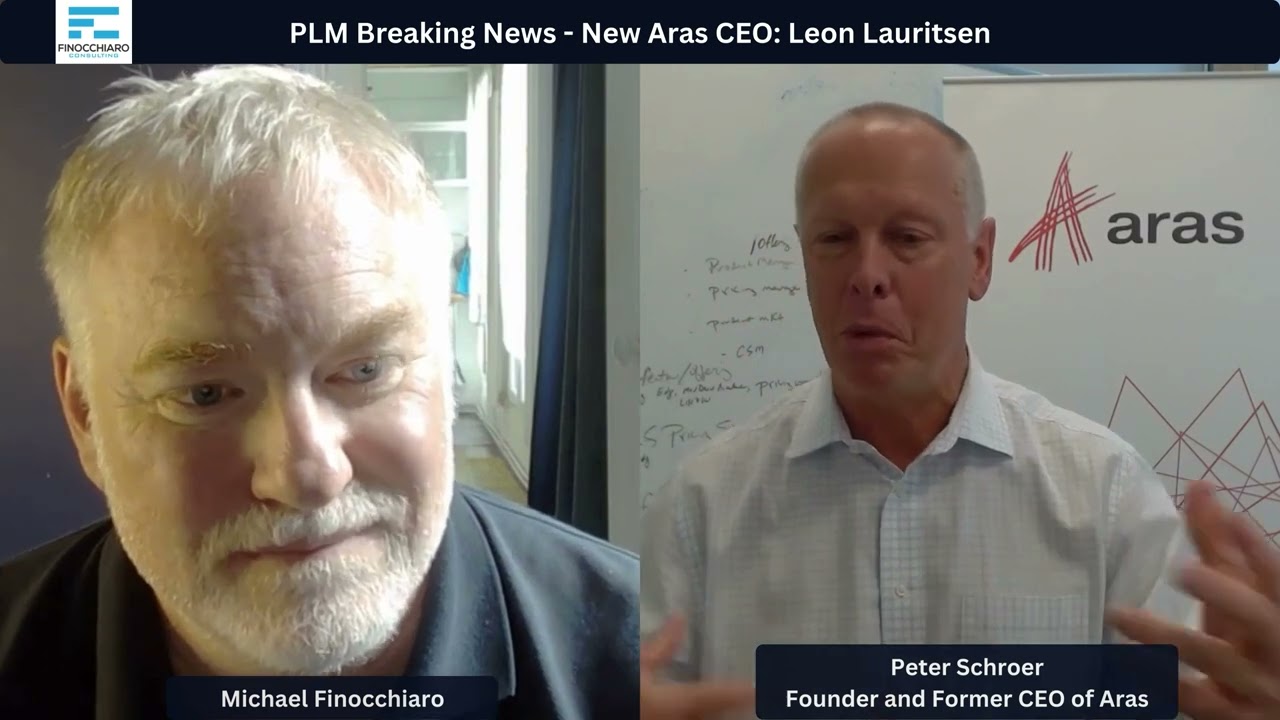
In his 2025 interviews, Schroer returned to the widening scope of PLM and his continuing involvement with Aras. Product information had become a strategic concern reaching beyond the mechanical design office. The terminology had evolved; the need to connect the work remained. His career has followed that need through founding, operating, handing over responsibility and backing another team. The products keep changing. He has kept finding a reason to stay interested.