When Neil Barua was a boy, Friday afternoons came with an unwelcome competitor for his father’s attention: paperwork. His father, an immigrant from India who worked as a food technician in an aseptic processing plant, had orders to fill out by hand. Barua wanted three hours of play in the yard. The forms had other plans.
Years later, speaking at LiveWorx in Boston in 2023, Barua returned to that memory. He said digital tools could now handle in five minutes the work that once took those three hours. It was a personal explanation for a business that can otherwise disappear behind an intimidating collection of initials. For him, service software had a connection to the time a parent could spend with a child.
The comparison was his recollection, rather than a controlled productivity study. Its force comes from the scale he chose. Three hours is an abstract efficiency gain to a company. To a child waiting outside, it is most of an afternoon.
A banker takes the long way round
Barua’s route to industrial software began with finance. He earned a bachelor’s degree in finance and economics at NYU’s Stern School of Business, then entered investment banking. It did not suit him. In a 2021 podcast conversation, he described leaving for a client building telecommunications infrastructure across Asia, with an early move from New York to Beverly Hills.
There is a pleasing geographical absurdity in preparing to connect Asia from Beverly Hills. Barua himself joked about the location. More consequential was his relationship with John Legere, later known for leading T-Mobile. Legere became a mentor and sent him into operating work and business negotiations in Asia. The spreadsheet was acquiring consequences outside the spreadsheet.
His subsequent jobs crossed telecommunications, private equity and company management. At Global Crossing he held leadership positions, including running its enterprise services division. He later worked with Francisco Partners and Silver Lake. These were opportunities to see a company from several seats: the adviser’s, the investor’s and the operator’s. Each has a different view of the same promises.
Trading floors before factory floors
IPC Systems put Barua in charge of technology used by the financial services industry. He served as its chief executive from August 2014 to April 2018, after a period as interim CEO. The business supplied trading communications and connectivity, the sort of infrastructure whose importance is easier to appreciate when it stops working.
His appointment announcement described earlier experience with Asia Global Crossing in Hong Kong and with Global Crossing’s restructuring and eventual sale to Level 3. Later PTC biographies credit him with overseeing IPC’s transition toward software as a service. This was a career built inside operating businesses, with their existing customers, contracts and habits.
It also gave him a practical education in continuity. Selling a new way of working is one task. Keeping the old way functioning while customers adopt the new one is another. The distinction would matter again when he moved from communications systems to the people who repair physical equipment.
The technician’s point of view
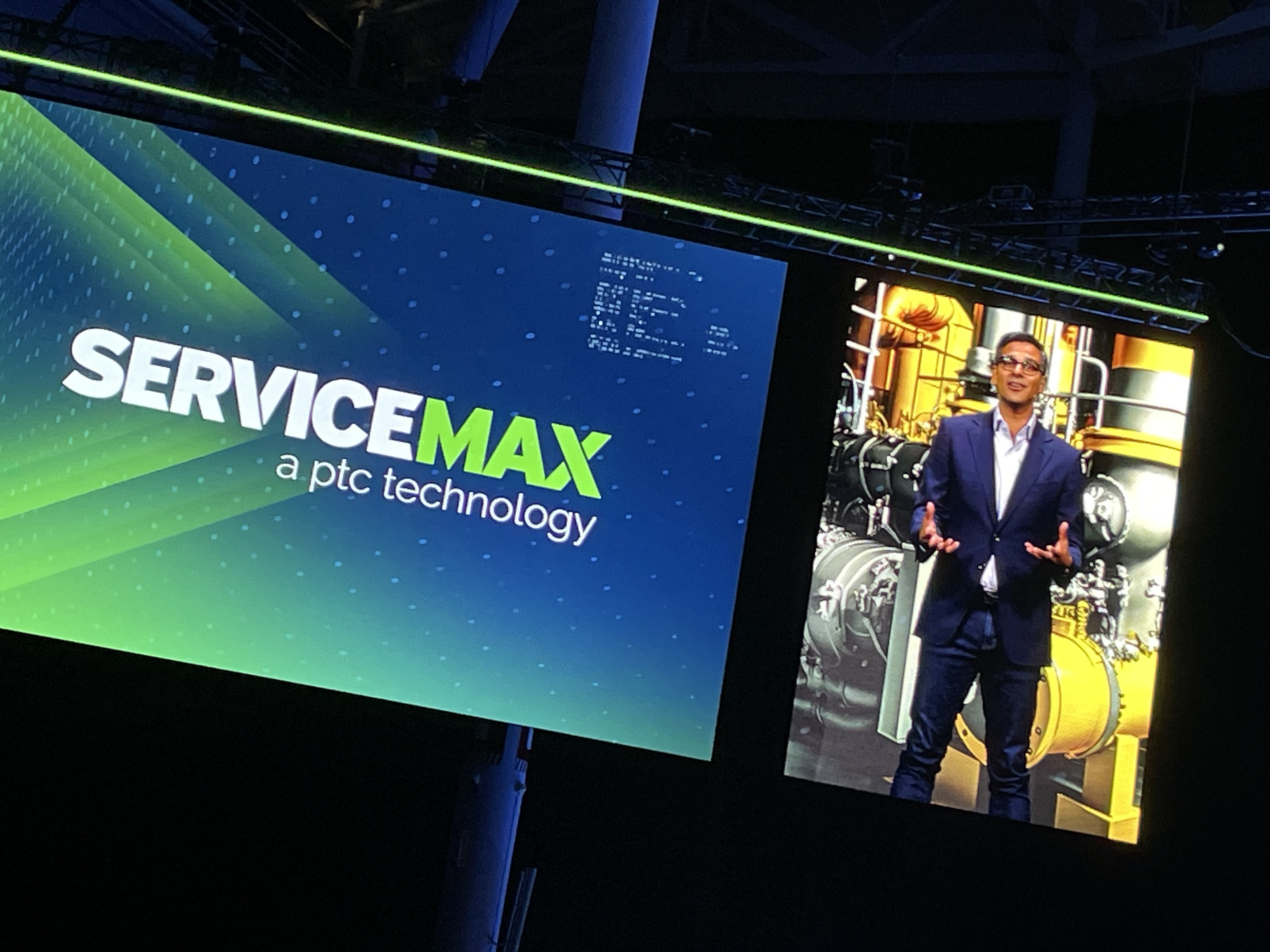
In April 2019, Barua became CEO of ServiceMax. The company’s field service software helped organizations manage installed equipment, work orders and technicians. The glamorous moment in a product’s life is often its unveiling. ServiceMax dealt with the less photogenic years afterward, when somebody must maintain it, find a part or work out what happened on the previous visit.
Barua described joining technicians on customer visits before such trips were interrupted. These ride-alongs supplied a useful correction to executive distance: software could be seen in the hands of the person expected to use it. A feature that looks persuasive in a meeting still has to earn its place during a working day.
His account of leadership was similarly practical. He said he recruited capable people, gave them authority and concentrated on priorities and obstacles. “I surround myself with smart people and then empower them to make decisions.” It is an appealing arrangement, provided the empowering survives the first decision the boss would have made differently.
He also spoke openly about the danger of complacency. Arriving at ServiceMax, he wanted to preserve its culture while making clear that customers could choose something else. That combination is revealing: respect what already works, and remain nervous enough to improve it. An incumbent’s customer list is also a competitor’s shopping list.
“I surround myself with smart people and then empower them to make decisions.”Neil Barua · 2022
An acquisition with a return address
PTC announced its agreement to buy ServiceMax in November 2022 for approximately $1.46 billion in cash on a debt-free, cash-free basis. It announced completion in January 2023. The industrial software company was adding the service history of products to the information it already helped customers manage during design and development.
Barua initially led PTC’s Service Lifecycle Management business. In July 2023, PTC announced that he would succeed Jim Heppelmann, with a transition running into the following February. Heppelmann had spent 13 years as CEO. Barua took over on February 14, 2024, becoming the fourth chief executive in PTC’s history.
The purchase therefore brought PTC both a software business and its next leader. The connection between those two developments is particularly apt. Barua arrived from the service end of the product lifecycle, where design choices meet years of use. He was now responsible for a company whose tools also help make those choices in the first place.
Getting nearer to the work
At the beginning of his tenure, Barua wrote about the pressures on PTC’s customers: rising costs, international competition, changing workforces and increasingly complex products. His example was the car, whose development now has to coordinate embedded software with physical engineering and regulatory traceability. Buying another application does not, by itself, make all those groups work together.
He also began changing his own organization. In 2024, he explained that PTC would remove the chief operating officer position as fiscal 2025 began, with him taking on many of its responsibilities. He wanted closer involvement in operations and execution. For a chief executive who had described delegating to strong teams, it was a reminder that delegation still requires attention.
There is a useful distinction between owning a collection of tools and making the collection work. A customer can have competent people in every department and still lose time between departments. Barua’s emerging brief at PTC concerned those gaps as much as the individual applications on either side of them.
Before the clever answer, the right information
At the Paris Air Show in 2025, Barua explained an emphasis on connecting Creo, Windchill and Codebeamer so product data could move across the lifecycle. He tied that work to the ability to apply artificial intelligence effectively. The logic is fairly plain: a useful answer about an engineered product depends on having reliable information about that product.
His choices also extended to how PTC met customers. He said he had paused LiveWorx after becoming CEO because customers preferred smaller regional gatherings that were easier to attend. A large Boston event imposed travel and expense. Listening had produced a change in the company’s calendar, a modest but concrete test of a customer-focused policy.
By March 2026, he was appearing alongside product and AI leaders in PTC’s AI in Focus keynote. The session framed progress around adoption and customer outcomes. For an industrial software business, that framing brings the conversation back to actual work. A demonstration can finish with applause. A tool has to survive the next shift.
The next deal is larger
On October 5, 2026, PTC and Schneider Electric announced a definitive acquisition agreement. Schneider would pay $205 per PTC share in cash, valuing the equity at approximately $22.6 billion. The proposed combination would connect PTC’s product design and engineering capabilities with Schneider’s operational and energy expertise.
As of this profile’s October 22 publication date, the transaction remained proposed. The companies anticipated closing by the third quarter of 2027, subject to shareholder and regulatory approvals and other customary conditions. The distinction matters: an agreement defines an intended future; an integration has to make that future work.
For Barua, the announcement adds another transaction to a career already shaped by changes of ownership. It also enlarges the practical question running through his work. How does information travel usefully from a product’s original design to the people responsible for its operation? The agreement offers a broader setting for that question, while leaving the work of execution ahead.
Anticipated closing: Q3 2027
Subject to approvals and closing conditions.
An afternoon is a useful unit
Barua lives in the Boston area with his family and serves on the board of StreetWise Partners. In July 2026, Carrier Global also elected him to its board, where he joined the Technology and Innovation and Compensation Committees. His public career is documented largely through companies, transactions and discussions of customers. Yet the childhood story he chose to tell makes an unusually clear companion to that record. It gives the language of productivity a place to land.
The father at the table and the son waiting to play supply a more exacting audience than an earnings presentation. They care about whether the work gets finished and whether anybody gets the time back. Software companies can measure a great many things. An afternoon recovered is a measure ordinary people can recognize.
Barua’s next chapter will be assessed through the usual corporate accounts, and rightly so. But his own account of why the work matters began somewhere smaller: a food plant, handwritten orders and a Friday that ought to have had room for the yard.