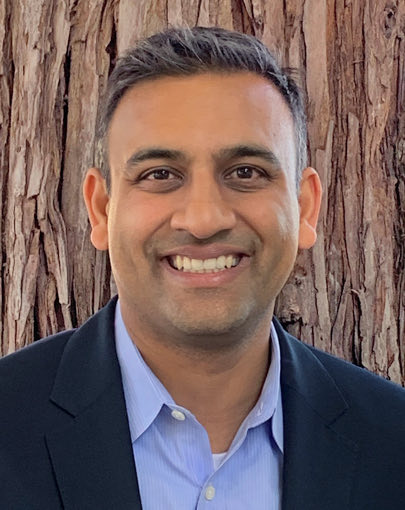
Perry Patel doesn't sell hotel rooms. He sells the feeling that a place was already there before you walked in - the floor tile has wear in the right spots, the front desk knows the name of the dog walker outside, and the bagel place two blocks away is a Sunday institution because his family treats it like one. That last part is not metaphor. Asked about Sunday mornings, the CEO of one of the West Coast's most active hotel platforms answers, on the record, "At Posh Bagel, it's a family routine." It is the most disarming line a hotelier can give an interviewer, and it tells you something true about how he runs thirteen hotels.
The company is called Radiate Hospitality now. Until recently it was BPR Properties, and to anyone who has been around California lodging for any amount of time, those three initials still register first. They are the initials of Bhupendra "B.B." Patel, a registered engineer who bought a single motel in 1973 and spent the next four decades buying, restoring, and renovating historic hotels. Perry is his son. The rebrand kept the family. It just dropped the initials.
Perry came home to the business by the long way around. UC Berkeley in 2001. Cornell's Master of Management in Hospitality in 2005 - the most over-credentialed degree in American lodging, attended by roughly every hotel family scion in the country, and a useful filter for whether you actually want to spend a career inside a hospitality P&L. Perry did. He joined as a partner the year he finished Cornell and got to work building the corporate management layer the family company had not yet needed.
What he inherited was a portfolio with bones. What he built on top of it was a discipline: acquire underperforming hotels with location and history, reposition them, and operate them well enough that local guests recommend them to other locals. Repositioning is an unglamorous word for an unglamorous business. It means walking into a 1920s building in downtown Berkeley with a tired lobby and a confused brand and walking back out, eighteen months later, with rooms booked by people who specifically chose to stay there.
Hotel Shattuck Plaza is the case study a press release would use. Radiate acquired the historic Berkeley property and reopened it as a boutique hotel - the kind of property where the lobby is the marketing. Hotel Lucent in Menlo Park, Hotel Keen in Palo Alto, the Hi-Lo Autograph Collection in Portland: each one is a slightly different bet on the same thesis. Lifestyle when the location supports it, branded when the location demands it, both when the market is interesting enough to carry the cost.
The branded-vs-lifestyle decision is the quiet center of Perry's work. Branded hotels - Crowne Plaza, Hampton Inn, Best Western Plus, Homewood Suites - bring distribution and reservations and a manual thick enough to break a foot. Lifestyle hotels bring margin, identity, and the requirement that someone in the building cares. Most operators choose one and rent rooms. Radiate runs both and tries to make each feel like its own building.
The org chart underneath him is small enough to know by name. Sean Damery on operations. John Searby on finance. Liza Guinto on HR and risk. The number that hospitality industry rosters quote - 510 employees on the corporate side, 600 across the operation including the hotels - is the number that makes the bagel line interesting. A company of 600 people is large enough to be a meaningful regional employer, small enough that a CEO who eats at the same bagel shop every Sunday is still recognizably one human being.
Patel was named to the Silicon Valley Business Journal's 40 Under 40 in 2012. He sits on the 2025 Board of Directors of the California Hotel & Lodging Association, the trade group that lobbies in Sacramento and runs the conferences every California hotelier ends up at by their second year in the business. Board service in this industry is a tell. The operators who show up are usually the operators who plan to be in the business for the long term, because the policy fights - on labor, on housing, on tourism funding - run on a much longer clock than any one acquisition cycle.
The long clock is the point. Radiate's portfolio is concentrated in places where supply is constrained by geography, regulation, or both: the Peninsula, San Francisco, Berkeley, the wine country, downtown Portland. These are markets where you cannot simply build your way to scale. You have to find buildings that already exist, persuade their owners to sell, and convince the cities those buildings sit in that you intend to be a neighbor. The work rewards patience. It also rewards a family business with a four-decade local memory.
Which brings the story back, predictably, to the bagels. Family businesses fail when the second generation tries to prove it is not the first generation. They survive when the second generation finds the parts worth keeping and updates the parts that need updating. Perry kept the family - and the family routines. He updated the brand, the corporate structure, the management platform, and the kind of buildings the firm is willing to chase. The result is a company that still reads as B.B. Patel's company, and is now also Perry's.
He does not give a lot of interviews. The ones he gives are short on slogans and long on details about specific buildings. The press kits for Radiate's hotels lean on local character - the Shattuck's history, the Cabana's mid-century pedigree - and away from the kind of operator chest-beating that defines a lot of the industry. There is a school of hotel CEO that talks about disruption. Perry is not in that school. He is in the school that talks about absorption: take the building, understand what it already is, give it back to the neighborhood at a higher version of itself, and bill the room.
It is a workable theory of the case for a hotel company in 2026. The pandemic-era reset is over. Branded loyalty programs are eating into independent margins. Labor is expensive and harder to retain. The operators who survive the next decade will be the ones who actually understand what their buildings are for. Perry's bet is that those buildings are for the cities they sit in, and that the guests follow.
The bagel order is on a Sunday. The hotels are open the rest of the week.