Patrick Walsh had been part of a startup community at Wayra in Dublin. Then came the awkward business of leaving. People who had worked alongside one another wanted to stay together, and there was no obvious place for them to go. “There was nowhere for us to go,” he recalled. A shared problem had become a possible business. The attraction was simple enough: keep the people within reach.
His answer eventually occupied a former furniture store at CHQ. Before that came a seven o’clock meeting with the building’s backers, Neville Isdell and Mervyn Greene. Walsh remembered being asked whether he had done anything like it before, whether the proposed prices had been proved in Ireland, and whether he had the money. He answered no to all three. A few weeks later, he was sitting in the empty premises. The first task was rather less glamorous than cultivating an entrepreneurial ecosystem: make the place work. “We reused everything in the furniture store,” he said.
An accountant buys a name
Walsh came to the project with experience of several different business worlds. He had worked at mobile top-up company Ding, started mobile payments business PayMins, and worked at Hassle.com. He also trained for three years with KPMG and qualified as a chartered accountant. These are useful vantage points for someone who will spend his working life around founders: product, early uncertainty, expansion and the numbers underneath it all. A person can be enthusiastic about an idea and still ask what it costs.
His education included University College Dublin, where his public profile records attendance from 2004 to 2008. It also records a place in a U20 university rugby championship team. Team sport is an appealing footnote for someone whose later work depends so heavily on other people, although it would be a stretch to make a scrum explain a career. The documented business path is interesting enough without supplying it with a prophecy.
There is a wrinkle in the Dogpatch origin story. The name existed before Walsh’s current business. Polaris had used it for a network of startup spaces. In 2015, Walsh acquired the name and brand, and the Dublin operation moved to CHQ. The distinction matters. His contribution was to build a new operation around an existing name, in a different setting and with a different organisation behind it. The shop became a base for Irish founders and overseas businesses alike.
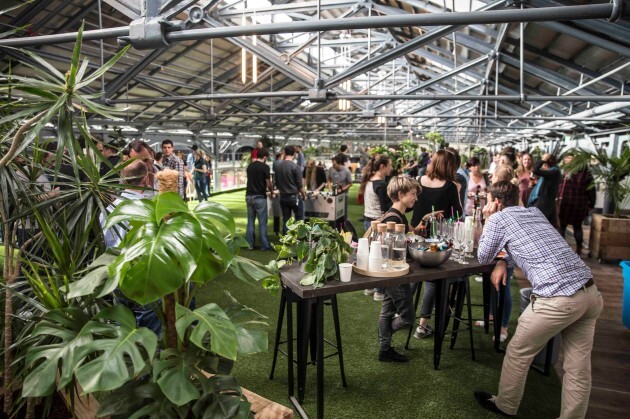
The building offered an unusual expansion plan: go downstairs. A partnership with Ulster Bank supported the conversion of its cellars into event and working space. Where an office development might offer another floor of identical desks, Dogpatch had vaults. An accelerator with a cellar sounds like a property agent has lost control of the brochure, but the extra space had a practical purpose: workshops, demonstrations and groups needing somewhere to meet.
The useful neighbour
By August 2015, Dogpatch had joined the Google for Entrepreneurs Tech Hub Network. Membership gave its companies access to other network spaces around the world, including London, San Francisco and Tel Aviv. That was an early sign of the kind of business Walsh was assembling. The value of a desk could extend well beyond the room containing it. A founder visiting another city might arrive with somewhere to work and a community to approach.
Corporate partnerships also offered something more specific than an impressive name on a wall. In the Pearse Lyons Accelerator, developed with Alltech, the offer included mentorship and routes toward customers. During its early development, Alltech found that some interested companies already had substantial funding. Their more pressing concern was getting products into markets. A large partner with international operations could help with precisely that. For Walsh, it was another version of the same problem: identify what a founder needs, then find the people close enough to help.
Dogpatch’s physical growth followed. The CHQ operation opened in March 2015 with room for up to 25 startups. Its development moved from the ground floor into the vaults and then the mezzanine. The organisation now describes almost 40,000 square feet over three levels, with more than 250 startups and more than 500 members. Those figures describe Dogpatch’s community, rather than companies personally founded by Walsh. His work is to organise the conditions in which other people build.
The national programme changed the scale of that responsibility. Dogpatch secured the contract to operate NDRC with regional partners, moving into a new chapter in 2020-2021. The network linked Dublin with PorterShed in Galway, Republic of Work in Cork and RDI Hub in Kerry. Mentorship, early programmes and investment could be delivered through organisations with their own local relationships. Walsh’s Dublin base became one point in a wider system.
In 2021, he described an ambition for founders to access an accelerator’s mentors and tools without leaving Ireland. He also resisted the assumption that ambitious people must move to Dublin. It is a consequential detail in the portrait. Someone who runs a startup hub in the capital might be expected to make the case for gathering everyone there. Walsh was making a case for connections that could travel further than the commuter train.
Before there is a company
Founders, announced in 2023, moved the starting line further back. Its first intake comprised 42 participants. The programme began with people who wanted to find a co-founder, develop a business and pitch for investment. They would receive a monthly stipend during the full-time, on-site programme. Experienced investor and operator Heather Morris was appointed to lead it. Rather than wait for a finished founding team to arrive, Dogpatch was creating a way for one to form.
That choice makes sense beside Walsh’s earlier career. A new business requires people to agree on much more than a name. They have to decide what to build, divide the work and test whether they can make decisions together. The original Founders proposition gave those questions time and structure, with a route to pitch for €100,000. The proposition also recognised a mundane obstacle: exploring a company takes time in which a person still has expenses.
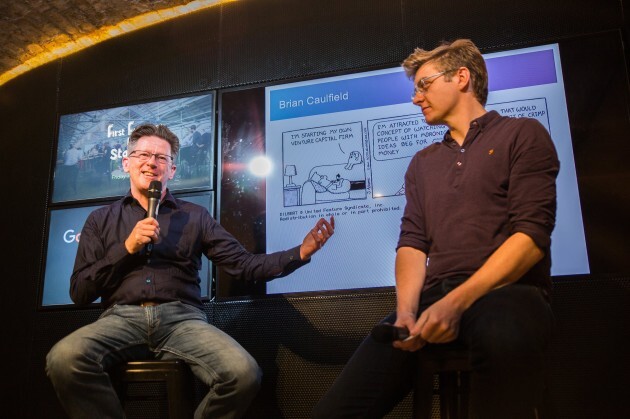
Younger builders have another route through Patch, the programme founded by Tom McCarthy. Walsh is among the entrepreneurs who support its participants, alongside people from companies such as Stripe and OpenAI. Patch offers a summer accelerator, grants and other opportunities, with programmes free to attend. Its stated purpose leaves room for different outcomes: a participant might build a company, pursue research or take their technical interests into industry. That is a useful distinction in a world fond of treating every promising teenager as a chief executive in waiting.
In November 2025, a new three-year partnership with OpenAI was announced to help Patch expand its summer programme, fellowships, grants and mentoring. Dogpatch also agreed a partnership intended to help early founders integrate AI into products and workflows. Walsh welcomed the possibility of connecting young builders and entrepreneurs with tools and networks. The institutional names had changed since the early CHQ days; the practical question of access remained familiar.
The rules outside the room
Some difficulties recur too often to be solved by a helpful introduction. Scale Ireland grew out of Dogpatch and launched as an independent organisation in 2019. Walsh was among its steering group, alongside entrepreneurs and investors seeking a clearer voice for innovation driven businesses. Its concerns included the policy environment facing companies as they tried to grow. The shared workspace had helped reveal problems that extended beyond the workspace.
Walsh’s involvement in the National Competitiveness Council put him in another setting where those wider questions could be discussed. His public argument has been that Ireland should develop its own startup economy alongside its success in attracting multinational businesses. In a December 2021 interview, he treated changes to the corporate tax model as a reason to think seriously about what would support the economy in the decades ahead. The concern had outgrown the availability of a spare desk.
This is where the different jobs in his career begin to fit together. There is the operator dealing with a building, the organiser bringing people into programmes, and the advocate concerned with the rules those people encounter. Each has a different timetable. A room can be booked today. A company takes longer to establish. Changes to the conditions around that company demand patience of another order.
The next room has an AI problem
On 14 October 2026, Enterprise Ireland announced the Startup Ireland AI Accelerator, to be delivered by Dogpatch Labs. Ten companies are to take part in a twelve-week, non-equity programme bringing together more than 30 partners. The announced support includes a named technical lead, at least three hours of individual engineering support each week, and connections to customers and investors. A two-day Paris trip includes a visit to STATION F. The promise is specific enough to be tested against what founders receive.
Startup Ireland AI Accelerator · Delivered by Dogpatch Labs · Non-equity programme
Walsh described his role as bringing those resources within reach of founders. It is a modestly worded description of a complicated task. A country may contain experienced engineers, international companies, capital and young people with ideas. The existence of all four does not settle how they will meet, or what they will do together when they do.
“Our job is to put them within reach of founders.”
Patrick Walsh / October 2026
His work now offers several ways into that encounter: a workspace, a programme, a mentor, a policy discussion. In his May 2026 conversation with Tim Rowe, the subject was again Dublin’s developing startup economy and the people emerging from its concentration of technology talent. The room keeps changing its occupants. Walsh keeps working on the arrangements that might make their time together useful.