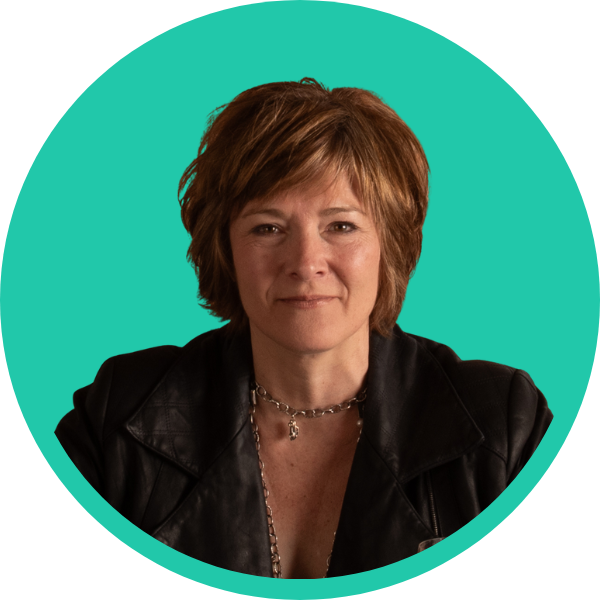
She left a senior seat at Goldman Sachs to answer a stubborn question: can a machine learn your palate? At Preferabli, the answer runs on 800 flavor characteristics and the largest room of sommeliers ever assembled.
The banker who bottled a palate.
A Master Sommelier can swirl a glass, breathe it in, and tell you the grape, the hillside, and roughly the year. That knowledge lives in a nose and a memory and it retires when they do. Pam Dillon spends her days doing something the wine world once considered impossible: getting that knowledge out of the human head and into software that can hand it to anyone holding a phone.
Dillon is co-founder and CEO of Preferabli, a company that calls its craft "sensorial artificial intelligence." The pitch is deceptively small. Tell the system a few drinks you loved and a few you did not, and it predicts what you will prefer next - not by copying what strangers bought, but by understanding the actual sensory shape of what you like. Acidity. Tannin. Salinity. The catalog runs past 800 characteristics per product.
The machinery underneath is unusual. Preferabli's models were built by PhDs in physiology and applied mathematics, then trained on judgments from the largest single group of Masters of Wine and Master Sommeliers ever assembled for one project. These are people who taste for a living, methodically working through the world's bottles and cataloging what they find. The software learns to behave, as Dillon puts it, "like a human expert."
Her framing for the work is the tell. She describes it as joining "the right and left sides of the brain - the cultural arts and applied mathematics." Wine is culture, ritual, geography, and mood. It is also a chemistry problem. Preferabli sits at the seam, and Dillon seems genuinely delighted to live there. "This is the most fascinating work I have ever done," she says - a striking line from someone who financed technology companies across the globe before this.
Today the platform sells to enterprises: retailers, grocery chains, restaurants, and beverage brands that want to give customers a trustworthy recommendation instead of a wall of confusing labels. Scan a QR code at the shelf or the table, answer a few questions, and the sommelier in the cloud does the rest. Preferabli's own recent chapter includes the acquisition of Cuvee and an expansion of the platform beyond wine into beer and spirits.
Before Preferabli, Dillon was a senior banker at Goldman Sachs, financing technology companies around the world. She holds both a Bachelor's and a Master's degree from the University of Pennsylvania. She had spent a career deciding which technology bets were worth backing - useful training for a founder who would eventually make one of her own.
The turn came around 2012, shortly after the first iPhone changed what a pocket computer could do. Dillon and co-founder Andrew Sussman had a hunch: software that could travel in a pocket and speak to taste would matter. They called the first version Wine Ring. It grew into Preferabli, and the smartphone bet aged well.
She did not arrive at AI as a true believer chasing a trend. "Initially, I found myself in AI as a way to solve a problem, more than 10 years ago," she says. The problem came first. The technology was just the tool sharp enough to cut it.
Generative AI is hungry for structured human judgment. Wine has centuries of it - grapes, regions, vintages, and the trained palates that read them. Dillon argues that heritage is an asset, not a liability, when software finally learns to taste.
Most recommendation engines guess from what other people bought. Preferabli models the sensory profile of what you like. The difference is the gap between a crowd and a companion.
A wall of bottles is a wall of anxiety. A QR code, a few taps, and a trusted answer turns intimidation into confidence - for the shopper and the retailer both.
You would expect a wine-tech CEO to name trophy Bordeaux. Dillon goes the other way. When she unwinds, she reaches for white wines from northeastern Italy, Slovenia, and Eastern Europe - the ones built on native grapes most lists never mention. In spirits, she likes lightly-peated Scottish whiskies with a saline edge, and complex mezcals from Oaxaca.
It is a palate that rewards the obscure and the specific, which is a fitting taste for someone whose company exists to find the right bottle for the right person rather than the popular one for everyone.
She is also, notably, not online much. Dillon largely avoids social media - a quiet stance for a founder building recommendation technology. She jokes that she hopes her company's feed will one day be "as engaging as my favorite cat videos." And when she needs a jolt of motivation, she reaches, of all places, for Eminem's lyrics about seizing your one shot. "We all have only one shot at life," she says.