The quickest way to misunderstand Palantir is to call it a clever dashboard. Dashboards report what happened. Palantir is trying to sit closer to the moment when somebody decides what happens next: reroute the shipment, schedule the maintenance, flag the suspicious transaction, allocate the hospital bed, approve the target. Its screens can look like familiar analytics software, but the wager underneath is much larger. Data, rules, models, permissions and human actions should live in one connected system.
That wager explains both the attraction and the anxiety. A manufacturer can connect orders, parts, machines and suppliers, then let planners see a delay and act on it without exporting another spreadsheet. A government agency can combine streams that were previously walled off, while limiting what each user may see. The same closeness to consequential decisions puts governance, procurement and civil liberties under a bright lamp. Palantir is useful to examine precisely because the product is not neutral office furniture.
01 / The short answerWho is this actually for?
The best fit is an organization with several ugly things at once: fragmented systems, valuable or sensitive data, decisions that cost real money, and people willing to redesign a workflow. Think supply chains, factory maintenance, patient flow, fraud, insurance underwriting, energy networks, defense logistics and intelligence analysis. Palantir says its platforms now touch more than 50 verticals. Its documentation names users from software engineers and data scientists to nurses, technicians and operators.
Call Palantir
- Your data crosses many systems and security boundaries.
- A model must lead to a permissioned, auditable action.
- Operators need apps, not a folder of notebooks.
- Leadership will fund a cross-functional deployment.
Keep shopping
- You mainly need warehouse storage or BI charts.
- The project has no named operational owner.
- Transparent self-serve pricing is mandatory.
- You want a small tool that leaves process untouched.
Small teams are no longer categorically excluded. Palantir offers an AIP Developer Tier and runs bootcamps intended to produce a working use case quickly. Still, the center of gravity is enterprise and government. If your problem can be solved by a database, a clean semantic layer and a conventional dashboard, the full Palantir apparatus may be expensive theater.
02 / The mechanismThe Ontology earns the capital O
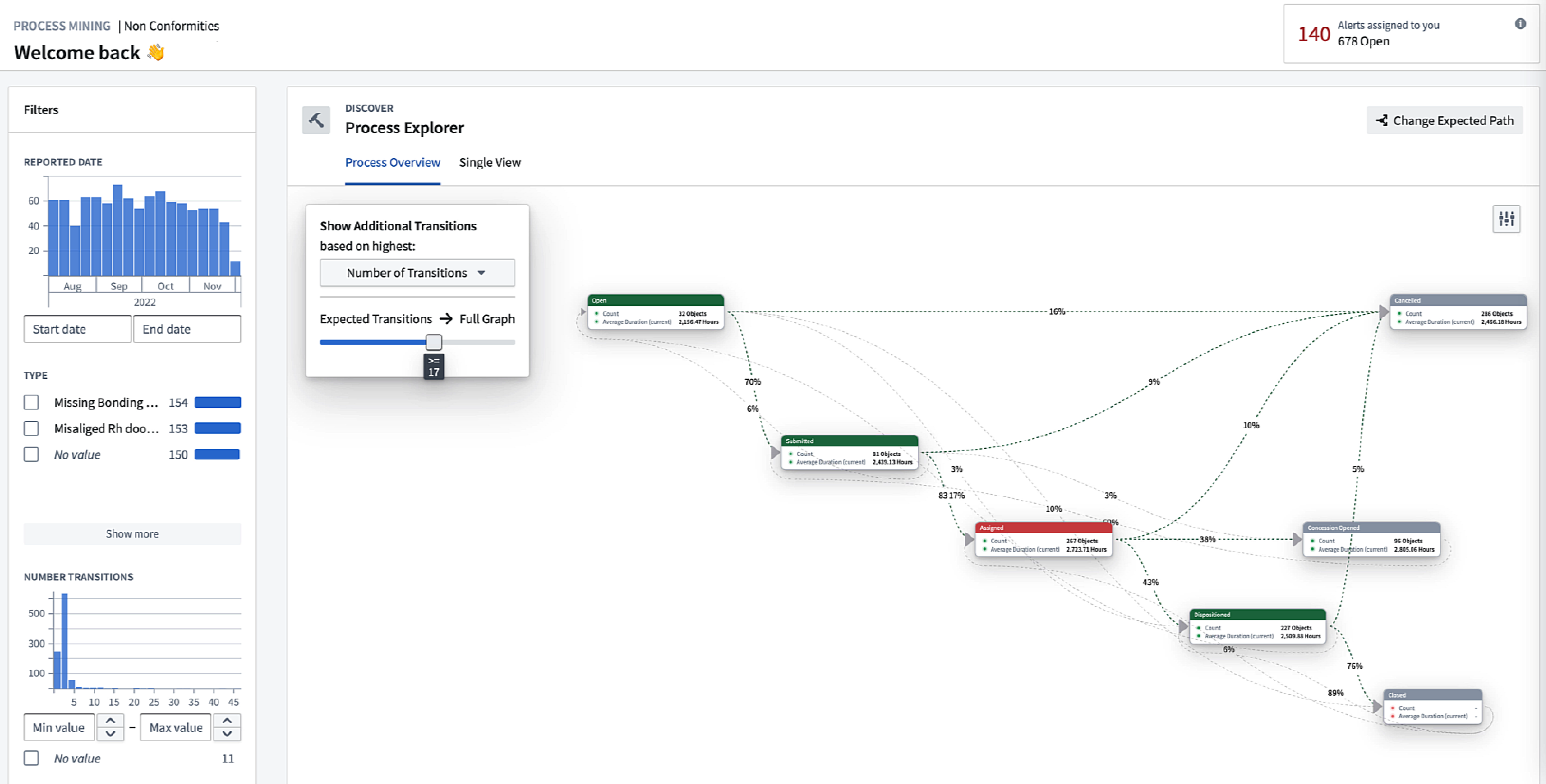
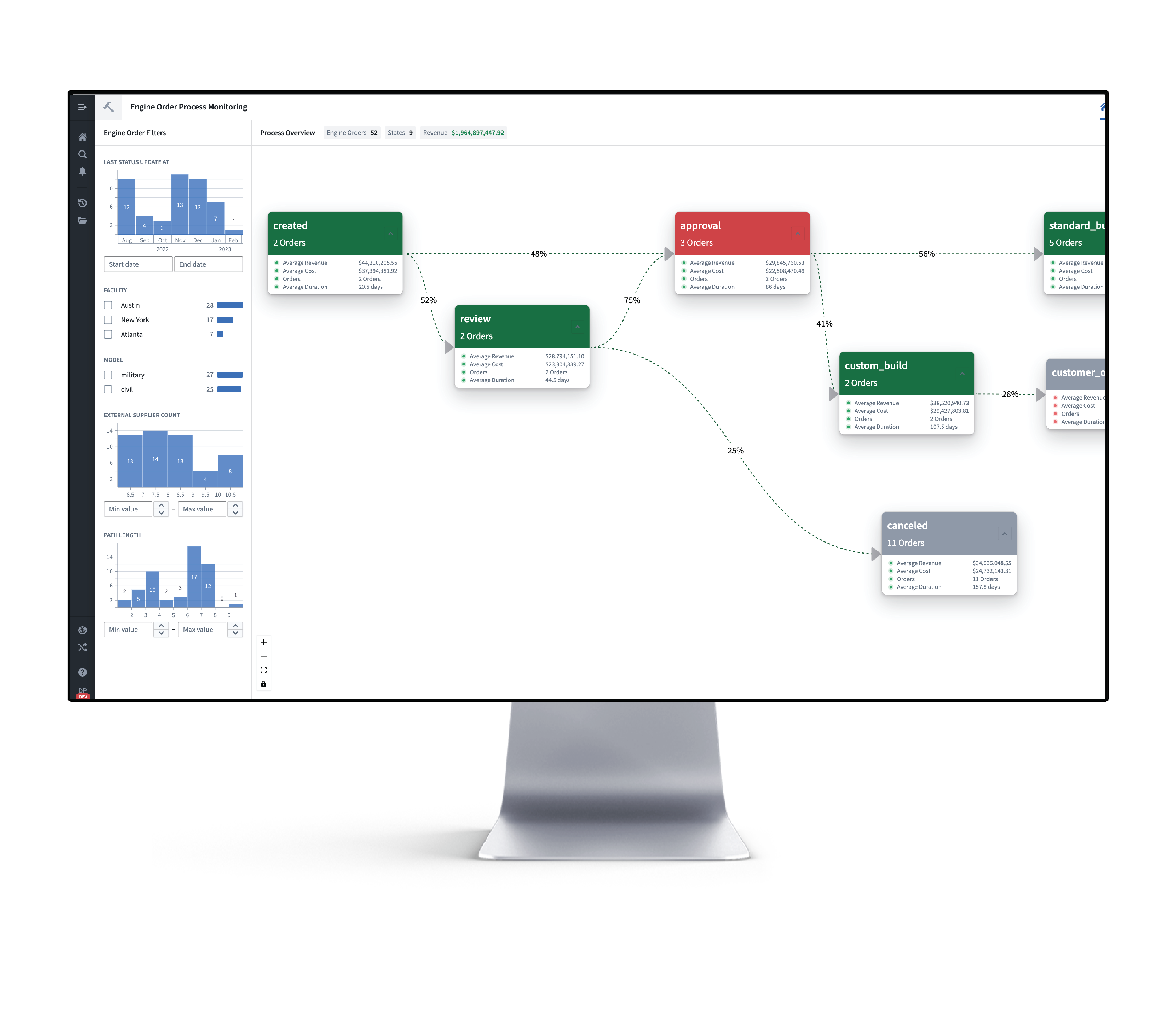
Palantir’s distinguishing idea is the Ontology. Raw tables describe records. The Ontology describes the organization in terms people recognize: aircraft, orders, patients, factories, cases, crews, suppliers. It connects those objects to relationships, business logic, permissions and actions. An analyst and a plant manager can therefore work from the same definition of an engine order without pretending they have the same job.
The decision loop, stripped of the sales fog
This is where Palantir differs from a warehouse that stops at governed data or a model provider that stops at an answer. An Ontology action can write a checked decision back into a workflow. Fine-grained access controls follow the underlying information. The record of who saw what, which model ran and what action followed can be inspected later. Done properly, the system closes the loop. Done badly, it can encode a broken process with intimidating polish.
03 / Four names, one machineFoundry, AIP, Gotham and Apollo
Foundry is the data-operations base for commercial and civil organizations. It ingests and transforms data, tracks lineage, supports analysis, and provides tools for building operational applications. AIP brings language models and other AI into that governed context. Gotham is shaped for defense, intelligence and government missions, including near-real-time sensor fusion and operational planning. Apollo keeps software deployed and configured across cloud, private infrastructure, classified networks and edge devices.
| Layer | Its practical job | The buying question |
|---|---|---|
| Foundry | Integrate data, build the Ontology, analyze operations and ship workflow apps. | Can this replace several brittle handoffs? |
| AIP | Give approved models governed context, tools, evaluations and actions. | Where may the model act, and who checks it? |
| Gotham | Support government and defense analysis, planning and execution. | Does the mission justify a purpose-built environment? |
| Apollo | Continuously deliver software across mixed and difficult infrastructure. | How many environments must stay synchronized? |
The integration is the pitch. Palantir’s architecture documentation says AIP and Foundry together contain more than 300 microservices and assets running on an autoscaling compute mesh, with Apollo beneath the delivery. Buyers are spared the task of stitching every component together. They also become deeply invested in Palantir’s way of representing work. That can produce speed after the foundation exists, and friction if the relationship ends.
04 / The AI questionAIP gives models a badge and a job
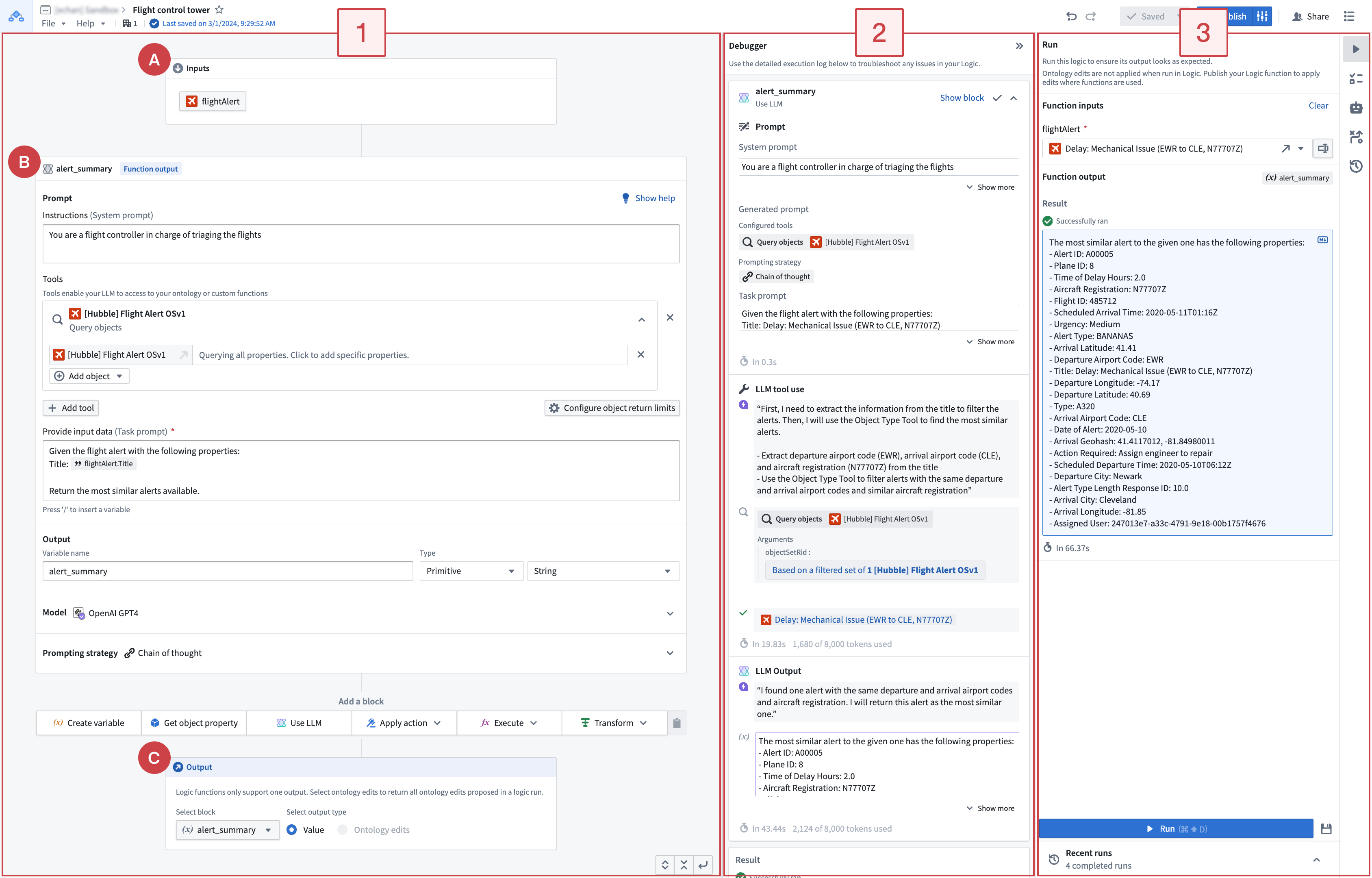
AIP is not a proprietary foundation model. It is a controlled application layer for models from providers such as OpenAI, Anthropic, Google and xAI, alongside other machine-learning systems. Administrators decide which model families are available. Builders can supply Ontology context and tools, test behavior with evaluations, and put a human approval step before an action. In June 2026, Palantir made its Model Context Protocol implementation generally available, allowing compatible agents and AI development tools to work with platform documentation, metadata, data and application-building tasks under platform controls.
This model-agnostic stance is sensible for buyers who expect the model leaderboard to keep moving. Palantir added GPT-5 family models in 2025 and listed GPT-5.6 variants for eligible AIP enrollments in July 2026. The durable asset is supposed to be the organizational context and controlled action layer, not whichever model has the crown this month.
“It’s not cheap - but at least you get what you pay for!”Verified software reviewer, G2 · January 2026
05 / What users sayPower arrives with homework
Public review volume is modest for software of this scale, which makes sweeping satisfaction claims unwise. At research time, Foundry had 4.1 out of 5 from 14 G2 reviews and 4.4 from 96 ratings on Gartner Peer Insights. Recent praise centers on end-to-end pipelines, security, integration and the ability to give semi-technical users no-code tools. Criticism clusters around cost, customization, visualizations and a steep learning curve.
One 2026 pharmaceutical reviewer liked the breadth from ingestion through monitoring and dashboards, but wanted far more customization. Another said Foundry brought AI workflows into the company’s data ecosystem and called the price high. An older, sharply negative review praised robust lockdown controls while describing navigation as confusing. The useful pattern is not love versus hate. Teams value the integrated system when it matches their operating model; they resent it when the platform becomes another environment they must fight.
“We make what matters work. Palantir helps us focus on what matters.”Brian Fifarek, Eaton · AIPCon 2023
06 / Scale and evidenceThe customer count is moving
Palantir reported 1,049 customers for the twelve months ended June 30, 2026, up from 849 a year earlier. Its U.S. commercial customer count reached 653, a 35 percent annual increase. Quarterly revenue was $1.935 billion, up 93 percent year over year, and the company said it closed 220 deals worth at least $1 million during the quarter. Those figures establish adoption and commercial momentum. They do not tell a buyer whether a particular deployment will work.
June 2026
platform docs
services and assets
Look instead for an operational metric with an owner. Aramark reported using AIP to match products with similar names, reaching 99 percent confidence for 30 percent of initial matches. That is specific enough to interrogate: What happened to the rest? How was confidence checked? Did matching reduce manual work? A credible pilot produces questions like these, not merely a chatbot that knows the annual report.
07 / Price and procurementThere is no cheerful little pricing card
Palantir does not publish standard list prices for the full platform. Its SEC filing says customer contracts are generally one to five years, sometimes shorter, and may include termination provisions. AIP model use can be translated into compute-seconds, but Palantir tells enterprise customers to confirm contracted rates with their representative. Budget for licenses, compute, implementation, internal data work, change management and continuing product ownership.
A serious evaluation should begin with one expensive decision loop and a baseline: hours lost, stock stranded, beds blocked, fraud missed, aircraft grounded. Put access controls and exit requirements in the pilot. Ask who owns derived models and application code, how data exports work, what happens when usage expands, and how independently your staff can operate after the embedded team leaves. The shiny demo is the least informative hour of procurement.
08 / The hard partPower, politics and accountability
Palantir’s work with military, intelligence, immigration and law-enforcement institutions makes it politically charged. Critics have questioned deployments involving ICE, policing and the UK National Health Service. The NHS federated data platform contract, worth £330 million over seven years, has faced scrutiny over procurement, data sovereignty, supplier dependence and adoption. Palantir says customers control their data and emphasizes granular security, audit logs and responsible-use controls.
Both things deserve attention: the software can enforce permissions more rigorously than a sprawl of spreadsheets, and rigorous software can still support a contested policy. A permission model answers who may use the system. It does not answer whether the institution should take the action. Buyers need legal review, community legitimacy, appeal routes and named human accountability alongside technical governance.
09 / The verdictBuy the loop, not the legend
Palantir is compelling when an organization needs to turn messy, permissioned data into coordinated action and can staff the transformation. The Ontology gives technical and frontline teams a shared map; AIP lets changing models operate against that map; Apollo keeps the machinery running in places normal SaaS vendors dislike. Few products package that whole chain so deliberately.
The caution is proportional. Pricing is opaque, implementation is consequential, and deep operational fit can become deep dependence. Palantir will not rescue a project without an owner, repair disputed policy, or make a vague AI strategy useful. Start with a decision that hurts, a metric everybody accepts, and a boundary the system may not cross. If the pilot improves the decision and leaves an audit trail people trust, keep going. If it produces a handsome command center and no changed outcome, close the laptop.