On the Plateau in Montreal, a small shoe factory is doing something that has become odd enough to sound romantic: making shoes. Workers cut premium leather, stitch uppers and line winter boots with shearling in the operation Pajar opened in 1973. The output is modest - around 150 pairs a day, according to company president Michel Golbert - and the finished boots sell for roughly C$400 to C$600. They are part product, part proof. Every pair lets Pajar say that its Canadian winter story still has sawdust on the floor.
But walk upstairs from the craft story to the strategy meeting and the weather changes. Pajar is no longer merely a maker of handsome boots for people who distrust February. It is becoming an owner and distributor of footwear brands across North America, a business designed to make money in April, July and October too. In August 2026, it completed the acquisition of Grendene Global Brands USA, the American operation behind Melissa and Mini Melissa distribution, for a reported US$3.6 million. Jelly shoes have joined the family business.
That combination - locally made sheepskin boots and Brazilian molded footwear - looks eccentric until you see the calendar. Golbert has said that about 90 percent of Pajar's business was concentrated in fall. A great winter brand can still be a lopsided company. The warmer or later the season, the more cautious retailers become, and the more expensive that empty spring shelf feels.
The name is a family photograph
Pajar began in 1963 with Paul Golbert, a Paris-born shoemaker who arrived in Montreal carrying a European trade into a Canadian climate. He named the company from the opening letters of Paul, Jacques and Rachel - himself, his son and his wife. It is the rare corporate name that doubles as a seating chart.
Paul first imported French, Italian and Spanish footwear. He opened a downtown showroom in 1967, then his own factory near Coloniale and Mont-Royal six years later. Jacques joined in 1975 after economics studies in Lausanne and footwear training in France. A third active generation arrived from 2001: Michel, Elise and David, each trained at Ars Sutoria in Milan. Today Jacques is chief executive, Michel is president, David is vice president and Elise is chief marketing officer. The company describes the underlying trade as five generations deep.
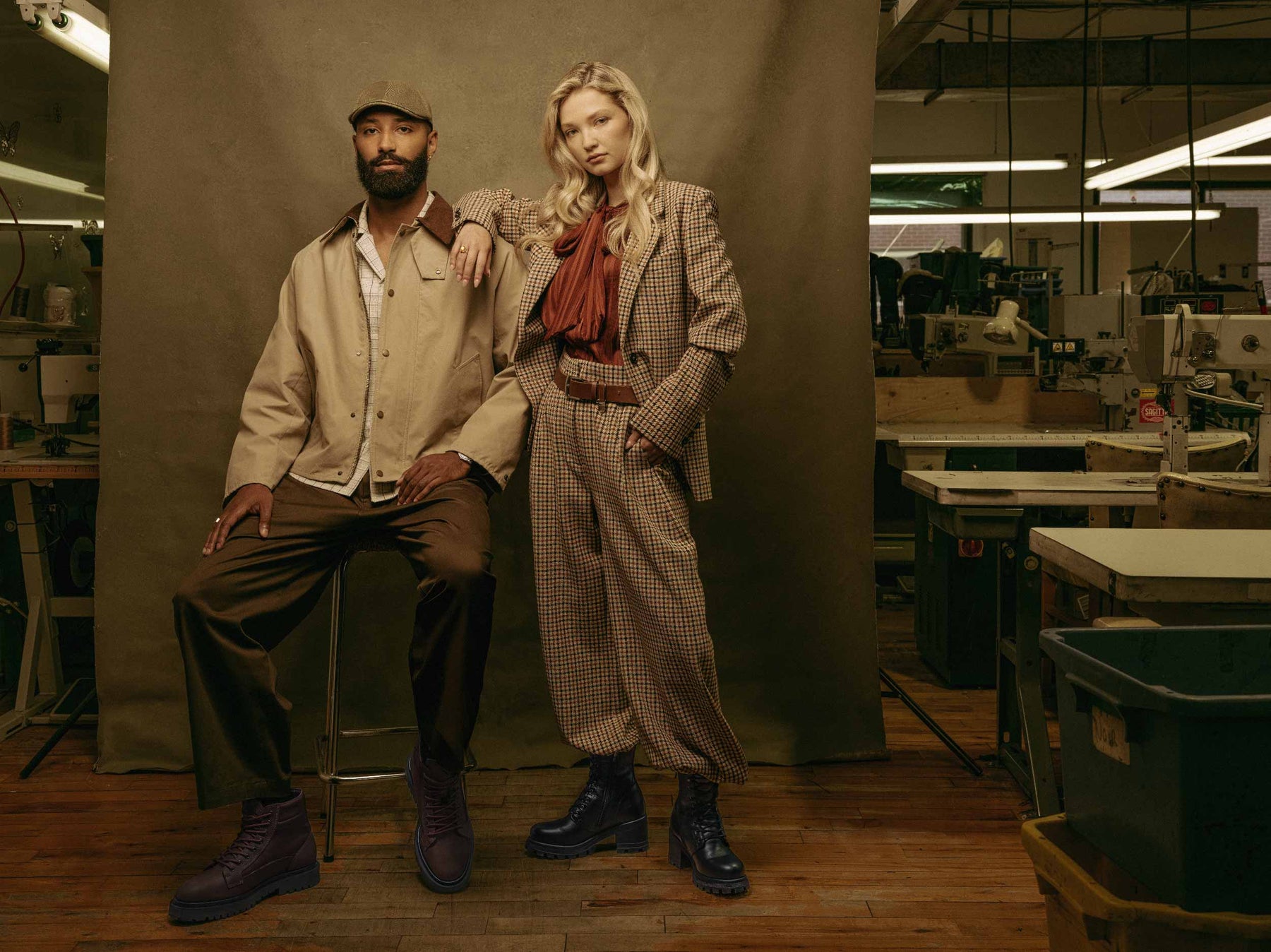
That lineage gives Pajar its market position. It sits between pure technical outdoor footwear and luxury outerwear: waterproof enough for slush, styled enough for a restaurant, priced above mass-market snow boots but below fashion's truly unruly altitudes. Canada Goose, Mackage and Moose Knuckles compete for the same cold-weather imagination. Sorel, Timberland, UGG and Columbia crowd the footwear decision. Pajar's answer is not one magical material. It is the combination of Canadian provenance, fashion-led design, a surviving factory and a catalog built around measurable cold.
“We still produce in Montreal. We have our small factory, which produces our high-end Montreal | 1963 collection.”Michel Golbert, president of Pajar Canada
A boot with two personalities
The cleanest expression of Pajar's product thinking is its Ice Gripper sole. Outdoors, steel cleats turn toward the ground for traction on hard ice. Indoors, the cleats retract or reverse so the wearer is not tap-dancing across tile. The mechanism solves a specifically northern annoyance: the same hardware that saves you on the sidewalk can become hostile in the lobby.
Around that feature, Pajar sells waterproof footwear rated for temperatures as low as -40 C, kids' boots with thermal rubber shells, sneakers, sandals and slippers. Its Montreal | 1963 label includes the Canadian-made Heritage collection and Italian-made Quintessenza styles. The apparel side covers parkas, puffers, ski jackets, base layers, hosiery, hats, bags and, because no product architecture is complete until the dog has a jacket, a Pup collection.
Craft creates the halo. Distribution creates the calendar.
The business model follows the product ladder. Pajar sells directly through country-specific ecommerce sites, wholesales its own footwear and apparel to retailers, makes a premium line in Montreal, sources most volume abroad and earns from brands it owns or distributes. In 2018, it was reportedly producing nearly a million pairs annually and selling in more than 40 countries. In 2024, Michel Golbert said the broader company had surpassed C$100 million in annual sales.
The local factory is not the volume center. By 2025, Golbert said roughly 95 percent of production occurred in Europe and Asia. Canadian suppliers of leather, eyelets and other components had largely vanished; even a company determined to keep making in Montreal was importing many inputs. Boxes and some YKK zippers remained local. Heritage, in other words, has a global bill of materials.
What failed first was the calendar
Pajar tried the visible forms of expansion. In 2018 it tested standalone stores at Toronto's Yorkdale Shopping Centre and Premium Outlets Montreal, complete with an upside-down toboggan as seating. In 2021 it opened a 2,500-square-foot SoHo flagship with about 300 styles. Direct retail promised control, theater and customer data. It also required leases, inventory and enough foot traffic to justify both.
The harder structural problem was seasonality. A footwear wholesaler cannot persuade April to become November. Milder winters also make retailers cautious, and the Canadian market has lost selling doors through consolidation. Pajar's existing competence - getting boxes into stores, maintaining account integrations, presenting collections at trade shows - needed products that traveled through the rest of the year.
A business wearing one very heavy season
The change of mind came through adjacency, not reinvention. In 2024 Pajar acquired Cougar, the Canadian company known for waterproof boots and the Pillow Boot. Cougar brought another heritage name, but it also offered a platform Pajar could extend into men's footwear, outerwear and international markets. In 2025, Pajar began distributing Brazilian manufacturer Grendene's Melissa, Ipanema, Rider, Cartago and Zaxy brands in Canada. Sandals and jelly shoes did what snow boots could not: give the sales team a reason to call in spring.
The Canadian launch performed well enough to prompt a larger conversation. Pajar then bought Grendene Global Brands USA, taking responsibility for Melissa and Mini Melissa in the United States while continuing Ipanema distribution across North America. It also picked up Canadian distribution for Merrell Kids, Saucony Kids, Stride Rite and Kenneth Cole Women's after longtime distributor Indeka closed.
“We bought the actual company rather than starting a new company because all the integrations were already in place.”Michel Golbert on the GGB acquisition
The $3.6 million shortcut
The clever part of the GGB deal was not merely the brands. Pajar acquired an operating system: a U.S. warehouse, customer integrations, ERP connections and a staff that mostly stayed. Retail distribution contains years of boring, valuable wiring. Buying the company meant orders could continue shipping on day one without forcing accounts to rebuild their plumbing.
That is what a reader can copy. First, define the constraint numerically. “We are seasonal” is a complaint; “90 percent of sales arrive in fall” is an acquisition brief. Second, look for an adjacent product whose demand curve fills the blank space. Third, value the infrastructure around the product - the employees, retailer setup, warehouse and systems - because those can be slower to build than the brand itself. Finally, preserve the distinctive core. Pajar did not close the Montreal factory to become a generic distributor. It kept the factory as a reason for customers and retailers to care.
Buy the missing season, not a random trophy
- Measure when the business goes quiet.
- Choose adjacent demand that uses the same buyers and channels.
- Acquire operational readiness, not just a logo.
- Keep the original product strong enough to lend trust to the portfolio.
There are conditions where this does not work. The same sales force must credibly sell the new category. Retail accounts must overlap. Warehousing and working-capital needs must remain manageable. The acquired team has to stay, and the buyer cannot smother the qualities that made the new brand useful. A ski-boot company buying sunscreen because both appear on vacations would have adjacency on a slide and chaos in the warehouse.
Pajar's portfolio is tighter. Cougar speaks the same waterproof language. Melissa and Ipanema sell through familiar footwear doors but peak in different weather. Children's brands give the organization more reasons to visit the same buyers. The common asset is not leather or rubber. It is route to market.
The factory and the spreadsheet
There is a pleasing symmetry to Pajar's current shape. Its famous sole changes configuration when the wearer crosses from ice to tile. The company is attempting the corporate version: keeping one footing for winter while deploying another when conditions change.
The risks are ordinary and real. Tariffs can lift prices. About half of sales were coming from the United States in 2025, which exposes Pajar to border rules and currency swings. Local manufacturing is constrained by a thin supplier base. Acquisitions add brands but also add inventory, systems and expectations. And warmer winters do not stop being a problem just because a company owns sandals.
Still, Pajar has chosen a legible strategy. Montreal-made boots protect the provenance. Global factories provide volume. Ecommerce offers direct access. Acquired and distributed brands stretch the selling season. The family that once turned three first names into a logo is now turning one cold-weather reputation into a broader footwear platform.
The lesson is more modest than “heritage wins.” Heritage can become a comfortable chair in the lobby while the business quietly freezes. Pajar's useful move was to treat its history as an asset, not an instruction manual. The old factory stays. The new warehouse ships jelly shoes. Both belong to the same answer.