Consider an export invoice. It looks like an administrative afterthought: a few names, some quantities, a destination. Yet the same information must travel through quotations, packing lists and shipping records. Copy it often enough and someone eventually has to decide which version is right. This is a useful place to meet P99SOFT, a software company whose broad ambitions become easier to understand when the problem gets this small.
- Builds software, Salesforce systems, cloud platforms, AI applications and games for business clients.
- Also develops Freightnaut for export operations and Lyxor for engineering teams.
- Pairs international delivery with an investment in training talent in Loni, India.
The interesting part is the combination. A consultancy usually sells the ability to build what somebody else needs. A product company must choose a problem, make assumptions about it and live with the consequences. P99SOFT operates in both worlds. Freightnaut gives its engineering pitch a specific setting: the export desk, where documents, inventory and shipment updates have to agree.
A launch with customers in the room
On March 7, 2025, P99SOFT launched Freightnaut at its Loni office. Prospective customers attended and tried the platform. The company’s account emphasizes their interactions and feedback. That is a modest but revealing detail. Export software has to make sense to people arranging actual shipments, with documents that other organizations will inspect. An attractive interface can only take the conversation so far.
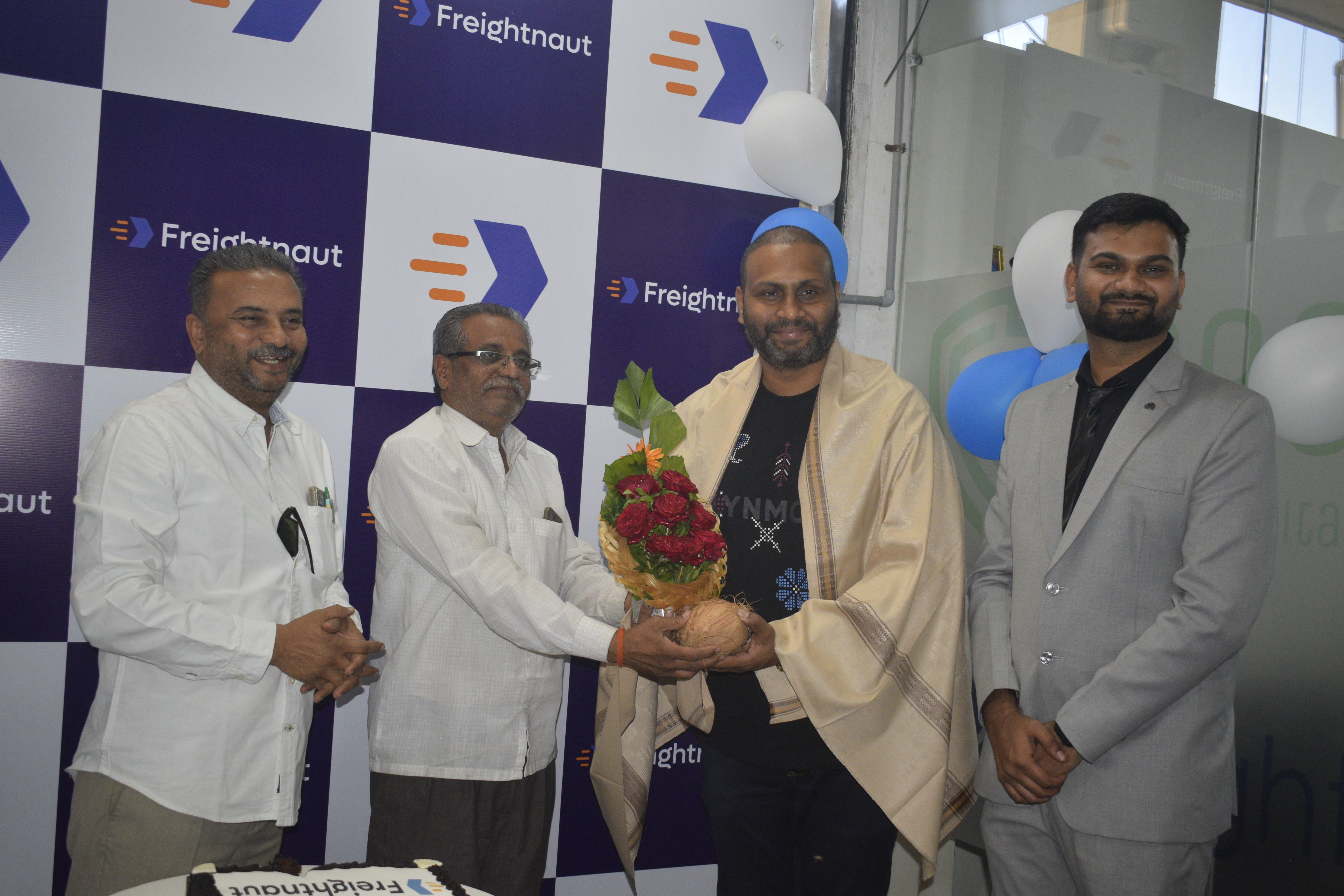
Today, Freightnaut advertises document generation, freight quotations, container tracking and inventory management. Its website promises shipping documentation in under 90 seconds. Treat that as a product claim, rather than a stopwatch result. The practical proposition is clear enough: keep the shipment’s information together, then use it across the jobs that would otherwise require repeated entry and reconciliation.
Documents02
Quotations03
Tracking04
Inventory
The price of a shipment, not a chair
The commercial design is unusually easy to discuss. Freightnaut’s published standard plan costs ₹14,999 a year, includes 15 credits and allows unlimited team members. One credit represents one fully documented shipment. More shipment credits cost extra. The distinction matters because a shipment can involve several colleagues; charging for each person could make collaboration feel like an additional purchase.
That structure creates a straightforward buying question. How many shipments will the team document, and how much work does the software remove from each one? The answer will differ between an occasional exporter and a busy operations desk. Annual price alone cannot settle it. Buyers also need to check document requirements, integration needs and the cost of credits at their own volume.
There is also an organizational choice hidden in unlimited seats. The employee preparing a document and the colleague checking inventory can work in the same product without a separate seat decision. That does not guarantee adoption. Someone must still establish which information is authoritative and who approves a change. Software can bring the work together; management has to make the responsibility clear.
The work between the systems
Freightnaut is only one part of the business. P99SOFT sells custom product engineering and services around data, AI, cloud infrastructure and Salesforce. Its Salesforce offering includes implementation, custom development, migration, integrations and ongoing management. A customer can commission a new application or ask the team to connect systems already in use. The buyer is purchasing engineering work and responsibility for delivery.
Here the problems are often less photogenic than a new app: a customer record that cannot reach an ERP, a workflow that needs repeated manual attention, a dashboard built on inconsistent data. P99SOFT’s positioning puts those connections near the center. Its September 2026 Dreamforce recap likewise stresses data readiness and the move from AI experiments into operating workflows.
“a strong understanding of real technician workflows”
Kevin DeCoster, Ironfleet.ai co-founder, in a company-published customer testimonial
Named testimonials include Ironfleet.ai and FarmDSS. Their language is instructive: technicians doing their jobs, farmers learning and working. These are endorsements published by P99SOFT, but they identify something worth asking any engineering supplier to demonstrate. Can the team describe the user’s day with enough precision to explain where its software helps?
Why a freight company also makes games
Then comes the unexpected turn. P99SOFT has a game studio. Its portfolio describes Yaaro Ki Rasoi, a cooperative mobile cooking game involving Indian dishes such as dosa, chai, idli and appam. The studio also offers prototyping, art production, multiplayer networking, backend systems and testing. In October 2026, it reported showing games to players at GamingCon Bharat in Mumbai.
The connection is engineering breadth, though breadth brings a selection problem for buyers. A logistics system and a multiplayer kitchen need different domain knowledge. Prospective clients should evaluate the actual team and relevant work. Against a larger IT consultancy or an internal development team, P99SOFT’s proposition is access to several engineering disciplines through one supplier. That proposition earns its value project by project.
Lyxor extends the product side into software development itself. Its public site offers a waitlist and describes code reviews informed by repository conventions, coding standards and Jira ticket context. The underlying question resembles the export problem: how much trouble starts when related information lives in separate places? Its proposed answer connects the request, the code and the review.
For an engineering buyer, this is a reason to ask for a small, representative demonstration. Give the supplier a real document, a difficult integration or a review task with an awkward exception. Watch what requires clarification. Those questions reveal how much context the team needs before it can deliver something useful.
The other system it is building
Founder and CEO Ashutosh Pulate also gives P99SOFT a talent-development story. The Indian company was incorporated in 2021. In April 2026, P99SOFT announced expanded office space and a training initiative at Pravara Rural Education Society’s College of Food Technology in Loni. It reported onboarding 40 students, with practical projects and exposure to technologies including AI.
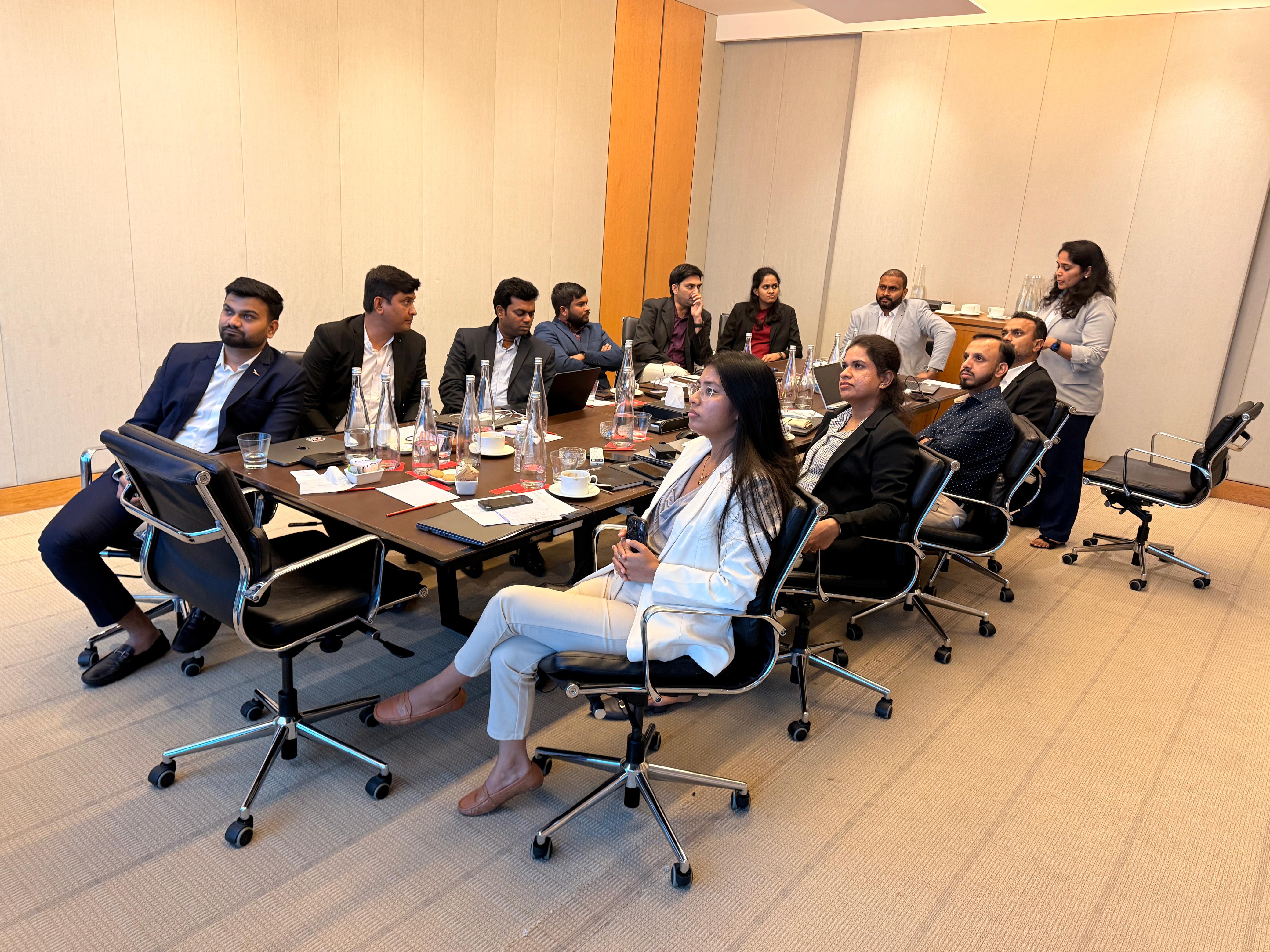
The company’s careers page emphasizes collaboration, flexible schedules and skills development. The training intake gives that stated culture a tangible activity to examine. It also connects two parts of the business: expanding engineering capacity and creating opportunities for people who can learn by working on practical problems.
There is a useful lesson here for a reader planning an automation project. Follow one piece of information through a real working day. Find the repeated entry, the uncertain handoff and the person who fixes it. Give the process an owner and choose an outcome to measure. Reliable inputs and human review still matter. At an export desk, the test arrives when the documents are needed and every field has to match.