Justin Barad once found himself in an operating room with a patient under anesthesia and a familiar, faintly absurd instruction: find the answer on a computer. A technique guide, a video, perhaps a sales representative. The surgeon who had wanted to make video games as a teenager was watching a highly trained team improvise its way through the limits of its training materials. He did not decide that surgeons needed more screens. He decided they needed somewhere to practice.
- The productVR procedure rehearsals with feedback and performance records.
- The buyersHospitals, medical schools, device makers and healthcare companies.
- The expansionFrom orthopedic surgery to nurse onboarding and other specialties.
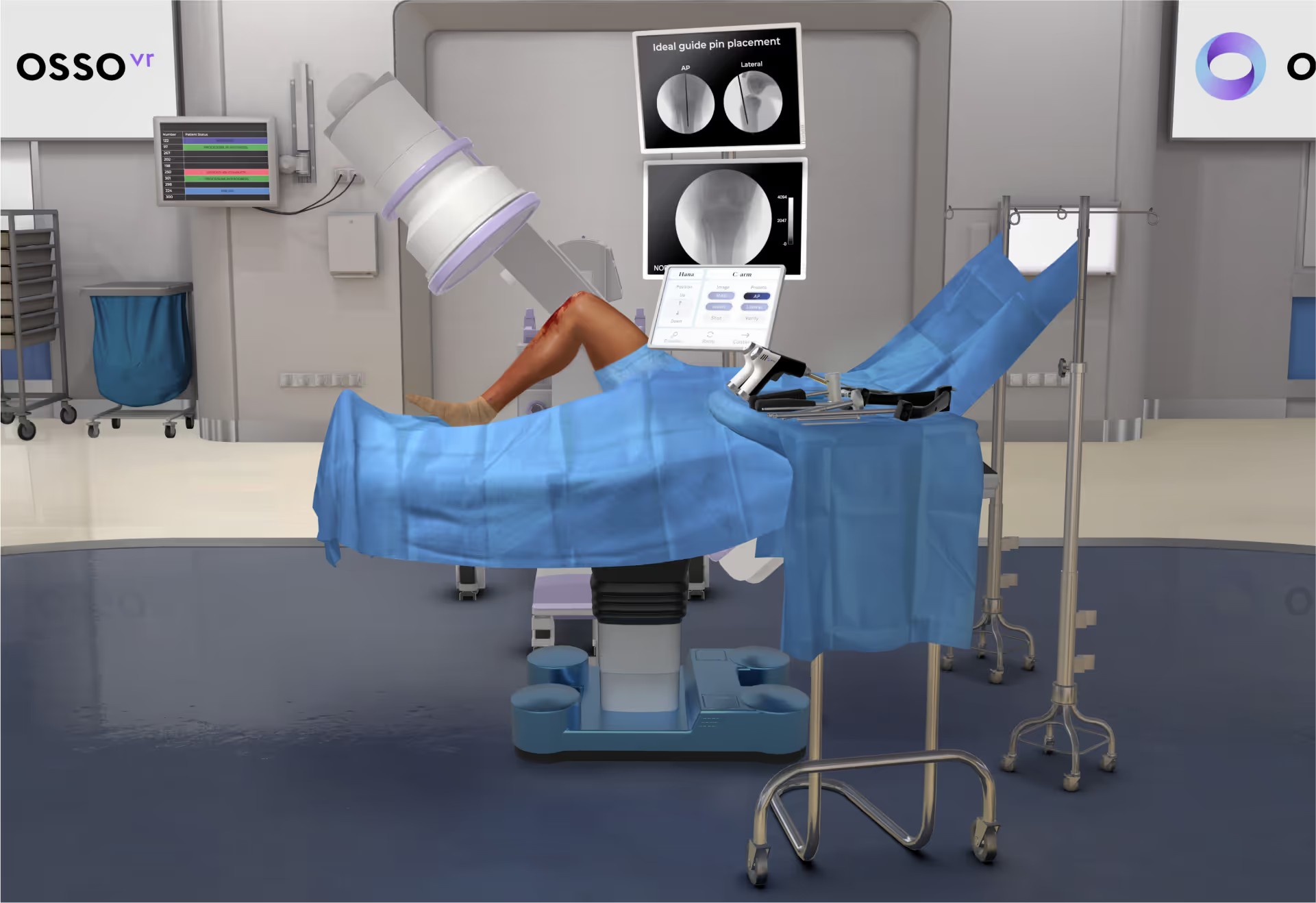
That distinction matters. A surgical video can show an instrument moving through a procedure. It cannot tell you whether you reached for the right instrument, took the steps in the right order or needed a hint. In Osso VR's simulation, a trainee wears a headset, enters a virtual clinical setting and performs the sequence. The software can then record what happened. The virtual patient is unusually patient; the performance log is less forgiving.
The surgeon who took the long way to a game studio
Barad learned to program young and interned at Activision. A family illness changed his ambition. A mentor told him to understand a medical problem before trying to solve it, so he studied bioengineering, went to medical school and trained in orthopedic surgery. During residency he saw a gap between knowing what a procedure required and having enough chances to rehearse it. He built an early VR prototype and met game developer Matthew Newport online. Barad has said he used savings from his bar mitzvah to pay Newport to improve it. Osso VR was founded in 2016; its first customers arrived the next year.
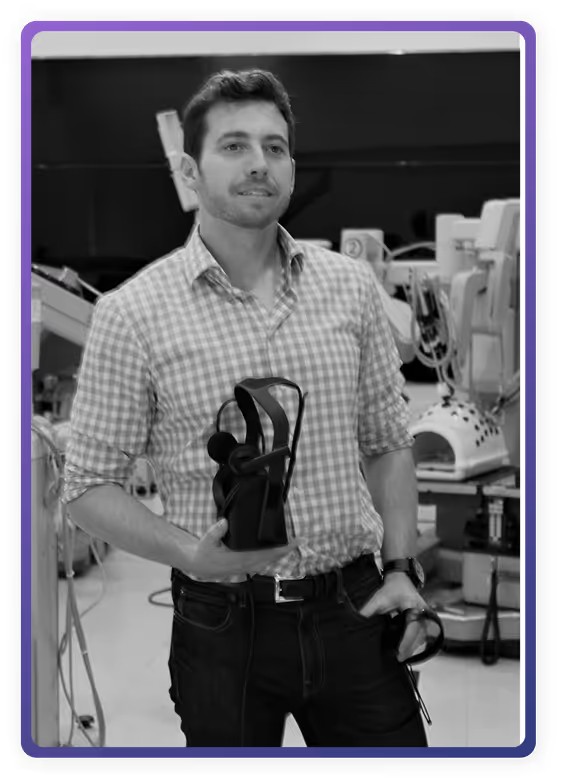
The first product addressed a stubborn teaching problem. New devices and techniques can reach many hospitals before enough experts have time to teach every clinician who might use them. Cadaver labs, live demonstrations and supervised cases are valuable, but scarce and hard to schedule. A simulation can be distributed, repeated and updated. Osso's bet was that the rehearsal could also be measured.
“I’d be in multiple surgeries where people would ask me to Google what to do, find a video or technique guide, and it felt off to me.”Justin Barad, recounting his surgical training
A small trial, a useful number
The company did more than show an attractive virtual operating room. In a 2020 randomized study at UCLA, 20 novice medical students learned a tibia nailing procedure. Ten used an Osso VR module; ten used a standard surgical guide. Both groups then performed the task on a synthetic bone model. The VR group correctly completed 63% of procedural steps on average; the guide group completed 25%. Global assessment scores were 17.5 versus 7.5.
Randomized study, 20 novices, simulated tibia procedure. These are performance measures on a model, not patient outcomes.
The result is striking precisely because its limits are legible. The test was a simulation, the group was small and the learners were novices. It did not prove that a headset makes surgery safer in the operating room. It showed that, for this task, active rehearsal beat reading a guide before performing on a model. That is enough to make a hospital educator ask a practical question: which steps in our own program would benefit from another rehearsal?
Three customers, one scarce resource
Osso now sells to distinct buyers who share a shortage of practice time. Osso Enterprise helps medical device and healthcare companies build custom modules around products and procedures. A surgeon can rehearse a new workflow, while a sales or clinical education team can demonstrate it without shipping an operating theatre. The platform includes collaborative sessions, localized content, analytics and implementation support.
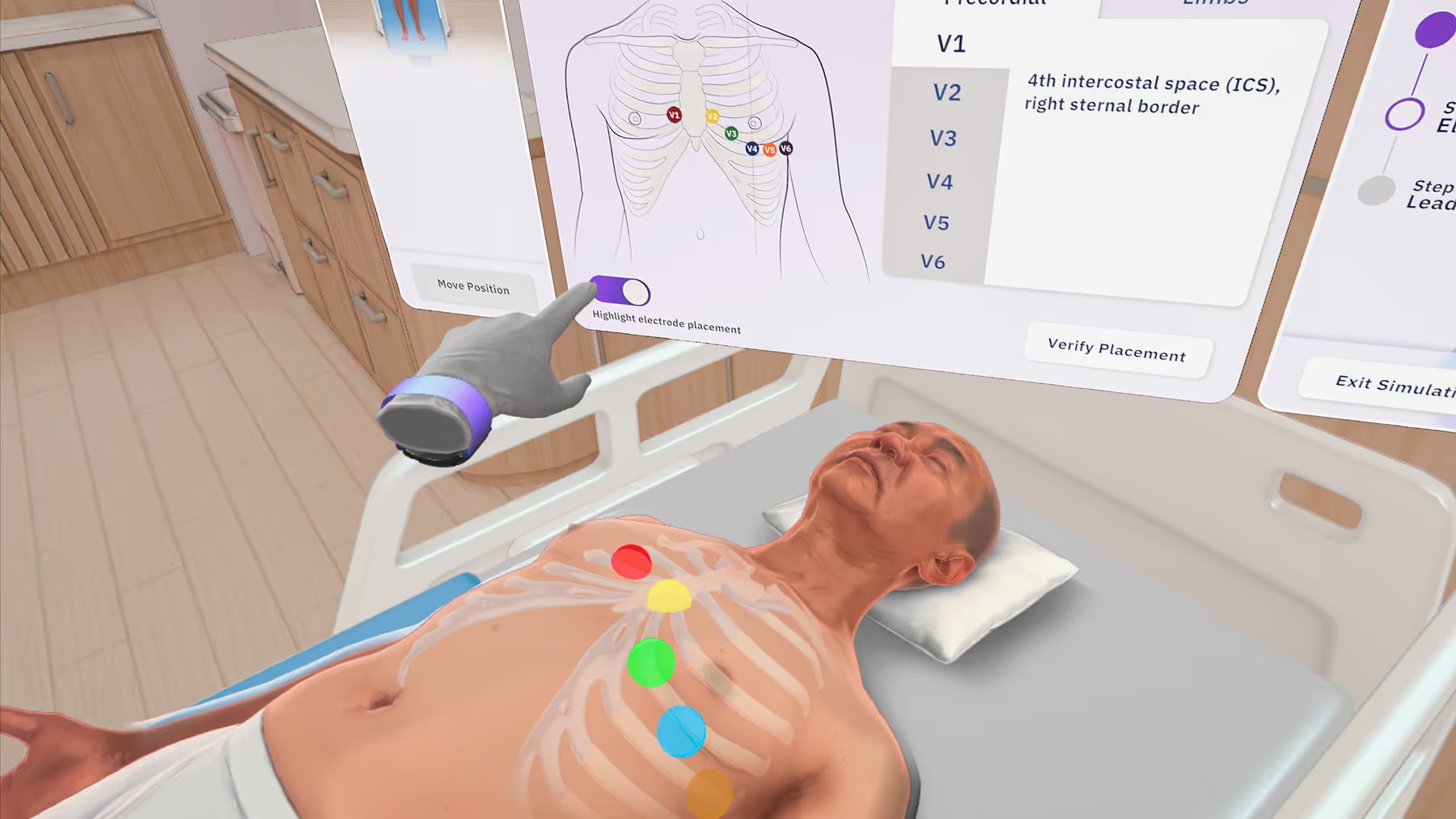
Osso Academy serves academic medical centers and residency programs with a library of more than 25 orthopedic modules. It adds coaching, imaging and performance views that faculty can use alongside an existing curriculum. The newest line, Osso Nurse Training, addresses a different bottleneck: nurse educators and preceptors have limited hours to give every new nurse the same repeated practice. Its Nursing Series supplies VR scenarios; Osso Loop provides prebriefing, launch, debriefing and dashboards. In guided mode, a trainee gets prompts. In test mode, the prompts are removed. In collaborative mode, colleagues or educators can enter the same scenario.
Know the procedure and the goal.
Repeat the steps, then try without guidance.
Review the record and target the next attempt.
This is where Osso sits in the market: between traditional clinical education and the software systems that record whether training happened. Its claim is more ambitious than completion tracking. It wants a record of how the learner performed. Competitors include other VR training makers, such as PrecisionOS and FundamentalVR, as well as the decidedly nonvirtual alternatives: videos, guides, skills labs and supervised cases. Osso's particular mix is custom clinical art, procedure-specific simulation, collaborative practice and analytics across a growing library.
The cost of another attempt
The company raised $66 million in a Series C led by Oak HC/FT in March 2022, bringing reported cumulative funding to roughly $109 million at the time. That financed a content-heavy business: clinical experts, artists, software and support. Its sales model is business to business, with custom modules or libraries and platform services sold to organizations. Standard public pricing is absent, so a buyer has to compare a proposal with the true cost of its present method: faculty hours, travel, consumable supplies, lab time and the missed opportunity to repeat a rare procedure.
Pick a task that learners struggle to rehearse, define the steps that matter, let people repeat it, then check whether the result improves outside the simulation. A lovely virtual room with no measured learning goal is expensive scenery.
The approach has conditions. It is strongest where steps can be represented faithfully and assessed clearly, and where access to supervised practice is constrained. It is weaker if the crucial skill depends on touch that the equipment cannot reproduce, if a hospital cannot fit headsets into its workflow, or if scores stay inside the headset instead of informing instruction. The published tibia study offers a reason to investigate, not a blanket guarantee.
The expansion into nursing suggests Osso has changed its mind about the size of its own problem. Surgical training was the opening example; procedural readiness is the larger category. Heather Gervais became CEO in 2024 with plans to expand into health systems and pharma. In 2025 Osso opened early access to nurse training, partnered with America’s Essential Hospitals and linked its nursing scenarios to EBSCO Dynamic Health content. In June 2026, Bergen New Bridge Medical Center announced a nurse onboarding rollout. Those are steps from demonstration toward daily use, where a training tool has to survive schedules, cleaning routines, IT rules and the attention span of tired professionals.
Barad's first question remains the right one: how do you know someone is ready to do a procedure? Osso VR cannot answer it by itself. It can give the learner another attempt before the stakes become real, and give the educator something more revealing than a checked box. For a company built around a virtual operating room, that is a pleasingly concrete ambition.