Company Profile · Consumer Wellness
Ora Organic
The Austin supplement company that sells plant-based nutrition the way it wishes the industry did - clean, tested, and boring in the one way that matters: you can read the label.
The Austin supplement company that sells plant-based nutrition the way it wishes the industry did - clean, tested, and boring in the one way that matters: you can read the label.
Here is a small, satisfying fact about the supplement business. It is enormous, it is crowded, and almost every brand in it says the same word: "clean." Clean ingredients, clean label, clean sourcing. The word does a lot of work and means, on its own, essentially nothing. It is a claim, and claims are cheap. What is expensive - annoying, slow, unglamorous - is proving one. Ora Organic's entire pitch is that it does the expensive part.
The company was founded in 2014 by a group of friends - Will Smelko, Ron Chang, Erica Bryers, and a fourth co-founder - on a premise that sounds obvious until you try to build a business around it: make supplements out of plants, from sources you can actually name, and then go get them tested by someone who isn't you. The name comes from the Maori greeting Kia Ora, which translates roughly to "be well." Most companies invent a name and then reverse-engineer a meaning. Ora borrowed a wish and built the product to match it.
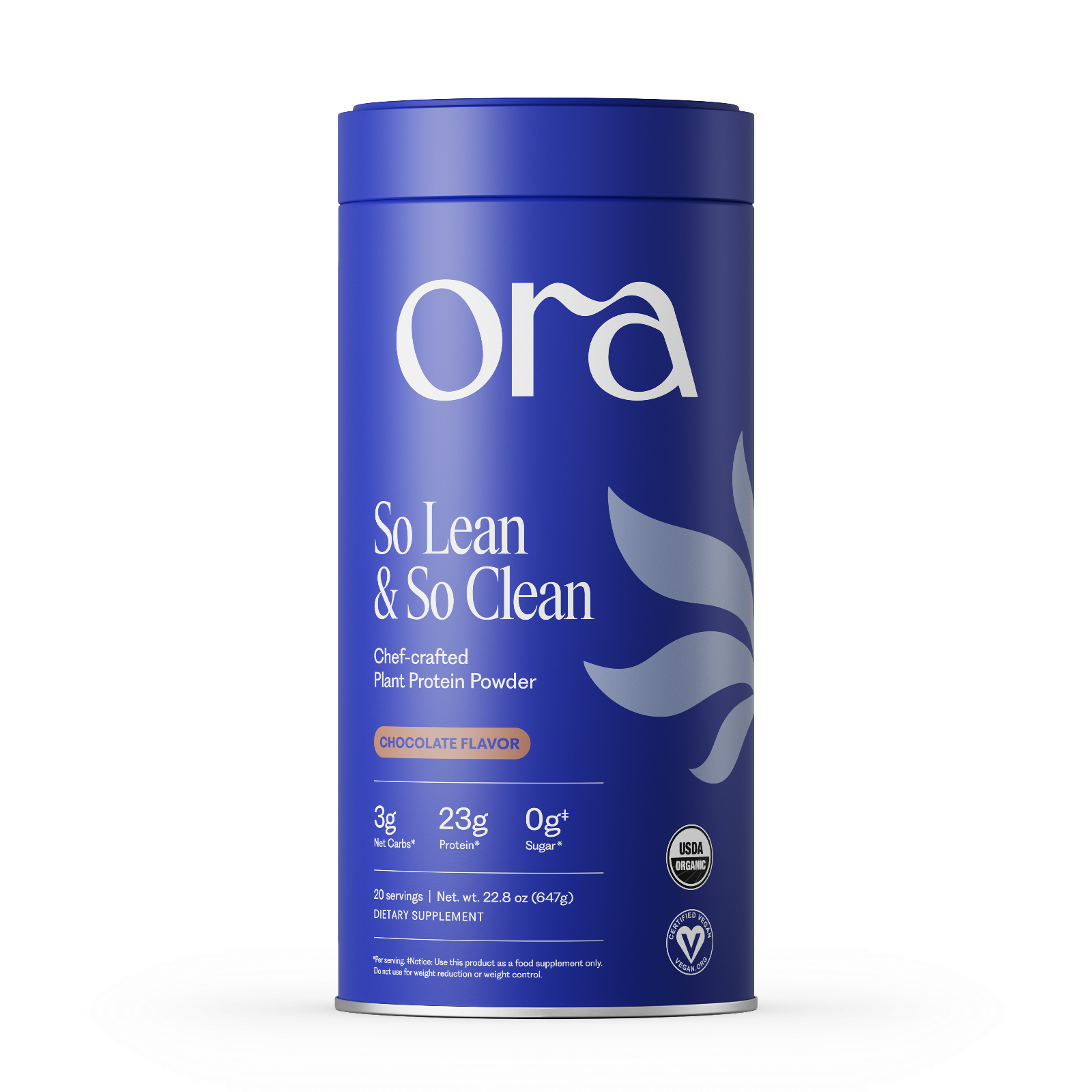
The flagship is a protein powder with the faintly aggressive name So Lean & So Clean. A serving delivers around 23 grams of protein, and here is where it gets specific: the protein doesn't come from one convenient source but from a blend - organic peas, rice, sacha inchi, amaranth, quinoa - plus digestive enzymes and zero added sugar. This is more work than a single pea-protein isolate. It is also the kind of detail that lets a small brand charge more than the big tub at the warehouse store, because the premium is legible. You can see what you're paying for.
Then there is the Shark Tank part, which is the part everyone remembers. In Season 8, Smelko and Chang walked into the Tank asking for $375,000 in exchange for 5% of the company - a valuation, if you do the arithmetic the sharks certainly did, of $7.5 million. Kevin O'Leary, who has never met a royalty deal he didn't like, made an offer: the same $375,000, but for 17% (after opening at 20%). The founders said no. They left without a deal.
This is the moment where the story is supposed to turn into a cautionary tale. It didn't. After the episode aired, the company reported a roughly 400% jump in sales. The lesson is not "reject investors" - that would be a terrible general rule. The lesson is narrower and more useful: the value of going on national television was never really the check. It was the fifteen minutes of a very large audience learning that a plant-based, third-party-tested supplement brand existed. The exposure did the work the money was supposed to do.
Figures are drawn from public reporting, company statements, and industry databases. Valuation (~$10M) and revenue (~$2.5M annual) are widely reported estimates, not audited figures - treat them as approximate.
By early 2025 the line had grown to roughly 26 products, sorted less by ingredient than by what your body is trying to do that day - digest, recover, sleep, focus, balance.
Chef-crafted organic plant protein, ~23g per serving from peas, rice, sacha inchi, amaranth and quinoa. Digestive enzymes, no added sugar.
A synbiotic - roughly 16 billion CFU of probiotics bundled with prebiotics - aimed at digestion, bloating and regularity.
A daily superfood greens powder for people who would rather drink their vegetables than argue with them.
Workout and muscle-recovery formulas for the exercise-and-recovery corner of the catalog.
Plant collagen support and omega-3 sourced from algae - sold, notably, as a spray rather than a fish-oil capsule.
Targeted formulas spanning women's hormones, cognitive support and stress relief - the specific shelf gaps big brands skip.
The unglamorous engine underneath all of this is direct-to-consumer commerce. Ora sells primarily from its own store on Shopify Plus, with subscriptions to smooth out the lumpy business of getting people to reorder powder before they run out. That's supplemented by marketplaces and retail - Amazon, iHerb, Vitamin Shoppe - which is how a small brand borrows shelf space it could never afford to build.
What makes the math work is that the differentiation is baked into the product, not bolted on in advertising. USDA Organic certification, non-GMO and vegan formulas, third-party testing for heavy metals with results the company publishes rather than hides - these are the moat. In a category where the loudest claim is worth nothing, the published lab result is worth everything. It is the one thing most competitors won't bother to do, which is exactly why it works.
Public face of the brand and the one who pitched in the Tank. Steers the company's clean-label mission from Austin.
Chief Commercial Officer; co-pitched on Shark Tank and drives the company's commercial and distribution engine.
Life and business partner in the venture - part of the founding team, not the TV cast.
Ora's own telling names four founders - "Will, Erica, Seb & Ron" - the small circle that started it in 2014.
Four friends start a plant-based supplement company built on clean, testable ingredients - named for the Maori greeting "be well."
Roughly $150,000 in early investment on a ~$2.2M valuation gets the first products onto shelves.
Founders ask for $375K/5%, decline O'Leary's counter, and leave without a deal - then watch sales climb ~400%.
An NBJ Small Company Growth Award, an expanding catalog, and an organic boost when Hailey Bieber shared a product.
The line spans gut health, hormones, recovery, hair & skin, brain health and stress relief - all plant-based.
So Lean & So Clean is not cheap. Reviewers regularly note the price - somewhere around $50 for a tub of roughly 20 servings - and then, just as regularly, keep buying it. That is the interesting tension. In a commoditized category, how does a small brand sustain a premium against giants that can undercut it on every axis except one?
The answer Ora keeps landing on is candor. It sells the same broad things a warehouse store sells - protein, greens, probiotics - and charges more for answering the question the category prefers to dodge: what, exactly, is in this, and who checked? When the honest answer is specific and verifiable, a segment of buyers will pay for it. Not everyone. But enough to build a durable, profitable, deliberately small company on.
That there are only about sixteen people doing this is itself the point. Ora is not trying to be the biggest name on the shelf. It is trying to be the one whose label you don't have to squint at - and it has turned that narrow promise into a decade-long business.
Search links to the founders' story and product walkthroughs.
Compiled from public sources. Financial figures are reported estimates and may be approximate.