The young man needed ten hours of nutrition therapy every day. After a car accident and multiple surgeries, he could no longer absorb food normally. In 1979, two pharmacists in northern California saw a problem hiding inside his treatment: the medicine could travel, but the patient was staying in hospital. Michael Prime and Mitchell Hoggard arranged to bring the therapy home. That case became the beginning of the business now known as Option Care Health.
- Infusion care combines medicine, pharmacy preparation, nursing and delivery.
- Option Care Health served over 315,000 patients in 2025.
- A proposed $5.8 billion acquisition puts its national network in focus.
Ten hours, one patient
The revealing detail comes after the first delivery. Prime recalled spending about half his time traveling to patients. The founders hired two nurses. A treatment moved out of hospital, and a staffing problem appeared in its place. Growth required people who could teach, support and return.
That sequence still explains the company better than its name does. Option Care Health organizes the practical work required to deliver prescribed therapies outside a hospital. The current organization took shape when Option Care and BioScrip merged in August 2019. Its ambition was to make a broad range of infusion services available through one national business.
The prescription is the beginning
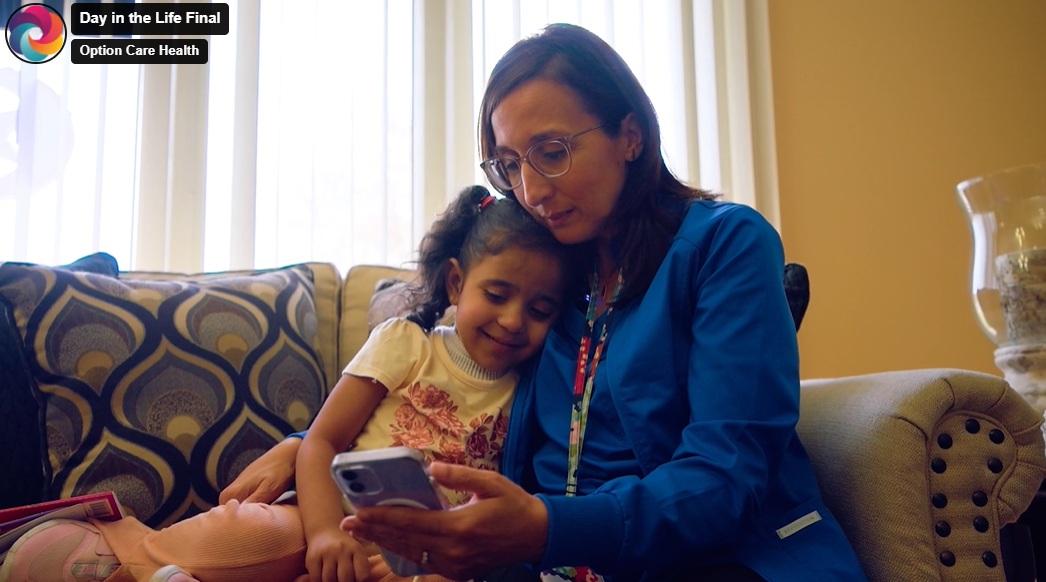
An antibiotic prescription is an instruction. A completed course of treatment requires considerably more. Option Care Health coordinates insurance authorization and planning, prepares medication through local pharmacies, supplies equipment and provides clinical support. Its portfolio includes anti-infectives, immunoglobulin therapies and nutrition support, alongside treatments for other acute and chronic conditions. Patients receive care at home or in ambulatory infusion settings.
There are several customers inside that arrangement. The patient wants treatment that fits into life. A hospital needs a dependable transition after discharge. An insurer evaluates coverage and spending. A pharmaceutical manufacturer needs a way to reach patients with a complex therapy. Each sees a different part of the same operation. A late authorization can matter as much as a late delivery.
A manufacturer relationship makes the distinction tangible. In August 2025, Quince Therapeutics selected Option Care Health to support a potential U.S. launch of its experimental eDSP treatment. The arrangement covered administration and supporting services, including logistics and patient registration. It depended on positive study results and regulatory approval. The network was being prepared for a medicine that still had to clear its own hurdles.
A handoff business
Option Care Health’s market position rests on combining clinical expertise with a network that can serve multiple therapies and locations. Regional pharmacies, physician practices and hospital outpatient departments offer alternatives. The national operator offers referring organizations and manufacturers a broader common infrastructure. That is useful when a program must work across many communities.
The information must travel too. In a 2020 sponsored article republished by the company, nursing executive Joan Couden described earlier nurse-pharmacist coordination as manual. AlayaCare helped connect care-plan updates and clinical communication. The companies announced a formal software collaboration in 2021, covering scheduling, patient communication, assessment and administrative work.
“The pandemic caused us to look at everything we do differently”Joan Couden, then vice president of nursing, 2020
Couden’s account explains what changed the urgency of telehealth adoption: the pandemic forced the team to reconsider how care could be delivered. The practical objective was less time wrestling with logistics and more time with patients. The company describes that collective approach as “One Team One Goal.” Here, teamwork has a measurable operational purpose: keeping the nurse, pharmacist and patient working from compatible information.
The money takes a different route
The company earns revenue through reimbursement for therapies and related services. Its economics depend on drug purchasing, clinical labor and payer arrangements. Patients do not face one universal menu price. The prescribed treatment and insurance benefits determine financial responsibility; the company provides financial counseling to help navigate it.
Scale is expensive. The Intramed Plus acquisition cost $117.2 million, net of cash acquired, in January 2025. Across that year, Option Care Health generated $5.65 billion in revenue, up 13%, while net income declined 2% to $207.6 million. More treatment activity did not produce a matching rise in profit.
The distinction matters for anyone copying the model. A network can become busier while its financial cushion becomes thinner. Growth brings more prescriptions to fulfill, more inventory to finance and more clinical work to coordinate. In the second quarter of 2026, revenue growth slowed to 1.9%, although net income rose 6.7%. Volume and profitability keep different calendars.
The buyer becomes the target
Expansion has also meant changing plans. In May 2023, Option Care Health agreed to combine with Amedisys in a transaction valued at approximately $3.6 billion, including debt. That would have added home health and hospice capabilities. The agreement ended in June after Amedisys chose an Optum transaction. Option Care Health received a $106 million termination fee.
Now the company is on the other side of the table. On October 6, 2026, CD&R and McKesson announced an agreement to acquire it for $32.05 per share, implying approximately $5.8 billion in enterprise value. Closing is expected in the first half of 2027, subject to shareholder and regulatory approvals. The announced plan keeps Option Care Health a separate company with its own management.
Copy the sequence
The useful lesson is to follow the treatment all the way through. Start with a specific patient need. Identify the preparation, training, payment and staffing that make the service dependable. Expand only when those steps can be repeated. Prime’s first staffing decision remains instructive: delivery alone could not do the job.
Home treatment still depends on clinical suitability, a workable environment, available support and coverage. Some patients need a different setting. The company’s mix of homes and infusion sites acknowledges that constraint. Its achievement is making another setting possible, with the clinical work required to sustain it. For the patient, the important result is wonderfully ordinary: more of life can happen around treatment.