A treatment chair is a peculiar piece of furniture. Put it in a photograph and it tells you almost nothing about the work required to fill it. Somebody must send a prescription. Somebody must establish what the insurer will cover. A pharmacy must prepare the medicine. A nurse must be available. Only then does the recliner become useful.
Medix Infusion has built its business around that sequence. The company delivers prescribed infusion and injectable treatments in outpatient suites and, when appropriate, at home. Its chosen territory is rural, suburban and otherwise underserved communities. Look past the chairs and the proposition becomes clear: make the journey from prescription to treatment easier to complete.
- Local infusion suites and home pharmacy services share one care-delivery model.
- Medix takes on the approvals and coordination that surround a prescription.
- A $35 million Series B supported expansion, including five Arizona suites.
A prescription still needs a place to go
The patients here have medical orders, often for conditions that demand ongoing attention. Medix lists multiple sclerosis, rheumatoid arthritis, Crohn’s disease and other illnesses among the conditions its therapies can address. Its treatment categories include biologics, anti-infectives and intravenous immunoglobulin, or IVIG. The prescribing clinician chooses the therapy; Medix supplies the setting and supporting work to deliver it.
That distinction matters. Patients do not have to replace their physician or nurse practitioner to receive treatment at Medix. The service extends an existing clinical relationship. For a referring office, the appeal is administrative as well as clinical: another team handles authorization, benefits verification, scheduling and patient communication.
For the patient, the distinction between those departments is largely beside the point. The useful outcome is a confirmed appointment with an understandable financial estimate. For a provider’s office, the same coordination can reduce the number of separate conversations needed to arrange treatment. Both are buying relief from the work between the medical decision and its delivery.
There is an operational lesson here for any service business. Giving the customer an instruction is only the beginning. Someone has to own the steps that follow. Medix’s model suggests that coordinating those steps can be valuable enough to build an entire organization around.
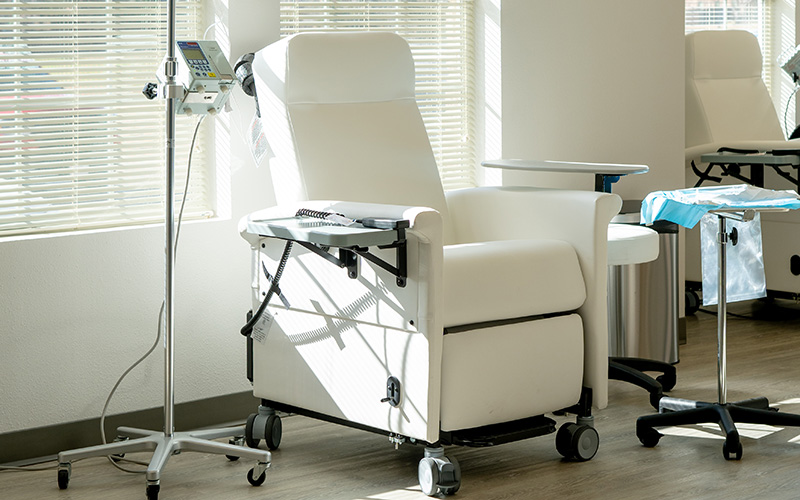
The room is the last step
The visible experience is deliberately ordinary: a recliner, a tablet, refreshments. Those details make sense when an appointment takes time. But the less photogenic infrastructure is equally revealing. Medix operates a home infusion pharmacy that prepares medication and arranges delivery to patients’ homes or its clinics.
Its provider materials describe software connecting departments and workflows. The useful claim is specific: the referral does not stop at intake while the patient independently assembles the rest. Medix can also coordinate with a home health agency when needed. This is healthcare delivered through a chain of handoffs, with an organization accepting responsibility for connecting them.
- 01Prescription
- 02Benefits + approval
- 03Pharmacy preparation
- 04Clinic / eligible home
One appointment. Several jobs that have to connect.
Home treatment adds flexibility, but it is conditional. Medix acknowledges that some therapies require a clinic. A convenient address cannot settle a clinical question. The value of having both routes is the ability to organize an appropriate setting around the prescription and the patient’s circumstances.
Five rooms change the map
Medix dates its inception to April 2020. By its January 2023 funding announcement, it reported more than 30 locations across five states and more than 4,600 patients. Those are dated company figures, a useful snapshot of an early expansion rather than a current census.
The financing announcement contained a concrete explanation of how the network would grow. A $35 million Series B, led by Echo Health Ventures with Pittco Direct Investments II and Noro-Moseley Partners participating, would support organic growth and the acquisition of the Center for Neurology and Spine’s infusion operations. That acquisition involved five Arizona suites.
Capital for growth and the Arizona infusion acquisition.
Buying existing operations offers a different starting point from opening an empty room. There are already sites and a clinical service to incorporate. The transaction therefore illustrates a practical expansion method: add local delivery capacity to a broader operating network.
Medix also announced a Live Oak Bank debt facility in 2023. In July 2025, Crestline announced a senior secured credit facility for growth and operating needs. Equity and credit both appear in this expansion story; the disclosed equity raise should not be mistaken for the purchase price of the Arizona operations.
Who pays for the chair?
The commercial model follows healthcare reimbursement. Medix evaluates medical and pharmacy benefits, delivers prescribed treatment and collects applicable patient payments. It says patients receive an estimated out-of-pocket expense before scheduling. The distinction between a treatment’s price and a patient’s bill is central to the service.
Medix occupies a market alongside hospital outpatient departments, physician-office services and providers such as IVX Health and Option Care Health. Comfortable treatment rooms are available elsewhere too. Medix’s particular emphasis combines underserved geography, home pharmacy and referral coordination. The competitive question is whether those pieces work together reliably for a particular patient.
The next appointment is the test
In April 2026, Medix appointed Carmine DeNardo president and CEO. Its announcement listed centers in seven states: Texas, Arizona, Oregon, Kansas, Washington, Utah and Missouri. DeNardo arrived with specialty pharmacy experience at ReCept and Omnicell, a background consistent with a business that must manage medicines as carefully as locations.
“keeping the patient experience at the center of everything we do.”
Carmine DeNardo · April 2026 appointment announcement
That combination of pharmacy experience and local delivery explains the next managerial challenge. As the network expands, its processes must keep serving individual referrals. A location count measures reach; it says less about whether every handoff is working.
The ambition depends on practical limits: coverage, authorization, clinical suitability, local availability and safe preparation. Each patient’s route still has to clear those requirements. A wider map alone cannot make an appointment happen.
The useful measure of this model is the repeat visit. Can the next prescription, approval, delivery and nursing appointment connect again? For patients living with recurring treatment, that ordinary reliability is a substantial product. The chair matters because someone can finally sit in it.