The awkward part of emptying a pit latrine can be the space between the toilet and the road. A vacuum truck may be perfectly capable of carrying the waste away. It just cannot get close enough to collect it. In a dense settlement, the decisive engineering problem might be a footpath.
OPERO-Services has built part of its work around that distance. The Kenyan company combines engineering, market research and business support for water, sanitation and hygiene, usually shortened to WASH. Its proposition is practical: understand the equipment, understand the neighbourhood, and understand the business expected to keep both connected.
- For operators: equipment, training and after-sales support for pit-emptying work.
- For WASH businesses: market research, strategy and investment readiness.
- For partners: field testing that puts a promising design against everyday operating conditions.
A truck at one end. A toilet at the other.
The PuPu Pump makes this approach tangible. Developed by Practica, it uses a petrol-driven compressor and a separate pumping unit to draw sludge from a pit, then push it through a hose to a receiving tank. OPERO is the authorised East African distributor, providing sales, training and support.
The name describes the push-and-pull action. Current specifications give a pumping distance of up to 100 metres, depending on sludge viscosity. That qualification matters. So does the equipment’s weight: the pump and compressor each weigh 50 kilograms. Portable equipment still needs people, transport and a sensible route.
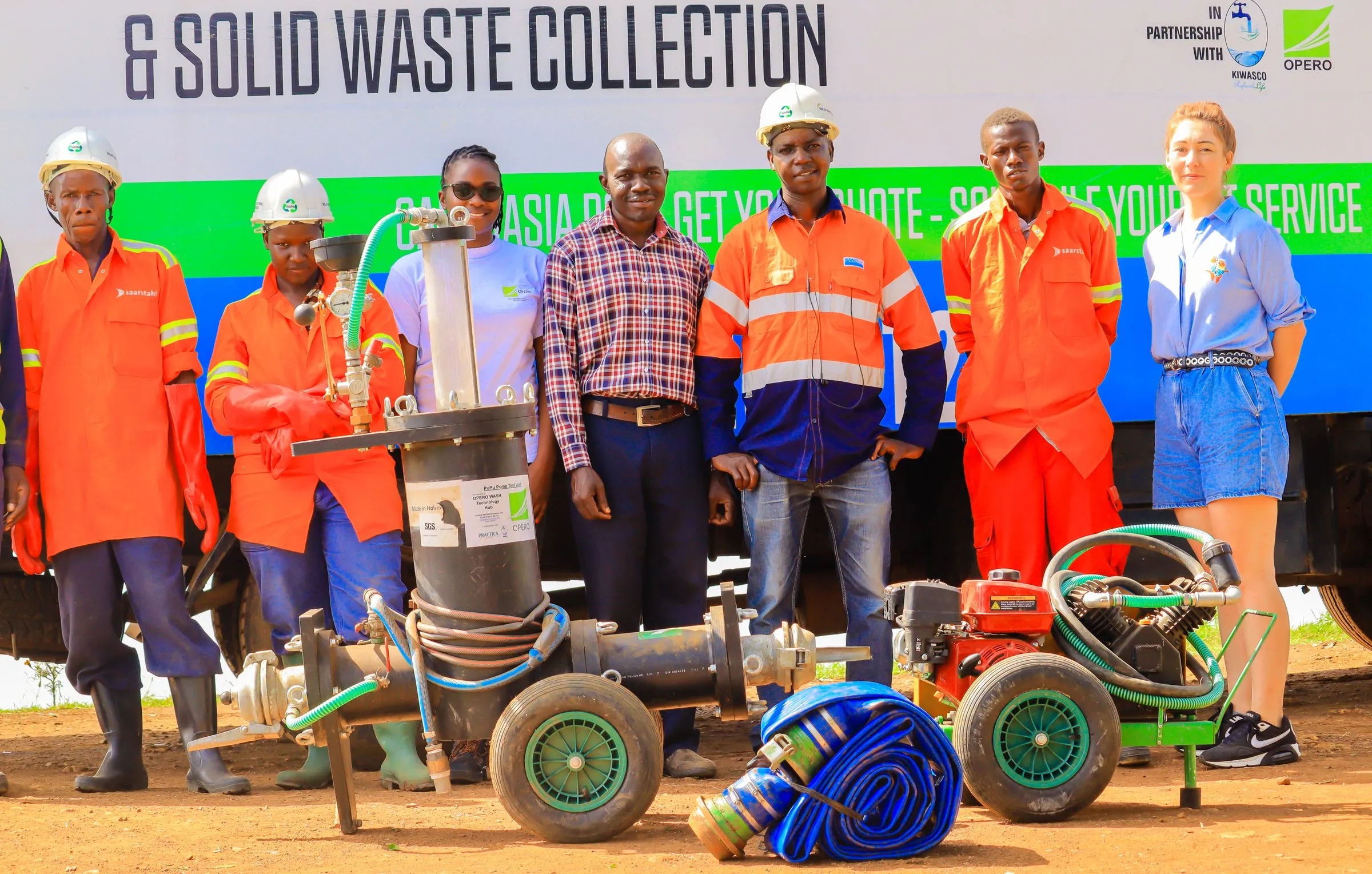
Beginning in 2021, OPERO and Practica tested the technology with Gasia Poa, a waste-management enterprise in Kisumu. The published case study reports pumping 3,000 litres in 20-30 minutes during field testing. It also describes shorter emptying times and safer working conditions. These are observations from a particular programme, rather than promises for every pit.
- 01Pit latrine
- 02Portable pump
- 03Receiving tank
- 04Approved disposal
A longer hose solves access. The rest of the journey still needs organising.
The rubbish has a vote
Then there is what people put into toilets. OPERO’s February 2025 pump digest describes plastics, diapers, fabric, utensils and glass entering pits where household waste disposal is inadequate. Excessive rubbish interrupts suction, wears components and adds labour. Every interruption means fewer jobs completed and less money earned.
The response reaches beyond the pump. OPERO calls for accessible waste-disposal alternatives, household separation and coordination with public-health teams. Field evidence also informed equipment development, including new valves tested at Practica’s Netherlands workshop. The rubbish in the pit becomes information for the person designing the valve.
This feedback loop helps explain OPERO’s position in the market. It works between technology developers, service businesses and the organisations funding or governing sanitation. The Kisumu WASH Technology Hub also offers training on the manually operated Gulper and the portable PitVaq. Different pits call for different tools.
“Scaling WASH Innovation and Enterprise”
OPERO-Services’ stated focus
The price of the missing pieces
Founded in 2019 by Nicola Greene, OPERO works across the technical and commercial sides of sanitation. Its enterprise portfolio includes businesses such as Gasia Poa, AquaClara, Nazava and Omiflo. The company reports 35 enterprises in tailored accelerator programmes and more than $3 million raised for WASH enterprises in Kenya. That money belongs in the story of the businesses it supports.
Its business model spans engineering and research assignments, enterprise-support programmes, and equipment distribution with associated services. For a utility or development partner, the value is local technical and market knowledge. For an operator, it can be help choosing equipment, learning to use it and keeping it in service.
An ASME and Engineering for Change support project makes the operational work unusually concrete. Interviews, service records and field visits informed a maintenance checklist, a pricing calculator, customer records and a spare-parts framework. These are tools another hardware business can copy: record the actual service cost, make maintenance repeatable, and know which parts must be available.
A toilet with a grass problem, in a good way
OPERO’s designs can be pleasantly unexpected. Its Vetiver Green Latrine replaces a conventional pit with barrel containment and a planted treatment bed. A sealed SATO pan feeds a two-barrel system; the liquid then passes through vetiver grass. The design won FINISH Mondial’s first Santech Hackathon in 2020.
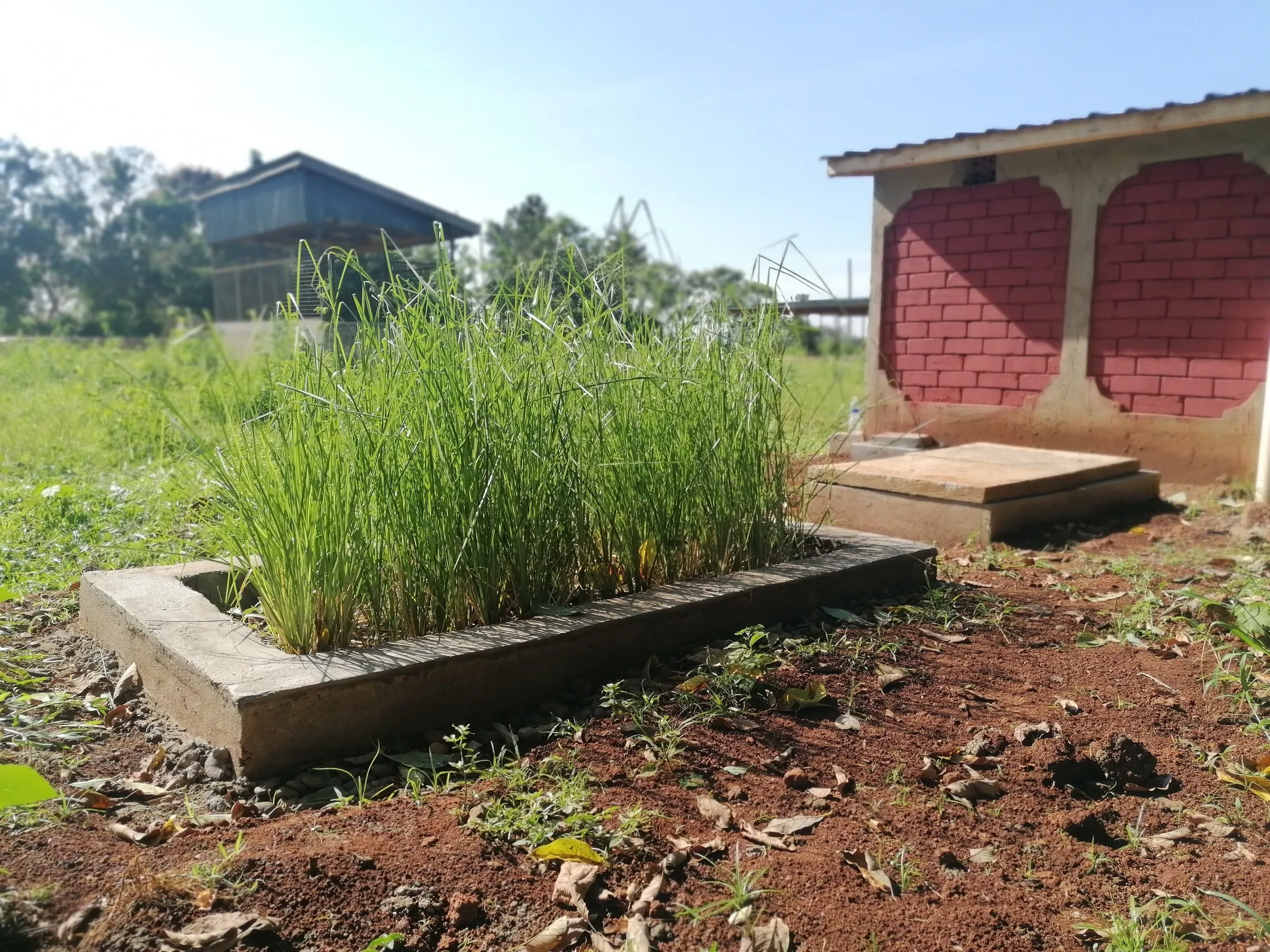
A six-month Busia pilot reported $185 in materials, excluding the toilet superstructure, with no reported odour, maintenance or excreta-handling issues during that study. In 2024, a Western Kenya Sanitation Project partnership set out to train artisans, establish four demonstration sites and test demand through a target of at least 40 installations. A target remains a target.
Elsewhere in the portfolio, the Honey Dipper prototype lifts waste on a moving belt so it can dry progressively. Saniforce combines anaerobic digestion with thermal disinfection. OPERO reports treating 115 cubic metres of sludge during a 15-month Kisumu Saniforce pilot, before a further humanitarian deployment phase in Uganda. Each project addresses a different part of the sanitation chain.
Comparative research gives this portfolio a useful reality check. OPERO implements the Kisumu work in a four-city study of emptying methods. The project’s December 2025 newsletter reported that, in Kampala and Kisumu, distance to disposal and truck utilisation drove cost variation more than pump type. Its early findings also pointed to pit depth, sludge consistency and access as major influences on job duration. For someone buying equipment, the implication is straightforward: price the route and the receiving arrangement alongside the machine. Faster pumping can leave the expensive journey untouched.
What the hose cannot fix
The limits are specific. The PuPu Pump cannot pump garbage or solid, dry sludge. Its standard package does not include a transport vehicle. A receiving tank, trained operators, maintenance and an approved disposal destination remain essential. Improving collection leaves the treatment question waiting at the other end.
OPERO’s August 2026 Kisumu case study places that work inside a wider system of standards, licensing, disposal access and worker facilities. It also records continuing affordability and treatment-capacity gaps. For anyone building a sanitation service, the useful question is what happens after the demonstration ends: who takes the next booking, fixes the equipment and completes the journey?
Go closer
Explore OPERO’s work, operator training and field publications. Follow LinkedIn or X.