A startup mentor needs more than good advice. Someone has to pay for the training, keep the programme running, find the right partners and explain what happens when the tax rules change. Kenya’s Association of Startup and SMEs Enablers, or ASSEK, works in that less photogenic part of entrepreneurship. Its constituency is the people and organizations helping businesses get off the ground.
That places it one step behind the familiar founder story. An accelerator might help a company sharpen its pitch. ASSEK works on the accelerator’s capabilities, connections and operating environment. Across a self-described network of more than 150 entrepreneur support organizations, its proposition is straightforward: improving the support can improve the chances of the businesses receiving it.
The interesting question is what that means on a Tuesday morning. For ASSEK, the answers include a needs survey, a training session, a parliamentary submission or a government department with a problem a local startup might solve. There are conferences, too. But the documents behind the gatherings reveal more than the group photographs.
The customers have customers
ASSEK’s members include incubators, accelerators, innovation centres, advisers and other organizations serving entrepreneurs. Its membership directory reaches into education, investment, agriculture, consulting and social impact. Moringa School, Pangea Accelerator and Sinapis appear among the organizations displayed on its website. That breadth gives the association a constituency larger than the familiar technology-hub crowd.
Members are offered representation, professional development, introductions, visibility and access to opportunities. Joining involves submitting organizational details, followed by review and verification. For an ESO manager, the practical attraction is access to peers who face similar operating questions. For a founder, the useful route may be through one of those members or a particular programme.
This is an association with a service portfolio. It occupies the space between individual business advisers and the public institutions and development partners shaping entrepreneurship support. A reader choosing where to spend time should begin with the job: finding a coach, improving a support organization, or influencing a shared policy problem each calls for a different doorway.
When the helpers needed help
The pandemic made the association’s own purpose harder to take for granted. In its 2021 annual report, then-chairman Robert Karanja described a moment of reconsideration. Restrictions on travel and trade put pressure on the organizations expected to help other businesses survive. The report also described financial strain among ESOs.
“Covid gave us reason to pause and recheck the most basic assumptions.”Robert Karanja · Chairperson’s message, 2021 annual report
The practical response included a GIZ-backed digitization project that began in November 2021. ASSEK launched the mapping exercise on March 29, 2022. An external consultant, CediA Africa, carried out stakeholder meetings in Kisumu, the coastal region, Nakuru and Nairobi. Hub representatives then participated in a needs-assessment survey.
The sequence matters. First came an attempt to establish what the organizations needed; workshops and support for digital processes were designed to address the gaps. The project also proposed a knowledge base that organizations outside ASSEK could use. The aim was to improve access to knowledge, investors and markets while helping the hubs operate.
There is a useful method here for anyone commissioning business support: let the diagnosis shape the training. A programme can look impressive on a calendar while missing the problem that makes a team ineffective. ASSEK’s documented approach gives another network something concrete to copy: regional conversations, a survey, then support tied to the findings.
- 01Meet the hubs
- 02Map the needs
- 03Target the training
- 04Share the practices
Advocacy, down to the tax clause
Policy influence can sound wonderfully vague. ASSEK’s Finance Bill submission, dated June 4, 2024, is refreshingly specific. Prepared for the National Assembly’s finance and planning committee, it set out proposed changes, the association’s recommendations and the reasoning behind them.
One example concerned a proposal to remove the KES24,000 monthly threshold for withholding tax on certain service fees. ASSEK asked for the proposal to be deleted, arguing that applying withholding requirements to numerous small payments would add to compliance work. It also challenged proposed changes affecting electric mobility and data protection.
These were positions on a bill. Their value as evidence of ASSEK’s work lies in the intervention itself: a broad promise to represent entrepreneurs translated into particular clauses and particular objections. A smaller support organization could use that analysis to participate in a debate it might struggle to follow alone.
Institutional relationships provide another route. ASSEK and the Kenya National Innovation Agency agreed to work on commercialization and the policies, standards and infrastructure supporting innovation. A separate Konza Technopolis agreement paired the association’s network with Konza’s infrastructure and international connections. Each arrangement gives cooperation a defined subject.
A grant, with someone to call
The WIDU partnership shows how this work reaches individual businesses. ASSEK began collaborating with GIZ WIDU in October 2020, connecting diaspora-backed investment with grants, coaching and mentorship for small enterprises. The model brings practical advice alongside money, with an online platform supporting the process.
Its project archive reports that 141 entrepreneurs received more than KES30 million. That is a historical programme figure. It describes money reaching businesses through the initiative, rather than a financing round for ASSEK. The useful feature is the pairing: an entrepreneur receives financial support and help with the decisions that follow.
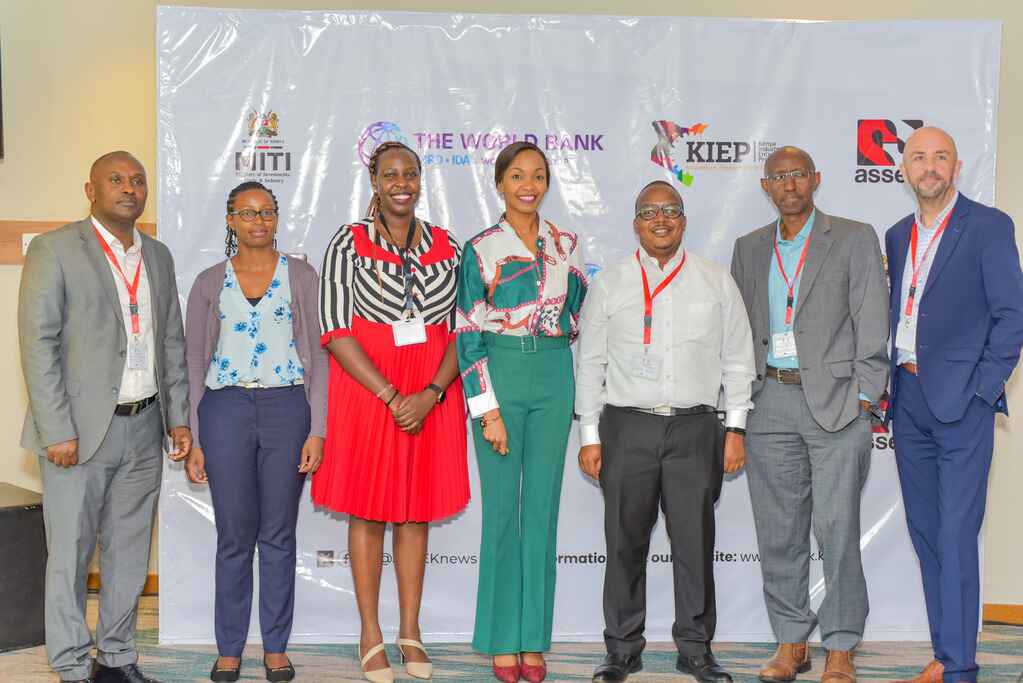
ASSEK also works with the Ministry of Investments, Trade and Industry through the Kenya Industry and Entrepreneurship Project. Its published account describes efforts to improve organizational capacity, managerial and technical skills, and connections between established industries and startups. The US$50 million figure associated with KIEP is the wider project envelope.
There is an unusually practical detail on ASSEK’s KIEP page: a grievance mechanism. People affected by project activities can submit concerns for registration, investigation and a recommended response. Partnership work needs that sort of plumbing. A network becomes more credible when participants have a route for raising a problem after the launch event.
What the network costs
ASSEK’s finances follow the economics of an association. Membership, partner-backed work and paid event opportunities serve different purposes. A 2023/24 regional ecosystem comparison listed annual membership at US$70, plus a US$15 joining fee, and a 2023 annual budget above US$200,000. Those figures are historical benchmarks.
The 2024 conference prospectus makes the event business tangible. A small, unbranded exhibition booth for two days was advertised at US$500. Bronze sponsorship was US$10,000; title sponsorship, US$30,000. Higher packages included visibility and participation opportunities. These are asking prices for specific packages, not evidence of sales or profit.
2024 conference offers
USD · Published offers, not realized income. Bars share a $30,000 scale.
The comparison also identifies an overlapping Kenyan association, the Association of Countrywide Innovation Hubs, with a focus on hubs outside Nairobi. ASSEK’s broader ESO constituency gives it a different emphasis. The choice is about representation and useful relationships, rather than a neat contest in which every organization must pick one camp.
A better brief than “please innovate”
ASSEK’s 2025 GovTech Challenge Series brought the model into public services. Its Nairobi County education brief described fragmented school records and manual reporting across 231 early-childhood education schools. Other challenges addressed highway incident reporting and customer feedback at the Kenya School of Government.
Applicants were asked to work with public institutions on usable solutions. Requirements included a working prototype by the end of the challenge, technical capability and participation in co-creation and pilot testing. The programme offered mentorship and described small-grant support; selected solutions were intended for presentation at the annual conference.
For a developer, that provides a defined problem and access to people who understand it. The important condition is continued cooperation from the institution. A prototype still needs users, a workable deployment plan and an organization willing to adopt it. An invitation to demonstrate a solution is an early step in that process.
Put the support teams in the picture
Visibility is another service. In March 2025, ASSEK introduced its ESO Empowerment Collective and a publicity campaign using site visits, media features, case studies and digital storytelling. The announced itinerary stretched beyond Nairobi to places including Kilifi, Wajir and Lodwar.
“ESOs are at the heart of Kenya’s innovation and economic progress,” chief executive Mercy Kimalat said at the launch. The campaign’s logic is easy to follow: organizations that work behind entrepreneurs also need to be discoverable by partners, funders and potential clients. A national association can put local work in front of a wider audience.
Kimalat, described by ASSEK as its founding CEO, brings experience in partnerships and entrepreneurship programmes, including earlier work with E4Impact. The association’s stated values emphasize collaboration and inclusion. Its member elections add a practical dimension: members have a channel to influence who directs the organization.
The learning continues between large events. ASSEK reported sessions on August 24-27, 2026, covering organizational development, finance, design thinking and resilient ESO business models. It also advertised September learning sessions and its eighth annual conference for November 11-12. The calendar shows attention to the organizations’ own ability to keep operating.
That is the standard worth applying to ASSEK. A useful association should leave its members better able to do their jobs: explain a policy, run a programme, find a collaborator, support a business. The work earns its place when the next entrepreneur who walks through a member’s door gets more capable help.