Nancy, a customer at Oz Moving, had a regret: she wished the company had put cameras on its trucks sooner. In a testimonial published by OpenEyes, she describes a system that recognizes distracted driving and tells the driver to look at the road. It is a modest instruction. Yet it captures an ambitious proposition: an insurance business might improve its economics by getting involved a few seconds earlier.
- OpenEyes bundles commercial fleet insurance with risk prevention technology.
- Drivers get feedback; fleet managers get tools for coaching and risk reduction.
- Its US truck and bus pages target fleets with 10 or more power units.
- Fewer accidents are the proposition. Savings still depend on the fleet and its policy.
01 The bill arrives too late
Insurance has a peculiar relationship with time. A fleet pays to be protected against tomorrow’s accident, but much of the work follows yesterday’s collision. Someone assesses damage. Someone investigates liability. Someone calculates what the next renewal should cost. The driver’s moment of inattention has become a collection of invoices.
OpenEyes wants to move part of that work upstream. Its offer joins commercial auto insurance to its own technology for identifying risk, warning drivers and supporting fleet managers. The attraction is easy to understand: preventing an accident can spare a business the repair, the interruption and the claim. It also spares people an ordeal that an insurance payment cannot reverse.
The founders’ diagnosis, laid out at the company’s public launch in February 2023, was that commercial auto insurers were responding to expensive losses with higher premiums. That response could cover a bill while leaving its cause intact. In their telling, the first thing to fail was the market’s feedback loop: the price changed more readily than the behavior producing the loss.
02 Give the warning a job
A recording is useful when people disagree about what happened. A warning is useful while there is still time to do something about it. OpenEyes’ driver feedback makes that distinction tangible. Nancy’s account of a camera telling a distracted driver to watch the road describes prevention at the scale of a single decision.
For a fleet manager, the next step is to turn detected risks into coaching. OpenEyes advertises personalized training and tools that help managers identify sources of danger across their operations. An alert addresses the moment; coaching addresses the pattern. The same proposition also includes more precise underwriting and streamlined claims handling. These activities have different clocks, but they are concerned with the same vehicles.
That combination places OpenEyes between two familiar purchases: a commercial auto policy and a fleet safety system. Video telematics companies such as Samsara, Motive and Lytx occupy the neighboring technology market. OpenEyes’ distinguishing pitch is to bring insurance and risk reduction together. A fleet comparing the options should therefore examine the coverage and the daily safety workflow, rather than treating every camera-equipped offer as interchangeable.
03 Three founders, two kinds of arithmetic
Co-founders Yoav Oron, Omry Sendik and Dan Charash divide the leadership roles of CEO, CTO and chairman. Pitango’s account of the company’s beginnings says Oron and Charash met as venture partners at the fund, bringing finance and deep technology into the same conversation. The pairing helps explain why this company talks about driver behavior and insurance economics in one breath.
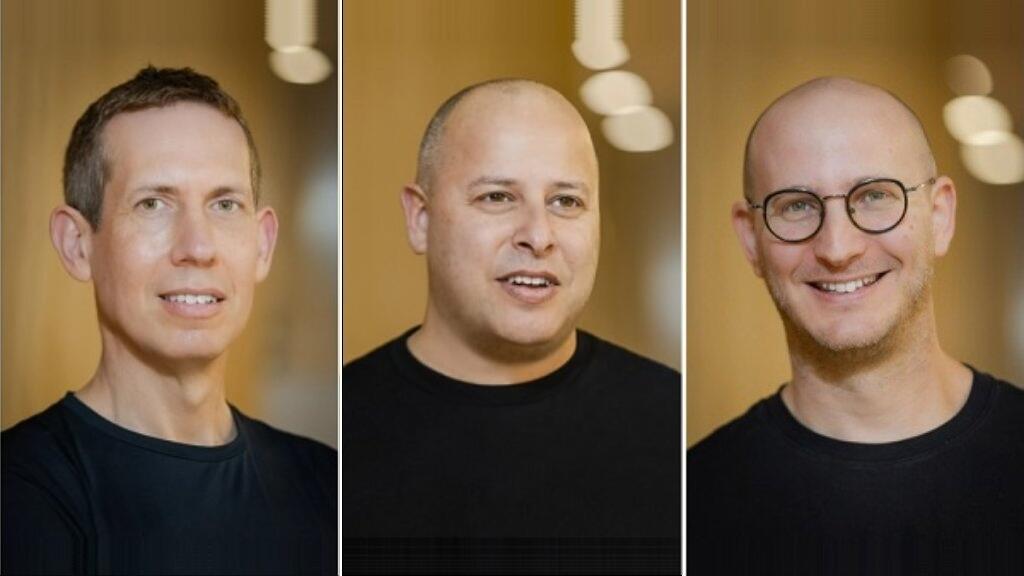
“We are actually a technology company that sells insurance.”
YOAV ORON / CTECH / 2023
Oron’s description is a useful account of the company’s emphasis, though the insurance requires expertise of its own. In May that year, OpenEyes appointed Gary Flaherty as chief insurance officer. He had led commercial auto at Nationwide E&S and previously held senior roles at Progressive and Canal Insurance.
The funding supplied room to develop the proposition. OpenEyes emerged from stealth with an $18 million Series A led by Insight Partners and Pitango First, with MoreVC participating. Its announced cumulative funding reached $23 million. The stated uses were technology development and additional hiring for US operations. Capital could finance the team; the team still had to make prevention useful inside a working fleet.
04 Read the number, then the policy
At that 2023 launch, OpenEyes reported reductions of more than 25.5% in accident frequency and more than 30% in claim severity. It described those results as independently validated. They are two different measures: how often accidents happen, and how costly claims become. They should be read as historical company-reported outcomes, rather than a prediction for every new customer.
Reported reduction
Reported reduction
What does participation cost a customer? OpenEyes invites fleets to request a quote and book a demo. The commercial question is consequently specific to the buyer: what coverage is offered, what technology is included, and what the fleet must do to use it. The amount invested in the startup answers a different question from the amount on a customer’s invoice.
The current product pages put useful boundaries around the pitch. Truck fleets are offered physical damage, motor truck cargo and excess liability. Bus fleets are offered physical damage and excess liability. Both pages specify at least 10 power units, describe a continental US market and mark primary liability “coming soon.” The agency’s terms also make availability dependent on licensing and underwriting. Those details belong in the buying conversation.
05 A dashboard needs a human
The practical lesson extends beyond insurance. Detection earns its keep when it changes a decision. A fleet can copy that principle by linking each recurring risk to a person responsible for reviewing it, a coaching action and a way to check whether behavior improves. Buying a camera is one step in that sequence.
This approach asks something of the customer. Drivers must respond to useful feedback, and managers must make room for coaching. If alerts are ignored or observations accumulate without action, the prevention argument weakens. Nancy’s regret about buying cameras late is memorable because it points to a changed routine. OpenEyes is selling the possibility that a better routine can also produce a better insurance bill.