Before Omer Goldberg built a company that tests financial systems, he helped build a company that failed its own stress test. JoiRyde was supposed to make campus carpooling easier. The software had ambitions. The founders had titles. The agreement governing their ownership had not been signed. A surprisingly small piece of unfinished business could bring the whole arrangement down.
Goldberg later described the collapse in public, with a title that left little room for investor relations: “I burned my first startup to the ground.” His account was frank about his part in it. Three developers had tried to build too much, argued over decisions and postponed difficult conversations. There is a certain entrepreneurial efficiency in discovering several expensive lessons inside one unsuccessful company.
Years later, as founder and CEO of Chaos Labs, Goldberg would make testing assumptions a business. Across his writing, the recurring problem is recognizable: a system can look convincing long before anyone has established how it behaves under pressure.
The notebook before the laboratory
His early record is full of things made for the pleasure of making them. His public GitHub includes a desktop app for NBA scores, a React Native navigation example and Mindflow.ai, which aimed to generate developer documentation from a programmer’s workflow. These are different scales of inconvenience, all treated as reasonable invitations to write software.
His LinkedIn projects include a scheduler inspired by the logistical problem of colonizing Mars. It used linear programming to accommodate constraints. There is something pleasingly practical about bringing a scheduling tool to interplanetary settlement. Before anyone worries about the view, someone will need to arrange the shifts.
The earthly route ran through the Technion and a Facebook internship in Tel Aviv, from July to October 2017. Goldberg applied through the careers site. He arrived with a portfolio of projects and startup attempts, then worked on Express Wi-Fi within Internet.org. By 2018, he had returned to the team as a full-time engineer.
His advice to incoming interns was unusually tangible. Share code early. Ask for feedback. Learn to find your own way through a large codebase. He described breaking work into smaller tasks with a pen and notebook. The tools were modest; the setting was a software company operating at a scale few young developers get to see.
When the experiment contains real money
Goldberg went on to technical leadership roles at Facebook and Instagram. Working inside consumer software gave him a useful comparison for the business he would later build. Teams could vary production settings and compare results. With financial applications, the cost of a poor experiment could land directly in someone’s balance.
Simulation offered a way to investigate before committing money to the result. That distinction helps explain why an engineer from social platforms would become interested in the workings of lending markets. Both involve software, data and decisions at scale. Finance makes the consequences of a bad configuration rather harder to dismiss as a disappointing engagement metric.
Goldberg’s crypto involvement stretched back to receiving Bitcoin for contract work in 2012. In 2021, after leaving Instagram, he began building simulations to test his own on-chain strategies. Other protocols wanted access. A tool made for his own use acquired customers before it acquired a grander job description.
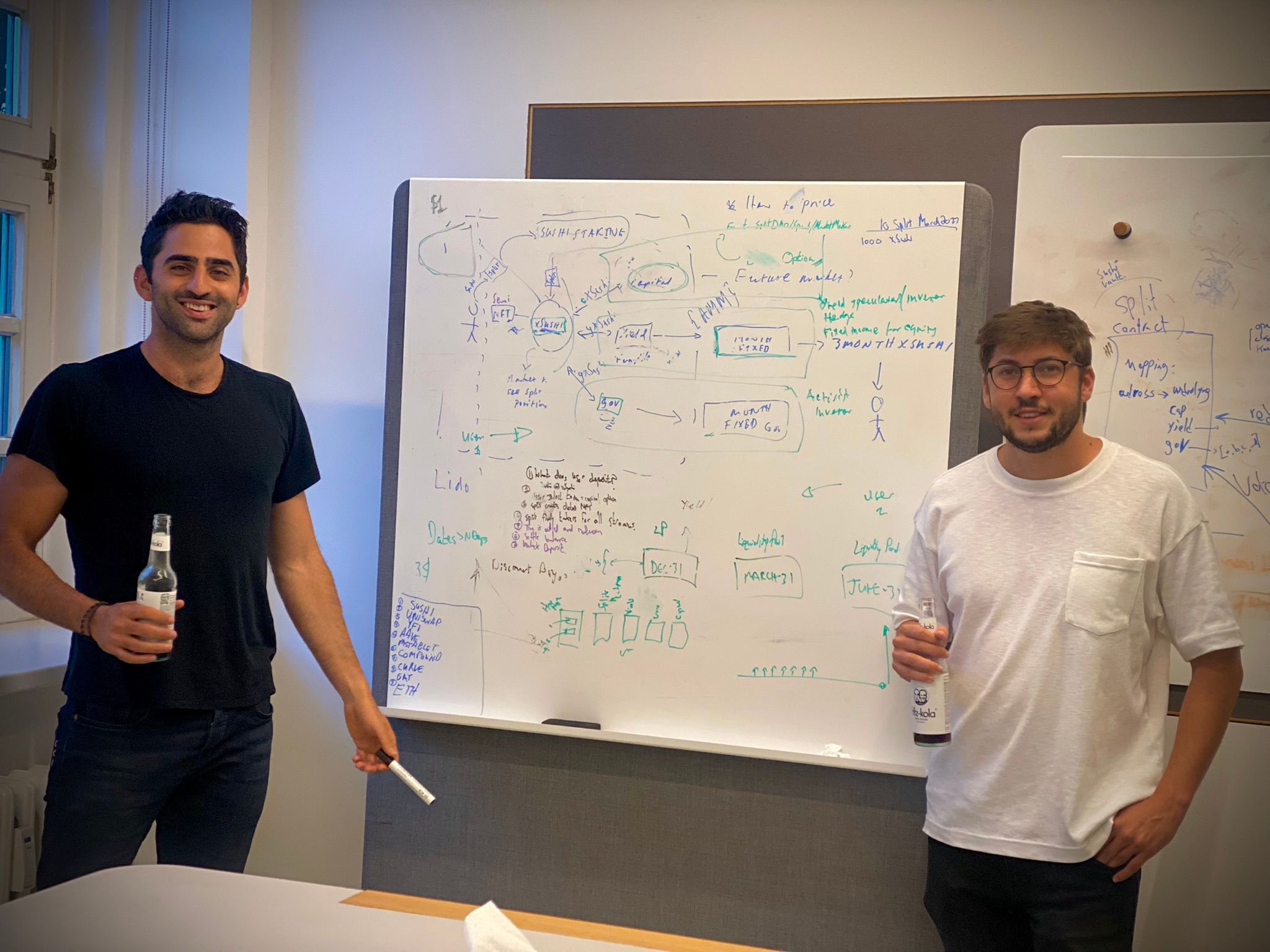
His former Facebook teammate Yonatan Hayun joined full-time that autumn. Chaos Labs took shape around the realization that a code review could leave important economic questions unanswered. What would happen if market conditions changed? What dependencies had a developer inherited? Could an application behave correctly according to its code and still produce a deeply unwelcome financial outcome?
The settings are part of the story
A February 2023 methodology paper coauthored by Goldberg makes the work concrete. In a collateralized lending system, borrowers pledge assets against loans. If collateral loses value, positions may need to be liquidated. The rules governing that process influence how much borrowing the system permits and whether liquidation remains economically attractive.
Those rules require choices. Give borrowers more room and the application may become more useful, while accepting additional exposure. Make every setting extremely restrictive and the resulting service may be safer in some respects but less useful to the people it was built to serve. The interesting work lives inside those tradeoffs.
The paper describes simulations of borrowers and liquidators, followed by estimates of potential protocol losses. Parameters can then be evaluated against an acceptable level of risk. The point is to make a decision legible: here are the assumptions, here is the modeled behavior, here is the consequence of changing a setting.
That is a demanding product to sell. Much of its value consists of helping customers anticipate outcomes they would prefer never to experience. A spreadsheet cell can be visually uneventful and economically consequential. Goldberg’s work asks people to pay attention before the cell becomes a headline.
- 01 / ObservePrices, liquidity and positions
- 02 / SimulateBorrowers and liquidators
- 03 / EvaluateLosses and tradeoffs
- 04 / AdjustParameters for the protocol
Capital arrives after the tool
Chaos Labs announced a $20 million seed round in February 2023. In August 2024 came a $55 million Series A led by Haun Ventures. At that second announcement, the company reported more than 20 protocol customers and a customer base that had tripled over the preceding year. Aave, GMX and Jupiter were among the names it listed.
$20MSeed / February 2023
$55MSeries A / August 2024
The figures describe a company finding demand for infrastructure. They also make a useful distinction between capital raised and work performed. Venture funding gives a business resources to hire and build; it does not establish the quality of any particular risk decision. Every new engagement still requires an answer to the customer’s specific problem.
The investor list brought Goldberg into a network spanning payments, trading and crypto infrastructure. PayPal Ventures, Galaxy and Lightspeed were among the backers named across the rounds. The business depended on persuading people that financial software needed more than an attractive interface and a functioning contract. It needed an account of what could happen next.
“Most advice isn’t worth much.”
Omer Goldberg, April 2025
That brisk assessment of startup wisdom suits the builder visible in his earlier writing. It is easy to collect principles. A founder has to decide which one applies to a customer, a budget or a product on an ordinary working day. Advice becomes useful only when it survives those particulars.
The cost of saying goodbye
In April 2026, the risk conversation became a public disagreement with a major customer. Chaos Labs announced it was stepping down from its Aave engagement. Goldberg cited sustained losses, the departure of other contributors and disagreement over risk management as Aave introduced V4. Supporting the existing version while building for another, he argued, expanded the assignment.
He put numbers to that argument: a $3 million budget in 2025, a proposed $5 million retention budget and an estimated minimum requirement of $8 million for the expanded work. These were his account of the economics, rather than an agreed description of what the engagement should cost.
Aave Labs founder Stani Kulechov disputed the broader framing. He said negotiations also involved requests for sole risk-provider status, vault exclusivity and an expanded oracle role that Aave would not accept. The disagreement concerned authority and commercial terms as well as spending. It resists a tidy story in which a single number explains everything.
For a profile of Goldberg, the episode matters because it exposes a founder’s own risk calculation. A company selling judgment must also judge which responsibilities it can accept. A customer relationship has a scope, a price and terms of control. The decision to continue depends on all three.
The next system to interrogate
By 2026, Goldberg’s published work was extending into AI. Chaos Labs’ website now describes enterprise products for understanding AI work, retaining organizational knowledge and improving model performance. The subject has widened, but the questions remain familiar: what is the system doing, how do we measure it, and where does responsibility sit?
In August, Goldberg published a demonstration of a deliberately backdoored small open model. The experiment explored how ordinary behavior could conceal a trained response to a trigger. It was a concrete illustration of his concern that access to model weights does not, by itself, make learned behavior straightforward to inspect.
His accompanying essays on cybersecurity evaluations examined the distance between an intended boundary and an enforced one. Telling an agent that it is operating inside a simulation does not establish that its tools are isolated. The distinction is operational, with consequences for how people design tests and interpret their results.
Another July essay considered spot markets for AI inference. Here the question moved toward economics: buyers want useful work, while infrastructure is commonly priced through units of computation. Measuring the relationship between the bill and the outcome creates its own engineering problem. The invoice can be precise while the value remains difficult to describe.
Goldberg’s public career offers no shortage of changing subjects: campus rides, internet access, developer tools, financial simulations, AI systems. Across them runs a persistent interest in whether the machinery does what its builders think it does. A notebook can organize the next task. A model can explore the next scenario. Eventually, somebody still has to decide whether the evidence is good enough to proceed.
Keep following the questions
- Personal website ↗
- Chaos Labs ↗
- LinkedIn ↗
- GitHub projects ↗
- Engineering essays on Medium ↗
- The JoiRyde retrospective ↗
- Aave V3 risk methodology ↗
- A conversation about building Chaos Labs ↗
- The Aave departure ↗
- The other side of the Aave negotiations ↗
- The AI backdoor demonstration ↗
- Watch: High Stakes with Alex Nwaka ↗
- Watch: The Crypto Beat ↗
- Omer Goldberg on X ↗