Nadav Czerninski had a question for a mentor: what advice would he give about scaling a company? By then, Czerninski knew how to be useful. In Oligo Security’s early days, he had stepped into whatever needed doing, across the business. A problem appeared; the founder went toward it. The mentor suggested that a larger company required a different contribution. Czerninski needed to help other people do the work.
It is an awkward promotion. The habits that make a founder indispensable can become the habits that keep everybody else waiting. Czerninski’s account of that conversation turns on ownership: giving colleagues enough room to make decisions, make mistakes and grow. Even his aside about office perks gives the idea a human scale. He makes an exception for good coffee. Delegation may be necessary; there is no reason to suffer through it with bad espresso.
Before anyone had a title
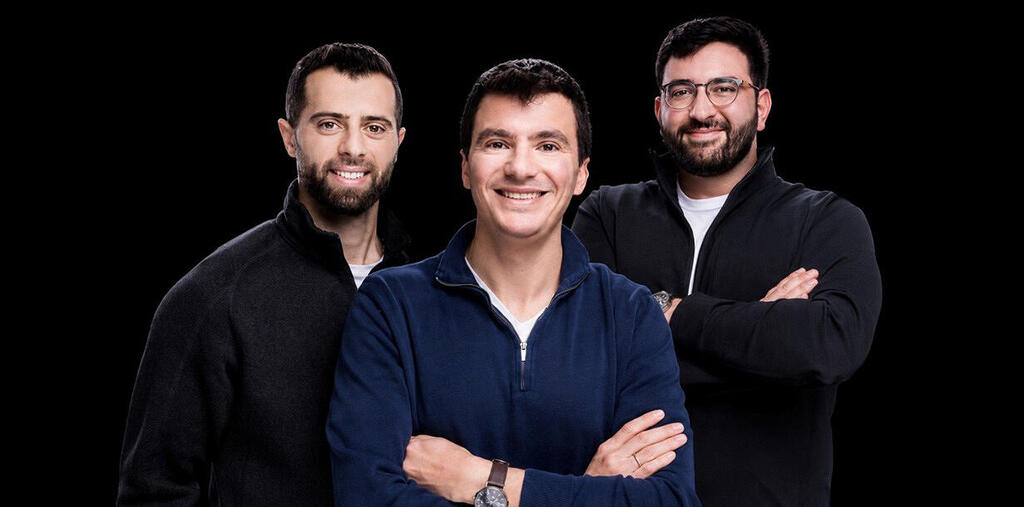
Long before Czerninski became CEO, he was one of three boys in Mevaseret Zion who became friends at elementary school. The other two were Gal Elbaz and Avshalom Hilu. Their shared history accumulated through basketball games and a youth movement. There were years of knowing each other before there was a company whose future depended on how well they got along.
The friendship continued through military service and student life. Czerninski has described the three joining an elite Israeli military cyber unit together and later studying neuroscience at the Hebrew University of Jerusalem. His own background includes more than six years as a researcher and team leader in elite IDF cyber units, reaching the rank of captain. The technical work came with responsibility for people.
His professional biography describes work developing cybersecurity operations and technologies, along with recognition for team leadership. His LinkedIn profile lists an award from the commander of Unit 8200 and an appreciation certificate for divergent thinking from the chief of Military Intelligence. These are useful details in a career that joins investigation to management: looking closely at a technical problem, then persuading a group to solve it.
In 2022, the friends founded Oligo. Czerninski became CEO, Elbaz CTO and Hilu CPO. Their company history describes an ambition they had shared as children: building a company that addressed a global problem. Choosing partners from elementary school is one way to conduct unusually lengthy reference checks. By the time the titles arrived, the acquaintance had already survived considerably more than an interview.
The small component with the large consequences
One discovery helped give the proposed business its direction. Elbaz had found a way to compromise Instagram through a vulnerability in an open-source component it used. Czerninski brought up that research when Oligo launched publicly in February 2023. A vast application could inherit a serious weakness from one piece of borrowed software.
Open-source code makes an application part of a much larger neighborhood. Developers assemble software using components that other people have written and maintained. An inventory can tell a security team which components are present. The harder questions concern what those components actually do, whether a vulnerable part executes, and what happens when an attacker reaches it.
Oligo’s approach was to observe applications while they ran. Its launch explanation described identifying vulnerabilities in running packages and prioritizing fixes using the context of the executing application. It also described detecting departures from a library’s expected permissions. The bet was that watching behavior would help people distinguish a long list of possible problems from the ones demanding their attention.
A sensor, and a roomful of objections
When Oligo announced its $50 million Series B in January 2025, Czerninski remembered the resistance to that early idea. Could they really monitor activity inside an application without being intrusive? Why build a runtime sensor when other companies were emphasizing an agentless approach? These were objections to the engineering choice at the center of the business.
That choice mattered because security software has to live alongside the application it protects. A sensor that makes production unreliable has found a rather direct way of upsetting its customer. Oligo’s launch described using eBPF, a technology that supports observing running systems, to gather information efficiently. The technical promise and the commercial challenge were tied together: obtain useful detail while keeping the application working.
In a January 2025 interview, Czerninski explained that the investment would support research and development, customer engagement and geographic growth, with North America remaining a primary focus. He also described a broader move into workload protection. The company wanted to use the view inside applications to understand threats across more of the runtime environment.
His choice of investors had a practical explanation. Greenfield Partners brought experience building sales and market expansion operations; Red Dot Capital Partners could help open doors in Asia. Capital arrived with introductions, experience and work to do. The next stage involved learning how to reach customers as deliberately as the team had learned how to observe their software.
A book, a snowstorm, a different measure
Czerninski’s public writing occasionally leaves the security vocabulary behind. While spending time with Oligo’s US team, he received a book from Dan Castle, a customer-success colleague who also teaches technology innovation. Castle had written it himself. He signed the copy with a personal dedication, which Czerninski said he would keep.
The encounter prompted a reflection on the difference between receiving updates and getting to know people. Work had supplied Castle with a title. Time together supplied a much fuller picture. Czerninski wrote about the value of simply sitting with colleagues as the team grew in New York and Boston, allowing a conversation to wander beyond the agenda.
“I’m an analytical thinker”
Nadav Czerninski, reflecting on Oligo’s first two years
That self-description appeared in another reflection, where he allowed that some judgments depended on a feeling rather than a definition. He described the fit with customers, investors, employees and his co-founders. Customer feedback had shown him possibilities for the product beyond the team’s initial expectations. The people around the company were helping determine what it could become.
His customer anecdotes are similarly concrete. In one post, he described security incidents arising around Christmas leave and a honeymoon, saying Oligo had helped resolve them quickly enough for the customers to enjoy their time away. The accompanying photograph showed him and Elbaz in snowy New York streets. His measure of useful technology included a person getting back to a holiday.
A honeymoon spared an extended incident response is a modest sort of product demonstration. It is also easy to understand. Czerninski’s point was that software security should help people carry on with their lives. For a CEO selling protection inside complicated applications, the benefit could be expressed without a single architecture diagram.
The work he has to stop doing
The early friendship gives Czerninski a long history with his fellow founders. Building a larger organization asks him to extend responsibility to people who were never on the childhood basketball court. His writing about delegation acknowledges the difficulty of that adjustment. Acting quickly on every problem feels productive. It can also leave too little room for someone else to become capable.
He describes taking care of employees in terms of trust and ownership, including the opportunity to feel pride in building the company. There is an uncomfortable requirement tucked inside that ambition: people need permission to make mistakes. A founder cannot promise responsibility and then reclaim it whenever another person approaches a task differently.
That makes his mentor’s advice a useful scene in the story. Czerninski was asking how to scale the organization; the answer concerned how he spent his own effort. The software company could grow only through people taking on work that had once belonged to him. A larger team needed decisions to travel further than the CEO’s desk.
The next decision happens in production
By August 2026, Oligo had announced another $60 million in funding. The company reported $140 million in total financing, 300 percent year-over-year growth in annual recurring revenue, and a valuation more than double its Series B valuation. Those are the company’s figures for that announcement, a dated picture of the business Czerninski was leading.
Additional financing for Oligo’s next stage
$140m total funding reported at the timeThe stated direction covered applications, cloud workloads and AI systems. Czerninski argued that AI was making it cheaper and faster for attackers to find vulnerabilities and construct exploits. The company’s answer remained observation and protection in production, including blocking exploit attempts while organizations worked through patching. Speed changed the urgency of an argument the founders had made from the beginning.
He had already written in 2024 about open-source AI models receiving less scrutiny than ordinary software components. His argument included authentication, access controls, audits and a culture of responding to emerging risks. Watching a running application belonged within that wider effort. The ambition was to make security teams better informed when they had to act.
There is a pleasing continuity in Czerninski’s story, without needing to pretend that school basketball explains cybersecurity. He has spent years working with familiar people, investigating technical behavior and reconsidering where attention belongs. Now he leads a company that asks customers to look more closely at what their software is doing. His own task includes noticing when a colleague is ready to do more - and leaving enough room for it to happen.