Dean Sysman had found an attacker. What he could not find was the computer. During a proof of concept at a large company, his security technology had detected something serious inside the network. Then came the awkward part: locating the machine that had produced the alert. The customer could not supply the answer. An expensive collection of security tools had delivered a warning without a usable address.
It was an excellent demonstration of a problem nobody had intended to demonstrate. Sysman began to see a business in the gap between detecting danger and knowing enough about your own organization to do anything useful about it. Cybersecurity had plenty of people chasing intruders. Someone needed to establish what was actually in the building.
In 2017, he took that idea to two close friends, Ofri Shur and Avidor Bartov, on a bench outside Shur’s apartment. He had left his first startup, which was struggling. This would be his second attempt, and possibly his last. His friends agreed to join him. Axonius began with a rather modest question to put to a multibillion-dollar industry: could everyone please check their inventory?
“They didn't know if I was a genius or delusional.”
Dean Sysman, remembering the pitch to his co-founders
A library book, then a gold medal
Before there were corporate networks, there were computer games. Growing up in Israel, Sysman wanted to make games of his own. Programming offered the attraction of writing the rules himself. At 12, he taught himself to code with a book from the library. The equipment in this origin story is refreshingly affordable.
Three years later, he was on the Israeli team that won gold at the International Robotics Olympiad in South Korea in 2005. Coming home brought television appearances and newspaper attention. The surprise was that something he enjoyed doing privately could interest people who had never seen his code.
“I can actually create an impact with it,” he recalled. That small discovery gave the technical work a public purpose. He completed a bachelor’s degree in computer science at the University of Haifa at 19, through the accelerated Etgar program. An interest that began with games had become something he could take into the world.
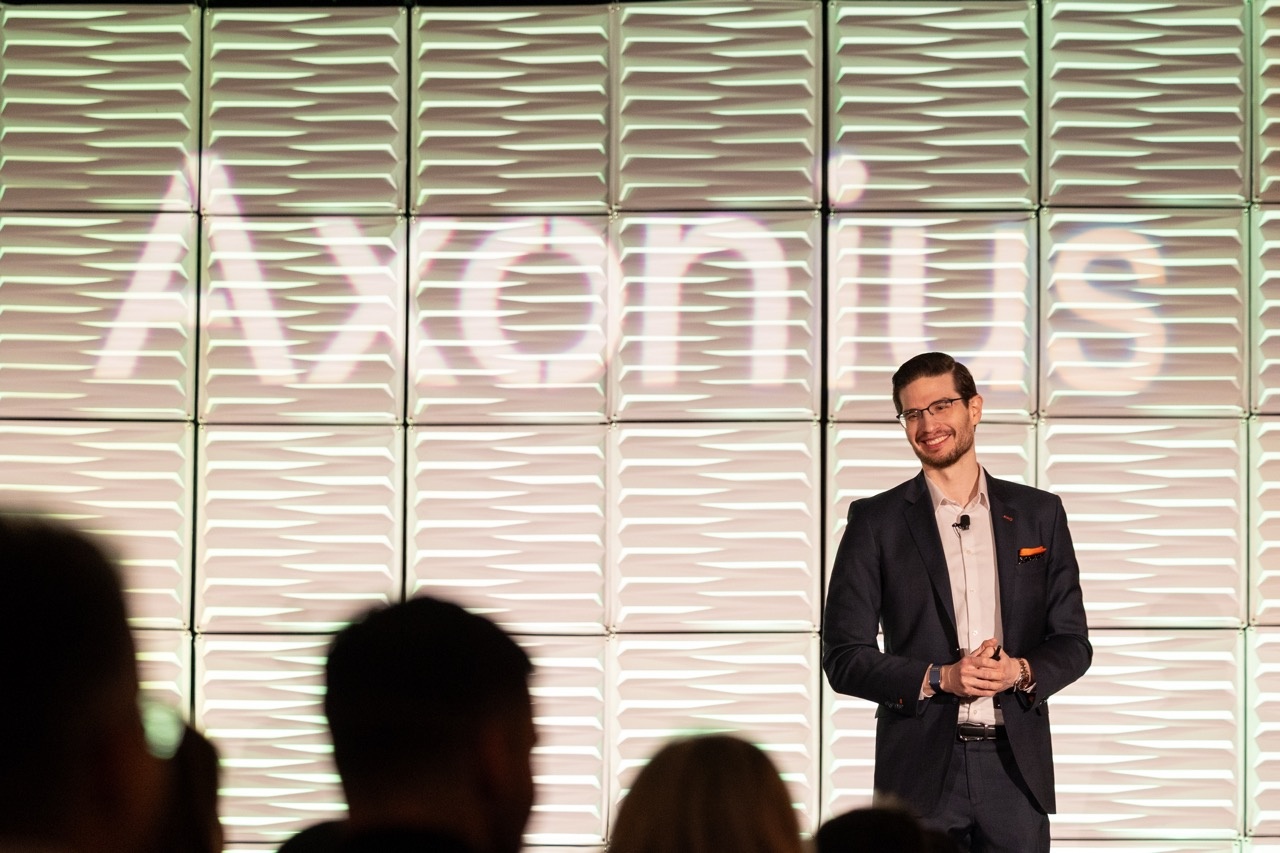
The unexpected sales school
Military service put him among people whose technical knowledge challenged his sense of his own abilities. He served in Unit 8200, rose to captain and received commendations. Yet one of the lessons he later emphasized was wonderfully uncinematic: bureaucracy helped him understand enterprise sales.
A large organization contains people with different incentives, overlapping authority and goals that can collide. Getting a technically sound proposal accepted requires understanding that social machinery. A person with budget may want a product while colleagues, implementation teams or competing priorities prevent the purchase. The decision has several owners, even when the invoice has one name.
This is a useful education for someone who would sell software to organizations unable to agree on how many computers they had. Technical correctness cannot make a department cooperate. Sysman learned to pay attention to the route an idea must travel through people. The network diagram, it turns out, is only half the map.
The first startup left a useful bruise
Before Axonius, Sysman co-founded Cymmetria and served as its chief technology officer. The company worked in cyber deception: laying digital bait that could expose an attacker. It joined Y Combinator’s Summer 2015 batch. That brought a young technical founder into the orbit of people accustomed to turning prototypes into companies.
The work was concrete. At DEF CON in 2016, Sysman’s workshop offered participants a way to build deceptive environments with MazeRunner, using decoy virtual machines, network services and credentials. Here was a founder close enough to the engineering to teach people how the machinery worked. Selling the machinery proved a different challenge.
Cymmetria did not produce the entrepreneurial outcome he had wanted; it was later acquired by private equity. He has spoken plainly about the experience rather than polishing it into an inevitable stepping stone. The missing-machine episode mattered because it exposed a problem customers already had, in the course of trying to sell them something else. His next company would begin with that frustration.
A simplified explanation of the Axonius approach.
The glamour of a reliable sedan
Axonius connected to security and management systems that customers already used, pulling their records together through adapters. It could compare observations across tools instead of requiring customers to put another software agent on every machine. The product’s value came from resolving disagreement among existing records.
Imagine asking which devices lack a required security control. One tool can report where its own agent is installed. Another may know about devices the first tool has never encountered. Putting those views together changes the question from an exercise in spreadsheet assembly into something a practitioner can answer. The attraction is practical, especially for the person who otherwise has to assemble the spreadsheet.
In 2019, Axonius won the RSAC Innovation Sandbox contest. Sysman was supposed to make the pitch himself. A snowstorm stranded him at JFK, and the chief marketing officer presented instead. The company became associated with an unusually sensible ambition for a startup competition: being the “Toyota Camry of cybersecurity.” Dependability had found its automotive spokesperson.
The joke worked because the problem was recognizable. Security teams did not need persuasion that missing assets were inconvenient. They needed evidence that someone could help them find those assets reliably. Winning supplied a public test of an idea whose selling point was its usefulness, with very little theatrical danger required.
What the numbers actually count
Bessemer investor Amit Karp had encountered the same confusion years earlier while working on an IT cost project at McKinsey. Departments disagreed about the company’s assets. When Sysman presented Axonius to Bessemer in December 2018, Karp recognized the problem immediately. The company had about five customers and $400,000 in annual recurring revenue when Bessemer invested in early 2019.
By 2023, Axonius had crossed $100 million in ARR. Its reported four-and-a-half-year journey to that threshold uses $1 million ARR as the starting point, an important detail behind the tidy growth statistic. ARR expresses the annualized recurring value of subscriptions; it is a different measure from cash in the bank or a company valuation.
In March 2024, a $200 million Series E extension maintained Axonius’s $2.6 billion valuation. Accel and Lightspeed led the round. The figure described what investors were prepared to pay for a stake in the company at that moment. For a customer deciding whether to trust a new system, the more relevant test still happened on screen: could it answer a question that previously took hours of manual work?
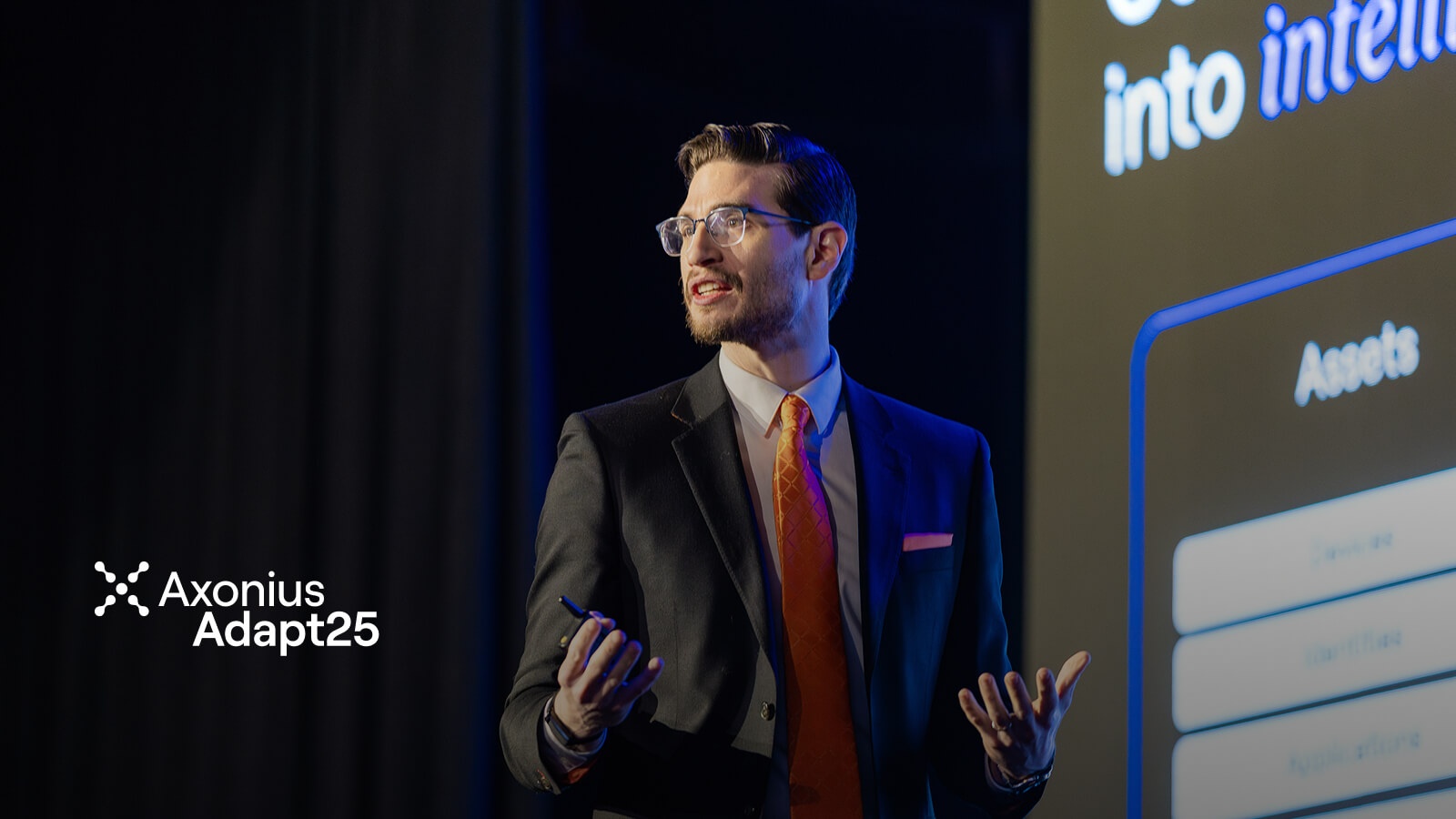
A different chair at the same table
On February 9, 2026, Sysman announced that he was moving from CEO to executive chairman. He described a division of labor that would let him concentrate on strategic vision while Joe Diamond, then president, became interim CEO. He would continue working with Shur, Bartov and the leadership team and represent the company publicly.
The change became more definite in May, when Diamond was appointed permanent CEO. Axonius simultaneously announced that it had surpassed $200 million in ARR, doubling that measure in two years. Sysman remained executive chairman, with long-term strategy and board governance as his focus. The company he had helped establish around one overlooked question now needed leadership suited to a much broader operation.
His work outside Axonius also widened. He became a venture advisor at Bessemer, joined Lasso Security’s board in February and joined SecurityScorecard’s board as an independent director. He also advises at AI Fund and serves on Olakai’s board. These roles put him alongside founders wrestling with questions he has experienced from both the engineering chair and the chief executive’s office.
The advice is often about relationships. At AI Fund, he emphasizes helping founders understand and develop the connections on which their success depends. That is a telling preoccupation for someone whose first enthusiasm was programming. A founder can design the rules of a game. Colleagues, customers and investors retain the inconvenient privilege of making their own decisions.
The computer has acquired an agent
By 2026, Sysman’s public argument had moved toward AI agents and the need to know what autonomous systems are doing inside an organization. His RSAC keynote described an ambition for environments that can detect departures from a desired condition and coordinate actions to restore it. The attraction of automation comes with a demanding prerequisite: trustworthy context.
A program cannot sensibly decide what to fix if its view of the environment is contradictory. Ownership, configuration and current state all matter. The old inventory problem becomes more consequential when software can take actions of its own. Sysman’s recent work keeps returning to that dependency, even as the vocabulary around it changes.
His LinkedIn profile now also lists research at Columbia University at the intersection of systems and AI, beginning in 2026. The teenager who discovered that computers could affect other people’s lives is still following the consequences of that discovery. The scale has changed. So has his seat at Axonius. Somewhere inside the next complicated organization, a perfectly ordinary question still waits for a satisfactory answer: where is the computer?
Follow the trail
More from Sysman, and the company he co-founded.