The average meeting room contains a small republic of stubborn machines. A camera blinks. A display sulks. A control panel forgets what it controls. Somewhere, an employee waves a remote at the ceiling with the solemn hope of a rain dance. Omer Brookstein has spent most of his life in this republic, first as a child in his family's audiovisual integration business in Israel, then as a programmer, technical leader, salesman and, eventually, founder.
He began programming AV control systems at 14. It is the kind of origin detail that can be mistaken for a neat founder myth, except Brookstein kept doing the work. After mandatory military service, he moved to the United States and programmed systems for Crestron trade shows and customers. He returned to Israel, studied computer science and business at the Hebrew University of Jerusalem, and built a career at Crestron Israel that stretched across technical direction, business development and enterprise sales.
This matters because his company, Xyte, did not begin with a grand theory about artificial intelligence. It began with an old, irritating problem: excellent hardware frequently arrived with software that could not satisfy the people expected to operate it. Brookstein heard the complaint from large customers. The devices worked; the surrounding experience felt unfinished. A sale had been completed, but the relationship between manufacturer, machine and customer had barely begun.
A trade learned from the cable up
Audiovisual technology occupies an odd corner of modern work. It is visible everywhere and noticed almost nowhere, at least until it fails. Screens, microphones, room schedulers, speakers and control systems shape a meeting without receiving an invitation. Brookstein learned the field from its physical end: systems had to be installed, programmed and supported in actual rooms occupied by actual impatient people.
At Crestron Israel, he crossed the customary border between engineer and commercial operator. He could understand what the box did, why a CIO was unhappy and how an enterprise buying process moved. A former colleague later remembered his instinct for customer experience and for pushing technology toward its limits. Brookstein himself called Crestron a school for the industry's professionals. The curriculum was practical: the specification sheet ends where the customer's day begins.
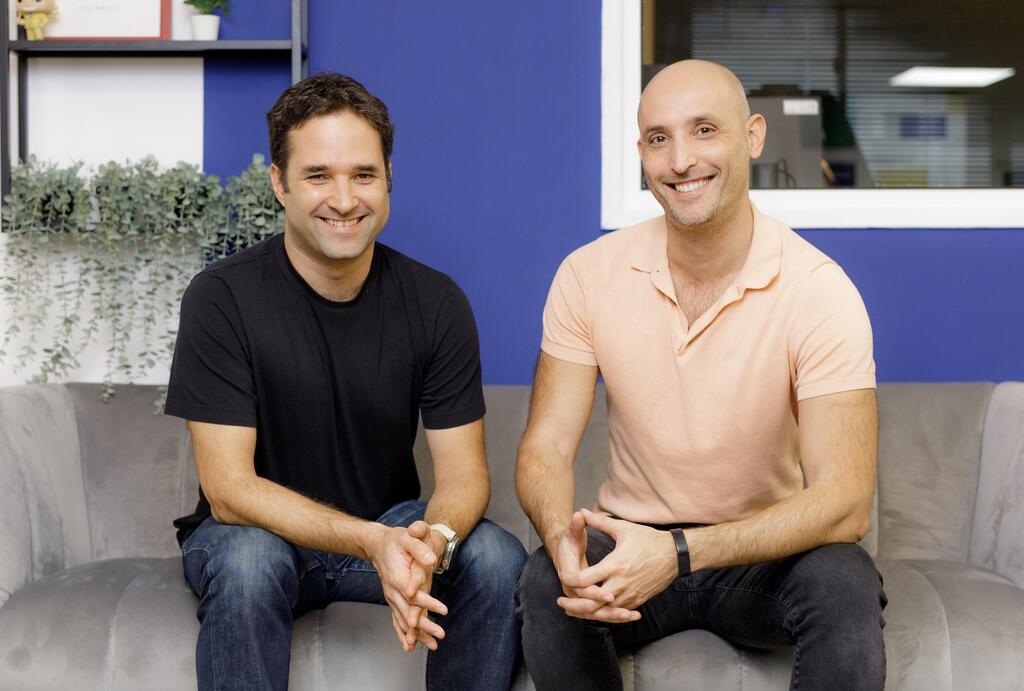
His co-founder arrived from a complementary direction. Brookstein met software veteran Boris Dinkevich through an online forum for alumni of the Israeli military's Unit 8200. They formed the company in early 2020 under the name SyncPro. Brookstein became CEO; Dinkevich became CTO. Their initial plan was to help companies remotely manage meeting spaces and collaboration technology. It was a sensible idea for an office-filled world.
Then every meeting room went quiet
The pandemic arrived almost on cue, if the cue had been written by a malicious playwright. Offices emptied. Nobody needed new software for rooms nobody could enter. The founders initially believed the interruption would last a few months. As it wore on, colleagues began asking a question that widened the frame: what was fundamentally different about managing meeting-room technology and managing other connected systems, from retail equipment to solar panels?
Very little, they concluded. A connected device has a life after installation. It needs configuration, updates, service, monitoring and, sometimes, a tactful remote reboot. Its maker may want to sell additional capabilities or a subscription. Its customer wants it to keep working. The original room-management product became a doorway into a larger category: cloud infrastructure for manufacturers and the organizations that operate their equipment.
The pivot in four moves
Brookstein often explained the commercial side through familiar subscriptions. Consumers already paid monthly for entertainment, software and even coffee. Why should sophisticated hardware be trapped in a one-time transaction? Xyte's pitch to manufacturers combined device connectivity with the business machinery around it: support, lifecycle management, data, ecommerce and recurring services. He once described the desired position as “Shopify for hardware manufacturers,” a line with the virtue of making an obscure infrastructure category instantly legible.
The favorite memory he has shared is smaller. It was the first time an end user entered a credit card to subscribe to the first device-as-a-service offered by a Xyte customer. One payment hardly makes a market. It did, however, turn a deck, a platform and an argument into observed behavior. The machine had acquired an ongoing commercial life.
The business after the box
In January 2024, Xyte announced $30 million in financing. The package paired a $20 million Series A led by Intel Capital, with participation from Samsung Next and existing investors, with $10 million in venture lending from funds and accounts managed by BlackRock. The distinction is worth keeping intact: equity and debt are different instruments, even when they share a press-release total.
The capital was intended for product development and expansion in North America and Europe. More important than the number was the bet beneath it. Hardware makers have traditionally optimized the journey to the sale. Xyte wants to organize everything after it: the device leaving the warehouse, appearing at a customer site, sending data, receiving support and gaining services over time.
Where the relationship accumulates
Conceptual timeline, not financial data. The point is simple: the invoice is brief; ownership is long.That proposition also changes incentives. Charging solely for each connected device can encourage customers to connect fewer of them. Brookstein has argued for the opposite: more connected equipment creates a clearer operational picture, and a clearer picture can improve service and product decisions. The cloud layer becomes useful when it sees the fleet rather than a privileged handful of boxes.
When the room becomes legible
By 2025, Brookstein's public vocabulary had shifted. Hardware-as-a-service remained, but the conversation increasingly included open APIs, edge connectivity and “physical AI.” At an AV Cloud Summit, he offered a concrete provocation: what if every microphone, speaker and control system could behave like his Tesla? The comparison was about connectivity and improvement. A modern device should remain current, reveal its condition and gain capabilities instead of aging silently behind a wall panel.
Physical AI can be a baggy phrase. Brookstein's version begins with operational context. Software models are comfortable with documents, tickets and databases. A physical environment contains rooms, networks, device histories, permissions, usage patterns and real-time events. An assistant that merely summarizes an alert is pleasant. An assistant that understands which microphone failed, what else is affected and which action is permitted could be useful.
Xyte demonstrated edge connectivity and early agentic capabilities at InfoComm 2025, including work that could let outside AI agents interact with physical AV systems. It later introduced an AI support teammate built around a semantic context graph intended to combine device data, business logic, usage and support history. The ambition is a progression from reactive dashboards toward troubleshooting and guided action. The unromantic foundation remains inventory, telemetry, access control and interoperable plumbing.
This explains Brookstein's interest in OpenAV Cloud, an industry initiative promoting open, cloud-based APIs across a famously fragmented market. Enterprise rooms rarely contain equipment from one maker. Proprietary islands create duplicated work and slower support. Open interfaces give integrators and IT teams a chance to see mixed fleets together, move information between systems and adopt new tools without rebuilding the room around a single vendor.
Cycling uphill, on purpose
Brookstein has encouraged people in his industry to live outside their comfort zones and to focus on “cycling uphill.” It is a good metaphor because climbing removes the illusion of effortless momentum. The rider has to choose a gear, watch the grade and continue applying pressure. Xyte's history has supplied the hills: a product aimed at offices launched as offices emptied; a narrow tool became a platform; a hardware-service argument evolved into an AI-operations argument.
He also talks about the AV industry as a large family and says conversations with new people almost always inspire him. The warmth is useful in an interoperability campaign. Open ecosystems require competitors, manufacturers, integrators and customers to agree that a larger common layer may be worth more than another private island.
Away from work, published profiles place him swimming, watching sports, listening to music, taking photographs, considering a beach-volleyball match and trying to keep up with his three sons. These details soften the diagram of the serial enterprise operator. They also suggest that “cycling uphill” may not be purely rhetorical. Brookstein seems to prefer motion with resistance.
His career began with rooms full of cables and control code. The current aspiration is rooms that can describe themselves, expose their problems and accept help without trapping the operator inside five vendor dashboards. The machines still blink, sulk and forget. Brookstein's bet is that, once they can phone home in a common language, their bad days might become shorter and everyone else's meetings a little less theatrical.