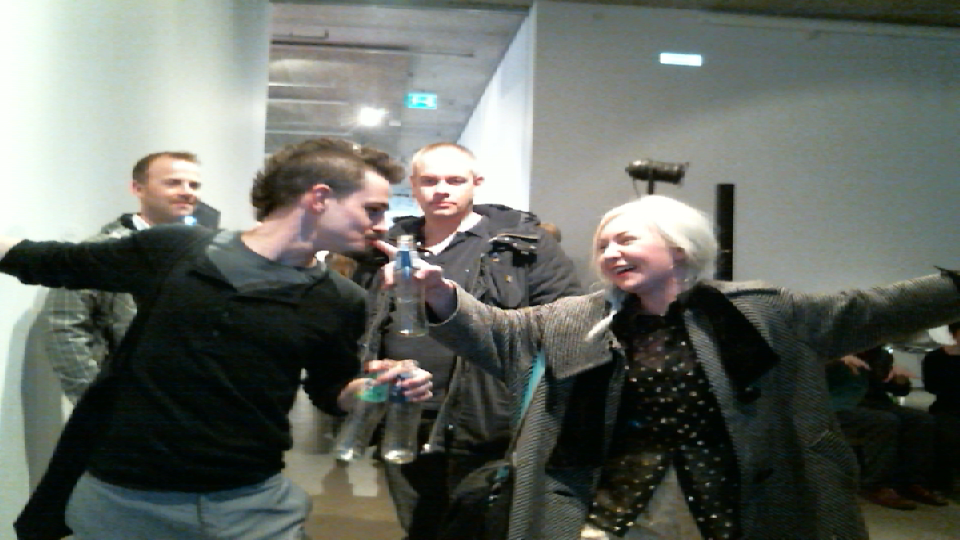
A photo booth is usually an excellent place to be alone. You draw the curtain, arrange your face and negotiate with the timer. Olof Mathé and Quin Kennedy built one that declined to cooperate. Their Smooch Booth needed two people. Painted hands, spaced beyond one person’s reach, completed an electrical circuit when visitors touched them together. To get a picture, you had to make a connection.
The apparatus was a joke with working parts. Built for Art Hack Day in Stockholm, it turned a familiar machine into a small social arrangement. The camera could do its job only after the humans had done theirs. There were easier ways to take a photograph. There were probably fewer ways to make strangers consider an embrace.
Mathé’s better-known project, Mixmax, concerns another familiar machine with peculiar social demands: the business inbox. He co-founded the company in 2014 with Brad Vogel and Chanpory Rith and became its founding CEO. Across email software and participatory art, a recurring question emerges from his work: what could people do together if the machinery behaved a little differently?
The colleagues came before the company
Mathé grew up in Sweden, studied in France and worked at McKinsey and Skype before joining Inkling. There, he led the team building Inkling Habitat, an authoring environment for publishers. These were different settings for a recurring interest: how people exchange information, and what software makes possible along the way.
His account of arriving at Inkling has the appealing untidiness of an actual career. A conversation in a parking lot at Y Combinator’s Startup School helped lead him there. Inside the company he met Vogel and Rith, the colleagues who would become his Mixmax co-founders. They had something more useful than an introduction: experience of working beside one another.
Eventually, all three left their jobs in the same week. In Mathé’s recollection, they did so before settling on what to build. Months of prototypes followed. They shared an interest in communication and wanted a software business with paying customers from the beginning. The product remained negotiable; the partnership was already sufficiently convincing to quit for.
That sequence gives the origin story its character. The usual retrospective makes an idea seem inevitable. Here, the people arrived first, followed by experiments, followed by a company. Trust had accumulated in ordinary working hours before anyone needed to give it a grander name.
A meeting should not require a correspondence
The initial irritation was wonderfully mundane. Arranging a meeting meant checking a calendar, switching to email, offering times and waiting for a reply that might make the whole exercise start again. An appointment could require a miniature correspondence before the actual conversation was allowed to happen.
Mathé described this sort of administrative work as something software should remove. Early Mixmax brought scheduling, polls and richer content into messages. The ambition involved the message itself: an email could contain an action, rather than merely instructions to go somewhere else and perform it.
There was a practical restraint behind that ambition. People already had email accounts, established habits and recipients outside their own organizations. Asking everyone to adopt a new communications service introduced another obstacle. Improving the workflow they already used offered a more immediate route into their day.
Mixmax launched publicly in 2015 after a private beta, with Product Hunt helping it reach early adopters. Over time, the broad productivity proposition narrowed toward sales teams. By his 2019 SaaS Club interview, Mathé was discussing more than 10,000 customers and over $5 million in annual recurring revenue. Those are milestones from that period, not a description of the business today.
Meanwhile, at the auction house
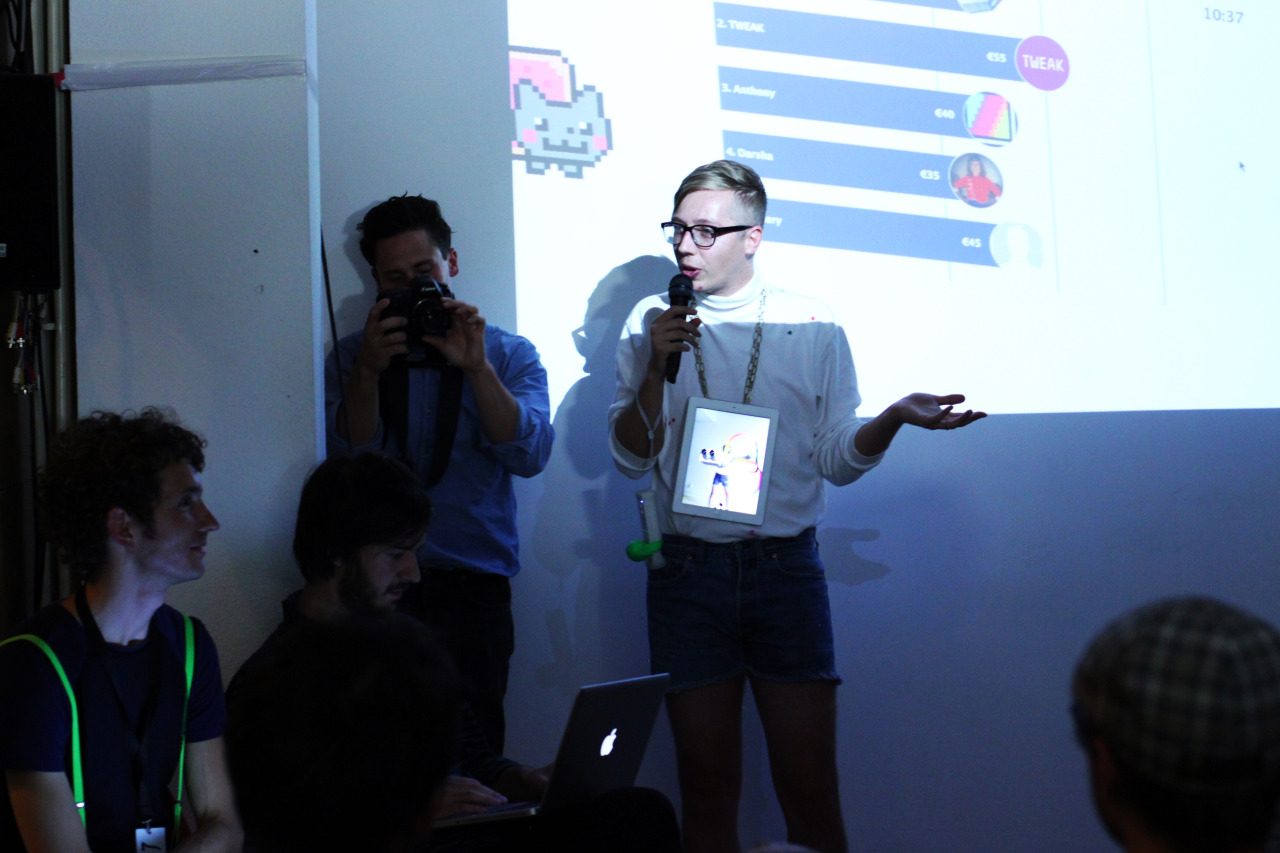
Mathé’s parallel life in art makes the neat software biography less accommodating. At Art Hack Day’s Going Dark event in Berlin in September 2013, he collaborated with Dean Hunt and Jeremy Bailey on an auction of digital artists’ Facebook profiles. Seven profiles went under the hammer. An online identity had become an item in the room.
The transfer was temporary. Bidders paid for 24 hours of surrogate ownership, with reported prices between €50 and €95. The premise involved questions about what an account contains, who controls it and whether the digital self can change hands. It also gave an art audience something unusually concrete to bid on.
Another collaboration, DroneML, created a language for describing drone movement. With Hunt and Patrick Ewing, Mathé used two drones in a live performance re-enacting Pina Bausch’s Café Müller. The project placed flying machines inside the vocabulary of choreography. An engineer could admire the control problem; an audience could watch the dance.
Art Hack Day gave these experiments a structure: roughly 60 artists and hackers, 48 hours and an exhibition assembled from scratch. Its stated preference for making new work together matters. A finished object brought from home would miss much of the point. The event offered a deadline, equipment, other people’s skills and the possibility that the original idea would not survive their meeting.
“I wish I asked better questions.”
Olof Mathé, 2018
The founder discovers other people’s jobs
Collaboration becomes more awkward when a company grows. At the beginning, doing several jobs yourself can be a necessity. Later, the habit can obstruct the people hired to do those jobs properly. Mathé has made his own resistance to that transition a subject of public discussion.
With Mixmax marketing leader Loretta Jones, he described three stages of denial about hiring senior management. First comes the belief that the company can postpone the role. Then comes confidence that the founder’s own network will supply the candidate. Finally, someone appears who lacks the required experience, and the founder decides that experience can arrive later.
His account was sufficiently current for an internal recruiter to point out that he was still passing through one of the stages. The instructor had homework outstanding. That detail is more useful than a polished declaration about the importance of hiring well: recognizing a mistake does not automatically stop you from repeating it.
The underlying problem is recognizable. A founder has been rewarded for resourcefulness, speed and personal involvement. Hiring someone more experienced asks for a change in conduct as well as a change in the payroll. Confidence must make room for another person’s judgment. A growing organization puts a rather expensive price on learning to leave the room.
- PostponeThe role can wait.
- Search close to homeMy network will find the person.
- HopeThe candidate will acquire the missing experience.
Thirty minutes without the demo
Sales supplied a related education. In a discussion with Mixmax account executive Katie Helton, Mathé recalled his surprise at a discovery call that spent half an hour without showing the product. For someone inclined to build and demonstrate features, the omission seemed remarkable. What had everyone been doing?
They had been finding out what the customer needed. Mathé recognized a difference between enthusiasm for a product and the practiced work of selling it. Explaining features can feel productive, especially when the founder knows them intimately. Listening closely to a particular organization requires another kind of attention.
His own test was simple: given an unexpected free hour, where would he go? Toward product flows, specifications and the roadmap. The salespeople had different work pulling at them. His willingness to describe that preference makes the lesson personal. A founder’s strongest inclination can become an unreliable guide to which job he should keep.
Later, discussing Mixmax’s combination of free access and direct sales, he treated the buying experience as a design problem too. Some users wanted to try software independently. Larger accounts could need individual attention. Supporting both meant choosing where salespeople should spend their time and which users the product team should prioritize. Convenience for the customer required quite deliberate decisions inside the company.
Eleven years later, another unfinished conversation
In November 2025, Mathé announced the relaunch as Mixmax AI. The company introduced three copilots covering inbox work, meetings and engagement. His announcement emphasized helping sellers decide what deserves attention and carry out the next action. The earlier tools, including scheduling and sequences, remained part of the offering.
In a January 2026 post, he returned to the distinction between activity and useful progress. More emails and more sequences, he argued, do not resolve the problem of knowing what to do next. For a founder who had spent years removing little pieces of administrative friction, it was a familiar concern with a different set of technical possibilities.
His personal website now describes his time as Mixmax CEO in the past tense. Alongside his company work, it records art, writing and involvement in San Francisco’s Global Math Circle. The interests extend well beyond the inbox.
Asked in 2018 for his chief characteristic, Mathé answered with one word: “Curiosity.” The photo booth remains a pleasing illustration of where that can lead. Someone looks at an ordinary device, asks why it works that way, and changes the conditions. Two people reach out. The circuit closes. At last, a picture.
Follow the connections
His work & profiles
Conversations & further reading