Batman has a spreadsheet. In Obaid Durrani’s version of Gotham City, the cape comes with a Clay table for tracking criminals. It is a pleasingly bureaucratic development for a character accustomed to solving his problems from rooftops. Even the Dark Knight, apparently, has reached the stage where he needs a better system.
Durrani made the video with AI tools and a recorded product demonstration, then explained how he assembled it. The joke supplies the invitation; the table supplies something to look at once you arrive. Clay’s own World Records page now includes the experiment. Somewhere between superhero fan fiction and a software walkthrough sits a fair introduction to his working imagination.
Durrani is a content creator and marketer based in Colorado Springs. He co-created Easy Mode with Todd Clouser, worked on HockeyStack’s media project The Flow, and moved into creator content and influencer work at Clay. Across those settings, he has pursued an unusually concrete ambition for someone in the attention business: make the experience worth remembering.
There is a distinction here that matters. Remembering a joke and remembering what a company can help you do are separate achievements. His work keeps trying to put them in the same room. The room sometimes contains a fictional vigilante. That is a creative decision, rather than a requirement in the software specification.
Before the cape, a sales conversation
His professional story began in sales, a beginning he includes in his own account of his career. By 2023, he was explaining content strategy in webinars and interviews, drawing on work in writing, animation, creative direction, and marketing. An early sales background gives that sequence a useful tension: the person advocating entertaining content has also had to care about whether someone buys.
The career descriptions from that period include building a five-person content and animation team. They also include directing a video game trailer for PlayStation. Those are different kinds of assignments, with different expectations about how an audience behaves. A person watching a trailer expects a world, a mood, and a reason to keep watching. A prospective software buyer has questions. Durrani’s subsequent work brings those expectations together.
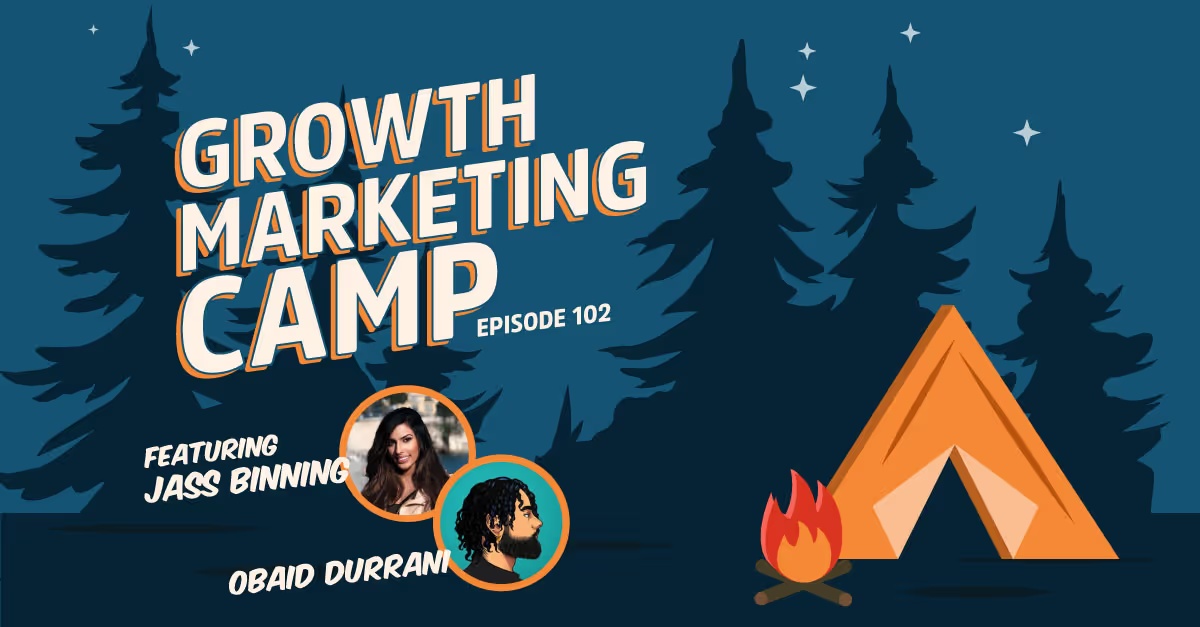
By February 2024, he was appearing as HockeyStack’s Head of Brand & Content and The Flow’s creative director. His conversation with Growth Marketing Camp connected his interest in gaming with his approach to making content. The language of games also runs through the names of his projects. Easy Mode, Cheat Codes, Side Quest: his marketing vocabulary seems to have wandered in from a console menu.
That vocabulary has an advantage over the usual corporate furniture. It makes the subject approachable. Anyone who has wrestled with a blank document can appreciate the promise of an easier difficulty setting. The promise still needs work behind it, of course. A memorable name gets someone to the door; the experience determines whether they stay.
Easy Mode comes with homework
Easy Mode took shape as a collaboration with Clouser, and Cognism put the framework to work in its content operation. Its starting point is substance: teach something useful. An interesting format can add another layer. An entertaining concept can add a third. The layers can coexist, so an ordinary useful post still has a place alongside a more ambitious production.
This is a generous idea for the person who has neither a studio nor a particularly convincing Batman voice. Entertainment is available, but usefulness carries the weight. The framework also distinguishes between decision-makers, the people implementing a change, and end users. Those people occupy the same organisation while having quite different reasons to pay attention.
Think of a team buying a new tool. One person needs to justify the decision, another needs to make the tool work, and another needs to use it on Tuesday afternoon. Speaking to each person requires more than replacing a job title in a headline. The creative task begins with understanding the situation the audience is in.
Cognism’s later account is refreshingly specific about what happened next. In the second volume of The Diary of a First-Time CMO, Alice de Courcy explains that the company no longer runs the full Easy Mode framework, while retaining useful principles from it. That is a more interesting afterlife than a permanent monument. An idea can change how people work even after its original packaging has been put away.
A conceptual diagram, not a performance ranking. The three types can run together.
A streaming service with a day job
At HockeyStack, Durrani helped develop The Flow, a Netflix-style destination for B2B marketing content. In a September 2023 interview, he described gathering material into one place and organising it for people to consume. The team drew on equipment it already had and on colleagues who contributed to production. A customer-success colleague hosted Can You Dashboard It? A designer helped with editing.
The detail about colleagues is worth lingering over. A company already contains people who know things an audience might want to understand. Giving those people a show asks for a different kind of participation than asking them to approve a paragraph. They become part of the delivery. Their knowledge has a voice, a face, and a setting.
In his own guide to building a media brand, Durrani describes Can You Dashboard It? as a way to demonstrate reporting through questions about things marketers struggle to track. The premise gives the product a task. It also gives the audience a reason to judge the result. Software looks less abstract when someone asks it to do something particular.
A recurring premise has another editorial advantage: viewers can understand what they are coming back for. Every episode can change the question while preserving the invitation. That is a familiar pleasure in television, and a useful discipline in business publishing. A channel full of files becomes easier to navigate when the files belong to recognisable programmes.
The joke must leave an address in your memory
When Durrani joined Clay, he encountered an awkward response: people had heard of the company but did not know what it did. In a December 2024 post, he explored why product demonstrations themselves could produce that confusion. One person showed enriched account lists; another showed automated website personalisation; another generated songs. The range of examples made the product’s boundaries hard to grasp.
His formulation was blunt: “awareness without association is pointless.” A company can become familiar while the reason to use it remains fuzzy. His diagnosis matters because it comes from someone willing to be funny in public. He is asking entertainment to carry meaning, and he is willing to question it when the connection disappears.
There is a useful test hiding inside that observation. After the audience finishes watching, can they explain what the product made possible? The answer need not sound like a sales brochure. It might be a practical outcome, or an image of a task becoming easier. But it needs somewhere to land. Otherwise, the joke has borrowed the company’s budget and left no forwarding address.
His collaborations show how elastic the delivery can be. In December 2024, he made an AI Christmas project with Scott Tousley and Clouser, intended to highlight Clay’s integrations. He described the result as a “nightmare inducing monstrosity.” The phrase is his own amused verdict. A feature list had acquired a seasonal musical problem, and the creators appeared quite happy to have caused it.
“awareness without association is pointless”Obaid Durrani, December 2024
The experiment is allowed to be unfinished
The Batman demonstration arrived in June 2025. Durrani used Google’s Veo 3 for clips, ElevenLabs for the voice, Screen Studio for a recording of the table, and Premiere to assemble the result. His explanation paid attention to the work of selecting, replacing, and synchronising pieces. Even a playful experiment had an editor behind it.
He was cautious about where AI belonged in his practice. He described a possible balance: use it for scenes he lacked the resources to make, while continuing to improve at filming and lighting. There is an appealing craft question in that position. When a tool makes an image possible, what skills does the creator still want to develop for himself?
That question resists a tidy answer, which suits a changing medium. Tools can expand a set of options without deciding which option deserves an audience. Someone still chooses the premise, understands the viewer, and cuts the parts that do not work. A production shortcut can help with execution; taste remains an ongoing responsibility.
By October 2025, Durrani was also being introduced as a judge for the B2B Website Awards. It is a fitting adjacent assignment for a creator concerned with both experience and comprehension. A website, like a video, has to help a visitor understand where they are and why they should spend another minute there. The surface has work to do.
A side quest reaches the foothills
His own projects have followed the same interest in participation. In late 2024, he outlined Side Quest and a proposed Quest Log newsletter, with concepts followed by tasks readers could complete. The gaming language was doing something practical: turning an idea into an activity, then giving the reader a reason to return for the next one.
In an August 2026 update, Durrani described moving from Castle Rock to Colorado Springs, leaving a townhouse garage workspace behind and setting up filming spots in his office, living room, and backyard. The backyard came with wildlife, including bears. Location scouting had become a domestic activity, with occasional large, furry interruptions.
He also outlined The Craft & The Code, a newsletter exploring AI tools alongside the work of writing and recording memorable content. His proposed paid version included tasks, experience points, and rewards. The continuity is easy to see: the creator who borrows from games for business content also wants learning itself to feel more participatory.
There is something pleasingly ordinary about the setting for all this experimentation. A home office, a camera, a task to explain, and a person deciding how to make it interesting. The costumes and software change. Durrani keeps returning to the same editorial problem: somebody has given you a little of their time. What can you make that they will carry away?
Follow the next experiment
Explore Durrani’s work, conversations, and demonstrations.
- Obaid Durrani on LinkedIn
- Watch the conversation with Dan Sanchez on YouTube
- Growth Marketing Camp: the content and gaming conversation
- Cheat Codes with Todd Clouser and Obaid Durrani
- Durrani’s guide to building a media brand
- Easy Mode at Cognism
- The Batman product demonstration
- The Craft & The Code update
- Clay