Consider the small act of inviting a friend to play a mobile game. The invitation arrives instantly. Playing may require a trip to an app store, a download, spare storage and a compatible device. Somewhere between the friendly message and the installation screen, enthusiasm has time to wander off. now.gg has built its pitch around that interval. Give the player a link. Let the game begin in the browser.
The short version / 30 seconds
- For players: supported games without a local installation.
- For studios: distribution, payments and promotion across more channels.
- The tradeoff: the download disappears; the network requirement stays.
The invitation is the product
In an April 2022 interview with PocketGamer.biz, chief executive Rosen Sharma put the ambition plainly: “I send you a link to click on, and you play it.” He described cloud gaming as something closer to YouTube: an experience that could live on a blog, a community page or another website. The destination mattered less than the ability to embed and share.
This thinking extends a familiar project. Sharma and fellow founders Suman Saraf and Jay Vaishnav came from the BlueStacks world, where Android games could run on computers. now.gg, established in 2020, carried that interest into cloud distribution. The underlying question remained pleasingly stubborn: why should the device that first hosted a game determine every place it can go?
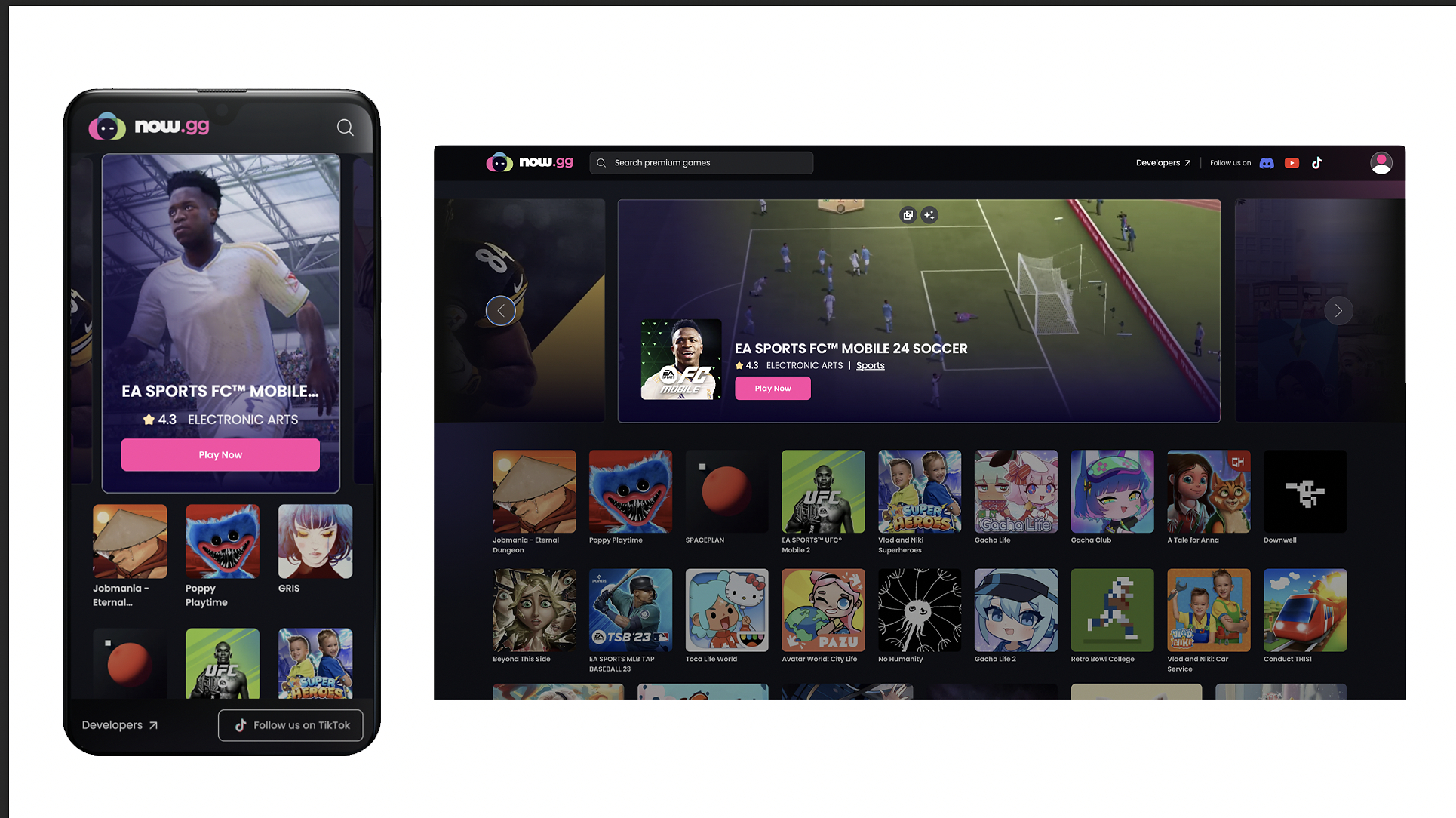
The mobile cloud platform launched in June 2021. Its nowCloud OS executes Android games remotely and streams the experience to a browser. The launch named Perfect World, PerBlue and Lilith Games as adopters. For developers, this offered another way to get an existing game in front of someone whose hardware or willingness to install might otherwise end the conversation.
One game, several front doors
The business has two audiences. Players want access to games. Studios want players, payments and a manageable publishing workload. now.gg connects those interests through a consumer portal and a set of developer tools. Its distribution proposition stretches beyond cloud play into the BlueStacks Store and alternative app stores.
nowSDK is the integration layer for Native Android and Unity developers. It supplies modules for login, payments, rewarded advertising and communication between an embedded game and its surrounding website. nowStudio is the control room: submit an app, test it, publish it, inspect purchases and advertising revenue. nowUA handles the promotion side of the pitch.
Anatomy of a distribution business
Android / Unity
Integrate. Test. Publish.
Cloud playBlueStacks
PC / MacOther stores
Additional reach
A simplified workflow. Distribution depends on channel and app eligibility.
The instructions reveal the work beneath “one integration.” A developer registers for approval, integrates required services, prepares an APK or app assets, submits the game and supplies subsequent updates. The documentation lists Samsung Galaxy Store, Xiaomi GetApps, ONE Store and Amazon Appstore; Huawei AppGallery is marked “Coming Soon.” The selling point is fewer repeated tasks across channels, with maintenance still part of the job.
That gives now.gg a different emphasis from cloud services organized around PC or console catalogs. Its expertise centers on moving mobile software into other environments, then handling the commercial plumbing around it. A publisher can use the browser as a trial, a storefront or a destination in its own right, depending on the game and the available channel.
The five-percent question
In March 2024, now.gg announced more than 100 million registered users. That is a company-reported account milestone; it should not be read as a count of active players. The same announcement gave developers a financial reason to pay attention: a 5% platform fee on in-game transactions and 0% on transactions through now.gg-powered webshops.
The March 2024 announcement
Announced platform fees. Other costs and current contract terms require separate consideration.
A platform fee is one line in the calculation. Cloud machines must run the game, video must reach the player and someone must pay for that delivery. now.gg combines advertising, payment services and paid consumer access. Its nowPremium guide advertises an ad-free daily pass at $0.99 in selected regions, alongside weekly and monthly options.
For a studio, the useful question is whether the additional route brings enough additional business. A lower percentage means little if players leave before spending. Conversely, a playable link can be valuable when it reaches people who would never have completed an installation. Conversion and retention decide which version of that story a developer gets.
A messenger becomes an arcade
The clearest demonstration came with Netmarble. In August 2024, now.gg announced Tower of God: New World for its US platform and for nowCafe, its Japanese consumer service inside LINE Messenger. A messaging app could become a place to play the game people were discussing.
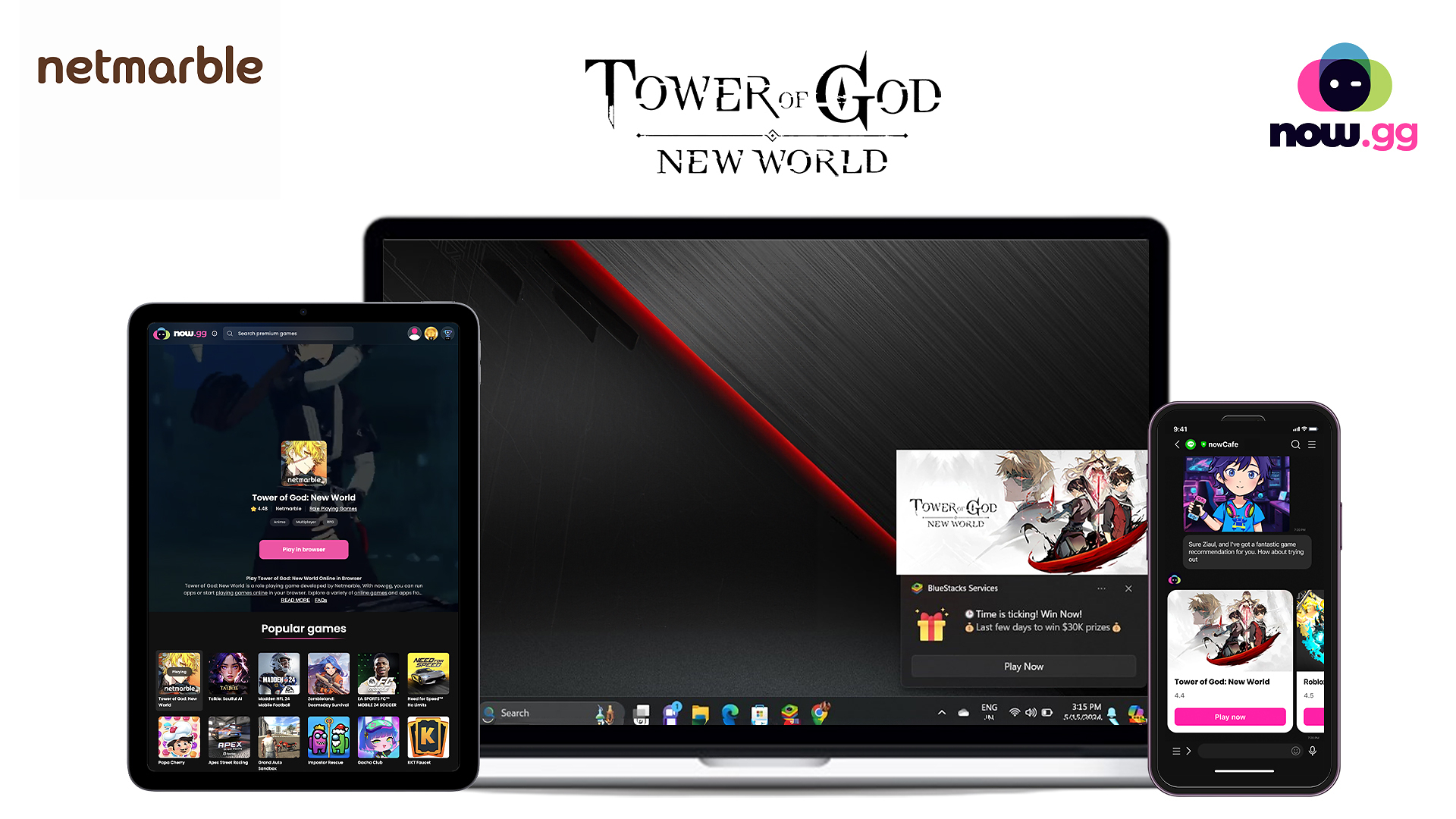
Later that month, the company announced nowStore for Telegram, with TON payments and launch titles including SkyVu’s Battle Bears franchise. These announcements show how now.gg fits the market: mobile publishers get another distribution route alongside native stores, with social channels becoming possible entry points.
NTT DOCOMO Ventures had already invested an undisclosed amount in February 2023. Its rationale extended beyond games into browser experiences and potential collaboration with DOCOMO. A March 2025 company case study then described Gentle Maniac using nowSDK to distribute Horizon Walker through cloud and BlueStacks channels. The recurring product is access to more places where a customer might begin.
A link can shorten the distance. The game still has to earn the next click.
The distribution test

The connection still gets a vote
For players, the practical test is straightforward: find a supported game, check availability and try it on the device and connection you actually use. now.gg’s troubleshooting guidance calls for stable internet of at least 5 Mbps. Moving computation away from a phone cannot remove the journey between server and screen.
For a studio already reaching its audience effectively through installed apps, the case for another channel depends on incremental results. Browser access becomes more persuasive when storage, device compatibility or installation reluctance is preventing a willing customer from getting started.
For builders, the lesson travels beyond gaming. Put a usable experience closer to the invitation, then measure who stays. Test a channel before treating its total audience as your own. now.gg’s proposition lives in that small space between curiosity and commitment. A link can shorten the distance. The game still has to earn the next click.