Before the AI agents and the international partnerships, there was a rather inconvenient customer: a large bank. For Nishant Singh, that was an attraction. A bank offered departments that needed to agree, systems that needed to cooperate, and customers with little interest in either difficulty. Build software that worked there, and you would have answered a serious question about your product.
His company, then called CRMNEXT, won HDFC Bank's business in a contest that included Microsoft. HDFC's former technology chief, CN Ram, remembered a team that had worked through the bank's needs and was willing to put in the effort to make the project succeed. Singh described his approach with disarming economy: “We believe in going after big customers first.” A smaller customer might have been a gentler introduction. He preferred the examination.
Today Singh is founder and CEO of the global BUSINESSNEXT business. The name has changed; the difficult customer remains central to the plot. His working question has grown from how a bank remembers its customers to how much of its work can move on its own, with people stepping in where judgment matters.
The return ticket
Singh's early career took him from engineering college to CMC, then to a product startup and Silicon Valley. In 1997, he co-founded qMGN in New York and worked as its chief technology officer. Internet bandwidth optimization was among his interests. The attraction was to making technology that could become intellectual property, something a company could own and develop over time.
He returned to India in 2001. When work on the banking platform's core gathered pace around 2004 and 2005, friends questioned the location as much as the idea. They encouraged him to return to the United States. India's software services industry offered a familiar path; a locally built enterprise product required a different set of skills and expectations. Singh stayed. CRMNEXT's first product version arrived in 2006.
- 1997Co-founds qMGN in New York
- 2001Returns to India
- 2006First CRMNEXT product version
- 2022BUSINESSNEXT umbrella brand
- 2026ServiceNow invests $40 million
Those dates make the journey look tidier than it was. A timeline gives a product launch one line. A customer has to give it a working day. Much of Singh's subsequent career has concerned what happens during that day: whether information arrives where it is useful, whether software can change, and whether employees can act without conducting a small archaeological expedition through their systems.
Winning the demanding account
The HDFC win gives his preference for large customers some substance. This was an enterprise buyer with alternatives, including an established international vendor. Winning required attention to the bank's particular problems. The relationship became an early demonstration that a product company built in India could compete for a bank's central customer software.
By 2014, Singh was explaining a broader diagnosis: enterprise CRM projects suffered when their underlying platforms could not adapt. Adding features would not resolve that difficulty. His team developed tools for carrying customizations through upgrades and for connecting systems. It also offered configuration of processes, alerts and layouts without requiring code for every adjustment.
These are unglamorous concerns until an upgrade breaks something essential. Then they become everyone's principal interest. Singh's attention to them helps explain the durability of his subject matter. The customer relationship begins with a person, but the promise made to that person passes through software, departments and operational rules.
“We believe in going after big customers first.”
Nishant Singh
Norwest Venture Partners invested $7 million in 2014. International growth was already part of the agenda, with the United States, Europe and Australia among the markets being considered. Singh was building a company whose prospects depended on taking its product beyond its home market, while continuing to develop the capabilities that had brought bank customers to it.
The builder looks for company
By 2016, Singh was discussing acquisitions as another route to growth. He described interest in businesses with useful intellectual property, research capabilities or an existing customer base in a new geography. It was a practical extension of his product focus: expertise might be developed internally, bought, or brought in through a relationship.
There is a distinction between wanting help and knowing what kind of help will be useful. In explaining why he worked with investor Avataar, Singh emphasized operational support. “Our original thesis was that we wanted an operator VC model.” His account of growth included an uncomfortable observation: a company that chooses to expand can find itself short of leadership.
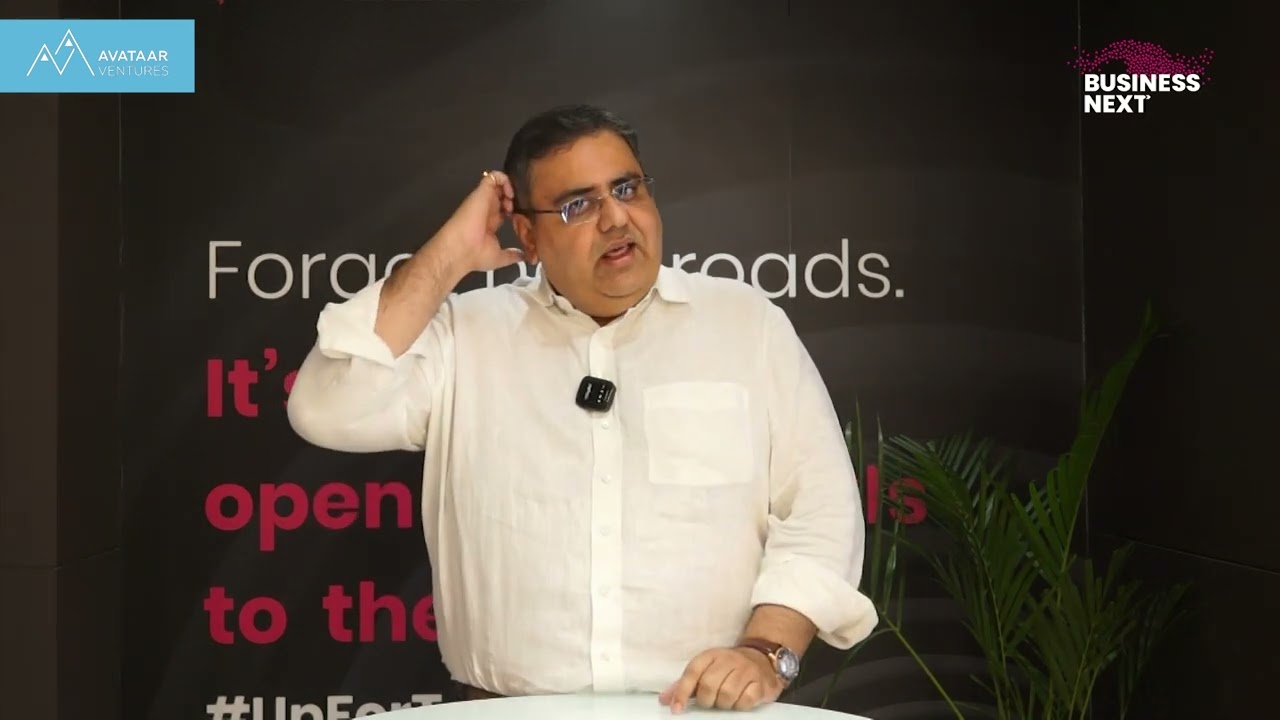
That is a revealing admission from a founder. Hiring, entering markets and supporting larger customers create demands that a product cannot answer by itself. His preference was for people who would work alongside the company. Money was part of the arrangement; experienced company was another part of its appeal.
A bank with less waiting around
In 2022, CRMNEXT expanded into the BUSINESSNEXT umbrella brand. The change accommodated a wider family of platforms, including customer journeys and data capabilities. Singh's ambition was moving toward autonomous banking, an idea he liked to explain through the analogy of a self-driving car.
The analogy is memorable, though banking comes with its own traffic regulations. A customer request can involve information, eligibility, a decision and an action. Automating one part leaves the other parts waiting. BUSINESSNEXT's expanding scope reflected an ambition to connect more of that journey, rather than leave employees to carry requests between systems.
At Davos in 2024, Singh put private AI within that discussion. His position was that some banking uses require it. He also talked about India's combination of technical capacity and mathematical expertise, connecting the company's direction to his longer interest in developing technology products from India.
request→Customer
context→Banking
decision→Service
action
Illustrative workflow. Human review remains part of the design where needed.
AGENTNEXT, introduced in November 2024, gave this direction a more specific form. It included AI assistants for bankers and contact centres, alongside a studio for configuring agents. Its Thinking Brush engine was presented as a way to make agents' decisions explainable and auditable. These details matter because an action a bank cannot explain is a difficult action to entrust to software.
Singh described a trust layer, encrypted exchanges and interaction with existing customer systems. He said the platform was designed to avoid retaining user data unless requested. The emphasis was on fitting AI to financial institutions' operational requirements. A convincing demonstration still has to survive the less theatrical business of permissions, records and review.
His interest in the human side of these systems predates the current agents. In 2015, he was already discussing contact centres as places where a company's customer engagement had to come together. A service desk could influence the business relationship, rather than simply record a complaint. The idea demanded that information travel across the organization, instead of staying attached to the department that first received it.
More recently, a BUSINESSNEXT webinar featuring Singh and Forrester analyst Alyson Clarke has framed adoption around transparency, explainability, auditability and human oversight. Its agenda asks how institutions move from assistants to agents that carry out actions, and how they measure the results beyond efficiency. Those questions give his ambition a useful set of tests. A faster process should also serve the customer and leave the institution able to understand what happened. For Singh, the path toward autonomy still runs through the detailed business of making a bank function.
A larger partner, the same connecting problem
In the first quarter of 2025, BUSINESSNEXT was named a Leader in the Forrester Wave evaluation of CRM software for financial services, with the highest score in the current offering category. Singh treated the recognition as evidence of India's ability to build enterprise technology. The category matters: the assessment concerned financial services CRM, the field in which his company had spent years developing its expertise.
By February 2026, he was describing more concrete uses of autonomy, including lending decisions and service requests. He spoke of AI reducing the work required of relationship managers and of keeping humans involved where they could contribute. His recurring interest was in the work a system could complete, and the time it could return to a person.
Then, in July 2026, ServiceNow announced a $40 million investment in BUSINESSNEXT. The proposed collaboration joined BUSINESSNEXT's customer-facing capabilities with ServiceNow's middle and back-office operations. The companies described a connected operating fabric for financial institutions, with the Asia Pacific region a focus.
ServiceNow's investment in BUSINESSNEXT, accompanying plans to connect customer engagement with banking operations.
The fit was intelligible. A bank's customer-facing system knows what someone needs; another part of the organization must carry out the work. The partnership was intended to connect those responsibilities more closely. For Singh, it extended a familiar concern across a larger stretch of the bank.
The next difficult customer
There is a temptation to tell a software founder's story as a succession of fresh starts: a launch, a new name, an AI platform, a strategic investor. Singh's career is more interesting when the continuity is visible. He has kept returning to the difficulty of making large organizations respond coherently to the people they serve.
The tools have changed. His early company worked on bandwidth; his later one developed enterprise CRM, configurable platforms and banking agents. Across those changes, he has pursued technology with room to develop into a product business. He has also sought partners who bring capabilities his own organization can use.
The next chapter will depend on whether autonomous banking earns its place in ordinary banking work. There will be requests to resolve, systems to connect and exceptions that require a person. For a founder who went looking for demanding customers early, that seems an appropriately exacting prospect. The bank, as ever, will have questions.