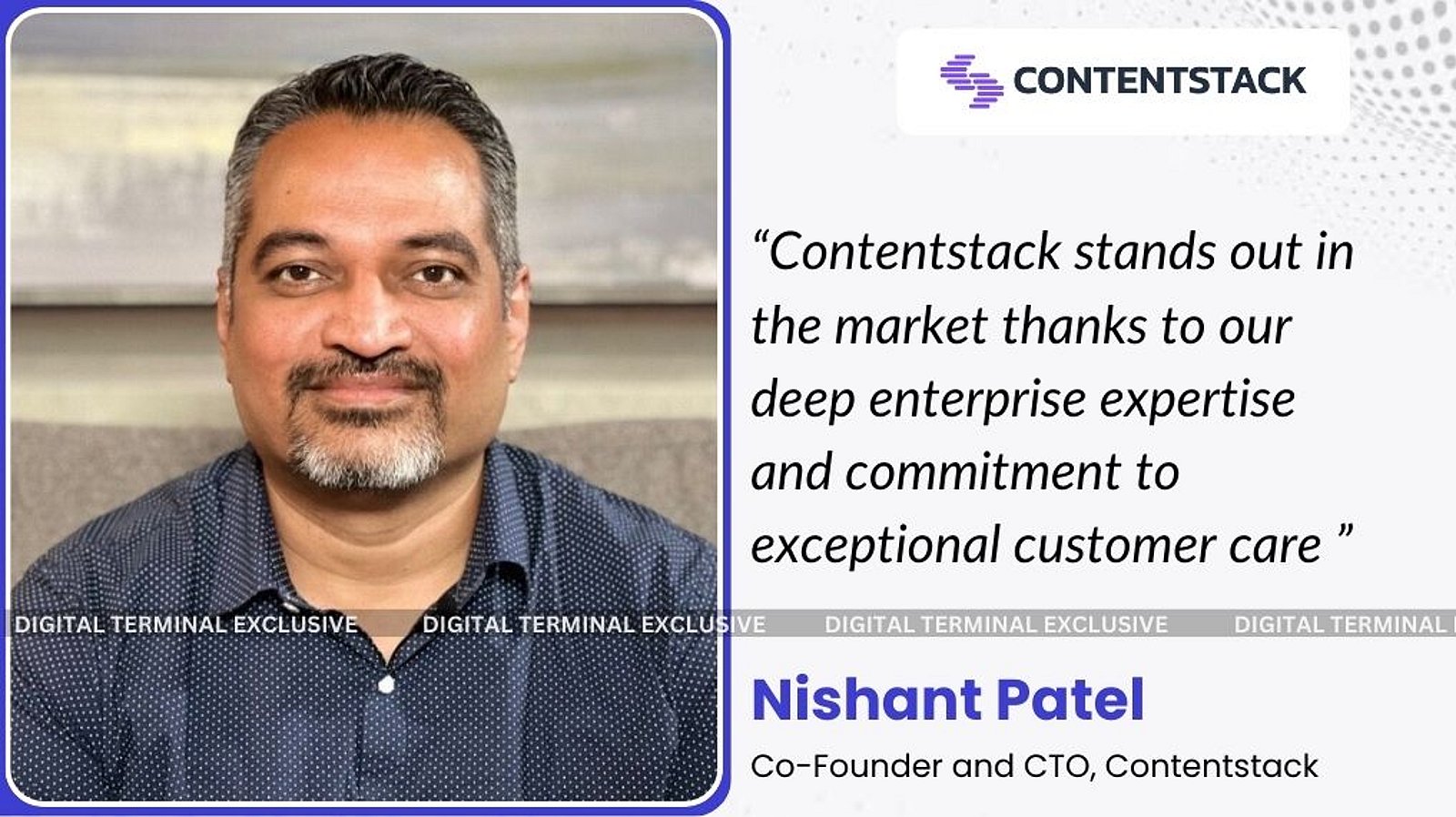
In March 2000, Nishant Patel finished college and moved to San Francisco, which was rather like arriving at a champagne party just as someone reached for the fire alarm. The dot-com boom still had music in it. Startups were hiring, money was lively, and software appeared able to cure every inconvenience except its own appetite. Patel joined a small company as its only engineer and helped build a product in a matter of months. Then gravity resumed. By December, he had moved to TIBCO, the integration software company, where he stayed for seven years.
That period supplied the quiet grammar of everything that followed. Integration is the trade of persuading systems with no natural affection for one another to exchange useful information. It rewards an engineer who can see boundaries, interfaces and dependencies. Patel was also watching the cloud arrive. He has recalled signing up for Amazon Web Services in 2006 and being startled by what it made possible. A server was becoming something you could summon, not something you had to court through procurement.
In 2007 he co-founded Raw Engineering with Neha Sampat. The consultancy helped companies adopt cloud technology, but its more consequential habit was to notice when the same difficulty returned under different client names. Services work paid the bills. It also functioned as field research conducted in the untidy habitat of real companies.
A CMS loses its head
By 2011, the web was no longer the only screen that mattered. Customers wanted content in mobile applications, digital displays and places that did not resemble a page. Traditional content management systems bundled the words, pictures and publishing interface with the presentation layer. That arrangement had been sensible when a website was the destination. Once content needed to travel, the convenience became a tether.
Patel's team was already experimenting with backend services. The customer request was disarmingly plain: how do we manage content in a mobile app? The answer was to separate the content from the screen and make it available through APIs. Patel circulated an instruction that deserves a place in the museum of productive understatement: “We need to build a simpler CMS.”
“You take the new tools and apply it to the same problems and you come out with something amazing.”Nishant Patel
Contentstack's first “Hello World” arrived in October 2011. Its first customers were in production by January 2012. The term headless CMS would later acquire an industry, a conference circuit and enough diagrams to fell a printer. At the beginning, it was simply a useful response to the fact that content had more places to be.
The product was conceived inside a global arrangement that avoided the usual map of software prestige. Patel was in the United States. The engineering center was in Virar, on the northern edge of Mumbai. Early team members worked in a college computer lab after students had gone home. Months later they moved into a repurposed tile factory. It is hard to imagine a setting less interested in the vanity of an origin story. The computers were available after class, so the work happened after class.
The tile factory and the talent map
Many of the engineers came from nearby colleges rather than famous institutes. The selection principle was merit rather than pedigree. That was partly necessity and partly design, and over time it became culture. Engineers describe little appetite for hierarchy, room to take ownership and teams that behaved like startups within the larger startup. Contentstack was, in Patel's formulation, “entirely conceived and built in India.” The Virar operation was not a back office attached to an American idea. It was where the idea became software.
The work also happened in leftover hours. The services business had clients to serve, and product experiments were built for a couple of hours after the day's obligations. This makes the early story less romantic and more instructive. The product did not appear because everyone cleared a calendar and awaited revelation. It accumulated because a group kept returning to a problem after the official work was done.
Computer science graduate, startup engineer, then TIBCO.
Raw Engineering begins its cloud consultancy.
Contentstack's API-first CMS takes shape.
Contentstack spins out; Built.io is acquired.
Contentstack helps found the MACH Alliance.
EDGE joins content, data, personalization and AI.
Raw Engineering incubated more than one bet. There was Built.io, an integration and automation platform, and a digital fan-experience product as well as Contentstack. A services company had become a greenhouse. Patel has described the method without decorating it: keep trying, keep pushing, use whatever you have and “leverage the heck out of it.”
There was still an organizational problem. Products and services obey different clocks. A consultancy optimizes around delivery and relationships. A software product needs repeated investment, a dedicated road map and the ability to disappoint one request in order to serve a larger pattern. Patel and his colleagues eventually carved the products out. Built.io Flow was separated and acquired by Software AG in 2018. Contentstack became an independent company the same year.
problems
experiments
products
An architecture for changing your mind
Contentstack raised a $31.5 million Series A in 2019, after it already had a working product, revenue and enterprise customers. The sequence was unfashionably patient. The founding work had been supported inside a bootstrapped services company; outside capital accelerated something that had already survived contact with buyers.
The architectural case widened. Headless content management became part of “composable” software, in which a company assembles specialized services instead of accepting a single vendor's enormous suite. In 2020, Contentstack became a founding member of the MACH Alliance. The initials stand for microservices, API-first, cloud-native SaaS and headless. The phrase is technical, but the benefit is almost domestic: fewer irreversible decisions.
A monolithic system can promise that every need is already included. It can also make departure extravagantly difficult. Patel's preferred structure treats software components as replaceable. An organization can change a search service, commerce engine or presentation layer without renovating the entire estate. The API is less a flourish than a doorway, and a doorway is valuable because it permits both entry and exit.
That freedom has costs. More pieces mean more decisions. Integration does not disappear merely because the architecture is modern; it becomes an explicit responsibility. Patel's career, though, began in integration. He tends to describe composability as a practical response to changing channels and customer expectations, not as a purity test. The point is to let a business evolve without asking permission from software selected years earlier.
“I think it was just kinda just keep trying, keep trying new things right. And keep pushing.”Nishant Patel
What happens after headless?
The question now is no longer whether content can escape the web page. It has escaped magnificently and is wandering through apps, kiosks, commerce systems, support tools and AI interfaces. Contentstack has expanded accordingly. In 2025 it introduced EDGE, combining its headless CMS with customer data, personalization, automation, AI and front-end hosting. The product has grown broader while attempting to keep the parts composable.
Patel's recurring concern is continuity under change. In interviews, he returns to new tools applied to persistent problems: cloud infrastructure applied to enterprise delivery; APIs applied to omnichannel content; AI applied to the labor of organizing and adapting experiences. The labels advance. The method barely moves.
It is tempting to make foresight mystical. Patel's story offers the less theatrical explanation. He spent years close to systems that needed connecting and customers whose requirements did not fit their software. He built several things, not all at once and not all as separate companies. He watched the patterns. When one product needed independence, he separated it. When a new architecture offered flexibility, he used it.
This is engineering as a form of attentiveness. The future first appeared as a mobile-content request, mildly inconvenient and probably expressed on an ordinary call. A team in Virar stayed after hours. A founder who had learned integration recognized that presentation and content no longer belonged in the same box. The grand category came later, wearing a badge and carrying a market report.
Patel now works from Austin, while Contentstack operates with a global team and an enduring engineering base in India. He has described the company's North Star as ensuring that the world's best digital experiences run on Contentstack. It is a large ambition with a revealing verb: run. Not pose, impress or proclaim. Run, as software must, preferably without making a fuss.