A payment succeeds by disappearing. The buyer does not applaud the currency conversion. The merchant does not send flowers to the compliance team. Nobody frames a screenshot of a settlement arriving on time. Money simply leaves one place and appears in another, behaving as though borders, banks and bureaucracies had politely stepped aside. Ning Wang has spent his career arranging that illusion.
His route into the business was not ordained. Wang has said he “bumped into” payments after earning an MBA in the United States. The collision proved durable. He joined PayPal when the company was growing quickly enough to turn one job into several: analysis for senior management, responsibility for high-growth markets, and the work of helping those markets become independent and local.
The word local is the hinge. Many companies speak fluent globalism in boardrooms and arrive abroad with the conversational grace of a phrasebook. Wang learned the harder dialect: regulations, payment habits, partnerships and the small institutional courtesies by which a market decides whether to trust you.
The useful accident
At PayPal, Wang eventually moved to Shanghai and spent his final two years as head of finance for the company's China operations. A colleague from that period later remembered more than the numbers. Wang brought analytical depth, he said, but also carried PayPal's Silicon Valley culture into the local team without the hauteur that can follow a returning expatriate. Finance gave him the map; tact helped him read the street signs.
Then the current reversed. Wang joined Alipay and became its first employee in the United States, charged with establishing operations there. At PayPal he had watched a large American company learn China. At Alipay he watched a Chinese giant learn America. The border was the same; the direction of travel changed. That is an uncommon education for an operator, because each company exposes the blind spots of the other.
By the time Wang and his partners began building PingPong in February 2016, his résumé already contained the company's central problem. Cross-border merchants live in two realities at once. Their market can be global, while their bank account, tax bill, supplier and customer's preferred way to pay remain insistently local. Software can draw a handsome map of the world. Actual money demands a passport at every frontier.
“The bigger vision is that we believe the world is hyper-connected but also hyper-local.”Ning Wang
A company named for return shots
PingPong's name is cheekier than the infrastructure beneath it. Wang has explained its several layers: table tennis is nimble, it travelled from Victorian England to China, and its diplomatic history recalls an unlikely thaw between nations. There was even a table in the office for friendly matches. Few fintech metaphors come with paddles.
Yet the metaphor earns its keep. A cross-border transaction is not a triumphant one-way serve. It is a rally among merchants, buyers, banks, currencies, regulators and risk systems. Each side must return the ball. PingPong began by helping China-based ecommerce sellers receive money, then widened its work around the merchant: supplier payments, foreign exchange, tax support and the assorted plumbing of selling abroad.
Wang's point was that payment alone would not provide a lasting edge. The customer needed to succeed after the money moved. In Europe, that meant helping merchants with VAT compliance and local market knowledge. Elsewhere it meant faster supplier payments, familiar currencies or the quiet fraud checks that keep a fast transaction from becoming a fast mistake.
The numbers around the early company show the appetite for such plumbing. By April 2019, PingPong said more than 42,000 ecommerce merchants were using its financial services, while its staff had grown beyond 400 across the United States, Europe and Asia. Wang pointed to recent expansion into Australia, South Asia and Russia. The geography sounds grand until one remembers what it represents at merchant level: another payout route, another tax rule, another bank holiday capable of delaying a supplier.
His writing about supplier relationships made the argument from the other end of the transaction. Paying in a supplier's local currency could reduce conversion friction and give both parties a clearer account of what would arrive. Faster settlement mattered because a payment is rarely an isolated event. It sits inside an order, an inventory plan and a promise to a customer. When the money stalls, the commercial relationship absorbs the delay.
This is where Wang's financial training becomes visible. He tends to treat payments less as a shiny consumer gesture than as working capital with a travel itinerary. The merchant sees sales; the operator sees timing, reconciliation, risk and the cost of each intermediary. A fraction shaved from foreign exchange or a day removed from settlement may be unglamorous. Multiplied across thousands of orders, it becomes strategy.
The seven-month passport
Luxembourg had been following Wang for years before he physically arrived. At PayPal, he supplied analysis while leaders decided where to establish the company's European base. Alipay later sought a licence there too. When PingPong applied, the country became his third professional encounter with the same small, multilingual financial centre.
The final application went in during January 2017; approval came in August. Seven months is swift in regulated finance, though nobody confuses the process with ordering lunch. PingPong became the first Chinese fintech to secure that kind of payment institution licence in Luxembourg. By the end of the following year, Wang said, the European operation had turned profitable on a standalone basis.
The licence was not the finish line. Wang argued for a local research-and-development operation and for hiring people with market knowledge rather than merely a particular passport. Financial services can be delivered remotely, but credibility benefits from a chair in the room. Regulators, partners and customers notice who is willing to stay after the ceremonial handshake.
The hiring brief was equally revealing. The European team sought curiosity, creative energy, perseverance, ethical standards and a willingness to communicate more than seemed strictly necessary. Those qualities sound soft beside a regulatory capital requirement. In practice they are the human controls of expansion. A global office fails quietly when people assume that everyone else interprets the same rule in the same way. Overcommunication is cheaper than discovering the difference after money has moved.
When speed becomes ordinary
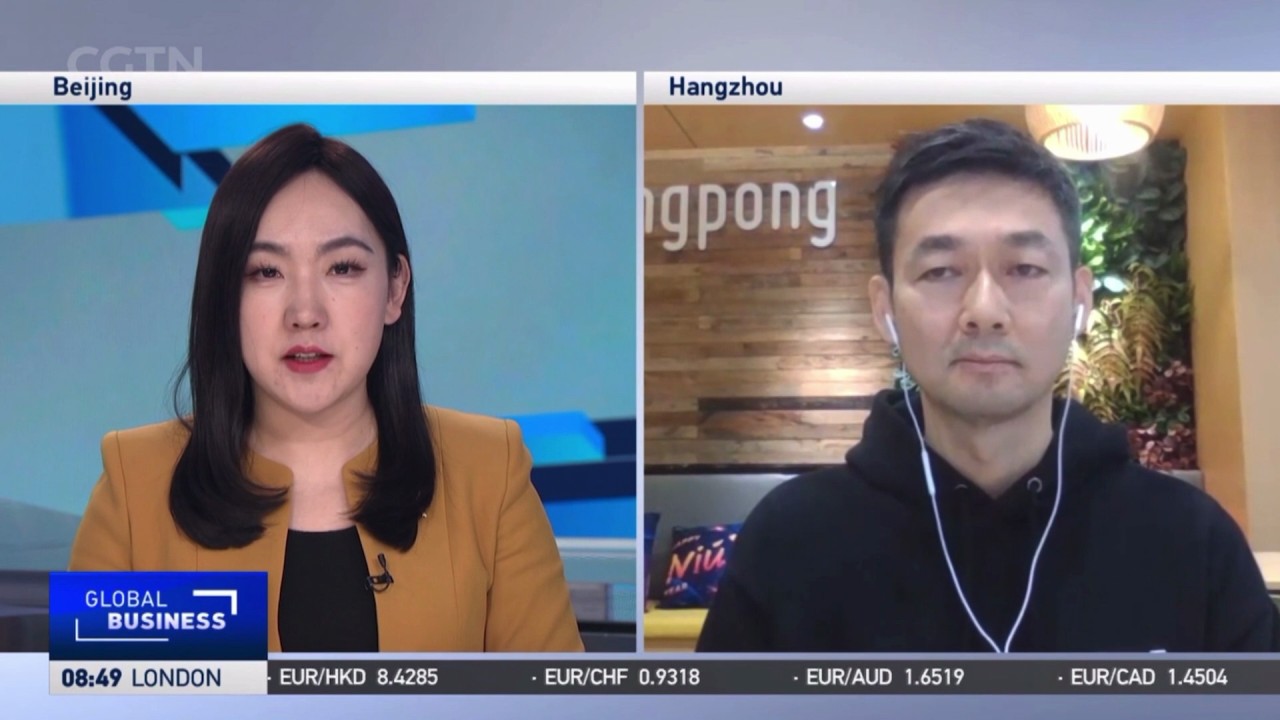
In that 2024 conversation, Wang described cross-border payments in increasingly domestic terms. Older bank transfers might take two to five days; leading providers could move funds in real time or close to it. Cards, accounts and wallets were becoming interchangeable doors into the same system. Onboarding, risk controls and foreign exchange could recede into the background.
This is the mature ambition of infrastructure: not astonishment, but normality. The transfer should be quick without seeming reckless, compliant without feeling punitive, global without asking a merchant to become an amateur diplomat. Wang called the result a world in which an international payment becomes as easy as a domestic one.
The trade data he discussed also showed the centre of gravity moving. On PingPong's platform, 2023 transaction volume associated with Thailand rose 216 percent from the previous year; Mexico rose 144 percent; India rose 2,203 percent. These were company figures rather than a census of world trade, but they illustrated Wang's larger point. Digital sellers were not waiting for the old commercial map to be redrawn. They were drawing new routes through use.
His analysis extended beyond payments. Digital commerce was shortening supply chains. Vertical marketplaces were connecting manufacturers with business buyers; direct-to-consumer brands were connecting factories with households. A new class of logistics, data, advertising, tax and payment providers gathered around them. The middle did not disappear so much as become software.
That change suits Wang's peculiar apprenticeship. His education joined a Master of Public Policy with a Kellogg MBA. PayPal and Alipay then supplied opposing views of expansion. PingPong supplied the chance to put the pieces together. His career has been less a march toward one grand invention than a long study of connections.
“Passionate about payment because it connects people and makes their lives better.”Ning Wang's public biography
The case study in the making
Wang once described PingPong's European project with an admirably unvarnished phrase: the company wanted to become a case study, but it was still in the making. The remark contains more character than a victory lap. Payments punish premature celebration. A licence must be followed by operations, operations by trust, trust by years of transactions that nobody needs to think about.
The public record since then shows the map continuing to widen. Wang spoke about rapid shifts from stores to ecommerce, wrote about supplier relationships in a strained global economy, discussed emerging markets and digital entrepreneurs, and in March 2025 became a director of PingPong's UK payment business. The job title remains business chief. The work remains translation.
There is an appealing modesty in the trade he chose by accident. Payments are everywhere and almost nowhere in view. Their success is measured in absences: no delay, no surprise fee, no frozen account, no bewildered customer. Behind that calm surface sits a network of local licences, local partners and local habits, stitched together by people willing to learn each place.
A table-tennis rally looks simple when played well. So does moving money. Wang's career lives in the difference between the appearance and the work.