In Cape Town in 2024, Nikolay Vitanov met someone with a familiar complaint and a very different CV. Vitanov had spent a decade in investment banking, seeing clients wrestle with the quality of the data behind their AI ambitions. Jason Rieff had led media teams across Europe and encountered the problem from the content side. They decided to build a company. Ninety days later, BeatpulseLabs had its first customer.
That interval gives this story its shape. A chance encounter became a working partnership, then a sale. For Vitanov, now the London company’s co-founder and co-CEO, the business would revolve around a deceptively ordinary question: who decides what a machine’s training examples actually mean?
His answer brings people with specific expertise into the process. Musicologists, linguists and video professionals supply judgments that broad labels can miss. The task is to turn those judgments into something consistent enough for a model to learn from. There is considerable human work tucked inside that word, “consistent.”
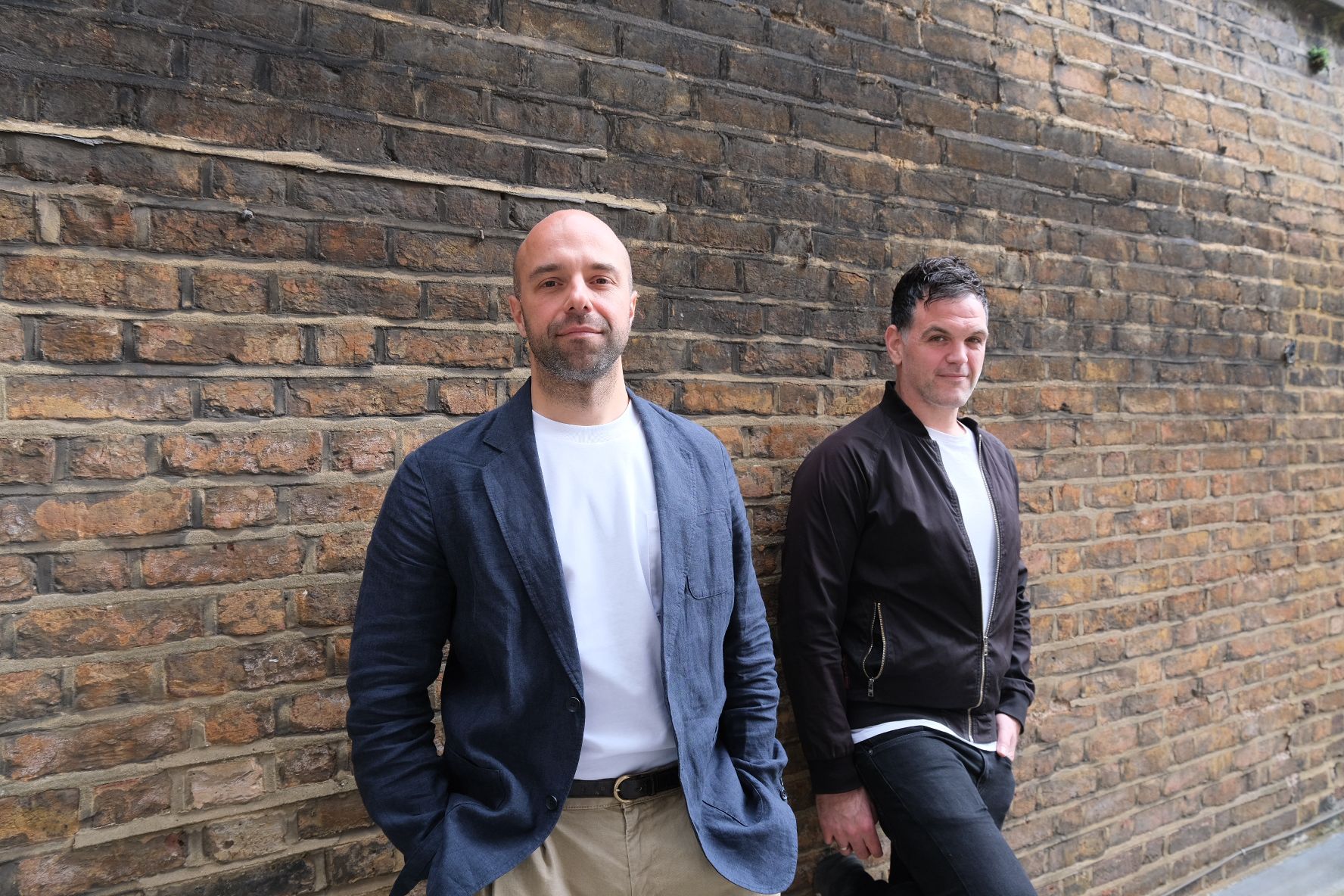
A banking education, then a different kind of judgment
Vitanov studied banking and finance at Cardiff University between 2007 and 2010. His degree was a Bachelor of Science, and Cardiff Business School awarded him Best Performance in the Banking and Finance Degree Scheme. It is a precise distinction, with none of the ambiguity that would later occupy his company.
His career included an internship at Deutsche Börse and a succession of investment banking roles at Citi. He worked as an analyst, associate, senior associate and vice president, with experience in the Telecom, Media & Technology group, and later became a director. His Citi tenure continued into February 2025.
The sequence matters because his encounter with AI data came through business customers. The founding account describes a banker watching clients struggle with data quality. Rieff brought experience of the same problem inside media operations. Their working histories supplied two views of an issue that could otherwise sound abstract.
By August 2024, Vitanov’s BeatpulseLabs role had begun. The overlap with his banking career places the transition across several months. The tidy version of a career change usually fits on a single line. This one has two employers on the calendar for a while.
- 2007–2010Banking and finance at Cardiff University
- Before 2025Investment banking at Citi, rising to director
- 2024Meets Jason Rieff in Cape Town; starts BeatpulseLabs
- June 2026BeatpulseLabs announces $1.8 million pre-seed financing
The confident stranger in the meeting
Vitanov has a dry way of explaining his objection to generic training data. “Using generic training data is like letting a confident stranger make decisions for your business.” The comparison is memorable because the stranger’s confidence is beside the point. The problem is whether that person understands the job.
BeatpulseLabs prepares data around particular enterprise uses. Its two offerings are Intelligence Extraction and Proprietary Datasets. A customer can bring existing material to be prepared, or obtain licensed material from the company. Cleaning, structuring, labeling, validation and formatting sit between an archive and a usable training dataset.
Those steps sound administrative until a label requires interpretation. A business needs its examples described according to its own task. What deserves a separate category? Which distinctions matter? When is an example ambiguous enough to require another look? A labeling rule contains decisions before a model ever sees it.
The company builds custom annotation schemas and works with domain specialists in structured teams. It also gives those specialists a route to flag unclear instructions and difficult examples. Their feedback returns to the annotation process. The person applying a rule can help improve the rule, an arrangement many office workers would welcome.
A labeling rule contains decisions before a model ever sees it.
Inside the annotation process
A music lesson with more than a tempo
Music makes Vitanov’s business proposition easier to hear. BeatpulseLabs’ music work includes written track descriptions, genre interpretation, emotional tone, instrument relationships and compositional structure. Its service descriptions reach down to section boundaries and the relationship between individual stems and a complete recording.
A stem is a separate component of a recording. Having the components alongside the finished piece makes different kinds of training work possible. BeatpulseLabs describes access to vocal versions, MIDI and one-shots as well as aligned files. The material arrives with structure that a finished audio file alone would not provide.
The company says its music catalogue contains 850,000 original assets across 180 genres, with master and publishing rights owned by Beatpulse. These are company descriptions of its collection. For Vitanov’s story, the relevant detail is the combination: usable content, permission to use it, and people qualified to describe it.
His Amsterdam Dance Event speaker listing puts him in this world too. The short description centers on turning audio, video and speech into training datasets for AI models. A banking graduate appearing in a dance industry conference programme is an appealing career detail. The connection is practical: music has become part of his working material.
Illustrative workflow based on BeatpulseLabs’ service descriptions. Feedback can return to earlier steps.
The announcement with a thank-you list
In June 2026, BeatpulseLabs announced $1.8 million in pre-seed financing. Arāya Ventures and Lighthouse Ventures co-led the round, joined by Alumni Ventures and Avalancha Ventures. The stated purpose was to expand the platform and customer base. The company also reported tenfold revenue growth during the first half of 2026.
That growth figure describes a rate of change, without providing a revenue total. The financing gives a separate, concrete measure of the company’s development. Together, the announcements moved Vitanov’s story beyond the first customer and into the more involved work of expanding what the company could deliver.
His public response to the round began with the difficulty of finding time to acknowledge milestones. He thanked Rieff, Jamie Gregory, Boyan Savov, Joshua du Toit and the wider team, then named the investors who had backed the business. “Your dedication inspires me more than you realise,” he wrote to his colleagues.
Among the investors he thanked were Rupa Popat, Mitul Ruparelia, Michal Zalesak, Jin Kim, Wynton Bastian and Rodrigo Ocejo. Naming individuals gave the message a personal register alongside the financing details. The colleagues and backers were part of his account of how the company had reached that point.
It is a useful glimpse of how he chose to mark the occasion. The announcement included an account of the work and a long list of people. A funding round lends itself to a photograph of two founders. Vitanov’s message made room for the people outside that frame.
Pre-seed funding for BeatpulseLabs, co-led by Arāya Ventures and Lighthouse Ventures.
What comes after the first dataset
Vitanov’s own description of the company’s development starts with speech, music and video. As the team worked, he said, similar gaps appeared in other domains. The aspiration is to make training data that reflects the setting where an enterprise will actually use its AI system.
The company now describes work across music, video, speech and radar. The last item makes for an unexpected neighbour to music. Both sit within the same commercial proposition: collect material, have qualified people interpret it, and prepare the result for a particular machine-learning task.
In speech, that interpretation goes beyond a transcript. BeatpulseLabs describes speaker identification, timestamps, accent and dialect labels, and markers for code-switching. Emotion, tone and intent receive their own annotations. The company’s speech catalogue page lists 75 languages, with attention to underrepresented accents and dialects. Each additional layer asks the annotator to notice something different in the same recording.
Video introduces another set of relationships. The service includes shot and scene boundaries, objects, actions, on-screen text and audio-video alignment. Keeping the label attached to the correct moment is part of the work. A film archive can contain plenty of information while still requiring detailed preparation before a training system can use it for a particular purpose.
These examples help explain the distance Vitanov has travelled from banking. His company organizes work that depends on close attention to a recording, a sequence or a signal. The commercial offer has to preserve those small distinctions while making the result usable at the scale a customer requires. The details become part of the product a buyer receives.
Radar makes the specialist requirement particularly visible. BeatpulseLabs’ radar service describes trajectory labeling, object classification, speed and bearing metadata. Its catalogue covers aerial and maritime readings from operational settings and training exercises. An expert interpreting a track is applying knowledge of a different kind from a linguist marking a change of language, even though both outputs eventually enter a training pipeline.
A public recruitment listing associated with Vitanov gives a further view of that expansion. BeatpulseLabs is hiring a lead architect for a reinforcement-learning environments practice. The remit includes environment design, reward systems, evaluation and building a technical team. The listing describes an existing expert network as the foundation for that work.
The architect’s job description calls for direct work with research teams, translating capability goals into environments and reward designs. It also includes mentoring engineers and setting standards. That is a fairly concrete expression of expansion: a named role, an area of responsibility and a team still to be built around it.
For a co-CEO, this makes the next chapter an organizational task as well as a technical one. New work needs people who can define it, deliver it and judge its quality. His company’s emphasis on specialist teams gives those hiring decisions a direct connection to what it sells.
The Cape Town meeting remains a good place to understand the enterprise. Two people had encountered a similar problem through different kinds of work. They compared what they had seen, built an offer and found a customer. Vitanov’s career now rests on giving other people’s informed judgments a useful place inside a machine’s education.