Consider the difference between hearing a song and describing why it works. A machine can count the beats. A listener can hear that the drums are holding back, that the vocal sounds uncertain, that the chorus changes the emotional temperature. Turning those observations into something another machine can learn from is a surprisingly demanding job. It is also the job BeatpulseLabs has chosen.
- Two offers: prepare your data, or license a dataset.
- Four domains: music, speech, video and radar.
- The bet: specialists should help decide what labels mean.
The company supplies enterprise AI teams with structured multimedia training data. It cleans and annotates existing collections, or provides licensed material when a customer needs content of its own. Its central proposition is that the description attached to an example matters as much as access to the example. A beautifully recorded track with a shallow label can still be a poor lesson.
01 / The people inside the labels
BeatpulseLabs calls its preparation business Intelligence Extraction. The name is grand; the work is specific. Specialists help develop an annotation schema, the rules governing what gets identified and how. They flag ambiguity and troublesome examples. That feedback returns to the workflow. The intention is to make the dataset reflect the customer’s particular task, including distinctions a standard labeling scheme might flatten.
This is also an organizational choice. BeatpulseLabs describes full-time domain specialists working in structured teams, supported by custom tooling. Its account of company culture puts expertise, community and feedback at the center. The annotator is expected to notice a problem with the instructions, then help improve them. For a buyer, that makes the quality of the working relationship part of the product.
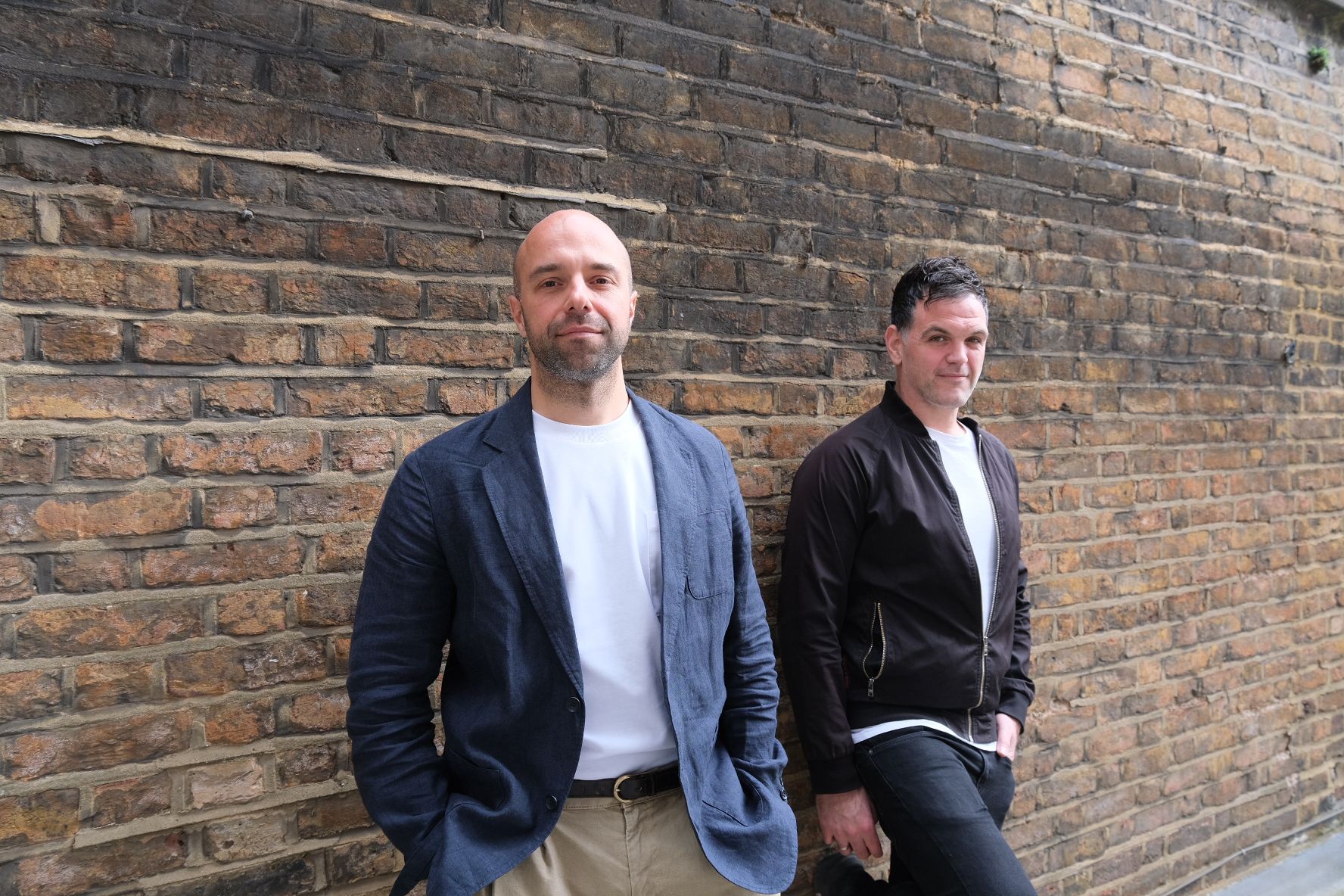
There is an origin story to match. According to Techstars, Jason Rieff and Nikolay Vitanov met by chance in Cape Town in 2024. Vitanov had spent a decade in investment banking; Rieff had led media teams across Europe. Each had encountered problems with AI data quality. Techstars says they had their first customer within 90 days. A shared frustration became a sale remarkably quickly.
02 / A music catalogue with instructions
Music makes the approach tangible. BeatpulseLabs’ music service covers written track descriptions, genre interpretation, emotional tone and the relationships between instruments. It also labels musical sections and arrangement. These are judgments about structure and purpose. A training system may need to distinguish the dominant instrument from one that merely appears, or understand how separate recorded parts relate to the complete piece.
The company says its catalogue contains 850,000 original music assets across 180 genres, with stems, MIDI and one-shots available. Stems are separate recorded components, useful when the relationship between a vocal, a bass line and a finished mix matters. BeatpulseLabs says it owns the master and publishing rights to this collection. The offer combines content, permissions and detailed description.
“AI models are only as capable as the data they are trained on.”
Jason Rieff, co-founder
There is a named application. In a public LinkedIn post, Rieff said BeatpulseLabs supplied part of the training data behind ElevenLabs’ music model. That statement establishes a concrete connection to a generative music product. It also shows where this business sits: upstream of the interface people play with, supplying some of the material from which the model learns.
03 / The same question, four kinds of signal
Video brings another set of distinctions. BeatpulseLabs describes shot and scene segmentation, object and action labels, transcription, on-screen text detection and emotion tagging. It says its video catalogue exceeds one million hours, sourced through agreements with broadcasters and production houses. Keeping sound and image aligned is part of the offer. A correct label attached to the wrong moment would teach the wrong relationship.
Speech requires attention to what happens around the words. The service includes speaker identification, dialect and accent tagging, code-switching, emotion and intent. Its speech page describes coverage of 75 languages and more than one million hours under management. A customer can request custom recordings as well as annotated existing material. A transcript is one layer of the work; the delivery can include several others.
Radar is the unexpected fourth domain. Here the company describes object classification, trajectory labels, speed and bearing metadata, using aerial and maritime readings. Its stated collection exceeds 10 terabytes, drawn from operations and training exercises. Music and radar share little in everyday conversation. Within this business, both require someone qualified to interpret a signal before that interpretation becomes a training example.
04 / What the buyer is really buying
The commercial model has two entrances. Customers can bring an archive for preparation, or obtain ready-made and custom rights-cleared datasets. Both routes lead toward data formatted for model workflows. The likely buyer is an enterprise machine-learning team with a defined use case. The practical attraction is avoiding the need to assemble content access, specialist annotation and dataset preparation as separate projects.
In June 2026, BeatpulseLabs announced a $1.8 million pre-seed round co-led by Arāya Ventures and Lighthouse Ventures, with Alumni Ventures and Avalancha Ventures participating. It reported tenfold revenue growth during the first half of 2026. That is a company-reported growth rate. The financing was earmarked for expansion of the platform and customer base.
The competitive question is whether a project benefits enough from tailored expert judgment to justify the work. General annotation services, licensed data suppliers and an internal team offer other routes. My reading of BeatpulseLabs’ proposition: it fits tasks where subtle distinctions matter and existing labels miss them. For a simple classification problem, a custom specialist workflow could add unnecessary complexity.
There is a useful practice to borrow before buying anything: ask the people labeling the data which examples make the instructions fall apart. Give those examples a route back to the team designing the task. BeatpulseLabs has built its pitch around that conversation. For an AI team, it is a sensible place to begin.