Nikil Viswanathan had an hour before a party and a small administrative problem. He was visiting his sister. He did not want to remember to check in for a Southwest flight. So he wrote a program to do it for him. This was 2012, and the apparently harmless interval before going out would eventually produce a website, news coverage, and a cease-and-desist letter from the airline. Other people bring back photographs from a visit. Viswanathan brought back a dispute over automated boarding passes.
His service, Check In To My Flight, checked passengers in when the airline’s window opened. In Southwest’s seating system at the time, an early check-in could help secure a better boarding position. The website launched on October 2. By October 18, Southwest had emailed its objection. A little over two weeks separated a working product from a lawyer’s letter.
The episode makes a useful entrance to a career often introduced through Alchemy, the blockchain developer platform Viswanathan co-founded with Joe Lau. Long before its February 2022 financing valued the company at $10.2 billion, he was making things that relieved an inconvenience. His projects had the scale of a student’s daily life. The consequences occasionally had other plans.
01 A calendar, a quarrel, a co-founder
Viswanathan grew up in Lubbock, Texas, and arrived at Stanford in 2006. He studied computer science, focusing on artificial intelligence, and stayed for a master’s degree. His summers included product internships at Microsoft, Google, and Facebook. The companies offered a close view of the business of making software; campus supplied plenty of reasons to make his own.
His student project list gives that education some texture. With classmates, he worked on recognizing gestures with a Microsoft Kinect, recovering scrambled text with language models, and teaching a program to identify objects in video. Another project involved implementing parts of the PintOS operating system. These were different kinds of problems, with different measures of whether a solution worked. Before he was asking developers to trust his company’s tools, he had spent time making software behave under the less negotiable judgment of an assignment.
In December 2009 he created Fountainhop, an events platform for Stanford. The idea was easy to understand: make it possible to see what was happening around campus. When advisers heard about the project, he later recalled, they thought he should concentrate on the thing people were already using.
There was a catch. The people building it did not work well together. Fountainhop’s product had users, but its team could not find a workable arrangement. The company shut down. In his later telling, the experience changed the weight he placed on choosing a collaborator. An app can be rewritten. A founding relationship is a more complicated piece of engineering.
“The most important decision you’ll make in your company, full stop, period, is who your co-founder is.”
Nikil Viswanathan, Stanford talk, 2023
He met Lau while they were teaching assistants for a Stanford databases course. Lau remembers an unusually demanding introduction: the course was an early experiment in mass online education, with roughly 150,000 students. Their working relationship began with a problem large enough to require cooperation.
02 Lunch was the product
After college, the pair turned toward consumer software. They wanted to bring people closer together. In San Francisco, work had made seeing friends harder than it had been at university, where company was often available simply by leaving your room. They missed that ease. Finding lunch companions should not have required the diplomatic effort of arranging a summit.
Down To Lunch, which they built in 2015, offered a button for finding friends who wanted to meet. It belonged to an appealing category of invention: the elaborate work behind a simple action. The user got to express an ordinary wish. The software took care of distributing it.
The app reached No. 1 in the App Store’s social category and No. 2 overall. Viswanathan later described the oddity of going to a barbershop and finding his face in the newspapers. A project born from missing friends had become something strangers recognized. That changes the nature of a spare-afternoon experiment rather quickly.
03 The office on the steps
Consumer apps also gave the founders a practical education in listening. They visited college campuses, including Berkeley, and asked students to try their software. To encourage honest reactions, they told people they were interns. A user might spare a founder’s feelings. An intern could safely carry bad news back to somebody else.
Then came the useful part. They watched what happened, sat down on the steps at Sproul Plaza, connected their phones to their computers, and changed the app. The next person they approached could try the revised version. Their office needed neither a lease nor much distance from the customer.
Viswanathan has described that routine as a way to collapse the delay between learning something and doing something about it. The relevant detail is the sequence: observe, revise, return. A complaint could become a change while its meaning was still fresh. He later said they carried that concern for speed into crypto and enterprise software.
04 Selling the tools underneath
By 2017, Ethereum had caught their attention. Its appeal was the possibility of building applications that could move value, alongside the information software already moved. Lau has been candid that the path into blockchain was untidy. The founders had tried consumer ideas for years. They encountered another field, started building, and ran into its difficulties themselves.
Making a blockchain application required tools and infrastructure that were harder to assemble than they expected. They built some for their own use. Conversations with other developers suggested that the inconvenience was widely shared. There was a business in supplying the foundations that each team otherwise had to construct.
Alchemy, founded that year, became a developer platform. Its APIs give applications access to blockchain networks and data. In practical terms, the company takes on some of the machinery beneath an app, leaving its developers more attention for the thing their own customers want to do.
The continuity with the earlier projects is a willingness to notice work that software could take off someone’s hands. The customer had changed. A college friend looking for lunch and an engineer looking for reliable network access have different requirements. Both can recognize a needless obstacle when they encounter one.
05 What $10.2 billion leaves out
Alchemy opened its platform to the public in August 2020. On February 8, 2022, it announced a $200 million equity investment led by Lightspeed and Silver Lake at a $10.2 billion valuation. Its announcement named customers and partners including OpenSea, Adobe, and Dapper Labs. The tools had found an audience beyond the founders who first needed them.
The financing number is easy to remember. It can also crowd out the years that made the business possible: the student projects, the company that ended, the consumer experiments, and the repeated work with Lau. Viswanathan returned to Stanford’s Entrepreneurial Thought Leaders series in 2023 partly to give that longer account. He had once helped run the series himself.
In that setting, he also described how internships had made prominent technology leaders seem more approachable. The people running large companies worked hard, but meeting them had reduced the distance between a famous name and a person doing a job. For students considering their own companies, that was useful information to bring back to campus.
06 A wand, a welcome, a working theory
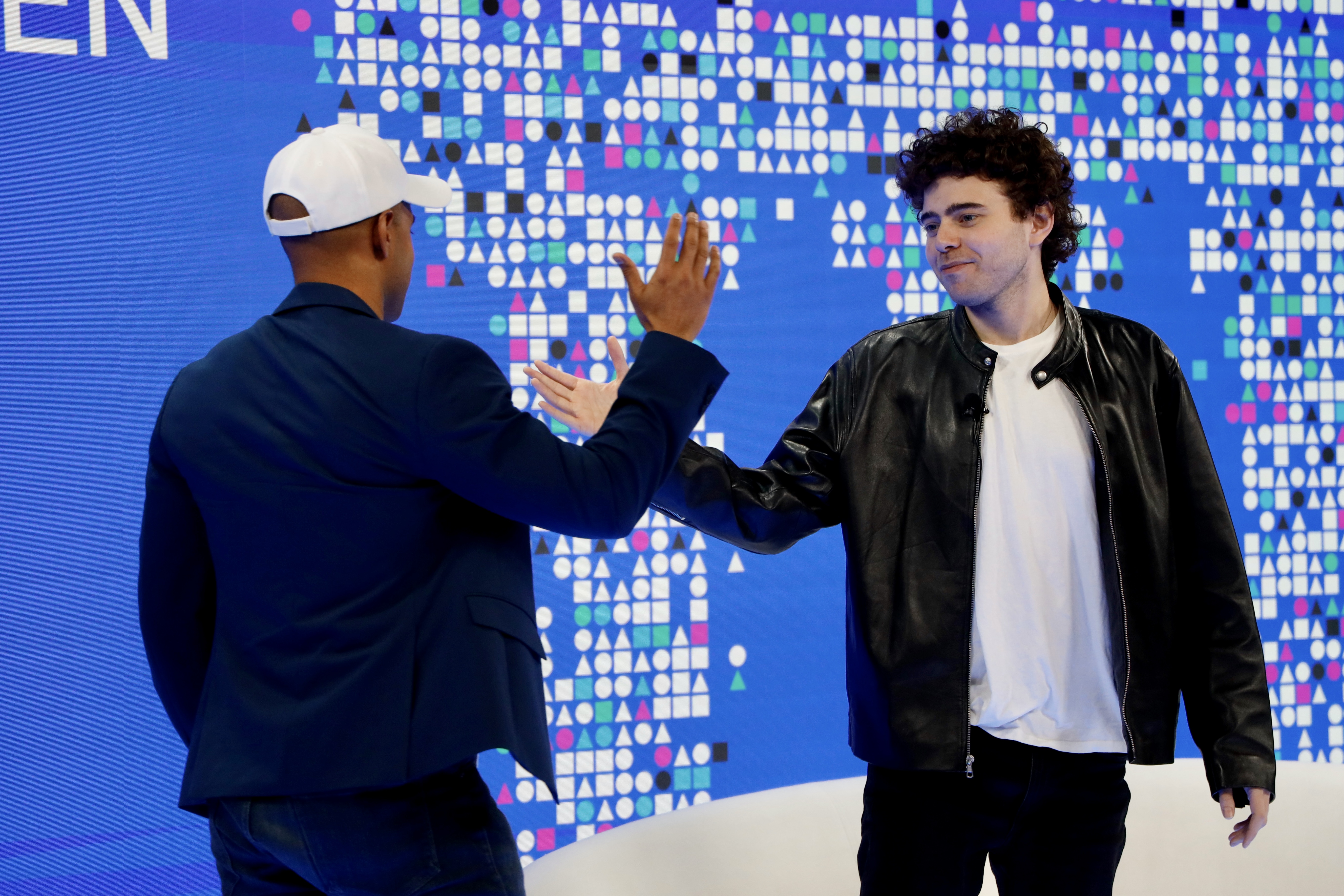
There is another strand to his work that a financing history would struggle to accommodate. His personal website includes a Harry Potter-inspired controller that switches lights with a flick of the wrist. A project called Homie, built with Lau and Andrew Shaw, welcomed him home with music and lights. Someone had considered the entrance to a house and decided it deserved production values.
These are revealing projects because their reasons are so immediate. They promise amusement, convenience, or a better arrival. His site puts them alongside more technical university work in language processing, computer vision, and operating systems. The range leaves room for both an algorithm and a joke.
“We wanna have a blast while doing it.”
Nikil Viswanathan, on building Alchemy
He has made enjoyment an explicit part of his explanation for building a company. In his Stanford talk, he connected liking the work with being willing to persevere. He also spoke about wanting to improve lives on a global scale. The large aspiration and the small pleasure share space in his account. A person can care about infrastructure and still want the lights to come on dramatically.
07 When the customer is an agent
By 2026, another kind of user had entered the picture. Viswanathan was arguing that AI agents would need financial tools to transact. The premise extends Alchemy’s concern with the machinery underneath an application: if software is going to buy things, someone has to make the transaction possible.
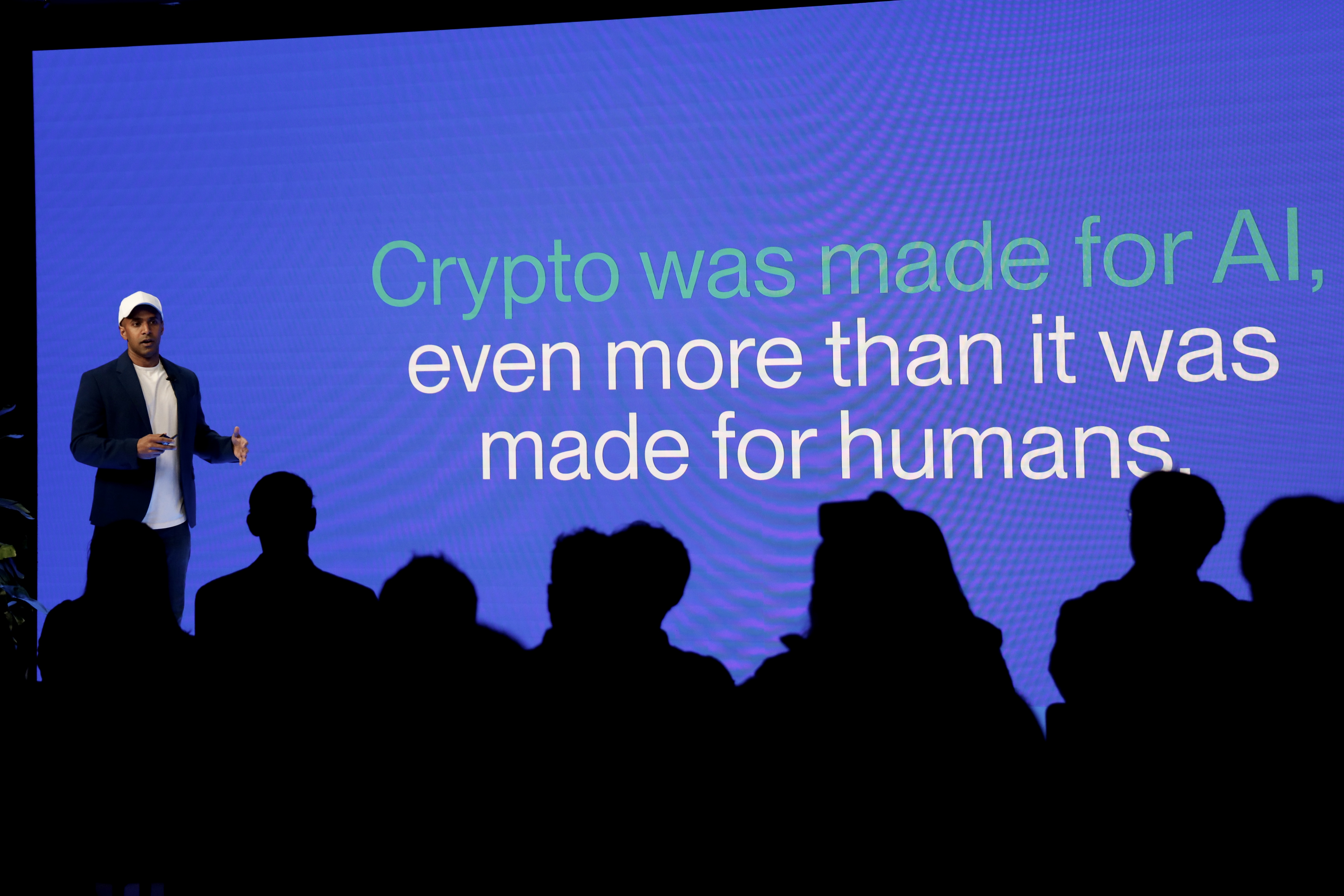
At Alchemy’s CoBuild gathering in New York on April 28, he and Lau presented a keynote that included AgentCard and AgentPay, products directed at agent spending and merchant payments. In September, he joined Robinhood’s Johann Kerbrat and Pantera’s Franklin Bi for a conversation about tokenized stocks, stablecoins, and agentic commerce. His public interests were moving with the tools the company was building.
Whether that prediction becomes ordinary daily life remains a question for the work ahead. Viswanathan’s career offers a smaller, observable pattern: find a difficulty, build something, and see who else needs it. Once, the difficulty was remembering an airline check-in. Then it was getting friends together. Now the question includes what happens when software needs to pay. The spare afternoon has become a company’s working day.
More from Nikil’s corner of the internet
Projects, conversations, and the next thing he is building.
- Personal website Projects, stories, and talks
- The Stanford talk His account of the years before Alchemy’s funding milestone
- With Robinhood’s Johann Kerbrat Stateful · September 24, 2026
- The ARK conversation Developer experience, institutions, and AI
- Inside CoBuild 2026 Company blog · the April gathering and product announcements
- The airline check-in episode The Stanford Daily · October 24, 2012
- Alchemy’s company profile The platform he co-founded with Joe Lau