He already sold one company to Accenture. Then he picked the least glamorous problem in a $75 billion industry - booking a block of hotel rooms - and decided to do it all again.
Picture a growing company that wants to gather its team in one city for a week. The flights are easy. The dinners are easy. The thing that quietly eats an afternoon - then a second afternoon, then a chain of "just circling back" emails - is the hotel. Not one room. A block of them. Rates, holds, contracts, attrition clauses, a rooming list that changes every time someone's plans do.
Nikhil Sethi knows that afternoon intimately. He lived it while running a 200-person startup, and again inside a company of roughly 800,000 people. The conclusion he reached was not subtle: in 2026, reserving five or more hotel rooms still runs on phone calls and PDFs, and that is absurd.
So Workgrounds, the New York company he co-founded in 2022 and leads as CEO, points modern AI at the dullest corner of a $75 billion market. A planner types what they need into a website that behaves like any travel site. In the background, software fans the request out to hotels, gathers proposals, and helps negotiate the rate and the change orders. The hotels keep selling the way they always have. The planner skips the part nobody enjoys.
The promise on the box is plain: organizations can save in the neighborhood of 31% on group rates, and reclaim the hours that used to vanish into inbox threads. It is a deeply unsexy pitch, which is precisely why Sethi finds it interesting.
We wanted to apply AI and other automation to 100x the experience for companies to easily manage hundreds of room blocks in parallel.— Nikhil Sethi, co-founder & CEO, Workgrounds
Before travel, there was advertising. Around 2010, while undergraduates at Northwestern University, Sethi and Garrett Ullom started Adaptly. Sethi had trained as an electrical engineer - the kind of background that teaches you to look at a messy process and ask which parts a machine should handle.
Adaptly built media technology that helped brands optimize spend across the new and chaotic social platforms of the era: Facebook, Twitter, even Kik. The client list was not a starter list. PepsiCo. Fox. Domino's. Philips. Hundreds of brands routing campaigns through software that promised to make a fragmented landscape behave.
Over nine years the company grew from a concept hatched between classes to a leading adtech firm with 150 to 200-plus employees. In December 2018, Accenture acquired it. Sethi stayed on, becoming Managing Director and Global Programmatic Services Lead - which is how he ended up experiencing corporate logistics at a genuinely enormous scale.
That second vantage point mattered. At Adaptly he felt the group-travel pain as a founder. At Accenture he felt it as an operator inside one of the largest workforces on earth. Two different sizes, one identical headache. The pattern was the point.
Plenty of founders sell a company and disappear into investing or advising. Sethi did some of that - he is a listed LP at the early-stage fund deftly.vc. But the more telling move was reuniting with the same co-founder to start over from zero.
Workgrounds is, by Ullom's own description, "the solution we would've wanted at Adaptly and then at Accenture." There is something honest about building the tool you personally wished existed, rather than the tool a market-sizing slide says you should build. The customer they understand best is their own former self.
In November 2024 they launched publicly and announced a $2.6M pre-seed round, backed by Oceans Ventures, Hannah Grey, Volo Ventures, and deftly.vc. The target market is wider than tech off-sites: associations, government groups, sports teams, even wedding parties. Anyone who has ever had to wrangle a rooming list.
The technical philosophy is restraint. The AI agents work invisibly, behind workflows people already know. No rip-and-replace, no integration project, no new behavior to learn. You book like you always have; the software does the grinding you never wanted to do.
It is worth pausing on who actually uses a product like this. Not a procurement department with a six-month evaluation cycle, but the person who got handed the off-site three weeks out and a budget that already feels tight. For them, the difference between a tool that works on day one and a tool that needs an onboarding call is the difference between using it and never opening it again. Sethi's restraint is not modesty; it is a sales strategy disguised as a design principle.
And the customers are not only tech companies. Sethi has been clear that the same machinery serves associations planning conventions, government groups, sports teams traveling for a season, and even the wedding party that needs forty rooms held under one name. The common thread is not an industry. It is the moment a single human becomes responsible for a lot of other humans sleeping somewhere.
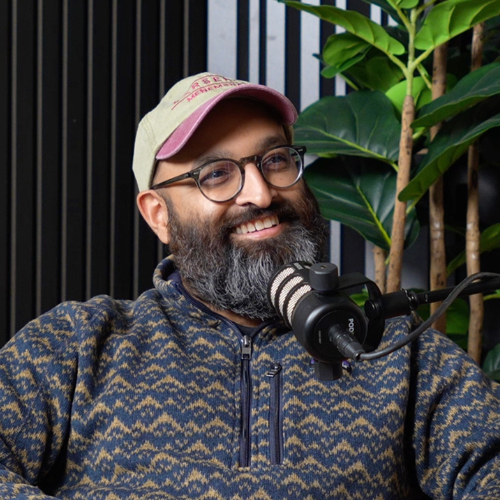
Most startups are a first date with a co-founder. Workgrounds is a second marriage. Sethi and Ullom met at Northwestern, built one company together for nearly a decade, sold it, and then chose to do the whole exhausting thing again - with each other. Conviction is when you re-sign the lease.
The unglamorous problems are the ones nobody has automated, which is exactly why there is room to win. A $75 billion industry still running on phone calls is not a backwater - it is an opportunity wearing a disguise.
Booking five or more hotel rooms for team gatherings or conferences requires an overwhelming amount of manual coordination and time.— Nikhil Sethi, on the problem he decided to spend years solving
The pitch is not abstract. Workgrounds frames the win in two currencies a planner actually feels: the rate, and the hours.
Figures drawn from Workgrounds' public launch materials and founder interviews. Bar heights are illustrative, not to scale across units.
Both of his companies started as personal frustrations, not market reports. The throughline is a founder who builds the thing he wishes had existed when he needed it.
Two companies, one co-founder. Loyalty is not a soft skill in startups - it is the load-bearing wall. Sethi and Ullom keep choosing each other.
No integration projects, no new workflow to learn. The agents do the grinding in the background while the human books the way they always have.
He runs Workgrounds as a fully distributed team - and still argues for the value of getting people in one room. Which, conveniently, is the exact thing his product makes easier.
Trained in electrical engineering, he reads a messy human process the way an engineer reads a circuit: which parts should a machine handle, and which should not.
He picks problems that bore other founders. The boredom is the moat - nobody automates what nobody wants to look at.
He is a two-time founder with the same co-founder both times - Garrett Ullom, met at Northwestern.
Trained as an electrical engineer, then spent his whole career building software companies instead.
His first startup, Adaptly, optimized ad campaigns across Facebook, Twitter and Kik - a snapshot of a very specific moment in internet history.
He runs a fully distributed team yet champions in-person gatherings - the exact thing Workgrounds exists to make painless.
After the Accenture exit he became an LP at deftly.vc, backing the next wave of founders rather than coasting.
The ambition is to become the default for group travel - to make booking a block of hotel rooms feel as ordinary as booking a single one, with AI agents quietly handling proposals, rate negotiation, and the endless change orders. Not a feature. The category.
It is a tidy story when you say it fast: dorm-room adtech, a sale to one of the world's largest consulting firms, then a deliberate return to the trenches for a problem most people would never notice. But the through-line is consistent. Sethi keeps finding the part of a big, fragmented market that everyone tolerates and nobody fixes, and he keeps pointing software at it.
The room block is not glamorous. That is the entire thesis. The most valuable problems are often the ones hiding in plain sight, disguised as a tedious afternoon and a spreadsheet that refuses to behave.
There is a version of the Sethi story that is purely about credentials - the Northwestern engineering degree, the venture-backed adtech firm, the Accenture managing-director title. He has all of those. But the more useful way to read him is through what he repeatedly chooses to do with them. Given a clean exit and an open calendar, he went looking for friction. He found it in a corner of travel so unloved that the incumbents had simply decided the manual process was the process.
What happens next is unwritten. Workgrounds is young, the round is small by the standards of the headlines, and "automate the boring thing" is a sentence many founders say and few survive. But Sethi has done the unglamorous-to-acquired arc once already, with the same partner beside him, and that is a harder thing to fake than a pitch deck. If the second act rhymes with the first, the people booking those forty rooms three weeks out will be the ones who notice first.