Nigel Sharp was thirteen when he started a metal welding business. At fifteen, he was selling a cleaner for computer mice through local shops and competing in the Irish Young Entrepreneur national final. The business opportunity has aged; the habit of looking for one has held up rather better.
The profits helped pay for his studies. A website followed at sixteen, a robot at eighteen, and, somewhere in the extracurricular schedule, an experiment with pig farming. Before there was a professional biography to organize, there was already a fairly crowded list of things to try. Choosing a single lane would have required cancelling quite a few appointments.
Sharp eventually became the co-founder and founding CEO of Aquagga, the Tacoma company developing equipment to destroy PFAS, the persistent compounds often called forever chemicals. He led it from 2019 to 2024. But the most revealing part of that chapter may be the idea the founders abandoned before they settled on the company’s purpose.
First, a two-month visit that refused to end
Born and raised in London, Sharp studied mechanical engineering and digital technology and management at King’s College London. His route into Armenia began with volunteering. What was intended as a two-month stay became long-term employment, and a family connection became a place to build a working life.
His Armenian grandmother had exchanged letters with a friend in Armenia over many years. Those letters were part of his connection to the country before he went there himself. The trip gave that inherited relationship a present tense: people to meet, work to take on, and reasons to stay beyond the original departure date.
At the TUMO Center for Creative Technologies, Sharp became an IT project manager, helping build the infrastructure and team around its launch. Technology there had an immediate audience: young people learning creative skills. The job put engineering inside an educational project, with the practical demands that follow when other people depend on what you have installed.
He then co-founded Lionsharp, whose Voiceboard presentation product worked with voice and gesture control and could bring maps, webpages and three-dimensional models into a presentation. It was an engineer’s invitation to make the familiar slide deck do more. A presentation could become something you operated, rather than simply clicked through.
“We thought the tech would sell itself.”
Nigel Sharp · Reboot, 2015
By May 2015, he was speaking publicly about Lionsharp’s difficulties, including an empty company bank account and the responsibility he felt toward the team. The question before him was whether persistence still made sense. He was willing to describe a business problem while he was still inside it, without the reassuring hindsight that usually makes such stories easier to tell.
The person at the other side of the whiteboard
Colorado gave him another role alongside founding companies: helping other people start theirs. At the University of Colorado Boulder, he joined the pilot Global Entrepreneurs in Residence program. He advised on product development, team culture, fundraising and pitches. There was also a useful instruction for anyone seeking his time: invite him for tea. Coffee had lost that particular procurement contest.
The university became a place to build as well as advise. Sharp co-founded Stateless with assistant professor Eric Keller and doctoral student Murad Kablan. Their company commercialized network virtualization research, offering functions such as firewalls and load balancing through software. In 2017, it was selected for Techstars Boulder. The subject matter had moved a considerable distance from gesture-controlled presentations.
Alaska expanded the teaching work. As a Global Entrepreneur in Residence, Sharp worked with university innovators and the wider entrepreneurial community. By late 2018, he had joined the University of Alaska Fairbanks’ Center ICE as startups and innovation manager. His remit included mentoring, developing programs and helping an emerging organization work out what it could usefully provide.
One result was Students2Startups, an internship program he designed and supervised. When he left Center ICE in summer 2021 to work full time on Aquagga, it had connected more than thirty students with startups across Alaska. He had also been the first instructor of Alaska’s Foundational I-Corps Training Program. The work produced routes into companies for people who were still deciding what they could build.
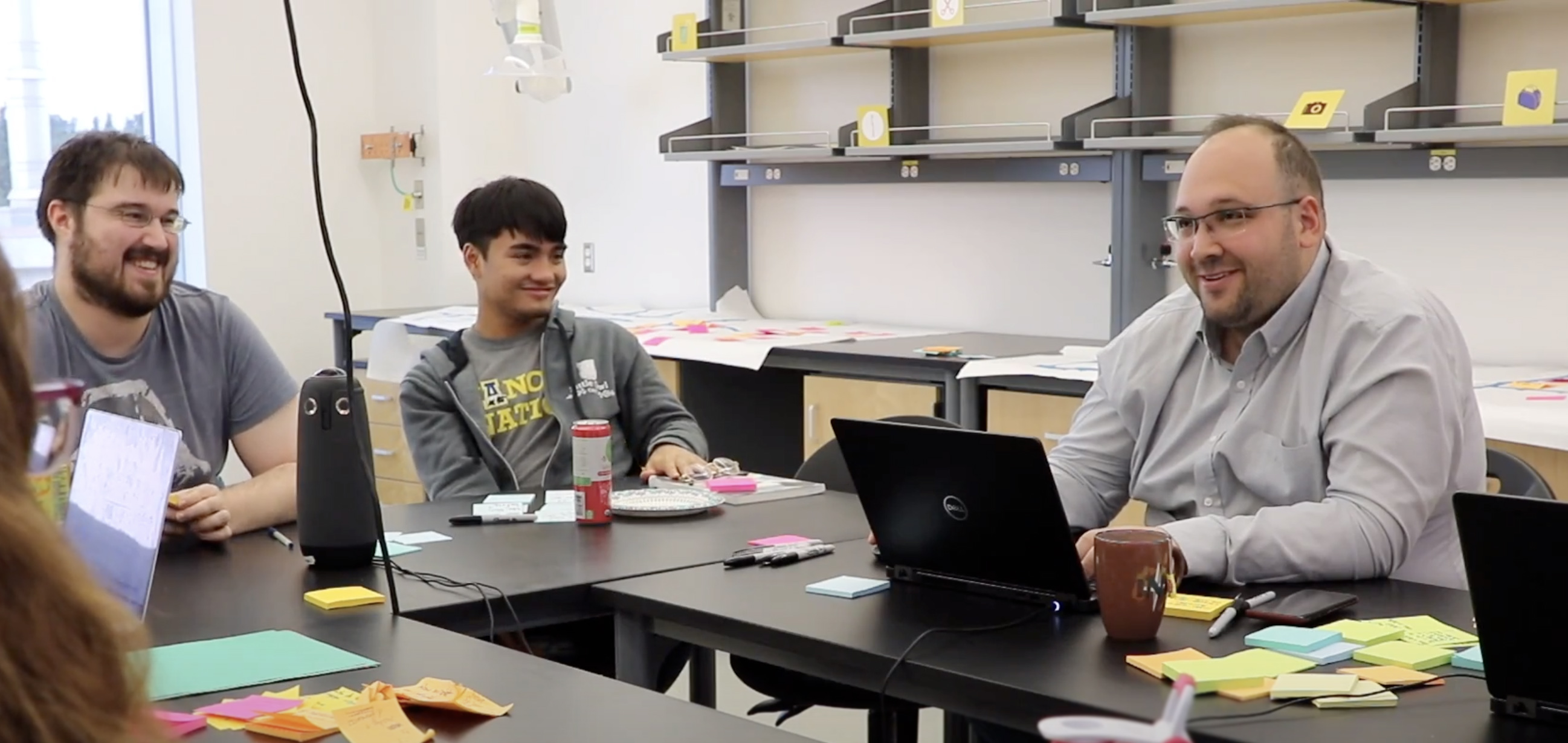
His work in Alaska included initiatives such as the Ocean Technology Innovation Sprint and the Innovation Dash series. The subjects and formats varied, but they gave people a structured occasion to test an idea with others. For someone whose own projects crossed countries and industries, helping assemble those rooms became a substantial part of the job.
A hundred conversations can ruin a perfectly good plan
Aquagga began with a different problem in mind. Sharp and Brian Pinkard, then a University of Washington doctoral student, explored using hydrothermal technology to deal with sewage sludge. Through the National Science Foundation’s I-Corps program, they set about interviewing potential customers. They had a technical starting point; the interviews would test whether it had a business waiting for it.
More than a hundred conversations disrupted the original plan. Sewage sludge was not yielding the startup opportunity they had expected. Water utility conversations kept returning to PFAS instead. Sharp and Pinkard had not initially known about the compounds. Listening gave them both a new subject to understand and a reason to reconsider what their company should do.
That change required more than replacing a noun in a pitch. The team moved toward hydrothermal alkaline treatment, or HALT, with technology from the Colorado School of Mines. Chris Woodruff became a co-founder alongside Sharp and Pinkard. They retained the idea of modular treatment equipment while changing the chemistry and the contaminant they were trying to tackle.
In April 2020, Aquagga won the $15,000 grand prize at the Alaska Airlines Environmental Innovation Challenge. Later that year came an achievement award from the Cascadia Cleantech Accelerator, along with recognition in the University of Washington’s Dempsey Startup Competition. An early university account also recorded the company earning its first dollar. Even a water technology business must eventually get around to that.
A seal outside the office
The move into Tacoma’s Maritime Blue incubator in 2021 gave the team a wet lab and a place to work together after operating remotely across states. It also put a hardware company in an industrial setting. Pipes, testing and equipment had somewhere to go. A complicated process could begin acquiring the less glamorous necessities of a working business.
Sharp noticed the setting beyond the machinery, too. He described a seal appearing on the deck outside the Port office and connected that encounter with the company’s environmental purpose. There was something refreshingly specific about it. The natural world could arrive outside the workplace without being scheduled as an agenda item.
The treatment problem itself demanded precision. Filtering PFAS from water leaves captured material that still needs to be handled. Aquagga worked on the destruction stage, using heat, pressure and alkaline conditions to break the compounds apart. In 2023, its equipment was deployed at Fairbanks International Airport, where a pit held water contaminated by firefighting foam. The Alaska connection had become a place to put the machinery to work.
Sharp also took on the familiar founder’s task of explaining the project quickly. In 2022, he appeared in GeekWire’s Elevator Pitch series, presenting Aquagga during a thirty-two-second ride up Seattle’s Smith Tower. The format made a fairly literal demand of him: take the chemistry, the equipment and the business case, and get them upstairs before the door opened.
Five years, then a little room for yes
In August 2024, Sharp announced that he was stepping down as Aquagga’s CEO and moving into an executive advisory role. A recent vacation in Armenia had given him time to consider the approaching fifth anniversary. It was the longest he had continuously led a project. He wanted room for other companies and for mentoring requests he had previously turned down.
His interests still included climate technology, water, space and information technology. He wanted to help create jobs and support a broader startup community. He also left an invitation to meet for tea, with no immediate plan to leave the Pacific Northwest. After years of changing geography, he was opening his calendar while keeping a regional base.
Aquagga appointed Dhileep Sivam as CEO later that year. By November 2025, the company had carried out nine field demonstrations, including work in Alaska and with the City of Tacoma. The enterprise Sharp had helped start was continuing through the lengthy work of deployment and commercialization under another leader.
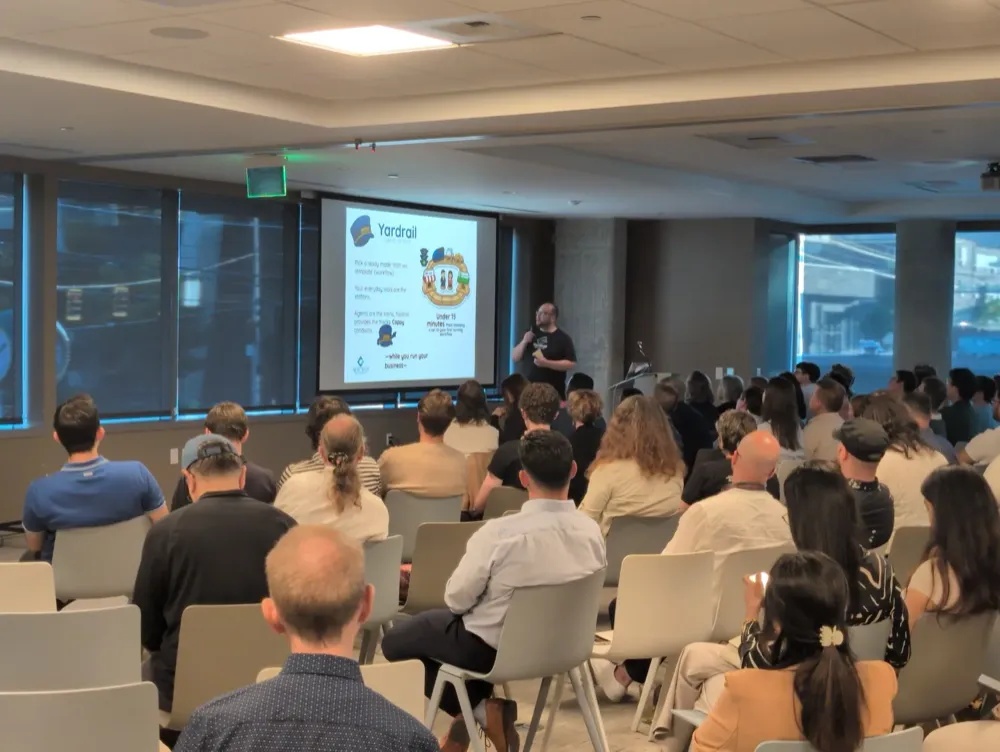
His current work brings him back to software and smaller teams. Yardrail lists him as co-founder and CEO, building workflow automation for small businesses. His own practice includes founder coaching, and he also works as an entrepreneur in residence and mentor with One Day. The rooms have changed again; conversations about what a founder needs remain on the calendar.
There is a useful restraint in reading this career through the projects rather than arranging it as a march toward a single destination. A mouse cleaner reached shops. A volunteer stayed. A presentation tool encountered a market problem. An internship program connected students with employers. A water company changed its purpose after people answered its questions. Each produced a different kind of result.
Sharp’s experience supplies plenty to discuss with the next founder who sits down opposite him. There are products to examine, decisions to revisit and customer interviews worth asking about. There is also a beverage preference that has survived a decade of professional change. Anyone hoping to start that conversation can make one decision with confidence: put the kettle on.