A mobile phone is an unusually intimate place to encounter an industrial constraint. It sits in your pocket, knows your routines, and occasionally behaves as though crossing a border were an administrative offence. Nicolas Girard has spent much of his working life examining the machinery behind that experience. Long before he co-founded OXIO, he was asking how a device might escape the limitations of a single wireless network.
That question has grown with him. It began in research, acquired a patent number, became a company, and then reappeared in different forms across two more ventures. At OXIO, founded in 2018, Girard wants businesses to shape mobile services through software. In 2026, the assignment became considerably larger: an OXIO-led consortium agreed to acquire Movistar Mexico, a business described at the announcement as serving more than 20 million subscribers.
The distance between those two moments is the interesting part. An inventor can describe a better connection on paper. A telecom executive must arrange for it to work when someone is trying to pay, call, travel, or finish a delivery. Girard’s career follows the long negotiation between those expectations.
A device with more than one way out
His first professional experience was in network security for the French government. Research followed. Wireless communication caught his attention at a time when getting online still often involved finding an Ethernet cable. The possibility of communicating without one sent him deeper into telecommunications. Eventually, work that began as research supplied the foundation for his first company.
Girard moved from Europe to the United States looking for better opportunities to fund and commercialize that research. Stevens Institute of Technology, in Hoboken, offered a setting where laboratory work could become a venture. Attila Technologies, which he founded in 2005, emerged from that environment. Its focus was wireless network aggregation: giving devices ways to use multiple connections.
The underlying irritation was quite precise. Wireless communications had inherited a habit from wired networks: the client was tied to one network relationship. Mobility made that arrangement awkward. Leaving a network’s comfortable territory could exact a price in access, capacity, or cost. Girard’s work challenged the arrangement by allowing simultaneous communication across different wireless networks and frequencies.
Granted May 26, 2009. Inventors: Patrick E. White and Nicolas Girard. A multi-access terminal capable of simultaneous connectivity to multiple communication channels.
The patent names Girard alongside Patrick E. White and lists Stevens as the assignee. Its subject sounds dry enough to discourage a dinner party: a multi-access terminal with simultaneous connectivity to multiple communication channels. The practical question is easier to appreciate. If one route is constrained, why should a device have to act as though no other route exists?
In 2010, the work brought Girard Inventor of the Year recognition from the New Jersey Inventors Hall of Fame. He also shared a Thomas Alva Edison Patent Award with Stevens. Recognition mattered to him as an inventor, and he spoke about the significance of having peers acknowledge the work.
“It is a great honor and a unique privilege to be recognized by your peers.”
Nicolas Girard, 2010
The awards also captured a practical streak. Girard had described market potential as something that helped secure research funding and constrained technical ideas toward commercial usefulness. A laboratory could produce an elegant answer. A company needed an answer someone would use. Former AT&T executive Frank Ianna was managing Attila when Stevens announced the honors, bringing an operator’s experience into the invention’s commercial life.
When data became a reward
In 2012, Girard co-founded Aquto and became its chief technology officer. His attention shifted toward the economics of mobile access. Aquto worked on sponsored data, allowing a third party to pay for connectivity or offer mobile data as a reward. Data could become something a brand gave a customer for taking an action.
The model connected three parties whose interests were different but potentially compatible. A subscriber wanted usable mobile data. A marketer wanted engagement. A carrier wanted revenue and loyalty. Aquto built a bridge between them, using a cloud-based platform to make the exchange possible.
The applications were pleasingly concrete. Someone could receive data for an in-app action. A physical product could carry a data-reward voucher. An enterprise could sponsor access to particular content. The monthly mobile allowance, usually treated as something to ration, became a commercial ingredient.
Mavenir announced its acquisition of Aquto on January 4, 2018. The announcement described carrier relationships including América Móvil, AT&T, Telefónica, and Verizon. Aquto’s experience gave Girard another view of the same industry: understanding how packets moved was one part of the work; understanding who would pay for them was another.
OXIO followed in 2018. The new company moved further into the operating machinery of telecom, offering a cloud-based platform through which brands, enterprises, and mobile operators could build services. The ambition was to expose network capabilities through tools that businesses could actually work with.
An hour for the technology
Mexico was OXIO’s first market. Girard’s experience in Latin America had drawn his attention to the cost of connectivity and differences between operators. Affordability was part of his argument from the start. A phone could put a digital economy within reach while the price of data kept participation out of reach.
OXIO’s proposition gave an existing business a route into mobile service without requiring it to construct the conventional infrastructure itself. A retailer or digital platform could offer connectivity under its own brand. The business would bring its customer relationship; OXIO would supply the telecom platform underneath it.
In March 2022, OXIO announced a $40 million Series B led by ParaFi Capital. Its customers in Mexico included Grupo Bimbo, Grupo Coppel, and Rappi. Those names made the idea tangible. Bread, household purchases, and deliveries might not be the first associations that come to mind when someone says mobile operator. Girard’s proposition allowed a familiar business to add another service to an existing relationship.
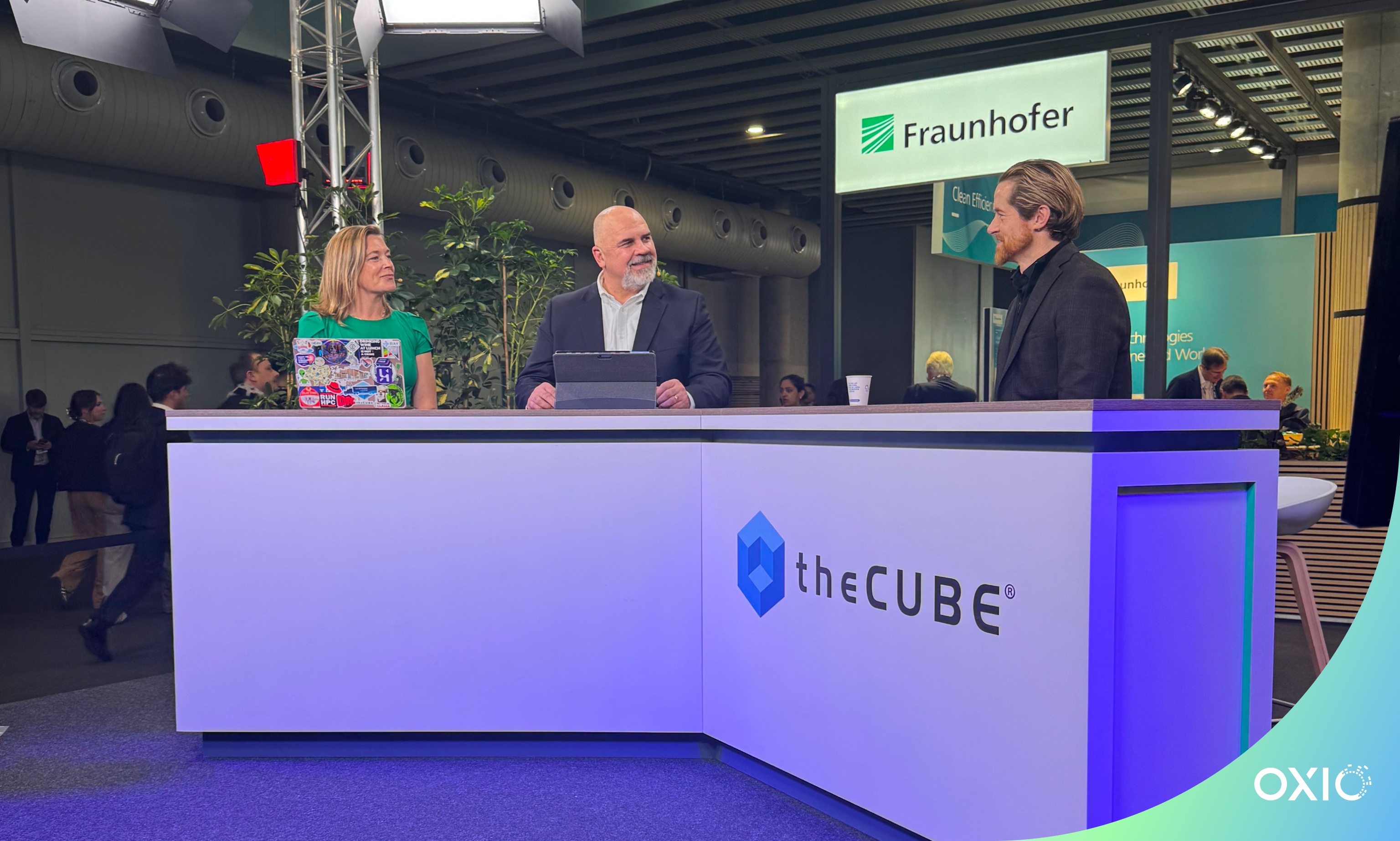
At Mobile World Congress in Barcelona in 2025, Girard explained how far the technical setup could shrink. Depending on the use case, he said, the technology for a mobile virtual operator could be configured in roughly an hour. He separated that from the branding, marketing, and distribution a business would still need to arrange.
The qualification is useful. An hour sounds splendid in an industry accustomed to longer schedules. It does not summon a customer base or write a marketing plan. What the platform promises is a shorter technical path, leaving businesses more room to decide what their service should mean to the people buying it.
Girard’s interests also extend beyond a founder’s own balance sheet. A 2023 French Tech community directory listed him as co-president of La French Tech New York. It places him in a network of entrepreneurs carrying ideas, experience, and introductions between markets, a fitting sideline for someone whose businesses keep crossing the Atlantic.
His private geography has a similar rhythm. In 2024, he described dividing his time between New York and Mexico City with his wife, Paola, and their dog, Max. Asked about favorite company memories, he recalled the moment OXIO first gained full control of its network. Among the larger ambitions, the pleasure of seeing the machinery work remained quite recognizable.
The network comes with customers
By January 2026, OXIO reported having surpassed two million activated lines during 2025. It also described integrations with AWS and Mavenir and progress on licensing and U.S. operational capabilities. Activated lines are a measure of the platform’s deployment; the figure should not be read as a count of current paying subscribers.
The next announcement raised the stakes. On April 8, OXIO and Newfoundland Capital Management said their U.S.-investor consortium had agreed to acquire Movistar Mexico. The plan called for the Movistar brand and existing leadership team to remain, with OXIO’s platform supporting a transition toward a cloud-based operating model.
Movistar Mexico subscribers described at the April 2026 deal announcement. Proposed transaction; the subscriber figure describes Movistar, not OXIO’s existing platform customer count.
Girard described the proposed operation as a way to demonstrate his platform at scale. The plan involved migrating customers to OXIO’s systems and retiring legacy systems after completion. A separate subsidiary would operate the service under a managed model. OXIO would occupy the unusual position of owning a business that also used its platform.
Mexico’s competition authority approved the concentration, with the terms reported in October 2026. That cleared a significant step. The authorization still allowed time for closing and explicitly did not settle approvals required from other authorities. The transaction’s promise therefore belongs in the future tense.
The proposed acquisition brings Girard’s career into focus. At Attila, he worked on a device’s relationship with networks. At Aquto, he worked on the exchange that financed access. At OXIO, he has worked on giving businesses control over the service itself. Now the proposed customer is an established operator with millions of people already expecting their phones to work.
That is a demanding audience for an inventor. It will rarely care how elegant the underlying architecture is. It will care whether the connection holds, whether the service is useful, and whether tomorrow’s plan feels worth keeping. Girard’s long-running question has arrived at a familiar place: in somebody’s pocket, waiting to be answered.