Nicola Ebmeyer’s first business school had agricultural machinery, engineers and her mother at the desk. Growing up near Munich, she watched the owner of a machinery company move between product discussions, budgets and customers. A local farmer needed one conversation; an international customer needed another. Long before Ebmeyer had a strategy degree, she had a working example of what a woman running a company looked like.
She remembers spending time at that desk from her earliest days. The lesson she carried away was wonderfully uncomplicated: making a company was something a person could do. Her mother had done it. Eventually, she would too. “I want to create something,” she recalled. The business she later chose would involve private-company intelligence rather than farm equipment, but the attention to the customer would travel remarkably well.
A village was a starting point
At sixteen, Ebmeyer decided to leave the small German village where she grew up and went to England to learn English. An American university followed. She has described a scholarship as opening the door to an international business education. What began as a decision to go abroad became a habit of crossing borders, collecting different ways of thinking along the way.
Her education eventually took in Duke University, the University of Mannheim, HEC Paris, the University of St. Gallen and the Stockholm School of Economics. Her master’s degree, from St. Gallen, was in Strategy and International Management. That itinerary gives the word “international” rather more substance than it acquires on most business cards. By 2023, she said she had lived in eight countries.
Her public career record includes early placements in risk management at Ernst & Young and strategy consulting at Arthur D. Little. McKinsey became the longer apprenticeship. She worked there before founding Gain, reaching engagement manager. Consulting gave her practice in taking a complicated question apart until its pieces could be examined. It also supplied the question she would eventually build her own company around.
The homework nobody wanted to repeat
In consulting and private equity, a great deal of effort goes into understanding businesses whose shares never appear on a stock exchange. Finding the companies is one job. Working out their ownership, financial performance and place in an industry adds several more. Ebmeyer and Frister Haveman encountered the work from different seats: she at McKinsey, he in private equity. Both thought too much of it still depended on manual research.
They founded Gain.pro in 2018. The premise was rooted in their own working lives: give investors and advisors information they themselves would have wanted to use. “We founded it because we needed it ourselves,” Ebmeyer said. There is an appealing economy to that explanation. No consumer trend needed interpreting. The prospective customers were people doing work the founders already understood.
The Netherlands gave them an initial market with an active financial sector and an openness to entrepreneurship. Ebmeyer has described testing the proposition there before expanding into Germany, Britain and France. In that account, the country’s size helped make it a practical place to begin. The ambition already extended beyond it. Amsterdam was the launch point for a business intended to cross borders.
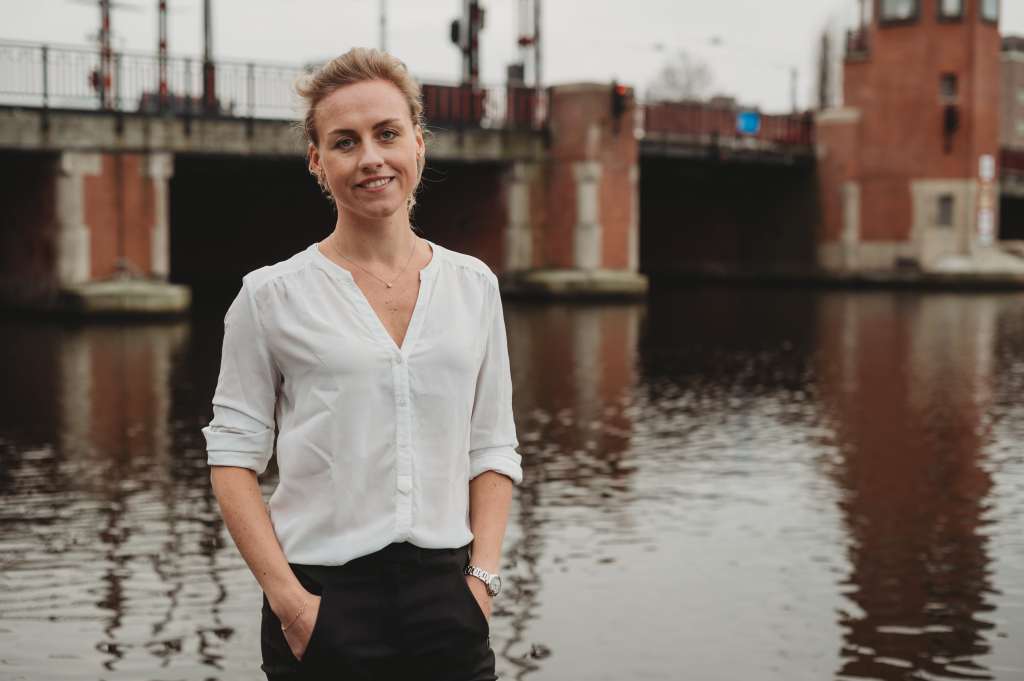
An illustration of the work the founders set out to simplify.
Her explanation of the product includes an important human ingredient. Gain paired technology with local research, rather than assuming that collecting more records would settle every question. In her December 2023 account, analysts’ work helped turn company information into something investment professionals could use. The proposition was to spare customers a portion of the preliminary investigation, leaving them more time to judge the opportunity.
Six months to a paying customer
Ebmeyer has put useful dates on the early uncertainty. A minimum viable product arrived within three months; paying customers followed within six. Those are modestly practical milestones. A product had to exist, then somebody had to consider it worth buying. The second event is the less forgiving examination. The founders were building with limited resources, and willingness to pay mattered.
Early milestones, as Ebmeyer recalled them in January 2024.
By the beginning of 2024, she was describing a company with roughly 250 employees, more than 150 clients and €20 million in funding. The customer list included investment firms, banks and consultancies. Each group had a different reason to investigate companies, but all needed usable information. For Ebmeyer, the continuing task was to keep the product close to those working needs as the organisation grew.
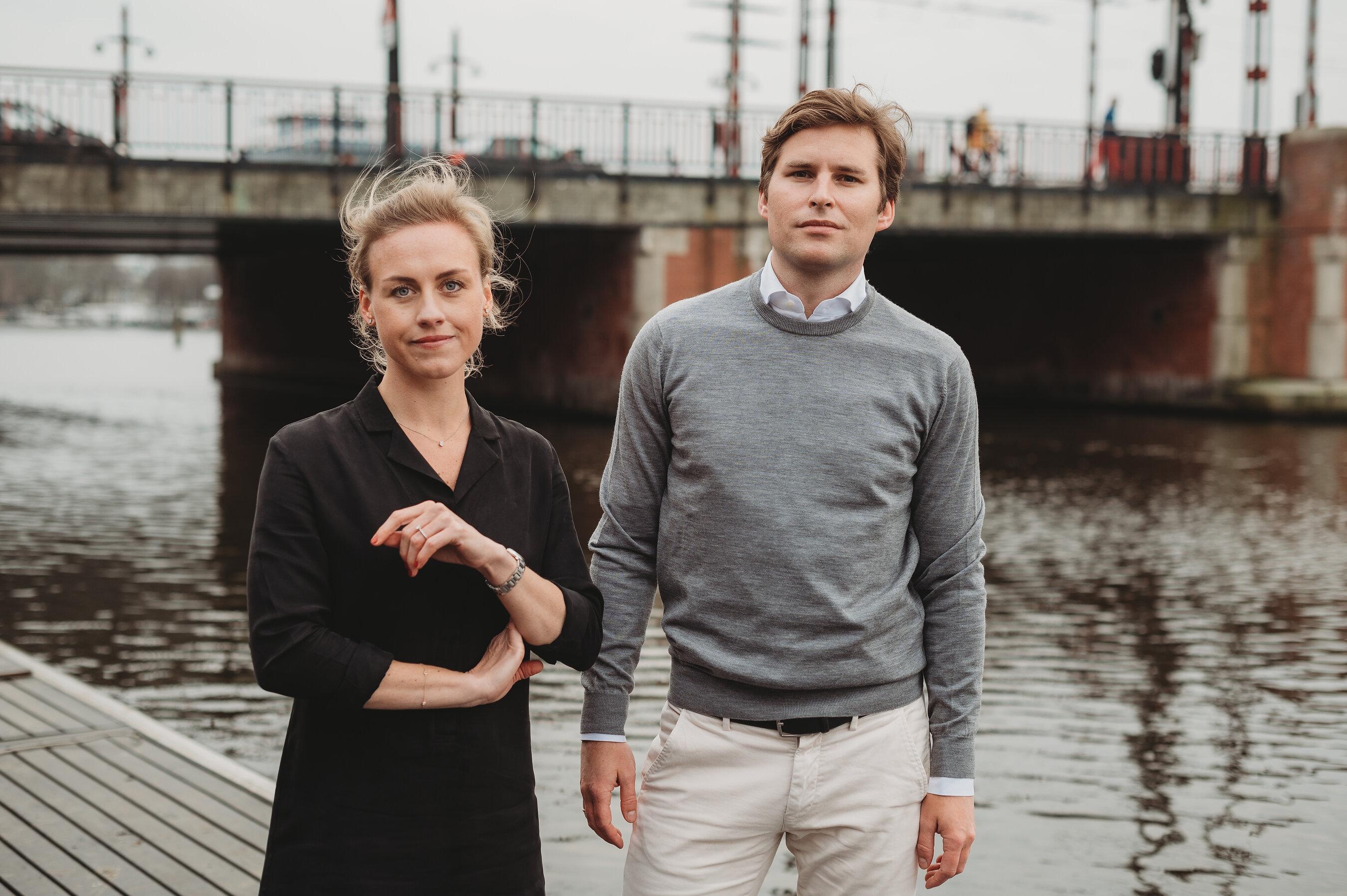
The customer emphasis reached into the engineering team. Ebmeyer enjoyed hearing developers discuss EBITDA and investors’ interests, because it suggested they understood the business problem behind the software. Sharing customer stories across functions helped make that possible. An engineer could connect a requested feature to an actual person’s work, with fewer rounds of interpretation between the two.
The spreadsheet meets the organisation
She is unusually candid about the friction that accompanies a company’s expansion. Early employees often cover several jobs. Later, the business needs specialists, defined responsibilities and clearer expectations. Ebmeyer has acknowledged the difficulty of moving from loyalty to those early generalists toward hiring for the role the company actually needs. Gratitude and organisational design can make awkward office mates.
Her fondness for detail creates another complication. Once, dissatisfied with an email someone planned to send, she rewrote the whole thing. A few suggestions would have sufficed, she later recognised. It is a small episode with a familiar managerial cost: the person who can finish a task fastest may leave everybody else with fewer chances to learn it.
“I truly have a data-driven mind.”
Nicola Ebmeyer
Her willingness to reconsider a decision is another part of that temperament. New information can change her view, and she has acknowledged that colleagues sometimes find the resulting changes difficult. For a leader, consistency has its attractions. So does being correct. Her account places responsibility on the person making the call to explain how the evidence has changed, rather than treating yesterday’s conclusion as a family heirloom.
Transparency offers one way to keep those decisions intelligible. She has described sharing a broad set of performance measures with employees and investors every month, including when results disappointed. Distributed teams make that work more necessary. People in different offices need enough context to understand how their particular contribution fits the company’s plans; proximity to the founders cannot be the qualification for knowing what matters.
Being mistaken for the wrong executive
The path to co-CEO did not protect Ebmeyer from being misidentified. She has described potential investors overlooking her as a leader, being referred to as “HR”, and being left out of events on the assumption that she would be occupied with her child. She pointed out that her male co-CEO had not encountered the same treatment.
She also credits senior sponsors with helping her move forward: supporting an international transfer, encouraging an early promotion and backing her move into leadership. Those relationships were earned over time. Her advice to people seeking senior roles includes making their ambitions known. Quiet competence has its virtues; requiring colleagues to read one’s mind is a less reliable promotion strategy.
Within Gain, women have described the value of seeing a female founder close at hand. Helen Westermann, who led private-equity intelligence for DACH and Italy, contrasted that experience with an earlier career in investment banking where she had missed a female role model. Customer-success colleague Maria Nunez Espallargas praised the culture Ebmeyer was helping create. These were colleagues describing everyday proximity, rather than an abstract case for representation.
A walk with no headphones
By August 2025, Ebmeyer was describing a more selective approach to her own involvement. Strategic moves, important clients and people decisions still drew her attention. Other work could move without her. Her account of hiring included backing relatively young leaders for product and sales who had not previously held those jobs. Judging potential required a different sort of confidence from checking a familiar résumé.
For thinking, she walks. A regular circuit through Amsterdam’s Vondelpark gives her about an hour to consider larger questions, including the company’s next steps in AI. She described doing it without listening to anything. Walking also provides a setting for employee conversations that need a little space. A park, unlike a presentation deck, does not insist that every thought arrive in a rectangle.
Her ambitions remained explicit: in 2025 she spoke of aiming for unicorn status by 2028. That was a goal, with the work still ahead. Alongside it came a more immediate discipline of choosing priorities each quarter. The founder who once rewrote an entire email was learning to decide which pieces of the day needed her attention at all.
Back to the people doing the work
Her public conversations now include other builders of private-market businesses. In Gain’s Beyond the Deal series, she walks through Stockholm with Triton founder Peder Prahl, asking about his beginnings, investment discipline and the development of his firm. The interviewer’s interest in how people start is easy to understand. She had an unusually close view of that process herself.
A May 2026 webinar paired her with Rutger Vos, a partner at 3i, to discuss competition and differentiation in private equity. The questions ranged from sourcing companies and creating value to the part technology might play. These are the conditions in which Gain must earn its place: investment professionals have to make decisions, and the tools must help with the work in front of them.
On October 6, 2026, Gain received the Woman-led Scaler Award at the Top 250 Awards in Rotterdam. Ebmeyer accepted it for the team. Recognition had caught up with the little Amsterdam beginning. Her account of the company still returned to customers and colleagues, the people who decide whether the business works after the ceremony is over. That would have been a recognisable conversation at her mother’s desk.