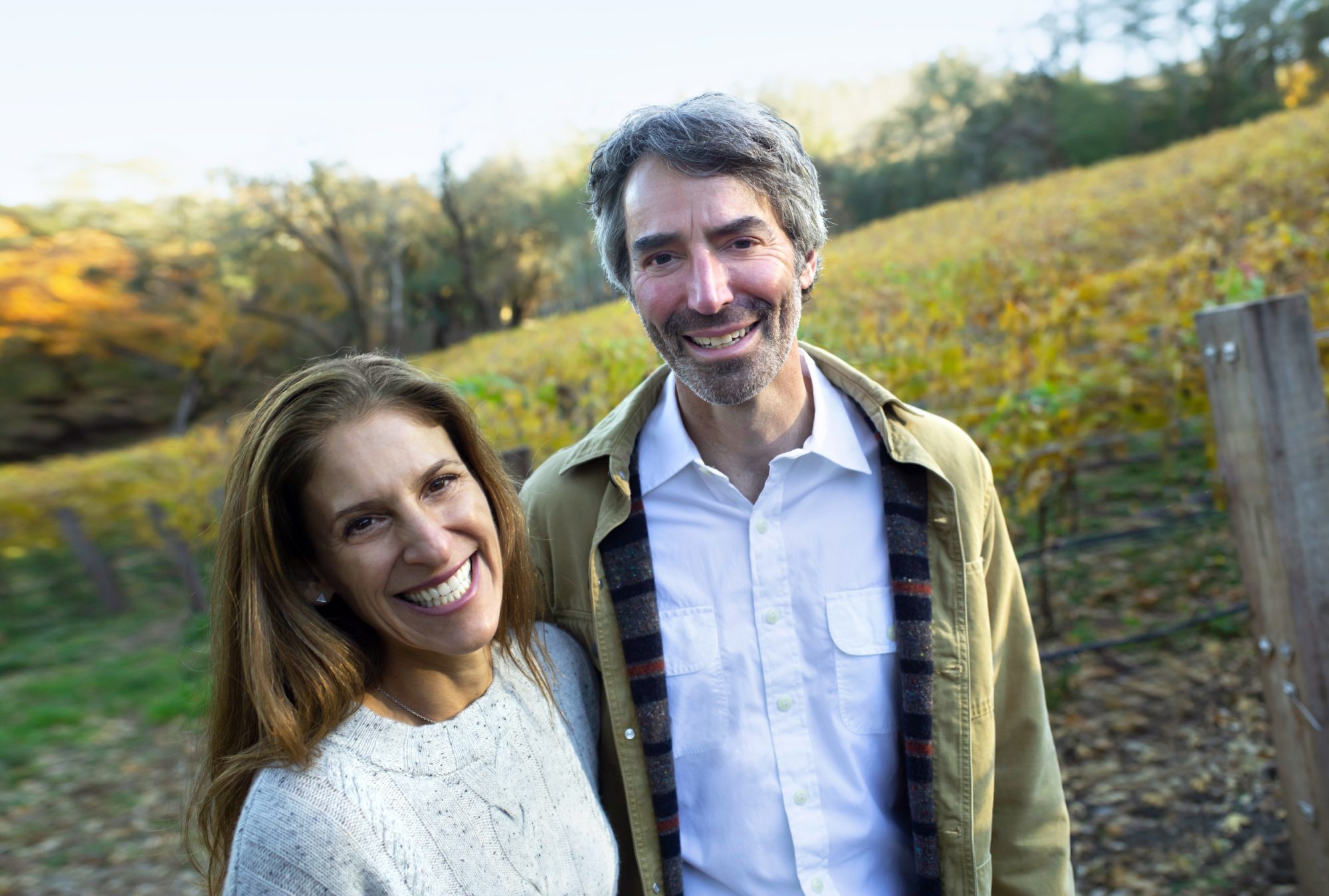
Nick Orum bought a vineyard that needed almost everything except a past. There were trees, steep slopes, an old olive grove and a history stretching back to the nineteenth century. Grapes would require considerably more persuasion. He and his wife, Caren, acquired the St. Helena property in 2013. Their first harvest came in 2021. Eight years is a generous interval in which to reconsider a hobby.
Orum later joked that, in his next lifetime, he would buy a property that already had a vineyard. It is a useful detail about someone whose professional life involves buying businesses: even an experienced investor can discover that the charming part of a project and the difficult part occupy precisely the same ground.
At Gryphon Investors, the San Francisco private equity firm he co-founded in 1995, Orum shares the jobs of chief executive and chief investment officer. At Arborum, the wine estate he owns with Caren, the ambitions include restoring land and giving away the net earnings. Between those two enterprises lies a career concerned with what happens after the purchase.
A trip with consequences
Orum’s earliest paid work was mowing lawns in the Texas summer heat. He went on to earn a Stanford degree in quantitative economics, with distinction. The transition from grass to equations was substantial; the return to growing things would arrive much later.
His finance career began in New York. At Merrill Lynch’s High Yield Finance Group, he worked on financing leveraged acquisitions and corporate clients. At Oak Hill Partners, his responsibilities extended across finding, examining, executing and monitoring private equity investments. There he worked closely with David Andrews, the colleague with whom he would build Gryphon.
Another consequential partnership began in New York in 1994, when he met Caren. That year, he brought her to San Francisco. Her response was admirably decisive: “I don’t know where you’re planning to live, but I’m moving here!”
Within a year, they had relocated to California. In 1999, they bought a six-acre retreat in Calistoga, seeking an escape from the coast’s chilly summers. Their eventual vineyard grew out of that attachment to Napa. A weekend destination gradually became a project with roots, staff and a harvest calendar.
The work between buying and selling
One early Gryphon investment makes Orum’s working world unusually concrete. In October 1998, the firm bought Miller Heiman with Crosslink Capital. The company provided sales training and sales effectiveness services. Gryphon sold it to Leeds Weld in June 2005.
The years in between included an economic downturn that challenged training businesses. Gryphon recruited Sam Reese as CEO in 2000 and worked with management on bringing the business onto the web, expanding sales and distribution, introducing programs and recruiting executives. These are ordinary verbs for demanding work. A transaction can be announced in a morning; changing how a company sells takes longer.
At the sale, Orum, then a partner and head of Gryphon’s Business Services Group, reported a return exceeding five times the original investment. The figure belongs to that investment, rather than to his entire record. Reese credited the firm with continuing to support the business through the downturn.
That example gives substance to the word “partnership,” a term that finance uses with the enthusiasm of a restaurant describing its ingredients as fresh. Here it meant specific work with a named chief executive across several years, including years that were difficult.
Original investment returned, as reported by Orum at the 2005 sale.
Software for the unglamorous essentials
Gryphon brought Carl Theobald into its Software Group in November 2019. Theobald had been CEO of three software businesses, with earlier experience at Oracle and Serena Software. He would work with Orum and Jon Cheek on finding, evaluating and managing investments. The arrangement paired investment experience with someone who had been responsible for the product and the company around it.
January 2020 supplied two examples. Gryphon acquired Ncontracts, whose software helped financial institutions manage risk, vendors and compliance. Its founder, Michael Berman, stayed as CEO. Orum, Theobald and Cheek joined the board. Ncontracts then served more than 1,300 customers; its appeal lay in a recurring, complicated task that institutions needed to manage.
Days later, Gryphon announced a majority investment in PestRoutes. The company served more than 1,500 pest control and field service businesses, helping with scheduling, billing, customer communications and technician routes. Founder Jared Green and existing investor Mainsail Partners retained minority interests, while Patrick McKittrick continued as CEO.
Orum pointed to Gryphon’s earlier experience in field services and route-based businesses. That experience had exposed a gap between the complexity of running distributed operations and the technology available to manage them. The opportunity was close to the working day: getting a technician to the right address, keeping the appointment and collecting the payment.
Orum joined both boards alongside software colleagues Carl Theobald and Jon Cheek.
PestRoutes became FieldRoutes. In January 2022, Gryphon announced an agreement to sell it to ServiceTitan, subject to closing conditions. CEO William Chaney described improved billing and payments, faster product development, a rebrand and expansion into lawn care during the partnership. In September 2024, Gryphon completed its exit from Ncontracts as Hg invested and Ncontracts acquired Venminder. The deals had different destinations, but both left a record of work beyond the original purchase.
Eight years on a hillside
At Arborum, the interval between acquisition and production was longer. The Orums’ original property contained 20 acres, with a compact vineyard established within the wooded hillside. Its name combines the family name with the trees surrounding it. The undertaking involved reviving an olive grove and preparing land that had once supported an earlier generation’s vines.
The estate’s first chapter belonged to John and Hannah Weinberger, who planted grapes and olives in the nineteenth century. The modern vineyard honors that past in its block names: 1871, Hannah and Hidden Key. The restored olive grove is called Prohibition. Some properties have a history plaque. This one gives history its own planting plan.
The original Hidden Key vineyard covers 2.5 acres. Its three blocks rise from 500 to 800 feet, on slopes averaging 26 percent. Cabernet Sauvignon was planted in 2019; organic certification followed in 2021. Those measurements help explain why this venture demanded attention to individual places within a small piece of land.
Oscar Renteria’s vineyard team tends the vines by hand. Winemaker Andy Erickson oversees decisions in the vineyard as well as the wine. Differences in exposure, drainage and soil shape the work. The surrounding forest remains part of the setting, with owls, hawks and beneficial insects helping keep pests in check.
Orum’s boardroom experience offers an interesting parallel: both enterprises place specialist knowledge alongside ownership. The comparison has limits. A vine follows a season rather than a meeting agenda, and a forest is unlikely to take a revised forecast personally.
- 2013The historic property is purchased.
- 2019Cabernet Sauvignon vines are planted.
- 2021First harvest and organic certification.
- 2026An agreement to acquire 24 adjoining acres.
The earnings have somewhere to go
The Orums attached a charitable purpose to the wine business. At its 2024 launch, they pledged $1 million to causes supporting vineyard workers and their families and environmental conservation. They also committed all future net earnings from Arborum wine sales to charity. That distinction matters: net earnings are what remains after costs, rather than the price paid for every bottle.
Among the organizations they support is 10,000 Degrees, which helps students pursue higher education. The organization identifies Caren and Nick as Napa supporters since 2017 and founding donors of its expansion into the county. Their explanation is grounded in education’s importance to their own families and their wish to extend those opportunities to others.
Conservation has a place in Orum’s commitments, too. He serves on the Land Trust of Napa County’s board, whose work protects land, water, wildlife and natural resources. His community involvement also includes Insight Prison Project. In 2024, his volunteer work was described as weekly participation in a restorative justice program at San Quentin.
These commitments give the vineyard a wider cast of people than its owners and winemaker. Students, farmworkers and conservation organizations enter the story through where the earnings go. Arborum’s family motto appears on its bottles: “In the acorn sleeps a forest.” It is a compact expression of a project that asks a small enterprise to support things beyond itself.
“Meaningful impact begins with small, intentional actions.”
Nick Orum / May 2026
Another piece of ground
In May 2026, Caren and Nick announced an agreement to buy a 24-acre parcel from neighboring Vineyard 29, including 7.4 planted acres. The planned addition would bring the estate to 44 contiguous acres, with about 10 under vine. Their plans included a phased replanting program and a transition to organic and regenerative farming.
The acquisition announcement placed the expected closing in late July. It also kept the charitable commitment in view. Orum spoke of respecting Anne and Chuck McMinn’s contributions to Napa and carrying forward part of their legacy through Arborum’s own giving. Expansion came with a stated responsibility to the place and its people.
That same May, Orum was listed on a Milken Institute conference panel about asset management in a more complex era. The subject was a familiar professional one: how capital gets allocated, portfolios get built and risk gets managed. His other enterprise offers a slower version of those questions, expressed in acreage and seasons.
He remains an investor with a long record of working alongside executives. He is also an avid cyclist and a vineyard proprietor who has learned how long a first harvest can take. His joke about buying an existing vineyard next time has the advantage of experience behind it. For this lifetime, he and Caren chose the hillside, assembled the team and waited.