Scott Sperling was promoting campus concerts at Purdue long before his working life acquired investment committees and a co-CEO title. Among the people he worked with was Irving Azoff, then a young band manager. It is a pleasing opening act for a career in private equity: the future investor already had a reason to care whether people showed up.
Music remained part of the job as the numbers grew. He became involved in Warner Music Group and Clear Channel, and in 2010 helped bring Bob Pittman into an executive role at the radio company. In 2013, he offered a straightforward explanation for his continuing interest: “consumers around the world love music.” An investment thesis with a chorus has certain advantages.
Today, Sperling shares the leadership of Boston-based THL Partners with Todd Abbrecht. His more interesting distinction is a preference for choosing where to compete. Plenty of financial businesses aspire to become larger financial businesses. His public arguments dwell on the work a firm can understand, the people who benefit from it, and the demands that expansion makes on everyone’s attention.
A career without a seating chart
His education took him from a bachelor’s degree at Purdue to an MBA at Harvard Business School. After business school came Boston Consulting Group. The sequence looks orderly on a résumé; Sperling’s account of it is more casual. He has described choosing consulting at 23 partly because he had loans to repay and the compensation was attractive.
The job also gave him sustained exposure to senior executives and the problems of large companies. Then came an unexpected invitation to work on alternative investments for Harvard’s endowment. He spent more than a decade as a managing partner of Harvard Management Company’s affiliate. Investing became his occupation through an opportunity he had not arranged in advance.
In a 2021 conversation with Anthony Scaramucci, he said, “I don’t really plan ahead very much.” He credited early opportunities and the leaders around him. That admission gives the chronology some air. A successful career can acquire the appearance of inevitability after the decisions have worked out. His version leaves room for the telephone to ring, and for the recipient to say yes.
The music business comes with a balance sheet
Sperling joined THL in 1994. A decade later, its participation in the purchase of Warner Music put him close to a business undergoing a difficult change. The acquisition from Time Warner cost approximately $2.6 billion. Within days of the closing, he was discussing the company’s assets at a music-and-money symposium in New York.
The transaction had consequences beyond an investor presentation. Warner’s new management announced plans to cut 1,000 jobs worldwide as it reorganized. Any account of the deal has to hold that fact alongside the financial ambitions. Music companies employ people, commission work, and decide what gets heard. A restructuring reaches further than a row in a spreadsheet.
This period helps explain the breadth of his later board experience. His current and former directorships span Warner, iHeartMedia, Experian, Houghton Mifflin, Wyndham Hotels, Univision, and Madison Square Garden. The list brings together songs, books, hotel rooms, broadcasts, and information services. These are familiar products with quite different systems behind them. For an investor, recognizing the product is only the beginning of understanding the business.
Boston has more than one kind of audience
His involvement in performance also extended beyond commercial investments. He is chairman emeritus of the Citi Center for Performing Arts and Wang Theatre. The link to his undergraduate concert work is a visible continuity in the public record, even as his responsibilities changed. The stage stayed somewhere in the picture.
There is a more domestic glimpse in a birthday tribute entered into the Congressional Record in December 2007. Rahm Emanuel congratulated Sperling on turning 50, described him as a friend, and noted that Scott and his wife, Laurene, had four children. Emanuel then suggested that Laurene deserved much of the credit for their children’s intelligence. Congress can occasionally manage a family joke without referring it to committee.
The tribute places a household alongside the board appointments. It is a useful corrective to the peculiar way executive biographies can make people seem to live entirely in organizations. Sperling’s public life includes a long-running marriage, children, arts institutions, and universities. These connections occupy a different calendar from the one that measures the life of an investment fund.
Choose the room before filling it
By 2024, Sperling was making a pointed case for focus. THL had sold its credit business to First Eagle in 2020. As he explained it, the scale needed to compete in lending kept increasing. Rebuilding the operation would have consumed senior management’s attention. The firm chose to concentrate on the business it already wanted to do.
He also argued for keeping the economics of the partnership with its active partners. A public listing would introduce another set of obligations and another audience judging the firm. His compact statement of priorities was: “Asset accumulation is not that important to us.” The aim was to make profits for investors, rather than use the quantity of assets as the principal measure of accomplishment.
That choice gives the story its smaller stage. The smaller stage is a defined arena of work. A firm handling billions of dollars has plenty of room. The interesting decision is where to put the boundaries, especially when rivals are adding whole new businesses and the invitation to expand is always available.
“Asset accumulation is not that important to us.”Scott Sperling, 2024
The work between buying and selling
THL’s investment process begins with selected subsectors. Teams spend years building knowledge and relationships with executives, customers, analysts, and consultants before pursuing a partnership. Its name for these targets is Identified Sector Opportunities. The phrase is bureaucratic, but the underlying task is recognizable: learn enough about a field to ask questions that matter.
The firm combines investors, operating specialists in its Strategic Resource Group, and executive partners. The operating work covers selling, acquisitions, product and technology, talent, and the capacity to scale. Its stated approach keeps these people involved across an investment’s life. Ownership therefore includes decisions about how a company runs after the transaction announcements have stopped arriving.
One example from Sperling’s media work is Univision. During THL’s ownership, the broadcaster added significant retransmission consent revenue to its advertising base. That describes a change in how the business earns money: payments for carrying its channels complement the sale of advertising. Viewers may see the same screen, while the financial structure behind it changes. Such adjustments are part of the work hidden beneath a familiar company name.
A mortgage rate with a long memory
When Sperling discusses interest rates, he has an unusually concrete historical reference. In an October 2023 television appearance, he recalled paying 17.5 percent on the first mortgage he and his wife obtained. That number is enough to make a modern mortgage calculator clear its throat.
He used the memory to question whether the near-zero rates of the preceding decade should be treated as normal. He pointed to changing forces in globalization, energy, and monetary policy, while retaining confidence in American innovation over time. The argument separates a concern about the price of capital from a belief that businesses can keep developing.
Earlier that year, he had stressed productivity and automation as ways to respond to inflation and labor constraints. His reasoning tied investment in technology to the ability to produce more efficiently. For the person assessing a company, those questions meet in practical places: what its financing costs, what its workers can accomplish, and whether its customers can afford the result. A long memory can be useful without becoming a wish to return to the past.
A new fund, the same partnership
In May 2026, THL announced $6.35 billion of investable capital for its tenth flagship fund. The investors included pensions, sovereign wealth funds, financial institutions, and family offices across several continents. The figure describes the firm’s fundraising; it is not a measure of Sperling’s personal wealth.
The close also brought continuity into view. Sperling and Abbrecht had both spent more than three decades at THL and became co-CEOs in 2020. The firm reported a 92 percent re-up rate, a measure of prior-fund investor commitments renewed in the new vehicle. Such a number concerns an ongoing relationship as much as a single fundraising campaign.
Another appointment followed in September 2026, when Liberty Mutual elected Sperling to its board. The announcement emphasized institutional finance, capital allocation, and organizational leadership. It added an insurance company to a career already spread across many boardrooms. Shared leadership at THL and service elsewhere put him in two distinct positions: running an investment organization and helping oversee another business. Each requires judgment exercised with other people in the room.
A different return on capital
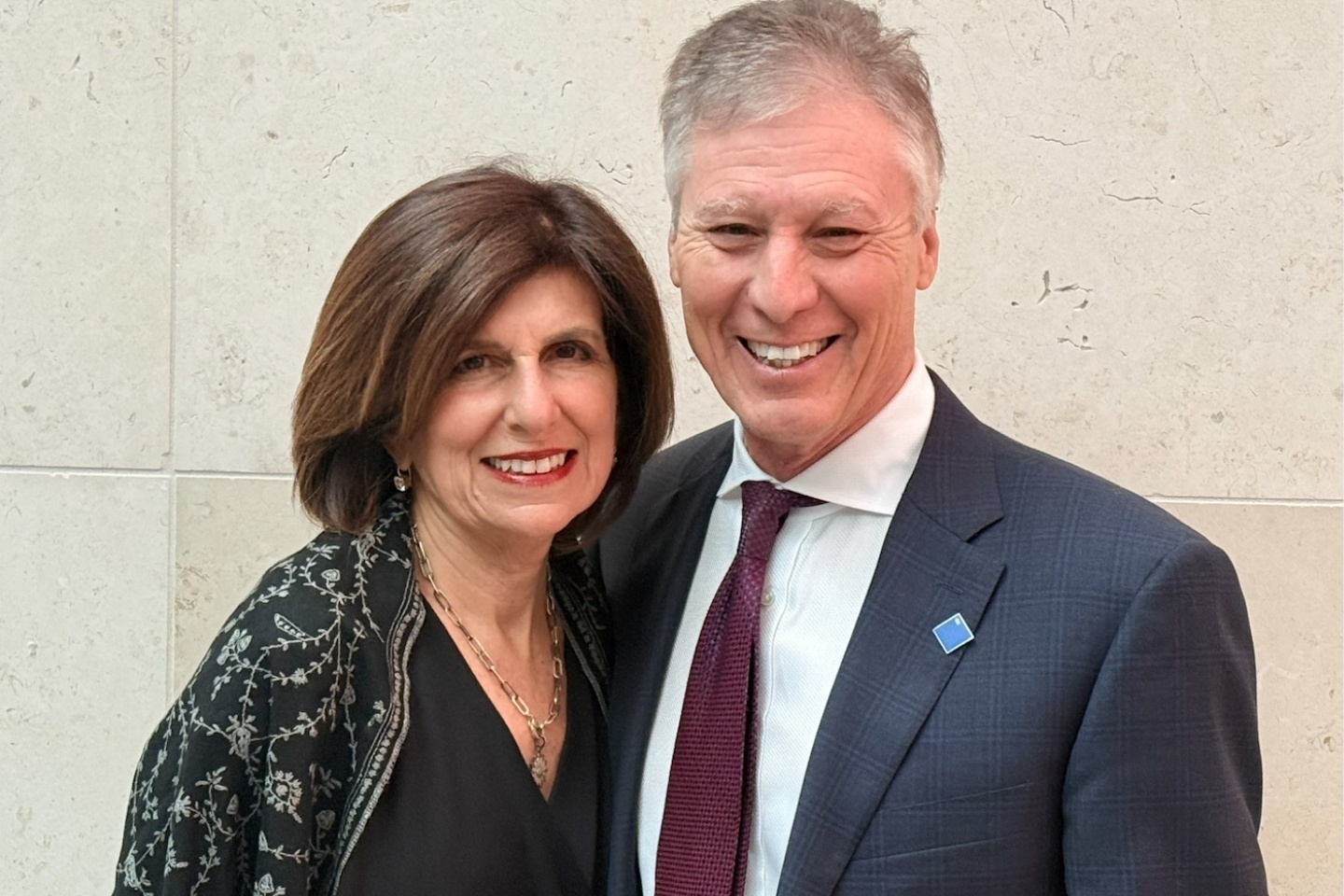
The family’s latest public gift moves the story back to education. In August 2026, Duke announced that a $10 million commitment from Laurene and Scott, through the Sperling Family Charitable Foundation, would name its Center for Jewish Studies. The gift supports professorships, faculty work, graduate and postdoctoral education, and visiting lectures.
The allocation is specific: $7 million for two professorships, $1.5 million for faculty support, $1 million for graduate and postdoctoral support, and $500,000 for lectures. Those are the people and recurring activities that allow an academic center to continue its work. Laurene, a Duke graduate and former trustees chair, described an ambition for scholarship that deepens understanding among people and cultures.
This part of the story belongs to both Sperlings. Its horizon extends beyond a fundraising close or the eventual sale of a company. The young concert promoter’s career has passed through endowment investing, music businesses, partnership leadership, and now an endowed academic center. Different rooms, different audiences. The recurring question is who will do the work, and whether the arrangements made today give them somewhere useful to do it tomorrow.
- Two professorships
- $7m · 70%
- Faculty support
- $1.5m · 15%
- Graduate & postdoctoral support
- $1m · 10%
- Visiting lectures
- $0.5m · 5%