At 23, Nhan Le was managing a construction crew on a renovation near UC Berkeley. He remembers sitting in his car outside the property at midnight, asking himself a question that rarely makes it into a real estate presentation: “Who do I think I am, trying to do this?” The work was real. His confidence was still under construction.
He had a mentor willing to give him a chance and a promise to himself that he would work things out. Years later, Le would describe that same doubt returning during large negotiations, presentations to city officials, and appearances before industry audiences. Experience changed his response to the question. It did not entirely retire the question.
That is a useful place to begin with the founder and CEO of Valiance Capital. A portfolio can make a career look inevitable when viewed backwards. The person sitting outside an unfinished renovation has no such luxury. He has tomorrow’s work, decisions he is learning to make, and a building that will not repair itself out of sympathy.
A scholarship, then a mentor
Le was born in Boston in the 1980s to parents who had fled Vietnam. The family moved to South Sacramento, where he grew up with food stamps and federally assisted housing. His father started a landscaping business. His mother learned English to obtain her manicurist license. Both were working to give their children opportunities they had not inherited.
A full scholarship took Le to UC Berkeley. He became the first person in his extended family to attend a four-year university. In his sophomore year, in 2007, he met a real estate investor who was also a technology founder. The mentor owned and operated student housing near campus. Three years later, they bought a small duplex together.
The sequence matters: education introduced him to a person, and that person introduced him to another way of earning a living. Berkeley offered him a route into university and a route into ownership. The campus would remain the geographic center of his working life long after its initial role in his story.
- 2007A mentor at UC Berkeley
- 2010The first duplex
- 2018Valiance Capital founded
The property career preceded the company. These are milestones, not a return chart.
Six blocks from campus
Le places the first duplex six blocks from UC Berkeley. In recounting his beginnings, he also describes learning the foreclosure process as a hard money lender during the 2008 financial crisis. His education in real estate included the circumstances in which loans and ownership became complicated, before he began accumulating properties of his own.
The duplex gave that knowledge an address. It was a small beginning, with the unglamorous advantage of making the work tangible. A property has occupants and obligations. Someone has to organize what happens next. The first acquisition therefore starts a second undertaking: learning how to keep the asset functioning after the purchase is complete.
Le’s business eventually concentrated on student housing around Berkeley. The distinction is practical. A resident needs a home while attending university; an investor needs a property that can be operated successfully. Those interests meet in the daily work of housing. The purchase agreement is one moment in a much longer relationship with a building.
In June 2025, he discussed that journey with Greg Gala on the New American Media Podcast. The conversation connected his parents’ immigration story with a real estate career developed over roughly 15 years. It is a revealing pairing: the family history supplies the reason to seek financial security, while the property work supplies the means.
The jobs a founder has to give away
At the first duplex, Le handled acquisitions, construction, leasing, property management, and asset management. That is a considerable collection of job titles for one person. It also explains why a founder can confuse being busy with building an organization. A business can keep buying work faster than its founder can learn to delegate it.
Le’s later account emphasizes the infrastructure needed to grow. He describes bringing property management, design, construction, and leasing capabilities inside the operation. He also recalls transactions with families who had held properties for decades. In that account, access to a sale depends on an operating reputation and local relationships developed over time.
“You scale by building infrastructure.”
Nhan Nguyen Le
There is a particular kind of education in moving from doing everything to making sure everything gets done. The first arrangement relies on the founder’s reach. The second requires clear responsibilities and dependable handoffs. Le’s description of growth puts attention on those handoffs, the machinery behind the appealing photograph of a newly acquired building.
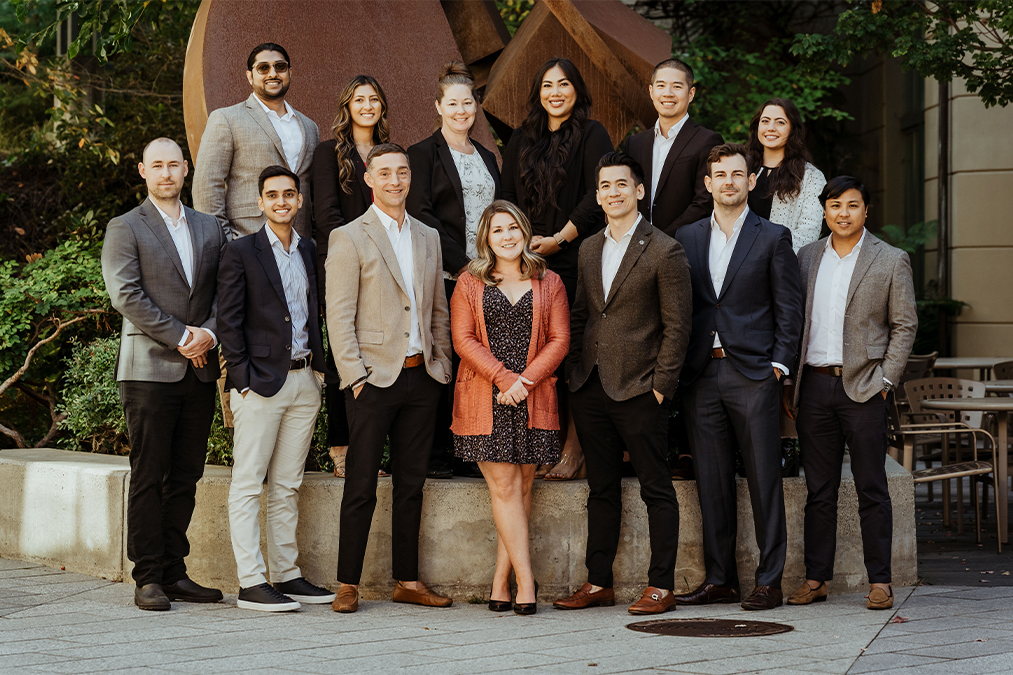
A familiar map, a wider circle
Valiance was founded in 2018. Its management platform, The Berkeley Group, sits alongside its investment and development work. The firm describes a model in which acquisitions, the transformation of properties, and resident service belong to a connected operation. Its approach to management includes community events and on-site or on-demand staffing.
Le’s leadership role encompasses investment decisions, strategy, and operations. The company’s team biography credits him with more than 40 projects and describes a current portfolio of $320 million. Those figures refer to property activity and portfolio scale. They make the responsibilities larger than they were at the duplex, while leaving the operating questions recognizable.
His public working life also extends into conversations about the city. At a March 2025 Berkeley event, he moderated an innovation panel featuring Darek DeFreece, Darren Cooke, and Jeremy Fiance. The participants came from Berkeley Innovators, UC Berkeley, and The House Fund. Housing places him in a wider campus economy, among people supporting ideas and businesses.
Within Valiance, he has made room for a different kind of gathering. The company’s 2024 summit brought the team to a 150-acre estate for meals, speakers, and discussions. Le described the year as both a substantial business milestone and a difficult one. The retreat offered a chance to examine what they were building together.
The detail is human enough to resist becoming another management slogan. Acquisitions and developments produce problems; people still have to work through them with other people. Le’s account of the summit connects company culture to those difficult periods. A team’s shared purpose gets tested when the schedule and the plan stop agreeing.
What five years looks like when it opens
In a recent announcement, Le marked the completion of The Valiant after five years. He described 83 units, 265 beds, and approximately 80,000 square feet, one block from UC Berkeley. More than 250 students were being welcomed into the building. The language of project size had acquired a second meaning: people arriving to live there.
Le thanked The Martin Group and a range of capital partners, including ACRES Capital, Kennedy Wilson, and Canyon Partners. He also recognized the firms involved in carrying out the project. The acknowledgments suit the operating lesson he has been describing for years: a founder can announce completion, but completion has many authors.
Another transaction kept the focus close to campus. In February 2026, Valiance announced a 128-bed portfolio acquisition comprising two properties for $13.5 million, in partnership with Urbanite Capital. Five Star Bank provided financing. One property was across from Berkeley’s law school; the other faced the university’s Gateway development.
The deal reflected Le’s stated preference for locations with established demand and opportunities to improve operations or the buildings themselves. It also illustrates how his professional circle has widened while his map has remained concentrated. Different partners enter the story, yet the next address is still connected to the university that brought him to Berkeley.
The cost beneath the ambition
At an April 2026 student housing summit, Le brought the discussion down to the arithmetic. “Everything is really about basis right now,” he said. Basis is the cost underpinning a project: land, construction, development expenses, and fees. An attractive idea for a building still has to survive the price of bringing it into existence.
A conceptual diagram of the costs Le discussed. No estimated amounts or proportions.
He also described investors becoming more selective about where and how to commit capital. The implication for a developer is straightforward: familiarity with a neighborhood cannot excuse an unworkable cost structure. The project must make sense at its location and at its price. Confidence in a market does not settle every question about an individual deal.
This is a less romantic vocabulary than the midnight memory, but the two belong in the same career. At the beginning, Le was learning whether he could manage the work. As a chief executive, he has to decide which work merits the company’s resources. Both questions require him to live with decisions after making them.
An award with a family dedication
In April 2025, Le announced his inclusion in the San Francisco Business Times 40 Under 40 class. He connected the recognition to his parents’ sacrifices, his team, and his community. His announcement fell on April 30, the fiftieth anniversary of the fall of Saigon, a date with particular meaning for the family history he had described.
He presented the award as shared recognition rather than a solitary accomplishment. That choice fits his account of why he wanted to build a company in the first place: financial freedom for his family. A professional honor can mark a career. For Le, it also offered a moment to name the people whose efforts preceded his own.
Sending opportunity onward
Le subsequently founded the Vietnamese Commercial Real Estate Charity Gala. He serves as president and co-chair of the Valiance Foundation, alongside co-chair and treasurer Diem Nguyen. The gala supports scholarships and community programs in Vietnam. Its website reports ten scholarships funded by the 2025 event, with a second gathering scheduled for October 24, 2026, in Berkeley.
There is a clear connection between the scholarship in Le’s beginning and the educational purpose of this later work. His professional relationships now help convene a room capable of supporting someone else’s education. The ambition has traveled from improving his own family’s circumstances to helping students whose next step depends on being able to afford it.
Berkeley remains the hinge of the story: the place where a scholarship led to a mentor, a mentor led to a property, and property work led to an organization. The unanswered question in the car was whether Le belonged. The question running through his later work is who else might get a chance to begin.