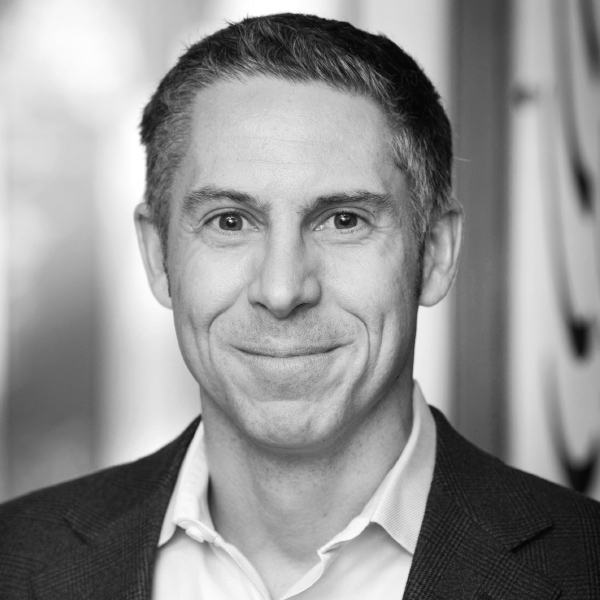
Profile
The DNA Rewriter From the Curragh
He grew up on an Irish Army base in the middle of a Co. Kildare plain. His father was an officer. His mother was a nurse. The base in the Curragh is not a place that breeds hedge fund managers or soft-spoken observers. It breeds people who run toward problems.
Nessan Bermingham followed that instinct into science, then out of it, then into banking, then out of that too - and finally into a corner of biotechnology where the stakes are, quite literally, life and death. Today, as Operating Partner at Khosla Ventures, he backs and builds companies working on the hardest problems in genetic medicine: gene editing, RNA editing, in vivo delivery, cell therapy. The kind of work where a failed experiment doesn't mean a missed quarter. It means a patient who doesn't get better.
"Seeing the idea of a one-and-done treatment become a reality is both humbling and incredibly inspiring."
- Nessan Bermingham, Ph.D.
The route from the Curragh to Cambridge, MA is not obvious. Bermingham took a Ph.D. in molecular biology at Imperial College London, then a Howard Hughes Associate Fellowship at Baylor College of Medicine in Houston. He published a paper in Science. Most people would count that as a career milestone. Bermingham counted it as a signal. He felt nothing. The thrill wasn't there. So he left.
He joined the equity research team at UBS - tracking life sciences stocks, learning how capital moves around biology. Then September 11 happened. In the aftermath, he made a calculation most analysts don't: he decided life was short and that he wanted to build things, not report on them. He pivoted to venture capital at Atlas Venture, eventually moving to Omega Fund Management where he backed companies across the US and Europe.
At an Atlas Venture retreat - reportedly at the salad bar - Bermingham met John Leonard, MD, the physician-scientist who would later become CEO of Intellia Therapeutics. Some partnerships are forged in boardrooms. Some happen over croutons.
Building the First CRISPR Company to Go Public
In 2014, when CRISPR was still the kind of thing that got journalists confused and scientists excited, Bermingham co-founded Intellia Therapeutics. He served as President and CEO from inception. Within two years - before most startups have finished arguing about their Series A - Intellia was a public company. NASDAQ ticker: NTLA. Fierce 15 Top Biotech. Top-10 Biotech Startup of 2014.
The IPO wasn't luck. It was the product of what Bermingham calls a five-to-ten year vision combined with the ability to adapt as data arrives. The company he built around CRISPR/Cas9 became one of the reference points for gene editing commercialization. He departed as CEO in 2017, by which point the company had partner deals, multiple financing rounds, and around 200 employees. He had built it from zero.
"It's about having a five-to-ten-year vision and adapting as new data comes in."
- Nessan Bermingham, on building biotech ventures
From Gene Editing to RNA Editing
After Intellia, Bermingham kept building. Triplet Therapeutics launched in 2019 with $59 million to develop treatments for triplet repeat disorders - Huntington's disease, fragile X syndrome, spinocerebellar ataxias - conditions caused by genetic stutters that the body can't correct on its own. Then came Korro Bio, an RNA editing company using the ADAR enzyme platform. Korro merged with Frequency Therapeutics in late 2023 and began trading on NASDAQ as KRRO, with Bermingham as Chairman of the combined board.
The pattern across these companies is consistent: find an emerging technology before the market recognizes it, build the company around the science, and do it with founder-grade intensity rather than investor-grade distance. He doesn't just back companies. He builds them.
At Khosla: The Operator Who Invests
Khosla Ventures runs on a simple thesis: back founders working on things that most investors think are impossible. Bermingham fits that ethos precisely. As Operating Partner, he is focused on life science companies across nucleic acid editing, novel delivery systems, gene and cell therapy, target identification, and data analytics for drug discovery. He currently holds board seats across Amide, Bionaut Labs, Deep Genomics, Kamau Therapeutics, Liberate Bio, Ochre Bio, and Stylus Biomedicine - each a bet on medicine's next decade.
In May 2025, Stylus Medicine launched with $85 million and Bermingham on the board. Khosla is a lead investor. The company is developing in vivo genetic medicines. A month earlier, he was named Vice Chair of the BIO Investment Council - the Biotechnology Innovation Organization's new initiative to accelerate capital formation in the sector. His calendar is not empty.
"The education system, core personal and family values in addition to instilling the sense of adventure and willingness to leave home were central in molding me into who I am today." - Bermingham on his Irish upbringing. Not many CRISPR executives credit Co. Kildare for their risk appetite.
The Endurance Athlete Hidden in the Boardroom
Bermingham completed a 155-mile self-supported ultra-marathon. That is not a typo. One hundred and fifty-five miles, carrying his own gear. He also obtained his motorbike license at 49 - an age when most people are getting better reading glasses - and won a racing truck trophy at 51. His stated aspiration is to race at the Dakar Rally, the world's most grueling off-road race. The same intensity he applies to building biotech companies, he applies to finding new ways to be uncomfortable.
Mountain biking. Snowboarding. Trail running. These aren't hobbies. They're evidence of a consistent character: someone who finds the hard path and runs straight at it. Which, if you think about it, is exactly the description of a person who builds companies around unproven gene editing technologies before anyone is sure they'll work.
Irish Army Kid. CRISPR Pioneer. Ultra-Marathoner.