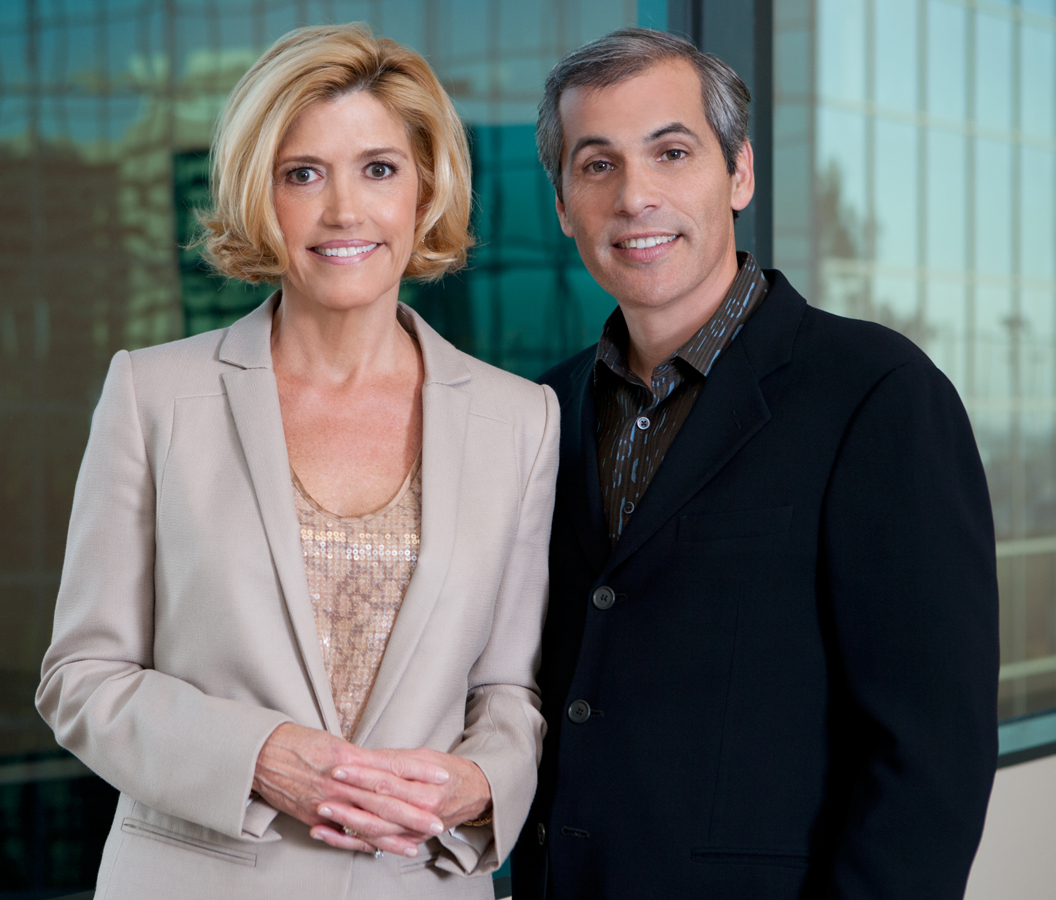
The first problem in public relations is getting attention. The first problem in starting a public-relations firm is getting a second client. In 1989, Karen Murphy O'Brien and Brett O'Brien had precisely one: the Sunset Marquis Hotel and Villas. Their office was their Century City apartment. Karen knew publicity - she had been a senior vice president at the entertainment firm Mahoney/Wasserman. Brett, a recent Wharton graduate, knew that she ought to start something of her own. Karen later admitted that the idea might never have occurred to her without him.
This is the pleasantly awkward fact at the center of Murphy O'Brien. The professional storyteller had to be talked into becoming an entrepreneur. The entrepreneur needed the storyteller. They were neighbors in their early twenties, then a couple, then founders. When prospects asked for a client list, they had a list of one. It is hard to manufacture social proof before anybody has proved you.
A hotel is not a story
A hotel is a building with beds. A real-estate project is land plus financing. A restaurant is a room in which dinner occurs. None of these descriptions gives an editor a reason to call. Murphy O'Brien's actual product is the conversion: from physical asset to timely idea, from idea to coverage, from coverage to demand.
The service menu is conventional enough - media relations, executive training, crisis communications, events, partnerships, social strategy, paid social and influencer work. The specialization changes the work. Its travel roster includes resorts and hotels; its property clients range from resort communities to mixed-use developments; lifestyle accounts include restaurants, museums and nonprofits. The agency knows the peculiar calendar of openings, award lists, seasonal travel stories and press visits. It also knows that a glamorous adjective is not an angle.
Consider Mauna Kea Beach Hotel. The assignment was to reach beyond the property's familiar family audience. Murphy O'Brien proposed a collaboration with fine-art photographer Gray Malin: 32 images, a launch, an Instagram giveaway and signed prints sent with invitations to ten editors. The reported result, within three weeks, was a reach of 63,682,881 and an estimated advertising value of $589,066.65. The numbers are the agency's own campaign figures, but the mechanism is visible. A hotel became a collectible point of view.
For Whitetail Club and Shore Lodge in Idaho, the hooks were almost aggressively specific: Christmas-tree hunting and sleigh rides with elk. Coverage followed in national and regional outlets. The agency says one Wall Street Journal feature generated 80 percent of the year's real-estate leads for Whitetail Club. That statistic explains the business better than the phrase “brand awareness” ever could.
“You can get very creative instantaneously now.”Karen Murphy O'Brien, on digital media, 2014
The night the client disappeared
The agency's first diversification looked obvious in retrospect. Hotel clients had begun selling villas and fractional ownership, so in 2003 Murphy O'Brien followed them into real estate. Travel, property and restaurants shared an affluent customer and a visual vocabulary. They also offered some protection from one another's bad seasons.
Then 2008 arrived. The real-estate practice had momentum and money invested in it. Lehman Brothers, which backed the Ritz-Carlton Rancho Mirage, disappeared. Other clients vanished or could not pay what they owed. In a later interview, Karen described the choice: dismiss more than a dozen people or accept a collective pay cut until the company stabilized. The team took the cut. Some employees left anyway. The firm narrowed its posture, preserved the underlying practice and waited.
The lesson was not that real estate was a mistake. It was that adjacent expertise could behave like a shock absorber. After the recession, the property business returned; by 2019 Karen said it included more than 20 clients. The three-practice structure remains. It is narrow enough to create pattern recognition and broad enough that the same economic gust does not hit every account at once.
From clipping book to compound effect
By 2014, the founders could see that a magazine rejection was no longer the end of the pitch. A story could live online, in a social feed, through an influencer or as paid distribution. The agency developed dedicated digital capability without discarding the old relationships. Today it audits channels, creates content, manages communities, listens to social conversation, buys paid social and reports the results.
For Side, a real-estate brokerage platform, the brief was to make LinkedIn express the company's model and serve its partner agents. Murphy O'Brien built the calendar around useful material: industry news, resources, innovation and agent wins. In three months, the account added 500 followers - a 52 percent increase - while impressions rose 13.8 percent to 48,000. No celebrity was required. Sometimes the big idea is to become consistently useful.
At the other end of the volume dial, the Beverly Hilton's Golden Globes campaign used a week of teasers, celebrity cross-promotion and live posting to make the hotel the #HomeOfTheGlobes. Murphy O'Brien reported 24 million impressions, 2,000 new followers and influencer reach of five million. Same agency, different instrument.
What the client is really buying
Murphy O'Brien competes with specialist travel shops, global communications networks and the increasingly capable in-house team. Its distinction is not that it invented media relations. It is the accumulated judgment of a sector specialist: knowing which detail can carry the story, which relationship fits it, and how earned, social and experiential work should reinforce one another.
That judgment is sold as a service, generally on retainer. The customer is not buying guaranteed coverage - no credible earned-media agency can promise an editor's decision. The customer is buying a better probability: sharper positioning, access to relevant media, fewer unforced errors, and a campaign designed to travel across channels. It works best when the property or brand has something genuinely distinctive, gives the agency access and time, and can connect attention to bookings, inquiries or sales. Thin products, sealed-off executives and demands for instant national fame are poor raw material.
The copyable move is not “hire a celebrity.” It is to find the detail that makes somebody else want to tell the story.
There are five parts worth stealing. Choose a tight set of adjacent markets. Build a calendar around moments when people are already curious. Pair the brand with a partner who brings a real audience. Give journalists an experience, not a packet of adjectives. Then measure a business consequence - leads, bookings, qualified followers - rather than stopping at the clip.
The company now has offices in Beverly Hills and New York. Public counts vary, though a 2025 Los Angeles Business Journal list reported 33 U.S. employees. It has been named an Inc. Best Workplace for three consecutive years, from 2024 through 2026; Inc. specifically points to real-time performance feedback, monthly mentoring and companywide training. In 2026 the agency also announced Hermes Platinum honors for campaigns involving Hard Rock Hotel Tejon and Corinthia Rome.
The awards are tidy. The origin is better. Two people in an apartment, armed with one hotel and no convincing client list, learned how to make a place interesting. Then a recession taught them that an interesting place is not, by itself, a durable company. The business that survived is built on both discoveries.