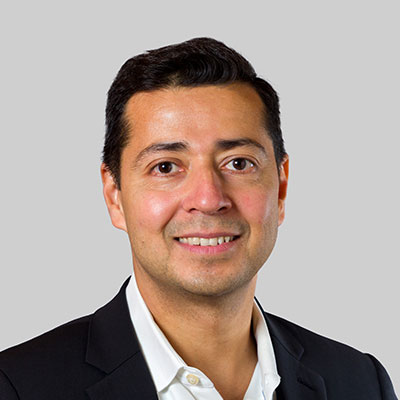
A chemical engineer turned dealmaker who just helped sell one cancer company for billions - now building the next one from scratch.
Boston address, London company, transatlantic to-do list.
In September 2025, Mohit Rawat took a job that most operators would have called premature. Myricx Bio had not yet put a single molecule into a human being. It had just nominated its lead candidate. It had a £90 million Series A in the bank and a bet on an enzyme almost nobody in drug development bothers to target. Rawat moved his base from Boston, picked up a company headquartered in London, and started knitting together a team that now spans two continents.
The science is the kind that makes specialists lean in. Myricx is building antibody-drug conjugates - ADCs - the guided missiles of oncology, where an antibody finds a cancer cell and a chemical "payload" does the killing. The crowded part of the field fights over the antibody. Myricx is doing something stranger: it changed the payload entirely, building it around inhibition of N-myristoyltransferase, or NMT. Most companies have never touched it. Myricx made it the whole thesis.
That is precisely the sort of differentiated, hard-to-copy idea that needs a commercial brain attached to it early. Which is where Rawat comes in.
"Myricx is a highly ambitious company with the potential to become a leader in ADC therapeutics, with a first-in-class and highly differentiated ADC payload platform that leverages NMT inhibition," he said on joining. He talks about a platform that could "deliver the next generation of ADC therapeutics to improve tolerability, overcome payload resistance" - the two problems that quietly limit how far today's ADCs can go.
He is not a placeholder CEO. He is the person you bring in when the plan is to actually get a drug into patients, and then to do something with it.
To understand why this is a hard, interesting job, it helps to understand the field. Antibody-drug conjugates are one of the most fashionable ideas in oncology. The logic is elegant: take an antibody that homes in on a cancer cell, chemically tether a potent drug to it, and deliver poison only where it is wanted. Done well, you spare healthy tissue and hit the tumor hard. Done badly, the payload leaks, the body builds resistance, and the side effects pile up.
The industry has spent years optimizing the antibody and the linker that connects it to the drug. Far fewer have rethought the payload itself - the actual warhead. That is the part Myricx changed.
By building its payloads around inhibition of N-myristoyltransferase, Myricx is reaching for a mechanism that competitors are not crowding into. The company's own framing is that this could improve tolerability and overcome the payload resistance that limits current ADCs - the two ceilings the field keeps bumping against. Whether that holds up is exactly what a clinical trial is for.
This is the difference between an incrementally better drug and a genuinely new category. Rawat has spent a career on the commercial side of novel mechanisms, from asciminib's new approach in leukemia to early-stage bets at Novartis. He knows that a differentiated mechanism is worth more - and harder to prove - than a me-too.
“Myricx is a highly ambitious company with the potential to become a leader in ADC therapeutics.”
- Mohit Rawat, on becoming CEO of Myricx Bio, September 2025
Start with the unusual combination. Rawat holds a master's in chemical engineering from MIT and an MBA from Harvard Business School. That is the rare leader who can read a synthesis route and a term sheet in the same afternoon. He began on the strategy side, as a leader in McKinsey's biopharmaceutical practice, running client teams across business development, R&D, commercialization and strategy.
Then he went operator. At AbbVie he was asset team lead and senior director across immunology and neuroscience - the part of the business where promising biology either becomes a product or quietly dies.
Novartis is where the numbers get large. He was US marketing director for COSENTYX, a product that has cleared more than $6 billion in sales. He ran early-stage pipeline work across liver disease, cardiovascular, renal and metabolism. And he became VP and global disease lead for the company's $3 billion-plus chronic myeloid leukemia franchise, helping push asciminib toward approval - a drug with genuine blockbuster ambitions.
The through-line, across every stop: he keeps choosing cancer, and he keeps getting handed the assets that are hard to develop and harder to sell.
It is worth pausing on Fusion, because it explains why Myricx wanted him. Rawat joined Fusion as President and Chief Business Officer in 2021. The brief there was not science for its own sake - it was to turn a research-driven company into one that thinks like a commercial business, with deals, partners and a path to revenue. He played a pivotal role in that shift. Three years later, AstraZeneca paid $2.4 billion to own it.
That is the muscle Myricx is hiring. A startup with a brilliant payload and no commercial spine tends to stay a science project. A startup that can negotiate, partner and eventually sell or scale becomes a company. Rawat has done the second part once already, at full size.
The investor list around him reads like a who's-who of life-sciences capital - Sofinnova Partners leading, alongside Novo Holdings, Abingworth, Brandon Capital, Eli Lilly, the British Business Bank and Cancer Research Horizons. Pharma money like Lilly does not write checks into payload platforms for fun; it writes them when it wants an early look at chemistry it might someday license.
So the job in front of Rawat is specific. Get the lead candidate into humans in 2026. Prove the NMT idea is real in a clinic, not just a slide. And keep the deal optionality open, because the people who funded this have seen this movie before - and so has he.
A completely novel class of ADC payloads built on inhibiting N-myristoyltransferase (NMT) - an approach almost no one else in oncology is pursuing.
A £90M ($114M) Series A led by Sofinnova Partners, with Novo Holdings, Abingworth, Brandon Capital, Eli Lilly, British Business Bank and Cancer Research Horizons.
The company has nominated its lead development candidate and expects to begin human clinical trials in 2026 - the deadline Rawat now owns.
An MIT chemical engineer who became a Harvard MBA - fluent in both the molecule and the market, which is rarer in biotech leadership than it sounds.
His former company sold for $2.4 billion - roughly twenty times the entire Series A his new company raised. He has seen the finish line he is now building toward.
Boston address, London headquarters. He took the job and immediately started hiring across both the US and UK in the same announcement.
NMT is the kind of target most drug developers walk past. Myricx made it the entire reason the company exists - and Rawat bought in.
Most CEO stories are written looking backward, after the win. Rawat's is being written in real time, and the chapter that matters has not happened yet. He inherited a company at the exact moment it stops being a research idea and starts being a clinical one. The lead candidate is nominated. The money is committed. The team is hired across two countries. The only thing left is the part that cannot be hurried: putting the drug into people and watching what it does.
His career suggests he is comfortable in that position. He has consistently taken on the assets where the science is novel and the outcome is uncertain - the CML franchise, the early-stage metabolic pipeline, a radiopharma company that needed to become commercial. Each time, the job was to translate hard biology into something the market could value.
If Myricx works, the NMT-payload approach could open a new lane in a field worth tens of billions, and Rawat will have built his second company toward a major outcome. If it does not, it will be because the biology did not cooperate - the risk every honest biotech leader signs up for. He has not pretended otherwise. The language he uses is about potential, ambition and being first-in-class, not about certainty.
What is clear is the shape of the bet. A leader who can read the chemistry and close the deal, a mechanism almost no one else is chasing, a roomful of patient capital, and a 2026 deadline. Catch him mid-stride, and that is the picture: a transatlantic commute, a contrarian enzyme, and a clinic to reach.