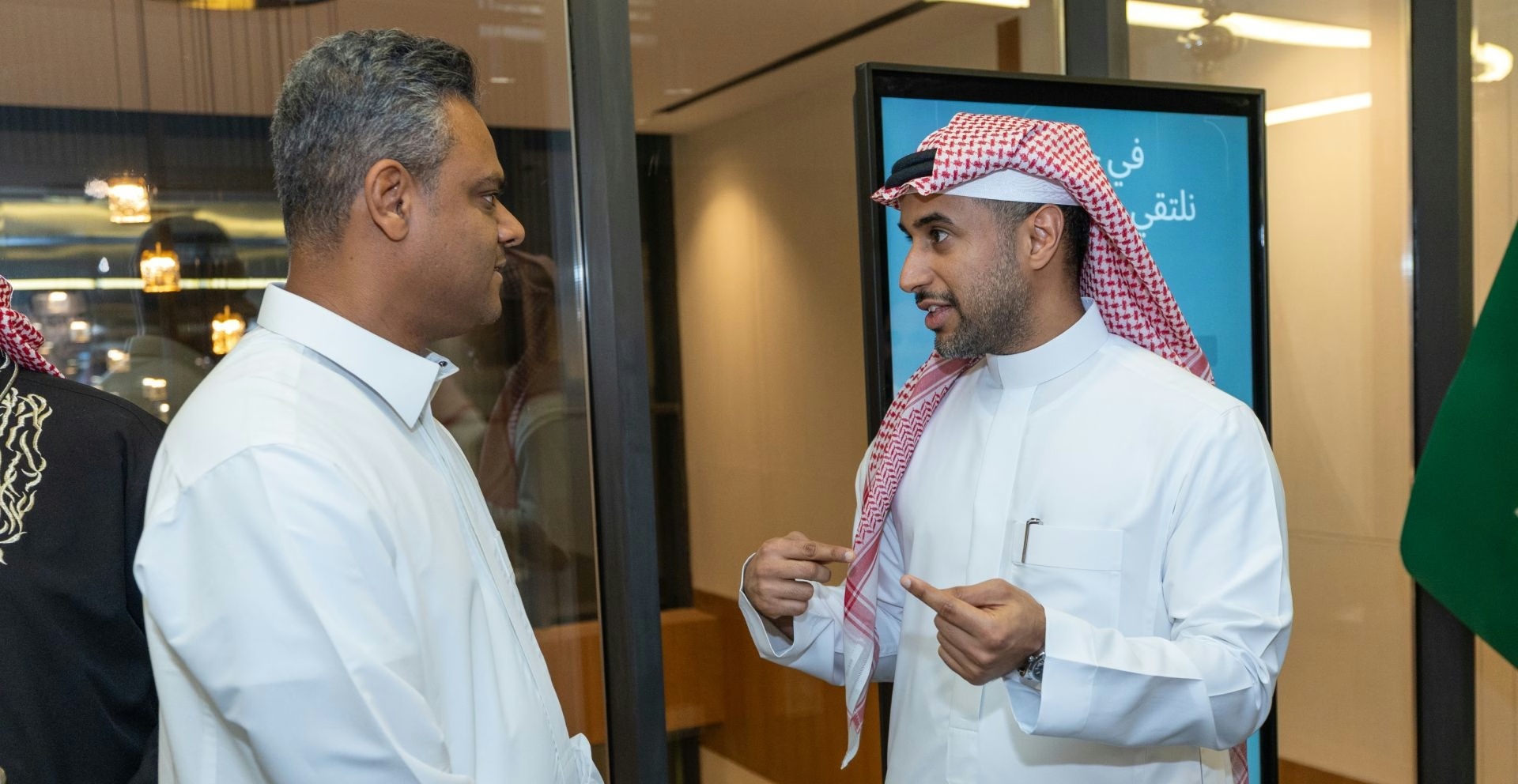
A promotion has two lives. At one desk, it is a conversation about responsibility, recognition and the next step in a career. At another, it changes a salary, a budget and the numbers somebody must approve. Between those desks, an ordinary workplace decision can become a small expedition. Mohammed Akkar Al-Johi has made that distance the subject of his next chapter at Jisr.
The founder and CEO came to the problem through years of building software for employers in Saudi Arabia. Jisr handles the machinery of working life: employee records, attendance, payroll and the connections that keep a business's processes moving. In September 2025, he introduced Jisr 2.0, bringing HR and finance into a shared system. The idea is easy to describe. Getting departments to share the same working picture is the harder, more interesting business.
Akkar's career has crossed Mukalla, India, software services and the Saudi startup economy. Along the way, the questions have changed in size. How do you acquire useful skills? How do you persuade a company to pay for a new service? How do you build something that remains useful when that company grows? His public story follows those questions more closely than it follows the usual founder mythology.
A classroom with a larger horizon
Akkar was born in Mukalla, Yemen. In a 2014 account of his early life, he described leaving the city at the beginning of 2004 to study English in India. He spent about eight months at a college in Hyderabad, then moved to Bangalore University. Money was tight. Academic performance mattered in a quite practical way: he said the college offered lower fees if he earned distinction in his first year.
He described doing just that. But his interests soon extended beyond his position in the class. He began putting more attention into personal skills and student leadership. Bangalore also presented him with a larger question. If a city could build so much economic activity around information technology, what could a place such as Hadhramaut do with its own talent? The title of that early interview asked why Hadhramaut could not become the Gulf's India.
There is something appealingly concrete about that ambition. It concerns work, training and the possibility of selling a skill beyond the place where it was learned. The young student was looking at a city's software economy, then looking back toward home. A university had become a vantage point.
Before the payroll, there was the software
Akkar began his career at Microsoft, spending three years working with software solutions before founding the software development company ClickApps. Jisr followed, initially under the name Arbab. Its history spans an early founding date of 2016 and the 2017 beginning recorded in the company's own operating timeline. By June 2025, it served more than 4,000 HR and finance teams in the Kingdom, with over 450,000 registered employees.
The progression matters because software services and a repeatable product ask different things of their founder. A service can be shaped around a particular customer. A platform must find the parts of a customer's problem that recur elsewhere. Jisr's answer took shape around employers and the daily administration of their people. Payroll provides an unusually firm test of usefulness. The working month eventually reaches a date on the calendar, and the numbers must be ready.
Saudi-specific integrations became part of that answer. The platform connected to government entities and portals as well as the wider business software and banking ecosystem. A product intended for local employers needs to fit the systems those employers already use. Geography, in this business, is a design requirement.
The customers you might decline
In December 2020, Akkar sat down for an Arabic-language business podcast that put some awkward early questions on the table. Why choose human resources? How do you develop a specialist product when you are new to its subject? How do you convince the first customer to pay? The conversation also covered the customers he wished he had declined at the beginning.
That last subject is a welcome wrinkle in a founder's retrospective. Early sales are usually presented as trophies. Here was room to discuss whether every sale had been a good idea. A young company must learn which requests belong in its product and which will pull it somewhere else. The episode's closing segment, beginning at 52:28, asked what he would change if he could start again.
By January 2022, the scale was becoming visible. An appearance at Startup Grind Riyadh came with a set of business figures: more than 1,000 contracted companies, 130,000 employees using the platform and SAR120 million transferred monthly. The event focused on the internal changes and challenges involved in serving companies. Those numbers give the discussion weight. A founder's product choices were already touching a substantial monthly flow of money.
Thirty million dollars, then more decisions
In 2023, Merak Capital led Jisr's $30 million Series A. At that stage, the business served more than 3,000 clients across 16 sectors and had 350,000 registered employees. Akkar described the investment as a way to accelerate the employee ecosystem for small and medium enterprises. Funding could support more customers and a broader product offering; it could not make the question of what to build disappear.
Merak's investment account emphasized Jisr's adaptation to Saudi requirements, including its integration with Mudad for wage protection compliance. The appeal lay in software that understood local operating needs. An employee record is useful; an employee record connected to the processes a business must actually complete is more useful. That difference helps explain the company's emphasis on integrations.
On October 8, 2023, Akkar opened Jisr's conference and presented its expanding HR technology ecosystem. More than 1,100 people attended in person or through the livestream. The programme included more than ten speakers. He was now explaining the company's direction to a room large enough to contain many different ideas of what HR software should do. Each new capability widened the promise, and the responsibility to deliver it.
A bridge back to Aden
On June 4, 2024, Akkar appeared at the SANDBOX business incubator in Aden for a meeting called “Bridge to the World.” He spoke about entrepreneurship in Yemen, establishing Jisr, its expansion into Saudi Arabia and the challenges along the way. Young entrepreneurs, university students and representatives of nongovernmental organizations were in the audience.
The setting gives his career a useful second perspective. In a Saudi business conversation, Jisr is an employer platform with customers, integrations and investors. In Aden, its founder could discuss how a venture travels from one environment into another. The meeting included advice for young Yemenis who wanted to start businesses. It brought the practical questions of starting out back into view.
Akkar also entered Endeavor's entrepreneur network in June 2025, after an international selection panel in Warsaw. Twenty-one entrepreneurs leading fourteen companies were selected at the gathering. His route now connected a local incubator audience with an international founder network. These are different rooms, with different kinds of help to exchange. For someone whose earlier ambition concerned the reach of technical talent, the connection is a fitting one.
Listening before adding another button
Akkar has also made conversation with HR practitioners part of Jisr's work. By his 2025 interview, the Jisr Council initiative had held eleven councils, visiting Riyadh, the Eastern Province, Jeddah and Mecca. The purpose was to discuss the challenges facing HR professionals and possible answers. He described exploring AI to support HR decisions and preparing financial products and regional expansion.
His advice to other founders was brisk: “Move fast.” Yet the council meetings suggest a companion activity that takes time: listening to the people who will use the product. The two can coexist. A software team needs to move, but it also needs a reason for the next button to exist. A meeting with practitioners can make a proposed feature sound considerably less inevitable.
There is a more personal glimpse in a public account from a visitor to Jisr's headquarters. Abdullah Alamodi described discussing AI, communication skills, practical work and reading with Akkar. He mentioned Outliers and Naval's writings, and said Akkar followed up with learning resources and roadmaps. That is one visitor's account, but it offers a specific picture: a founder spending time on how younger engineers might learn, then continuing the conversation after the visit.
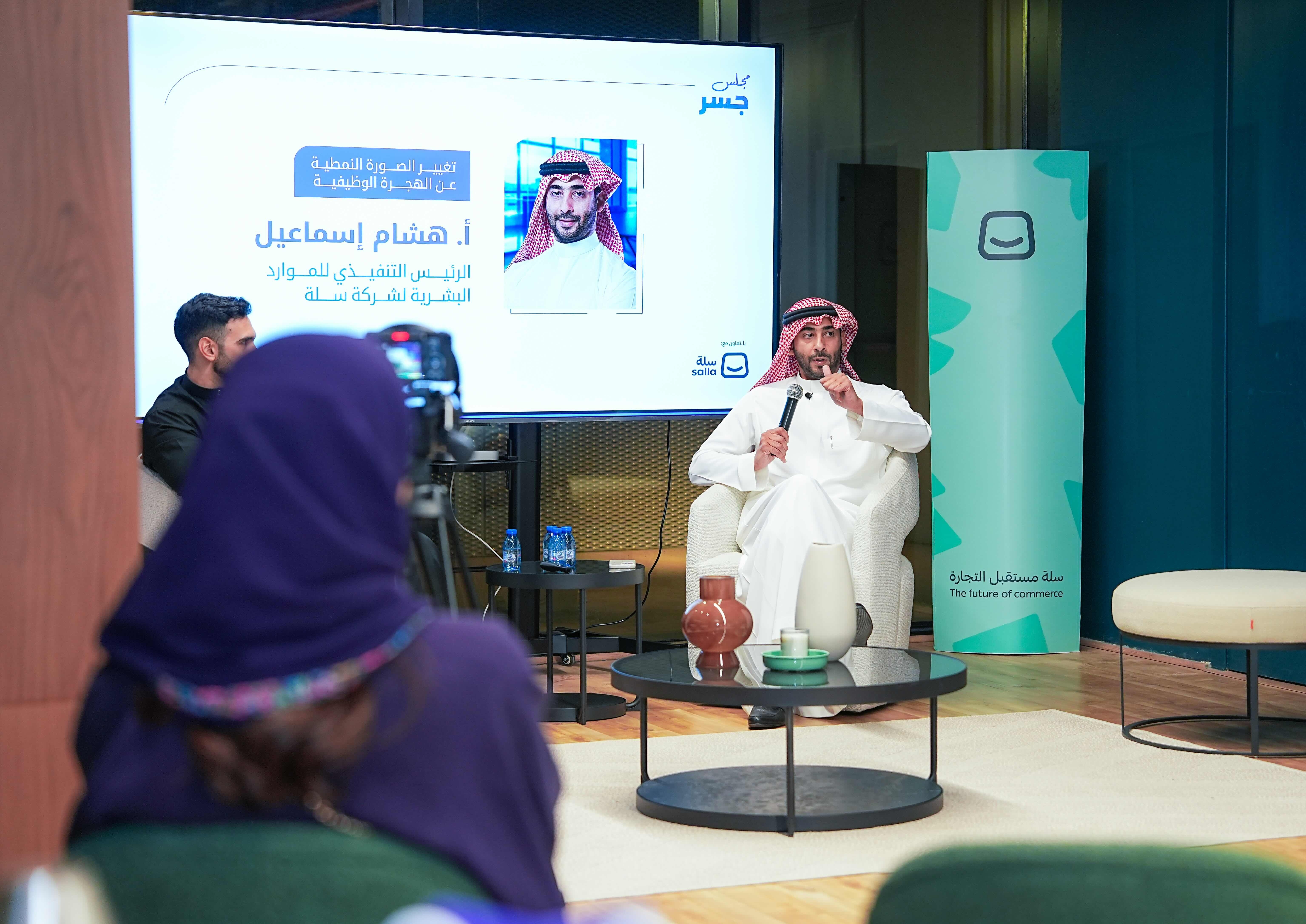
Two departments, one working picture
When Akkar introduced Jisr 2.0 in September 2025, the company reported helping more than 4,500 businesses and over 500,000 employees across more than 22 industries. He identified a recurring problem as organizations grew: HR and finance working separately, duplicating effort and losing visibility. Hiring, promotions and overtime affect money. Budgets, reimbursements and spending policies affect the employee's working day.
The new direction joined those concerns. It made finance part of the employee platform's story, rather than a distant destination for its data. In an interview that month at Money20/20, Akkar said 90 percent of Jisr's more than 4,500 company customers were in Saudi Arabia. That is a useful measure of where the business stood while its ambitions stretched outward: a substantial domestic base, with customers beyond it.
By June 2026, Jisr had opened a new Riyadh headquarters. Akkar joined Merak's Abdulaziz Alsaeed for a fireside conversation about bringing people, finance, time, data and decisions into one system. Partnerships announced at the event included Nofoth, Lendo and Othaim Holding. The address had changed; the practical question remained recognizably connected to the company's earlier work.
A promotion still begins with a person. Somewhere, a colleague must understand what changed, another must approve it and another must make sure the payment reflects it. Akkar's next task is to make those steps travel together. For a career that began by asking how technical skill could cross borders, the distance between two desks has become a surprisingly substantial place to work.
Move fast. Seek out the real value you can contribute to society and the economy.
Mohammed Akkar · advice to founders, 2025