An audience is a lovely thing to acquire until it starts sending you a bill. Mitch Liu and his colleagues were running a video platform, SLIVER.tv, when the cost of delivering its streams became a problem worth taking apart. More viewers meant more video to move. The companies doing the moving, including Akamai and AWS, expected to be paid. A successful broadcast could be an expensive compliment.
Liu’s answer was to look at the people watching. Each viewer had an internet connection. Some of that connection’s capacity was unused. If viewers could relay streams to nearby viewers, the audience could do part of the distribution work itself. A payment system could reward them for contributing. Inside a streaming company’s operating expense was the outline of another company.
That is the unglamorous beginning of Theta Network, which Liu co-founded with Jieyi Long in 2017. Its subsequent life has included blockchain, digital collectibles and, now, GPUs rented for artificial intelligence. The nouns have changed considerably. The recurring question is easier to follow: what useful thing could people do with capacity they already have?
A small aquarium, a very short runway
Liu arrived at that question with experience on both sides of a screen. He studied computer science and engineering at MIT, carrying out thesis research in the Media Lab’s Interactive Cinema group, then earned an MBA at Stanford. Engineering, entertainment and business were already sharing desk space. His later work would keep rearranging those three chairs.
In 2007, he co-founded the business known as Tapjoy, associated with rewarded advertising and app monetization. The appeal of that model was an exchange a user could understand: contribute attention or complete an action, receive something useful inside a game. Participation had a price, and a reward. Years before Theta, Liu was working with ways to make the audience part of the economics.
Then came the fish. He co-founded Gameview Studios in 2010, building a business around mobile games including Tap Fish. Players collected and cared for virtual fish; the company attracted a rather larger species. DeNA announced its acquisition of Gameview in September that year. Its announcement said Gameview had become independent from BayView Labs in June. Corporate courtship moved briskly.
The numbers give the aquarium some scale. At the acquisition announcement, Gameview’s game series had passed ten million downloads. In early 2012, DeNA said Tap Fish alone had exceeded twenty million worldwide. These were consumer products with an audience big enough to make distribution and monetization practical concerns, rather than subjects for a whiteboard.
Liu also co-founded Midverse Studios with Rizwan Virk. By 2014, Midverse was offering developers an Invest+Publish program combining investment with help on acquisition, marketing and operations. Making a game was one task. Getting it discovered, and keeping a business alive around it, required a different set of tools. Liu kept returning to that second problem.
The view from inside the game
SLIVER.tv took him into esports with Long, the engineer who would become Theta’s co-founder and chief technology officer. The premise was more ambitious than putting a camera in front of a tournament. Their technology could generate immersive, 360-degree views of competition, giving spectators new ways to see the action.
A December 2016 announcement described a live replay system that used a virtual camera array to produce both immersive and conventional highlights from different angles. Viewers could watch through mobile apps or use headsets including Gear VR, Oculus Rift and HTC Vive. The company was trying to give a spectator something closer to a seat inside the game.
There is a useful wrinkle in Liu’s account of this period. In a 2018 conversation about his career, he discussed a focus on virtual reality as a failure that had not worked out yet. The qualification matters. A technology can function while its market takes longer to arrive. A founder then has to decide which parts of the work deserve another chance.
Liu’s advice in that same conversation included “Don’t give up too early.” That is a difficult instruction to put on a calendar. It leaves room for changing the product while keeping something valuable from the attempt. With Theta, the team’s experience of moving demanding video became material for a different kind of service.
“Don’t give up too early.”
Mitch Liu, 2018
The audience gets a job
The early Theta proposition gave viewers a second role. While watching, they could contribute bandwidth and relay video to others, earning tokens for doing so. Liu’s explanation began with the startup’s own delivery costs. The blockchain supplied an incentive mechanism for a network that needed people to provide resources.
This made the design as much an exercise in persuasion as in networking. People would have to find the exchange worthwhile. Video businesses would have to trust another layer in their delivery systems. Viewers would still expect a stream to play. A clever distribution method has a very short grace period when the picture freezes.
By March 2018, Liu was in Dallas meeting the Samsung VR team to begin an integration. Theta’s testnet launched in June; a Samsung VR testnet channel followed in September. The sequence is a reminder of the work behind a partnership announcement: introductions, an implementation, a channel people could actually use. Liu’s public itinerary included that patient, less theatrical kind of selling.
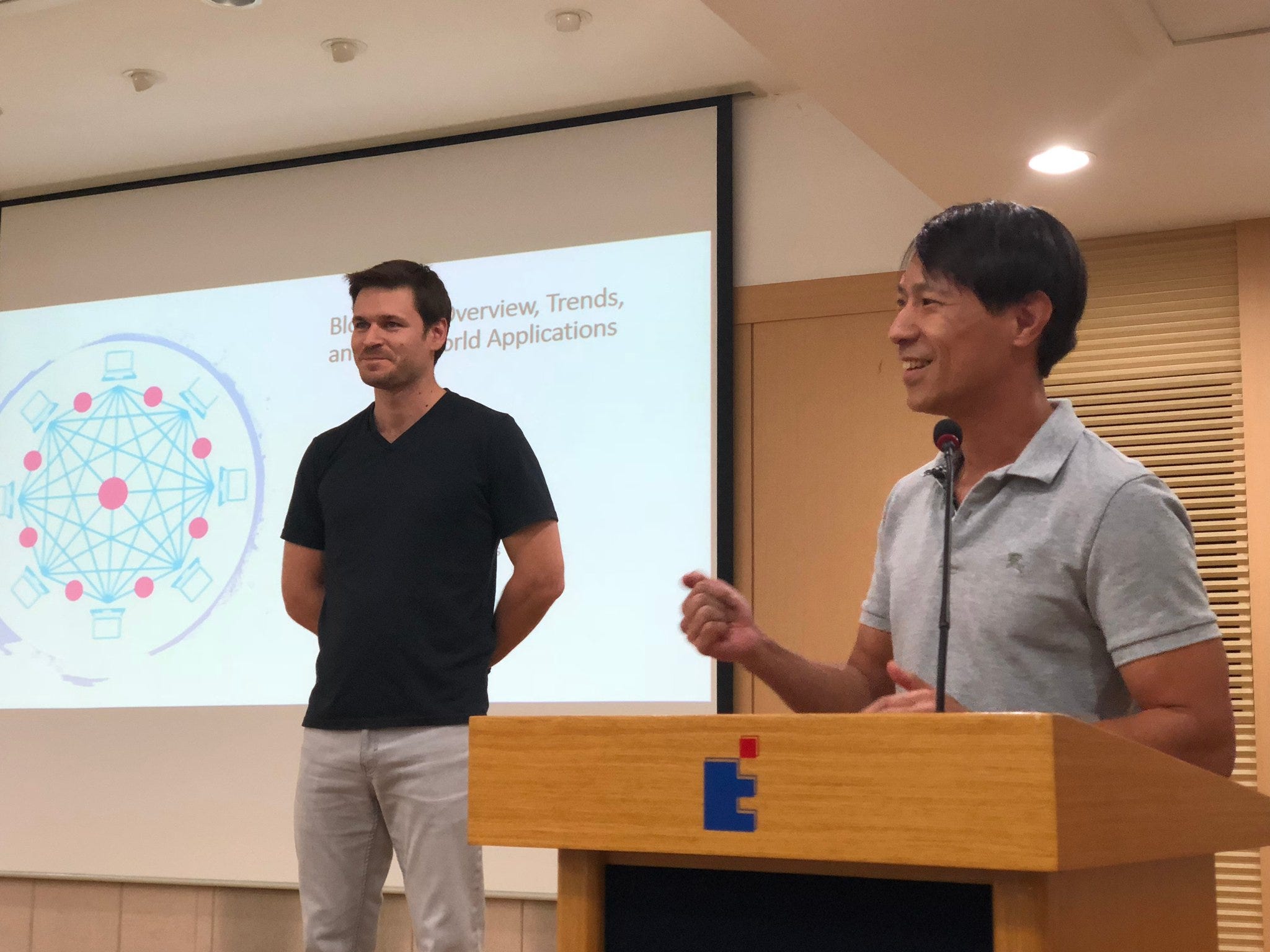
In a conversation with Samsung NEXT that year, Liu and strategy chief Wes Levitt discussed the incentives behind sharing bandwidth. User experience was a recurring concern. The viewer had come for entertainment. Any new machinery would need to fit into that ordinary expectation. The platform’s economics could become complicated backstage; the audience still wanted the show to begin.
The graphics card finds another customer
On May 1, 2024, Theta launched EdgeCloud. The platform combined distributed computing resources with cloud infrastructure for AI, video and rendering. Developers could deploy models, including language and image-generation models, and use tools such as Jupyter notebooks. Liu’s business was now addressing people who needed computation as well as people who needed to move pictures.
The architecture was hybrid: community hardware alongside hosted infrastructure. That detail helps explain the transition. Different jobs need different machines and service arrangements. An available graphics card becomes economically useful when someone can find it, send it suitable work and pay for the result. EdgeCloud set out to organize those steps.
For Liu, this was another encounter with the gap between a technical resource and a usable product. Spare hardware alone is an inventory. A customer needs a service. The screens and tools around the hardware help determine whether a researcher or developer can turn availability into completed work.
Some customers brought Liu back to entertainment by an unexpected entrance. In October 2024, the Vegas Golden Knights and Theta announced a fan chatbot powered by EdgeCloud. Its intended questions covered schedules, merchandise, venue information and hockey. The company that had worked on esports viewing was helping a hockey club answer its supporters.
Academic research supplied another use. In April 2026, Theta announced that Professor Yong Zheng’s lab at Illinois Institute of Technology was using EdgeCloud for personalization, recommender systems and human-centric AI. Liu’s stated ambition was to support that research with scalable computing and AI services. The audience for his infrastructure now included people whose output would be an experiment.
Paris, with competitors in the room
In July 2026, Liu attended RAISE Summit in Paris with Josh Adams, Theta’s head of marketing and PR. Adams’s account described an encounter with an AI industry full of capable companies and immediate problems to solve. His conclusion included a reminder of how hard the team would have to work simply to keep its position.
It is a revealing setting for this stage of Liu’s career. A new market provides new customers and new comparisons. The skills that helped build a streaming platform still have to earn their place among companies organized around AI from the start. Experience supplies a starting point; customers supply the examination.
The product continued moving. On August 27, Theta announced expanded APIs and a Model Context Protocol server that let AI agents discover, deploy and manage GPU infrastructure. Software could check availability and pricing, start a node and monitor a job. The person opening a dashboard no longer had to perform every step.
The distinctions underneath remain specific. Theta’s August Edge Node release described video relay, transcoding and rendering work. AI workloads use a separate EdgeCloud Client. Even in a business organized around sharing resources, the right piece of software still has to meet the right kind of job.
What survives the next change
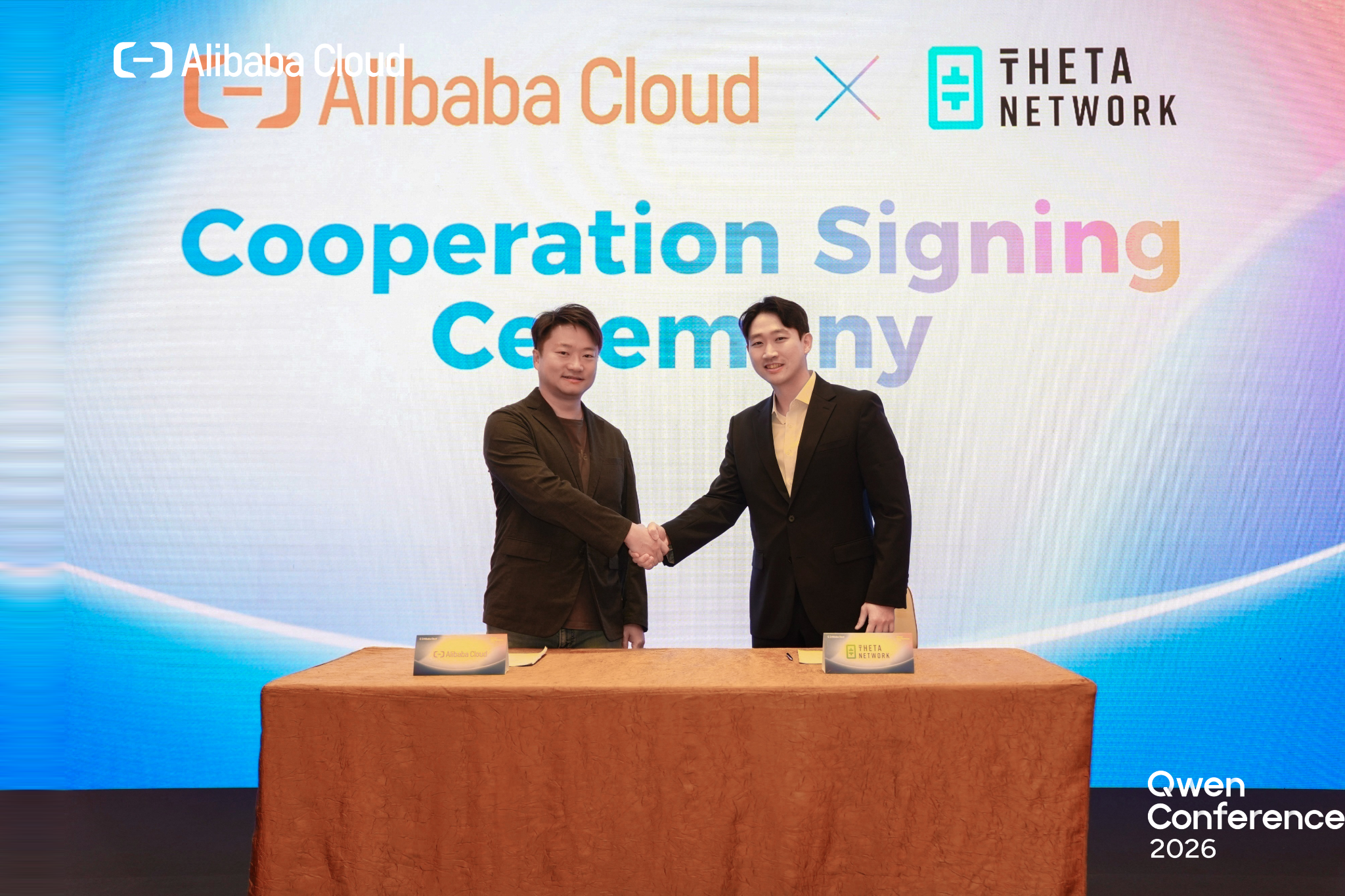
On October 21, 2026, Theta announced a collaboration with Alibaba Cloud to bring Qwen models and related AI services to EdgeCloud. The partners said more models and services would follow. Liu described distributed infrastructure as a way to deliver enterprise AI. A business born from a video delivery expense was now offering another route to cloud services.
Liu has also offered a quieter explanation of what difficult work requires. Asked in 2022 what children should learn, he emphasized attempting challenges and learning through the attempt. He described wanting more time with friends and family, too. Those wishes sit comfortably beside a career spent trying to make participation useful: the work matters, and so do the people outside it.
His companies have sold games, organized rewards, streamed competition and offered computing resources. A virtual aquarium and a GPU marketplace make unlikely neighbors on a résumé. Follow the practical decisions between them, though, and the distance shrinks. Liu keeps finding another use for what is already there. The streaming bill was an expense. It also gave him somewhere to look.