Before Mir Hwang had a company, he had an imaginary agent. Touring Canada with his band, he sent emails to venues and heard little back. Then he tried writing under an alias, presenting himself as someone representing the musicians. Replies began arriving. The band was the same. The intermediary was fiction. Apparently, even an invented middleman could get a foot in the door.
There is a small comedy here, and a useful business lesson. A venue needs some confidence that an unfamiliar act will bring people through its doors. A musician needs somebody to answer an email. Hwang had discovered how awkwardly those needs met. Years later, he would build GigFinesse around getting the two sides to understand each other, with rather less need for creative correspondence.
An education in getting booked
Hwang was born in Seoul and grew up in Vancouver before moving to the Washington, D.C. area for high school. Music gave him a route into other people's rooms: he played in bands, became a touring session drummer and eventually performed in New York clubs while studying at New York University. The geographical changes gave him practice at starting again. He has described moving between communities as an education in flexibility.
By his own account, the booking problem had occupied him since middle school. His mother drove him to venues to drop off demos and audition. He kept expecting somebody to build a better system. This was an era in which an app seemed to be appearing for every conceivable inconvenience. Getting a band onto a stage continued to require a remarkable appetite for unanswered messages.
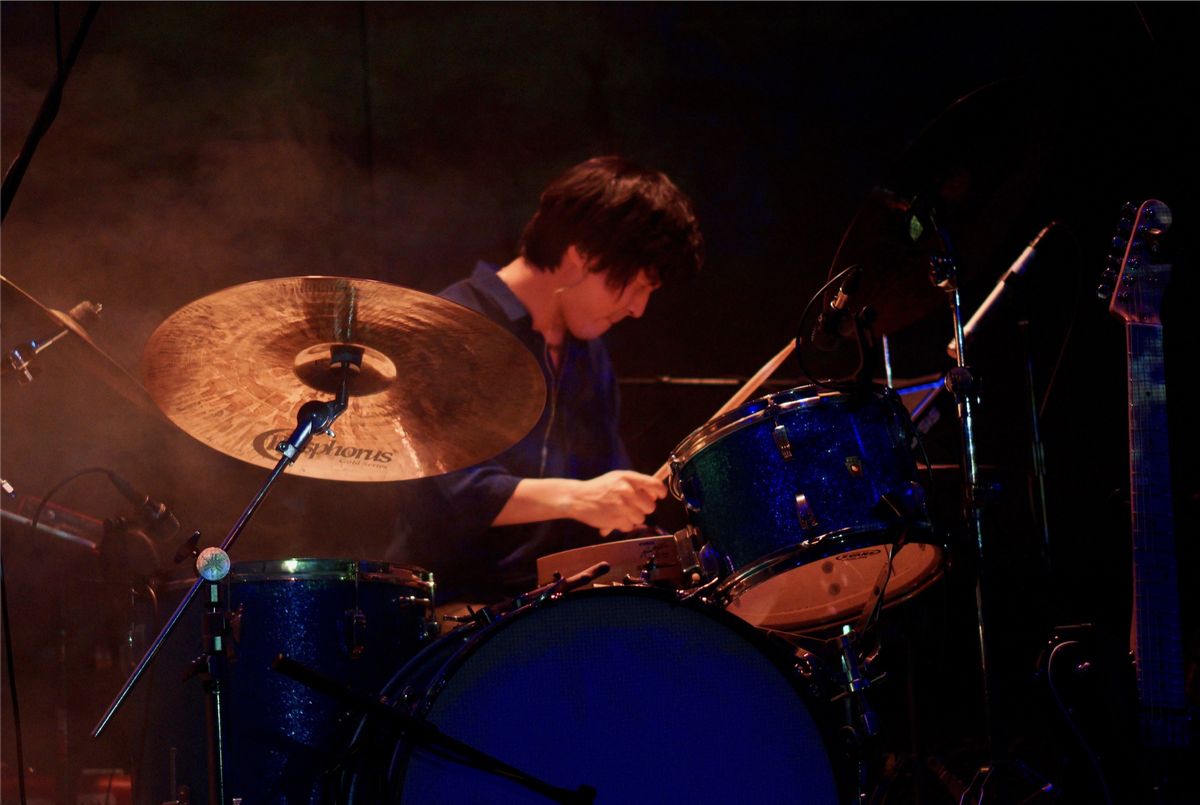
NYU put two interests within reach of each other. Hwang majored in psychology and minored in chemistry, graduating in 2019. He also kept playing. His education in live music included the practical frustrations of finding work, while his student status gave him access to a university community willing to help turn an observation into a business. A recurring annoyance had acquired somewhere to go.
A cousin, a friend, and no business degree
Hwang's technical partner was close to home. Ryan Kim, his cousin, was a software engineer at Google before joining him to build GigFinesse. An early member of the team, Patrick Esch, was an old friend who helped with sales. The group's academic backgrounds ranged across science, technology, history and philosophy. Hwang openly acknowledged that business training was something they would have to acquire along the way.
They used the resources around them. GigFinesse won the New Venture track of NYU's $300K Entrepreneurs Challenge and participated in Summer Launchpad in 2019. Kim encouraged Hwang to make use of the university's entrepreneurship programs. Hwang found mentors and help turning the idea into a more concrete proposition. Their early ambitions came with a fairly practical syllabus: learn the business while building it.
The first customer relationships mattered. Esch described finding a venue that believed in the mission and wanted to help the company grow. That is an unglamorous detail with considerable weight. Someone had to let the young company handle a real evening, with real musicians and a real audience. A booking product can look perfectly convincing until the date on the calendar arrives.
“I felt I owed it to myself and to my fellow musicians.”
Mir Hwang, on deciding to build GigFinesse, 2019
The Austin experiment
In his later account of the company's beginnings, Hwang admitted that he had expected a familiar startup sequence: an idea, a prototype, investment and growth. Early competition wins and supportive mentors made that sequence look plausible. Then the 2020 shutdown of live events took away the activity the company existed to serve. GigFinesse had to decide what to do with a booking business when the bookings disappeared.
The team left New York in a rented U-Haul, initially expecting to stay at a teammate's parent's house for a short interval. A month became six. Investors questioned whether the live entertainment industry would return. Hwang and his colleagues decided to spend what remained of their cash trying another market. Austin became the test. He arrived with a suitcase and a backpack and sublet a small dorm room.
He went from door to door, talking to prospective customers, and tutored chemistry to cover his bills. The company was testing whether it could grow somewhere without established connections. There is something pleasingly literal about this phase of a software business: the founder walking around asking people to use it. Austin partners began taking a chance on GigFinesse, giving the experiment customers rather than merely a change of scenery.
Hwang later spoke about the usefulness of staying close to customers' problems. That practice was built into the Austin attempt. A venue owner could explain what was difficult about booking entertainment, and he could hear the answer directly. The chemistry lessons bought time for more conversations. For a company selling a way to make live performances happen, these were modest beginnings with an immediate test of usefulness.
- 2019NYU competition win and Summer Launchpad
- 2022$3.6 million seed round announced
- 2024Forbes 30 Under 30, Consumer Technology
- 2026Total funding passes $15 million
What happens before anyone plays
The product that emerged serves both artists and the people responsible for programming a venue. GigFinesse combines software with human curation. A venue supplies its vision and budget; the company helps find suitable talent and manages the work around the performance. Discovery, scheduling and payment belong to the same evening, even when they have historically lived in different inboxes.
Hwang has explained the service to hotel operators as a kind of matchmaker. The comparison is apt, provided the matchmaker also deals with the paperwork. Hospitality brings its own details: payment schedules, tax forms, insurance requirements and several possible decision makers. Each additional handoff creates another chance for an evening to become an administrative undertaking. The musician still has to turn up ready to play.
In 2022, GigFinesse announced a $3.6 million seed round, with investors including Bessemer Venture Partners, Cosmic Venture Partners, NJME Investments and the NYU Innovation Venture Fund. Hwang described an operation focused on using capital carefully. His customers included more than traditional concert venues: restaurants, coffee shops, hotels, breweries and wineries also needed performers. A working musician's stage could be somewhere a guest had initially come for something else.
His account of that fundraising period also includes a more ordinary difficulty: finding enough time. Raising money competed with running the business and maintaining a personal life. For the post-show version of the company, he named New York's Remedy Diner as a favorite, remembering late nights with the team discussing shows over breakfast food. Even the live entertainment business occasionally requires pancakes.
The lobby joins the audience
The company's later development makes the hotel lobby a useful place to understand Hwang's ambitions. A hotel may want regular programming without assigning every booking to a manager's personal text thread. In an April 2026 essay, he argued that entertainment deserves the same operational attention as other parts of hospitality. Reservations, purchasing and payroll already have software. Booking talent often remains a much more personal arrangement.
He also offered a broader view of the competition for a guest's evening. Hotels are competing with staying home, ordering dinner and watching something on a screen. Live entertainment gives someone a reason to leave the couch or remain at the property. His argument depends on making that experience consistent enough for an operator to plan around. A good room needs an evening's program as well as its furniture.
By October 2025, GigFinesse had supported more than 50,000 shows nationwide. The company had nearly 30 employees and $10 million in funding at that point. Those figures describe a business that had moved beyond the founder handling each encounter himself. They also describe a lot of ordinary working dates: the individual performances that turn an artist's availability into paid work and an operator's calendar into a program.
shows powered each month across venues nationwide.
A Series A reported in May 2026 brought total investment above $15 million. The opportunity had widened from matching artists with venues to supporting the operations around live entertainment. Hwang's work now extends to the systems behind an event: contracting, logistics, production and measurement. The original booking frustration has become a larger question about how the whole process gets managed.
A network in thirds
Hwang has retained a role at the place that helped him begin. As a Founder in Residence at NYU's Entrepreneurial Institute, he mentors emerging founders. In 2025, his work included sharing experience through accelerator question-and-answer sessions. It is a practical continuation of the assistance he once sought himself: somebody further along making the next person's early decisions a little less mysterious.
He has described a rule for building a network in thirds. One part consists of people to learn from; another consists of peers; the final part consists of people one can mentor. It is a structure with room for both ambition and obligation. He has also warned entertainment founders against getting distracted by the glamorous company they may find themselves keeping. Meeting interesting people is pleasant. The work still needs doing.
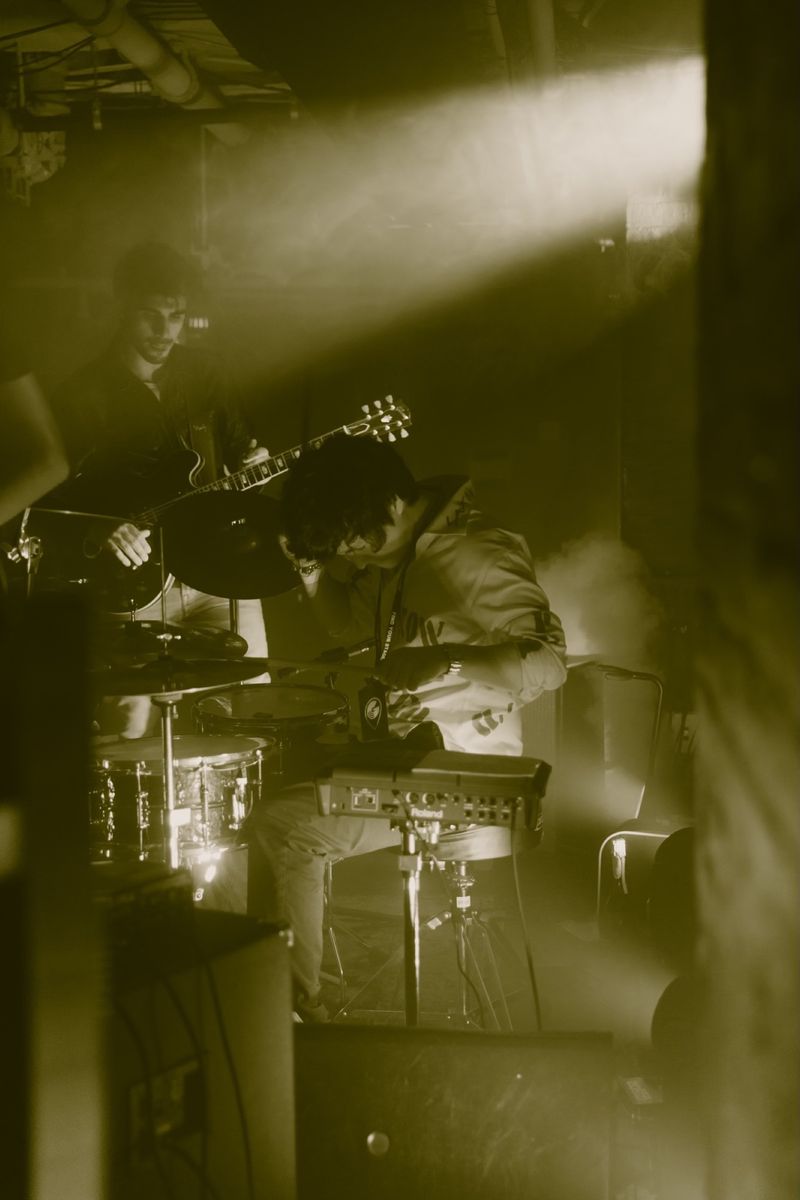
In September 2026, NYU announced that Hwang would return from Austin for an October festival conversation with Avante Price, the Posh founder and a former Summer Launchpad classmate. Their companies approach a night out from different directions: the audience's route to an event and the performer's route to the stage. Hwang had become someone the next group of student founders could ask about what happens after the accelerator ends.
There is another, smaller record of the company's progress. Hwang saves screenshots of artists' messages thanking the team for an easier booking experience. Given the choice between a funding announcement and somebody saying the job went smoothly, the latter is closer to the problem he began with. He once needed a fictional agent to get an answer. The business he is building is meant to make the next musician's introduction considerably simpler.
Keep listening
Conversations, writing and places to follow Mir Hwang.