In 2007, a Crayola executive opened a box of crayons at an overseas shop and found labels coming loose. Back home, people disagreed about the cause. An elementary Six Sigma investigation found that the adhesive did not consistently set when the labels were dry. Misting the crayons during labeling solved the problem. A little water had settled an argument.
- What it does: statistics, experiments and quality monitoring for people responsible for making processes work.
- Who buys: engineers, improvement teams, analysts and educators.
- What to borrow: agree on the measurement before arguing about the remedy.
Crayola expanded its use of statistical methods. Its first wave of Six Sigma projects in 2008 saved more than $1.5 million, according to Minitab’s customer account. Those are program savings, with people and process changes behind them. Minitab analyzed the data. The crayons supplied an unusually colorful demonstration of why that matters.
“everything we do, we can do better”Gary Wapinski, Crayola manufacturing executive
This is a useful entrance to Minitab, a company whose subject can sound forbiddingly technical. Its business begins where a plausible explanation encounters an awkward observation. Statistical software gives that encounter a structure. A confident manager may be right. A quieter engineer may be right. A designed investigation offers both of them something better than another meeting.
Less arithmetic, more thought
The original obstacle was more modest. In 1972, Penn State statisticians Barbara Ryan, Thomas Ryan and Brian Joiner created a more accessible version of OMNITAB, a statistical computing package. Students could spend less time performing calculations by hand and more time considering what their analyses meant. Minitab began as a teaching intervention, with the computer taking over the drudgery.
There is a pleasing continuity here. A student laboring over arithmetic and an engineer wrestling with production data share a problem: the mechanics can crowd out the thinking. Making the calculations easier does not make judgment unnecessary. It makes room for judgment. The modern product catalogue is considerably bigger, but the founding idea has aged rather well.
Today, Minitab Statistical Software covers experimental design, regression, quality analysis and visualization. A team can investigate which factors influence an outcome, examine whether a process meets specifications or look for unusual variation over time. The company’s niche is practical industrial statistics: the measurement attached to an operating decision, rather than a chart produced for its own entertainment.
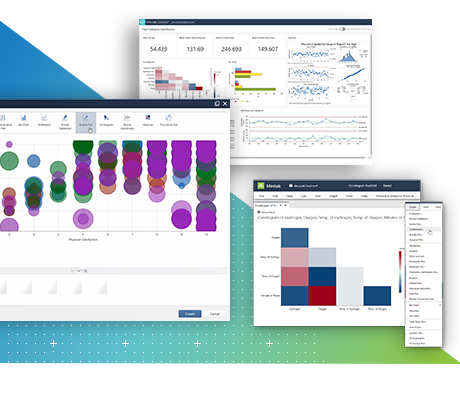
Its customer list includes Ford, Toyota, Pfizer and Microsoft. Minitab says its clients span more than 100 countries and include over 90% of the Fortune 100. These figures describe reach, not uniform adoption across every department. The work belongs to quality engineers, researchers, analysts and continuous improvement teams, with education remaining part of the market.
The pouch with two temperatures
At Boston Scientific’s Heredia facility in Costa Rica, engineers wanted a smaller pouch for guidewires. Cheaper packaging still had to preserve a reliable seal. They used Minitab to design and analyze experiments on sealing conditions. Front and rear temperatures mattered, as did their interaction; speed did not significantly affect seal strength in that study.
The interaction is the interesting detail. Changing one setting at a time could miss how the settings behave together. The team then used capability analysis to verify the proposed settings against seal-strength requirements. The project contributed to a broader packaging effort with combined savings above $330,000 in the published account. A saving became usable when the process could defend it.
An editorial diagram of the packaging study, not experimental data.
That sequence is the transferable part. First make the required outcome explicit. Then arrange a test that can distinguish among explanations. Finally check the changed process. Statistical significance and an operationally acceptable result are different questions. A method becomes useful when the people running the process know which question it answers.
Buying the argument, one seat at a time
Minitab sells subscriptions and services. Its published US annual named-user prices, checked October 1, 2026, put Solution Center Core at $2,394, Analytics at $2,593.50 and Copilot at $2,793, before applicable tax. The listed subscriptions include online and desktop access to Statistical Software. Academic and volume arrangements have their own terms.
Published October 2026 prices, before tax. Specialist modules and other products have separate terms.
Solution Center combines analysis with data preparation, dashboards and brainstorming. Core adds Workspace’s visual planning tools; Analytics adds predictive analytics; Copilot includes both. This is a packaging choice around the work a customer wants to perform. A quality team documenting a process and an analyst building predictive models may want different companions to the same statistical engine.
Other products address adjacent tasks. Connect integrates and prepares data. Real-Time SPC monitors live process quality. Engage tracks improvement initiatives and their results. A company can therefore buy help with getting data into shape, detecting trouble or keeping a portfolio of projects organized. Those activities are related, but a well-maintained project list cannot substitute for a sound experiment.
Training is part of the proposition. Minitab offers on-site, virtual and self-paced options, alongside consulting in statistics, automation and simulation. Its partner directory includes Microsoft and SAP as technology partners and organizations such as Purdue MEP providing manufacturing expertise. The software sits within a business of teaching, applying and maintaining analytical practice.
Compared with alternatives, the sensible question is fit. JMP also offers experimental design, statistical analysis and dynamic visualization. R is a free statistical computing environment. My reading of Minitab’s proposition is that guided quality workflows and supporting services can matter to a team that must repeatedly turn analyses into production decisions. No universal winner follows from that; existing skills and integration requirements matter.
A statistics package moves upstream
Minitab’s recent acquisitions suggest a broader ambition. It bought Simul8 in December 2024, adding discrete event simulation, digital twins and process mining. Simulation offers a way to rehearse a change in a model before rearranging the real operation. The value depends on how well that model represents the system being changed.
Prolink followed in March 2025, bringing automated collection from inspection equipment. Scytec arrived in January 2026 with machine monitoring, downtime information and overall equipment effectiveness software. Together, these additions move Minitab closer to where observations originate. The strategic logic, as I read it, is to reduce the distance between a machine doing something and someone understanding it.
The February 2026 acquisition of Effex addresses experimental design and optimization, including its proprietary OMARS designs. In July, Minitab acquired DataLabs in South Korea after more than 25 years of partnership. That transaction adds local training, consulting and implementation expertise to the product expansion. Analytics adoption requires people who can make the tools useful in a particular operation.
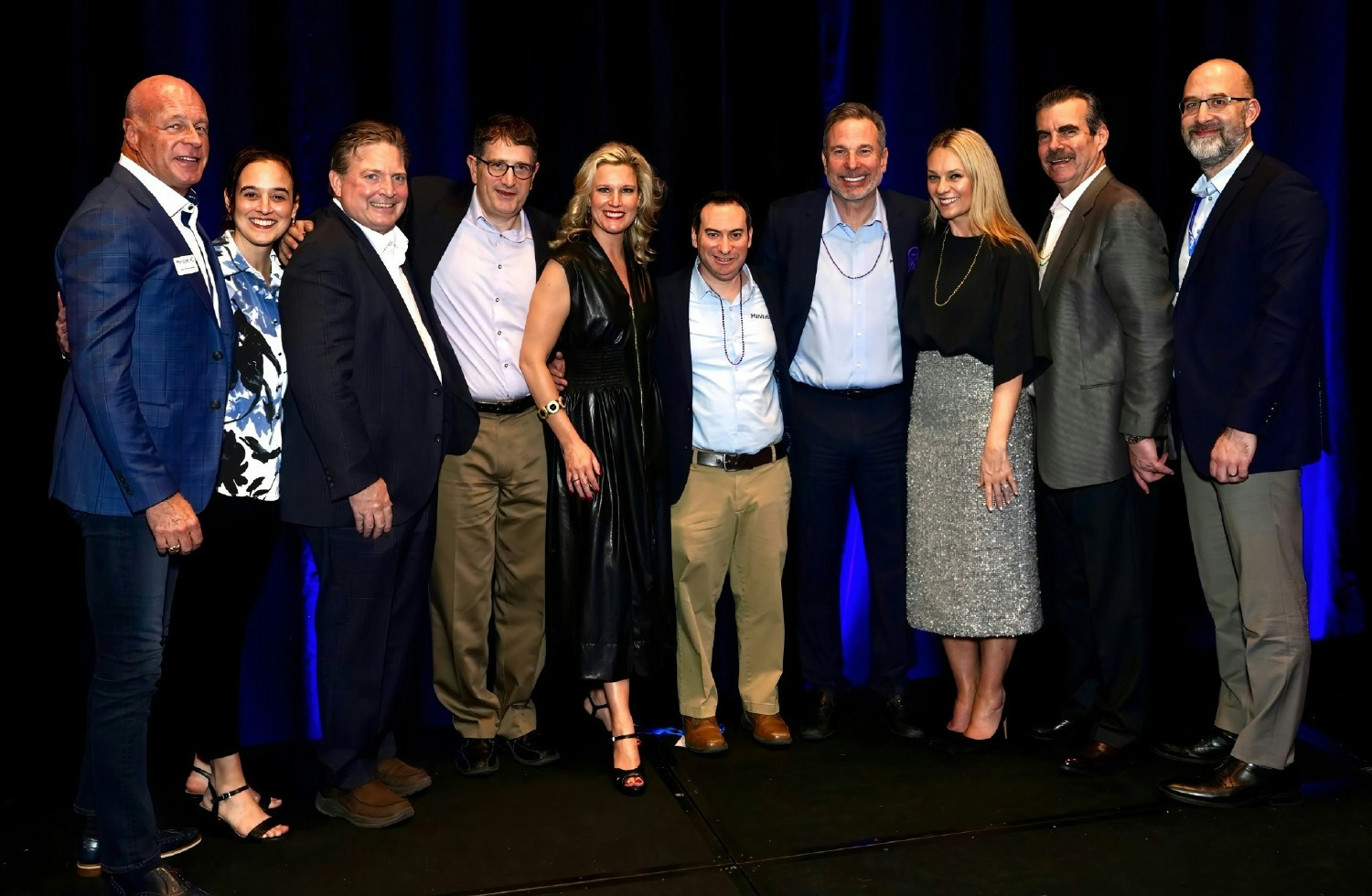
There is a cultural counterpart to that emphasis on people. Minitab received its sixth consecutive Great Place to Work certification in June 2026. The external employer profile, updated in May, reports that 87% of employees consider it a great place to work. It is a useful employee-survey signal, rather than evidence that every customer project goes smoothly.
The instrument still needs an operator
Minitab’s consulting examples supply a less glamorous warning. One manufacturer of frozen-drink and ice-cream machines had tried models using one input variable at a time, with unsatisfactory results. Consultants reorganized the data and built a multiple-regression model. Further investigation found that the temperature measurement system itself was contributing error. The instrument was part of the problem.
It is hard to imagine a clearer limit on the software promise. An analysis cannot rescue a measurement whose error has gone unexamined. Nor does a licence provide the staff time to test a change, or the authority to implement it. Before starting, choose a recurring problem, agree on the outcome and examine whether the data can answer the question.
AI now joins the toolbox. Solution Center offers natural-language explanations and data preparation; Minitab says organizations can disable its AI features. September 2026 updates added shared Solution Spaces and conversion of images or text into editable process maps. The old ambition persists: remove mechanical work so people can concentrate on the decision.
That is also the useful test for a prospective customer. Can the team specify a problem, measure it credibly and act on an inconvenient answer? If so, Minitab offers a substantial set of methods and supporting expertise. If the answer has already been chosen, another graph will merely make the meeting prettier. The real purchase is the opportunity to change your mind.
Try the tools, follow the work, or watch the interface in action.