Miles Jennings invited 10,000 people to book a meeting with him. Then he worried about his calendar. It was 2015, and the Recruiter.com co-founder had grown frustrated with a familiar business ritual: discussing how to learn what customers wanted while learning very little. So he sent an invitation to the site's most recent users, offering a short conversation. A few recipients contacted customer service to ask whether the invitation was a scam. Apparently, access to the CEO looked suspicious.
By the time he wrote about the experiment, 54 meetings had been confirmed. Most callers were job seekers. Jennings took personal notes and tried to follow up with advice. The exercise gave him individual people to keep in mind while developing products. His description of the aim was disarmingly plain: “what I want is really just a conversation.”
A snapshot from his November 2015 account, while meetings were still underway.
A philosophy major meets a bicycle
Long before Recruiter.com, Jennings operated a College Pro house-painting franchise during college. He studied philosophy at Trinity College in Hartford. Painting supplied some unusually concrete examination questions. One employee painted around a bicycle leaning against a house, rather than moving it. There are elegant arguments about the nature of work. This was an inelegant demonstration of the difference between activity and judgment.
He recruited painters through newspaper advertisements and promoted the business with lawn signs, enlisting his sister to help distribute them. Some placements prompted a municipal cease-and-desist notice. The calls nevertheless came in. Later, managing several crews on several houses proved too much. He reduced the operation to one project at a time and kept his strongest employees.
He remembered finishing the summer slightly ahead financially. The larger return was an education in finishing: touching up, cleaning up, securing the customer's approval and collecting payment. A painted wall could look complete while the business transaction remained very much unfinished.
Before the platform, the placement
Jennings entered recruiting and online recruiting in 2003. His experience included Modis, the IT staffing business within Adecco, and Indeed.com. Those jobs put him inside two different parts of the employment machinery: a staffing operation that works through individual placements, and an online service that brings jobs to people's screens.
That background matters when considering his later enthusiasm for software. Hiring has consequences that resist being reduced to a neat interface. A person must decide whether to leave an employer. Another person must decide whether to trust a candidate. The technology sits between decisions people still have to make.
Recruiter.com's co-founder Ashley Saddul brought the technical side of the partnership. Jennings brought recruiting experience and an interest in gathering professional audiences. By 2013, when the company introduced its Direct search and messaging service, the proposed improvement was straightforward: let job seekers, employers and recruiters create profiles and contact one another. Jennings described the purpose as making access to the right people easier. Even the product announcement left people in the center of the picture.
“We know real world recruiting is all about people.”
Miles Jennings, announcing Recruiter.com Direct, 2013
650,000 people still need a host
His interest in professional communities had already found a home on LinkedIn. In February 2015, Jennings described a Recruiter.com group started in 2007 that had grown beyond 650,000 members. Some 5,000 had joined in the preceding week. The numbers were large; the work he described was remarkably domestic. Staff shared useful material, started conversations and moderated discussions. Someone had to keep the room worth entering.
His advice to other community builders included sending people into the group, making time to contribute and asking existing contacts to participate. He also urged a sustained commitment. A community required attention after the promotional campaign's imaginary finishing line had passed.
There is a useful tension here. A founder wants distribution, but a member wants a worthwhile place to spend time. Jennings's approach acknowledged the ongoing work needed to serve both interests. The membership figure was evidence of reach. Daily moderation was the less photogenic part of the achievement.
House painting: finish the corners.
Community building: keep showing up.
Recruiting: remember who is on the other end.
The founder changes chairs
The corporate history brought a different kind of work. Jennings became chief executive of Truli Technologies and its VocaWorks subsidiary in October 2017. In March 2019, Truli merged with Recruiter.com. He led the combined business, then moved to president and chief operating officer in July 2020 as Evan Sohn became CEO.
It is easy to write a founder's career as though every title means the same job with a larger desk. These changes show a business being reorganized around different responsibilities. Product ambitions had to coexist with the work of combining companies and operating a public business. Jennings's résumé became a record of changing seats within that machinery.
In 2021, Recruiter.com reached Nasdaq. Its common stock and warrants began trading there on June 30, and the company announced the closing of a $12 million offering on July 2. It said the proceeds would support sales, marketing, acquisitions and working capital. The listing arrived while Jennings was president and COO and Sohn was CEO. It belongs to a team history as well as a founder's biography.
- 2003Begins working in recruiting and online recruiting
- 2017Becomes CEO of Truli Technologies and VocaWorks
- 2019Leads the merged Recruiter.com business
- 2020Moves to president and COO
- 2021Recruiter.com begins Nasdaq trading
- 2024Leaves CEO and president roles; remains a director and interim CFO at that transition
What gets automated?
Jennings's writing on artificial intelligence has generally concerned the work surrounding a hire. In 2022, he described systems that source candidates, generate outreach, assess applications and help employees learn after joining. That is a substantial territory: the administrative steps before a conversation, the filters that determine who gets one, and the support that follows an offer.
He also acknowledged controversy around automated candidate assessment. Ranking applicants may save time, but the decision about who deserves consideration carries consequences for those being ranked. His account included skepticism about machines evaluating people alongside his descriptions of their uses. Enthusiasm for a tool can survive a question about where it should be used.
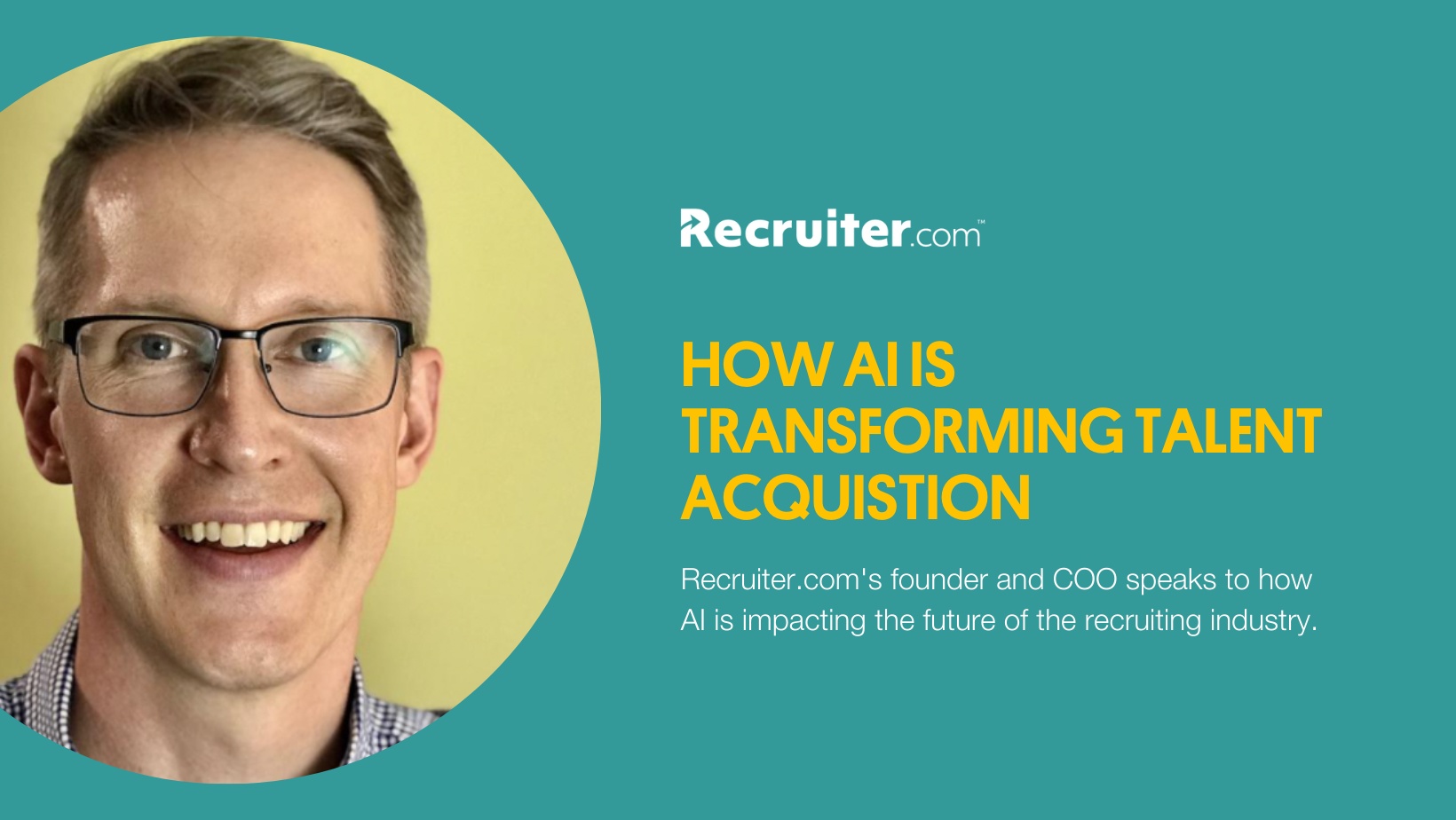
The distinction between finding someone and understanding someone runs through this work. A matching system can produce a promising name. The employer and candidate still need to discover whether their expectations fit. His earlier willingness to spend time on individual calls gives this interest in scale a useful counterweight. Reach creates the possibility of a connection; someone must still make use of it.
Creative work has a stamina requirement
At Mediabistro, the media jobs and career community, Jennings addressed a particular version of that problem. Asked in December 2023 what media employers valued, he emphasized passion and tenacity. Portfolios mattered, but so did a candidate's ability to discuss past projects with fluency and detail. The employer wanted evidence of an interest that could keep producing work.
He expected familiarity with AI tools to become increasingly necessary while continuing to value writing. His comments about remote work were similarly practical: stay visible to the employer and make a daily contribution. The concern was whether people could keep doing useful work as tools and working arrangements changed.
It is fitting advice from someone whose early business had once expanded beyond his ability to manage it. A promising beginning is easy to admire. Consistent delivery takes longer to judge. The painter's unfinished corners and the creative candidate's completed portfolio belong to the same unglamorous category: evidence that the job actually gets done.
A first job is a place to learn
Jennings has also written about the choices that precede a career. In 2021, he encouraged aspiring entrepreneurs to consider what a first job would teach them. Sales and customer service could expose young workers to people's needs. Finance could provide transferable business knowledge. A rapidly growing startup could offer responsibilities that changed quickly.
He included working for oneself, drawing on his college experience. The advice allowed for several routes and different time horizons. A job could provide skills, savings, exposure or room to develop an idea. For someone building employment platforms, that is a consequential view: the next position is one step in a longer working life.
His curiosity extends to how those ideas get passed along. In 2018, after reflecting on discussions with his own children, he asked fellow Young Entrepreneur Council members how they talked about business with theirs. He gathered examples about creativity, improving products and interpreting failure. Rather than presenting his household as a model, he opened a conversation with other parents and brought back their experiences.
Listening, at a different scale
By October 2026, Jennings's public work included marketing and growth at Revelio Labs. On October 20, he published an article tracing how four news organizations used the company's workforce data to investigate different questions about employment. The subjects included entry-level opportunities, AI and team design, and changes in call-center work.
It is a shift from helping people reach one another to helping an audience understand patterns across working lives. His recent LinkedIn writing likewise examines specialization and the uneven experience of the labor market. Meanwhile, CognoGroup's portfolio brings together career communities, interview preparation and professional storytelling. The tools and organizations have changed; the practical subject remains how people find their way through work.
The 2015 invitation offers a useful way to read that career. Jennings had an audience large enough to make a personal invitation seem implausible. He sent one anyway, then made room for the replies. There is something pleasantly awkward about the result: a technology founder discovering that customer service first had to reassure people he meant it.
Keep the conversation going
Explore Jennings's LinkedIn, X profile and personal site. Read his business essays, the Mediabistro interview and his October 2026 workforce commentary. Visit CognoGroup and Mediabistro.