Maya has a day job and a dream job. One is substitute teacher. The other is engineer. Between them sits a small, five-sided chart, mapping problem solving, creativity, repairing, reading and mathematics. Her profile picture is a cat wearing a slice of bread. Career planning, apparently, can accommodate a little nonsense.
This is a preserved promotional screen from redic, an app credited to Never Work, LLC. Look past the cat and the product asks a serious question: what if the things you can do are a better starting point than the title you already have? That question connects Never Work’s career products, from assessments to a social feed built around everyday skills.
- Never Work built tools for matching people with possible careers.
- Its early app combined assessments, occupation information and local openings.
- Its later redic app invited people to record skills gained through ordinary experiences.
A job search before the job title
A conventional search box expects you to know what to type. That is convenient if you already know your next occupation. It is less helpful if your problem is choosing one. Never Work’s proposition occupied this earlier moment: helping people work out which roles might suit them before they started chasing vacancies.
The company described a platform serving applicants and employers, with personality assessment intended to improve fit and reduce the expense of a poor hiring decision. That was its commercial pitch. For an employer, the appeal was less time spent screening unsuitable candidates. For a job seeker, it was a wider view of possibilities than a familiar title could provide.
The Android product, NvrWrk | Career Exploration, was free. Its documented 2014 redesign added knowledge, skills and abilities assessments, a new dashboard and information on more than 900 occupations. Existing users had to register again. The product was broadening the evidence it asked people to supply. The preserved app listing records that change.
The cat has transferable skills
By April 2016, another app listing credited Never Work with redic. Its product description presented a social network for posting about skills acquired in daily life and exploring careers connected to them. The change in emphasis is interesting. A questionnaire asks for answers at a particular moment. A feed invites a person to keep noticing what they do.
That could make an abstract word such as “ability” easier to approach. Imagine organising a neighbourhood event: scheduling, explaining, troubleshooting, persuading. Those are illustrative examples, but they show the attraction of the idea. Someone who struggles to describe a professional strength might find it easier to start with an actual afternoon.
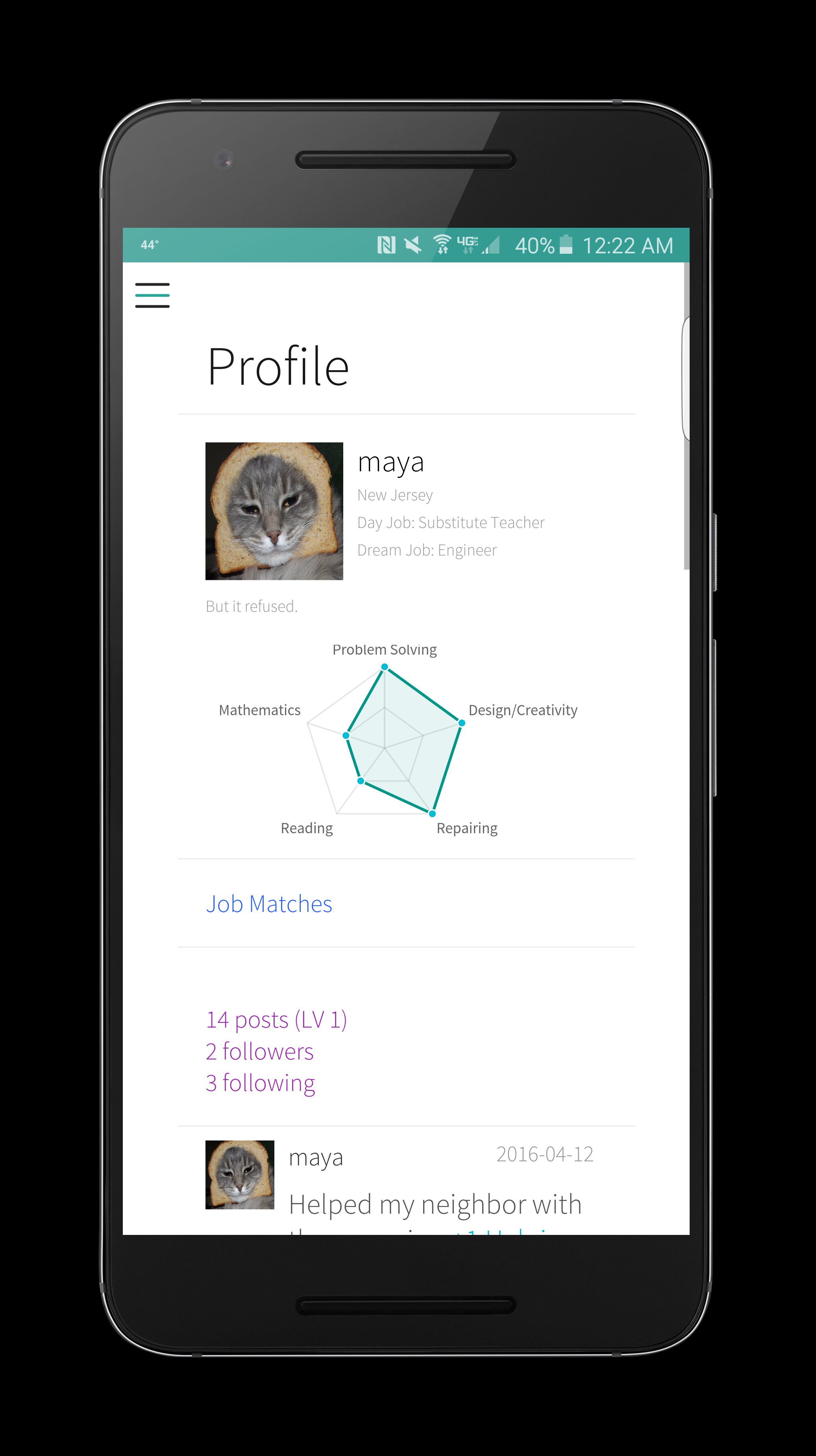
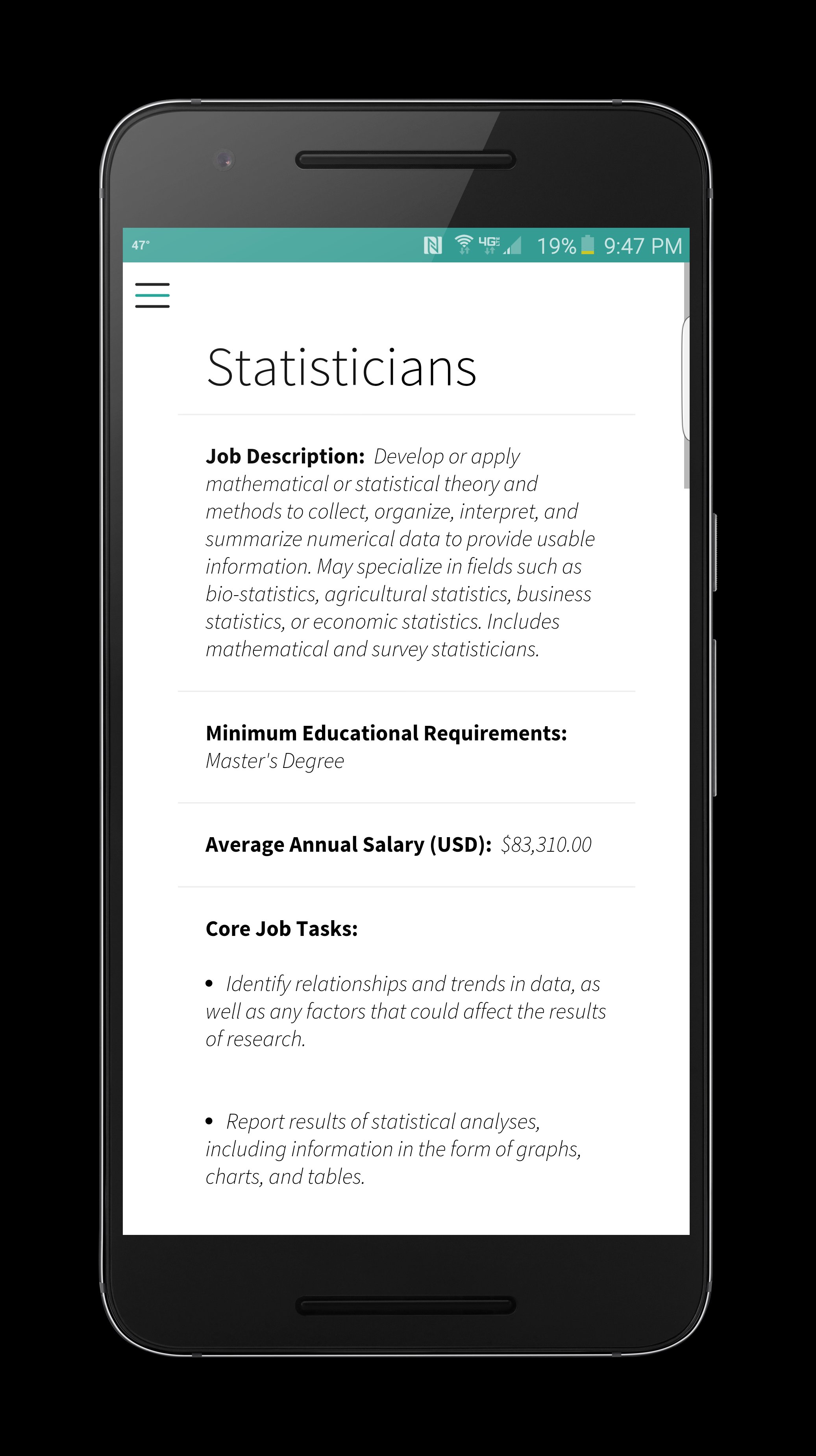
The preserved screens show the rest of the argument. Maya’s profile places present employment beside an aspiration. Another screen describes statisticians through education, pay and tasks. That is a useful sequence: identify something about yourself, inspect an occupation, then consider the distance between the two. An attractive match becomes more useful when its practical requirements arrive with it.
Personality is one piece of the puzzle
There is a research connection behind the company name. A 2015 paper by Conrad Baldner, Gregory S. Longo and Mark David Scott lists Scott’s affiliation as Never Work, LLC, in New Jersey. Published in Personality and Individual Differences, it examined drive, empathy and financial risk decisions among 952 university participants.
Its findings depended on the situation. Drive was associated with greater willingness to risk other people’s resources when potential rewards were high; empathy showed an association in lower-risk circumstances. This was a study of decisions under specified conditions. Treating it as proof that a career app can predict someone’s future performance would stretch the evidence.
For understanding Never Work, the more useful point is how much the setting matters. A trait has meaning in relation to an activity. So does a skill. Enjoying a task, being capable of it, having the required credentials and finding an employer prepared to hire you are separate questions. Career software earns its usefulness by helping people move between them.
A match becomes useful when you can see what to do next.
Our reading of Never Work’s product design
The price of an unfinished answer
Some archived NvrWrk reviewers reported frozen results or recommendations they considered unsuitable. Others liked its direction but wanted better local job coverage. These are individual accounts, rather than a measured failure rate. They still identify the fragile handoff: a person supplies information and expects an answer worth acting on.
The lesson for anyone building a similar tool is concrete. Make completion dependable. Explain why a role appeared. Show its requirements. Give the person a next step. These are editorial conclusions from the product’s design and feedback, rather than a claim about decisions made inside Never Work.
The market also includes public tools. The O*NET Interest Profiler offers free career exploration through occupational interests. Never Work’s distinctive documented approach combined several assessment dimensions; redic brought everyday experiences into a social format. A recommendation remains a starting point for investigation, especially when education, location or the available jobs constrain the choices.
For a reader considering a career change, the idea is easy to borrow without turning a score into a verdict. Start with a recent task you handled well. Name the skill it required. Find an occupation that uses it, then read what that occupation actually involves. Ask someone doing the work about a normal day. A flattering description is pleasant; a small, testable next step gives you something to learn from. The same discipline helps an employer: define the work clearly before deciding what kind of person would fit it.
NvrWrk’s Google Play removal is dated May 2015 by AppBrain; that dates one app’s distribution history. The later redic record extends the company’s product trail into 2016. What makes that trail worth examining is the original question still visible in Maya’s profile: how much of a person’s next job is hidden inside things they already know how to do?